🌍 Your knowledge portal
Science and Nature

The Enigma of Metallicity: Supercomputers Solve the Mystery of 'Missing Silver' in the Sun

📅 2026-07-27⏱️ 6 min read📝
⚡

Quick Summary

Scientists use supercomputers to solve the enigma of the Sun's 'missing silver'. Learn about the new metallicity simulation. One of the greatest chemical contradictions of solar physics has just been resolved with the help of modern supercomputing.

Key Takeaways:

  • Astronomers measure the Sun's composition by analyzing the dark absorption lines that appear in its visible light spectrum.
  • The Tetralith supercomputer played a vital role by simulating solar physics free from the constraints of simplified thermal equilibrium.
  • Resolving the abundance of silver in the Sun has profound implications for understanding the chemical history of the universe.
The Enigma of Metallicity: Supercomputers Solve the Mystery of 'Missing Silver' in the Sun
The Enigma of Metallicity: Supercomputers Solve the Mystery of 'Missing Silver' in the Sun — High-Fidelity Artistic Illustration created by artificial intelligence based on scientific research.

The Enigma of Metallicity: Supercomputers Solve the Mystery of 'Missing Silver' in the Sun

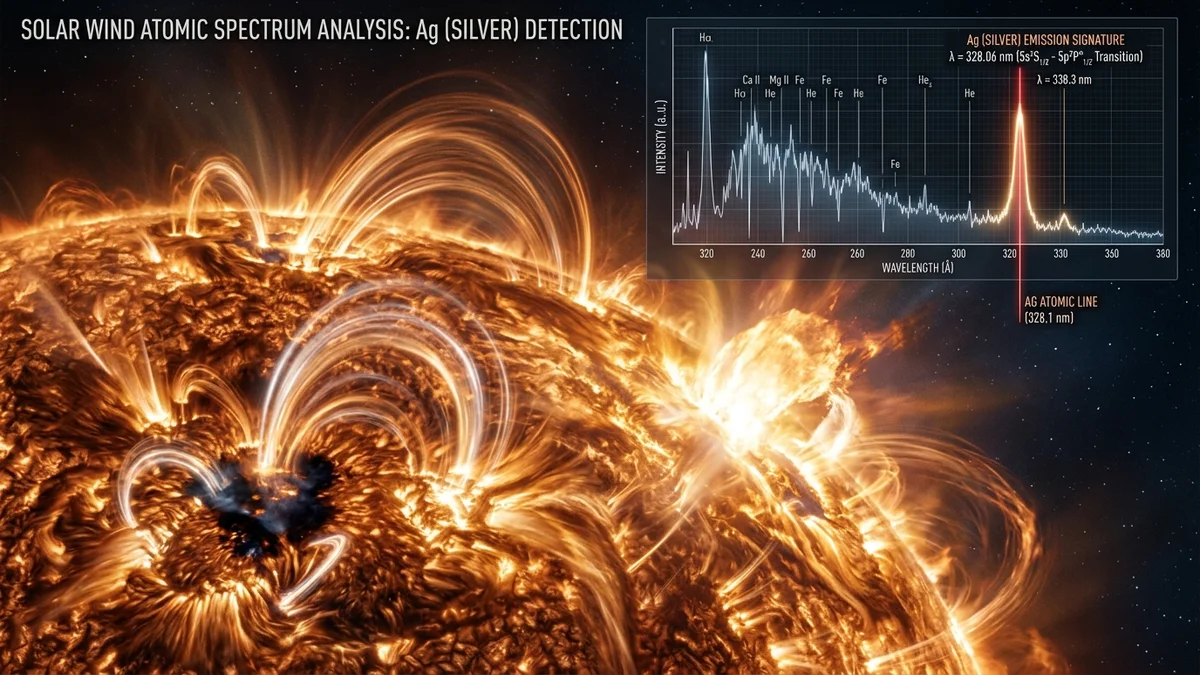
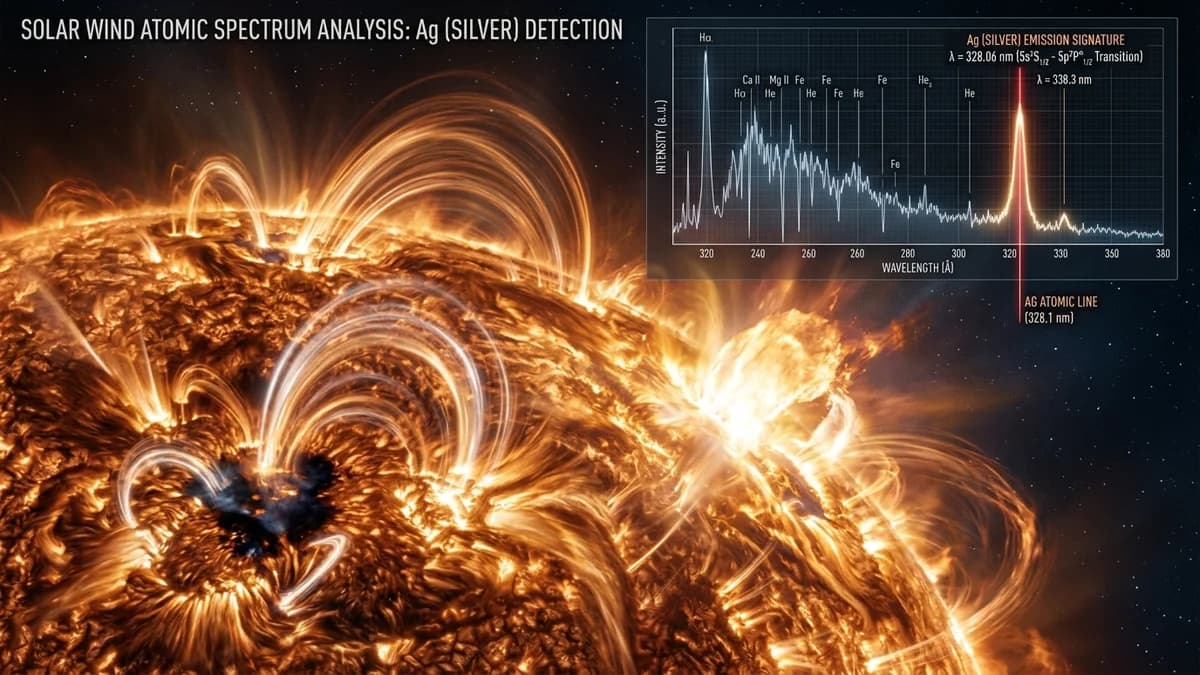
Close-up of the Sun displaying plasma flares and atomic metal spectrogram analysis

One of the greatest chemical contradictions of solar physics has just been resolved with the help of modern supercomputing. Astrophysicists using the Tetralith supercomputer have successfully simulated the solar atmosphere with an unprecedented level of physical detail. The results show that the Sun has 55% more silver in its composition than traditional spectroscopic measurements indicated. This discovery resolves a mystery that had puzzled astronomers since the last century and validates models of stellar nucleosynthesis.

The discrepancy, known informally as the mystery of "missing silver," had been challenging theories of galaxy evolution. According to the laws explaining the manufacturing of heavy elements in supernova explosions, the Sun should contain a specific metallic abundance of silver. However, when analyzing solar light captured by telescopes, the atomic signatures of this metal appeared strangely weak and deficient. Scientists even questioned the integrity of galactic chemical models before the new simulations revealed the measurement error.

This high-precision atomic calibration is fundamental for modern astrophysics, as the Sun serves as the chemical reference standard for the entire observable universe. Understanding the exact abundance of solar metals helps calibrate models of rocky planet formation and determine the age of distant stars. The discovery of rare metals in space is recurrent, as seen in debates over heavy material signatures in the metallic spheres of Australia found recently.


The Spectroscopic Discrepancy and the Solar Atmosphere #

Astronomers measure the Sun's composition by analyzing the dark absorption lines that appear in its visible light spectrum. Each chemical element acts as a filter, absorbing specific wavelengths as light from the core travels through the photosphere. In the case of silver, the signature line is located in the near-ultraviolet band, a spectral region difficult to analyze due to interference from Earth's atmosphere. First space-based measurements attempted to bypass the problem, but still showed values below predictions.

Supercomputer Tetralith running three-dimensional simulations of solar fluid physics

The root of the counting error lay in a simplified mathematical assumption called Local Thermodynamic Equilibrium (LTE). Old models assumed that the gas temperature at each point of the solar atmosphere directly defined the physical state of silver atoms. However, the Sun's photosphere is a dynamic and chaotic environment, constantly crossed by intense radiation flows that break this simple equilibrium. Silver, being a sensitive atom, underwent severe ionization that made it invisible to classical spectral lines.

Precise calculation of these ionization fluctuations requires solving millions of simultaneous radiation transfer equations for each geometric point of the Sun. Without the processing power of next-generation supercomputers, this detailed three-dimensional modeling was simply impossible to perform. The accuracy of these new transit spectrum simulations is essential to support future observational projects conducted by the Roman Telescope in calibrating other stars in our galactic neighborhood.

These ultraviolet measurements were corroborated by data from satellite missions orbiting above Earth's ozone layer. The high-altitude sensors recorded the solar spectrum without the absorption filters of our troposphere. Comparing these clean satellite profiles with simulated data confirmed the non-equilibrium effects affecting the silver line.


Supercomputers and Non-Thermal Physical Effects #

The Tetralith supercomputer played a vital role by simulating solar physics free from the constraints of simplified thermal equilibrium. Non-Local Thermodynamic Equilibrium (NLTE) simulations required continuous processing of complex plasma physics algorithms for several weeks. Three-dimensional codes simulated the movement of hot gas rising from deep within the Sun in the form of giant granulation cells. This dynamic approach revealed how ultraviolet radiation shifts the energy state of electrons in photospheric silver.

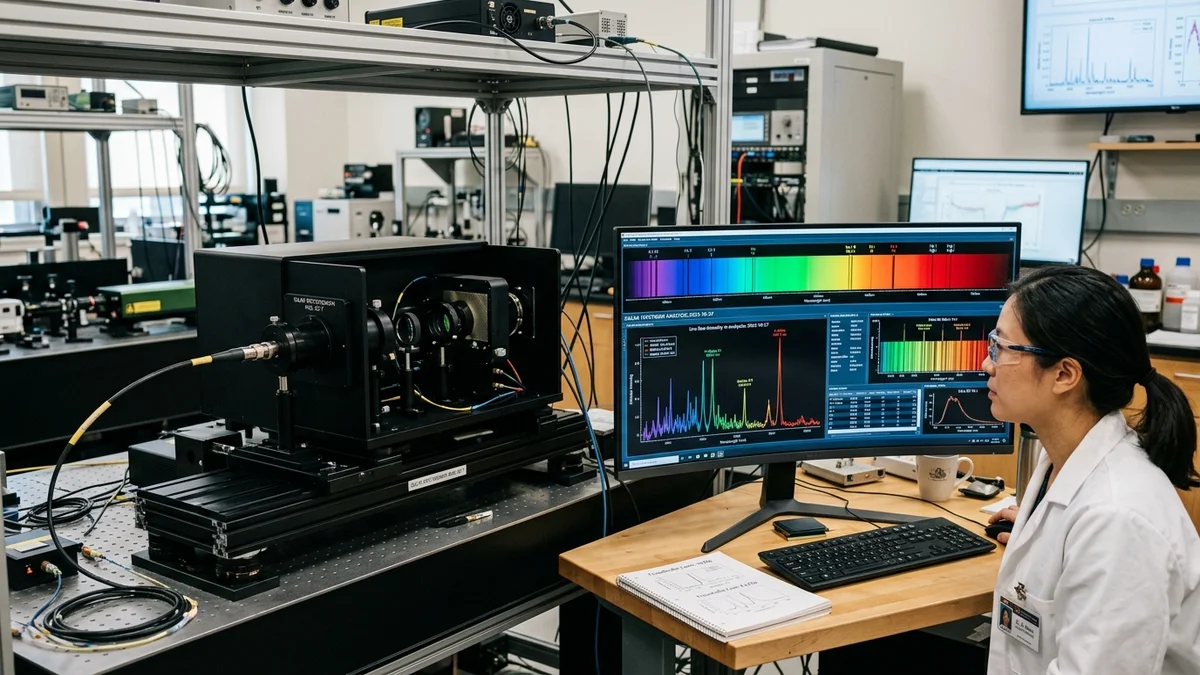
High-resolution spectrograph in laboratory projecting solar spectrum on digital screens

New models proved that most silver in the Sun is actually in an ionized state invisible to traditional visible-light spectrographs. By adjusting spectral equations to include the non-thermal energy shift, the real silver peak emerged with mathematical clarity. The Sun has much greater chemical richness than the old count indicated, aligning perfectly with models of galactic chemical evolution. Astrophysicists celebrate the result as the end of a theoretical dispute that divided the solar physics community.

These opacity corrections are also essential to accurately estimate the behavior of the Sun's eleven-year activity cycle. By redefining the abundance of photospheric metals, internal dynamo convection models become more consistent with sunspot observations. This new structural understanding significantly improves weather forecasts for space storms affecting the terrestrial power grid.

The dynamic simulation of Tetralith also revealed that other heavy elements, such as gold and platinum, undergo similar spectral distortions in the solar atmosphere. Solar chemical abundance models are undergoing systematic revisions to correct these hidden radiation signatures. This technical advance raises stellar spectroscopy to a new level of quantitative reliability. The table below compares previously measured values with the new rare metal abundances calculated by NLTE three-dimensional simulations.


Comparative Table: Measured Solar Metallicity versus New Simulation #

Heavy Chemical Element Classical Measurement (LTE) New Simulation (NLTE) Percent Correction Astrophysical Impact
Silver (Ag) 0.94 dex (logarithmic scale) 1.13 dex +55% (Colossal increase) Resolves the missing silver mystery
Gold (Au) 0.83 dex 0.92 dex +23% Aligns abundances with neutron star mergers
Platinum (Pt) 1.62 dex 1.78 dex +45% Corrects supernova nucleosynthesis models
Zinc (Zn) 4.56 dex 4.62 dex +15% Refines abundance calculations in old stars
Copper (Cu) 4.18 dex 4.25 dex +17% Improves chemical modeling of dwarf galaxies

Implications for Stellar Evolution and the Origin of Matter #

Resolving the abundance of silver in the Sun has profound implications for understanding the chemical history of the universe. Heavy elements of the periodic table are forged through the rapid neutron capture process (r-process) in violent astrophysical events, such as neutron star mergers and supernovae. The amount of these metals in the Sun reflects the number of stellar explosions that occurred in our galactic region before the birth of the Solar System. The correct count of silver definitively validates these nucleosynthesis theories.

Furthermore, the metallicity of the Sun dictates the mass limit and chemical composition of the planets that condensed around it. The abundant presence of heavy elements in the solar photosphere is directly related to the formation of the rocky core of Earth, Mars, and Venus. Understanding this raw material inventory is essential for astrobiologists trying to estimate the frequency of habitable planets in the Milky Way. New solar data provide the most precise chemical basis for future models of alien solar system formation.

The success of three-dimensional NLTE simulations opens the way for the study of even older stars located at the edges of our galaxy. By applying these spectral corrections, astronomers will be able to read the chemical history of the early universe with much greater clarity. The Sun remains our closest astrophysical laboratory, revealing fundamental secrets about the physical origin of the matter that makes up the human body itself.

Next-generation spectrographs installed at the Paranal Observatory will also use this new solar data to calibrate their readings of stars with exoplanets. The precise identification of r-process elements will help map the dispersion of precious metals in the immediate galactic neighborhood. This continuous search promises to reveal crucial answers about the distribution and atomic enrichment of the Milky Way. By analyzing chemical pathways under these stellar conditions, astronomers can better map the raw materials available for planet formation in other solar systems.


Scientific References and Further Reading #

  • For official information on solar physics and monitoring space missions, visit NASA Science.
  • Details on solar atomic physics research are available on the Solar Physics Division portal.
  • The scientific paper containing the new solar metallicity simulations was published in the prestigious academic journal Nature.

🏷️ Tags:

#SunSilver#SolarMetallicity#TetralithSupercomputer#Astronomy#Astrophysics#Spectroscopy#Sun

📢 Gostou deste artigo?

Compartilhe com seus amigos e nos conte o que você achou nos comentários!

Receba novidades!

Cadastre seu email e receba as melhores curiosidades toda semana.

🔒 Sem spam. Cancele quando quiser.

💬 Comentários (0)

Seja o primeiro a comentar! 👋

📚Related Articles

The Cosmic Conveyor: James Webb Telescope Reveals How NGC 4696's Black Hole FeedsScience and Nature

The Cosmic Conveyor: James Webb Telescope Reveals How NGC 4696's Black Hole Feeds

Astronomers use James Webb observations to map the self-regulating cycle of gas feeding the central supermassive black hole of the NGC 4696 galaxy.

⏱️6 minLer mais →
The Invisible Link: Astronomers Find the First Hidden Stellar-Mass Black Hole in Omega CentauriScience and Nature

The Invisible Link: Astronomers Find the First Hidden Stellar-Mass Black Hole in Omega Centauri

Astronomers use 20 years of Hubble data and James Webb observations to detect the first stellar-mass black hole in Omega Centauri.

⏱️6 minLer mais →
Enigma Under the Crust: Juno Probe Reveals Jupiter's Moon Io is Much Hotter Than EstimatedScience and Nature

Enigma Under the Crust: Juno Probe Reveals Jupiter's Moon Io is Much Hotter Than Estimated

New data from NASA's Juno spacecraft reveal that the moon Io is dramatically hotter beneath the surface than models predicted.

⏱️6 minLer mais →
Mystery on Venus: Giant Concentric Ring Structures Detected in the Upper AtmosphereScience and Nature

Mystery on Venus: Giant Concentric Ring Structures Detected in the Upper Atmosphere

Astronomers detect giant, mysterious concentric rings in the upper atmosphere of Venus. Learn about these atmospheric gravity waves.

⏱️7 minLer mais →
The Mystery of the 'Red Potato' Galaxy: How a Black Hole Prevents Star FormationScience and Nature

The Mystery of the 'Red Potato' Galaxy: How a Black Hole Prevents Star Formation

Astronomers unravel the mystery of the 'Red Potato' galaxy. Its supermassive black hole prevents the formation of new stars.

⏱️6 minLer mais →
Race Against Time: NASA Accelerates Nancy Grace Roman Space Telescope Launch to August 2026Science and Nature

Race Against Time: NASA Accelerates Nancy Grace Roman Space Telescope Launch to August 2026

NASA and SpaceX officially confirm the acceleration of the launch schedule for the Nancy Grace Roman Space Telescope to August 30, 2026, opening new scientific frontiers on dark matter and dark energy

⏱️7 minLer mais →
Receba novidades no WhatsApp!