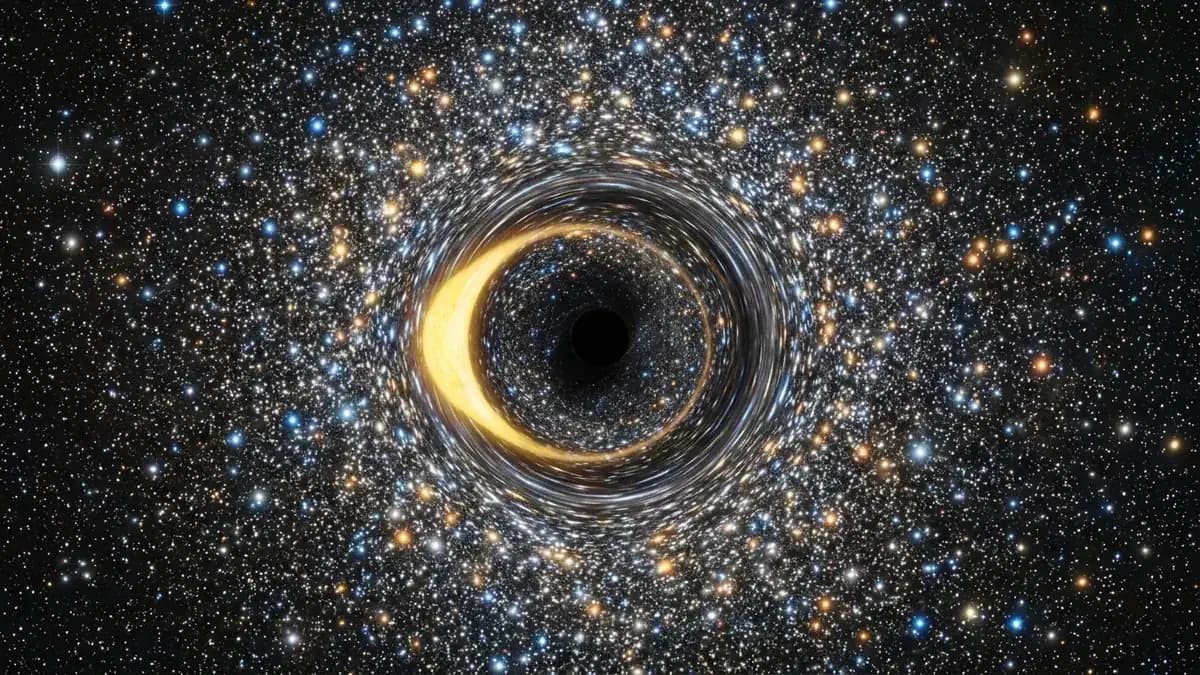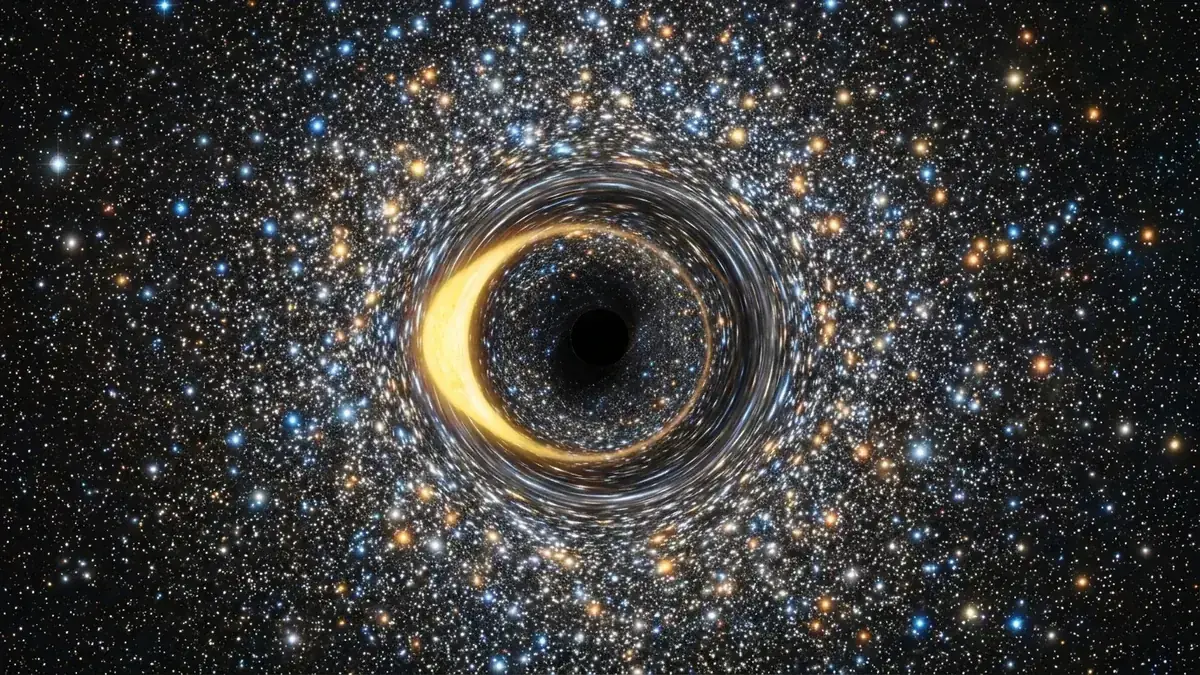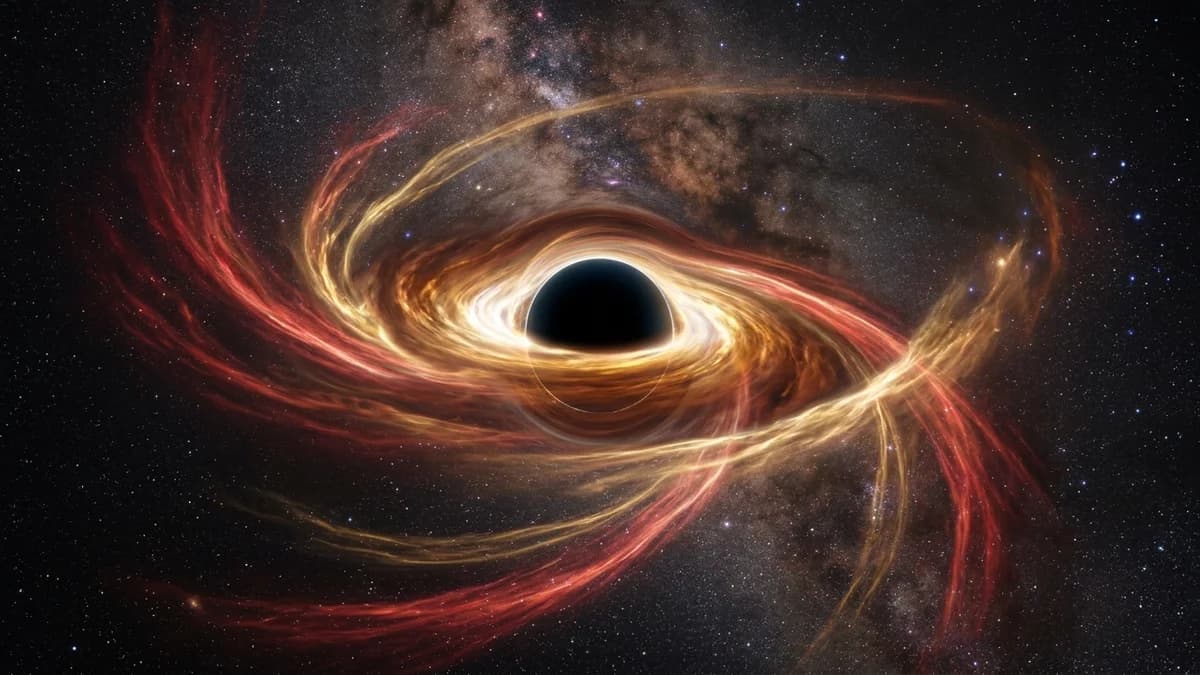
This astrometry technique overcomes the limitations of classic searches for X-ray emissions in compact binary systems. Most known black holes were discovered because they draw gas from their companions, generating intense heat and radiation. oMEGACat BH-2, however, is in a wide orbit where active mass transfer does not occur. This thermal isolation makes the object an excellent example of a quiescent or dormant black hole in the local universe.
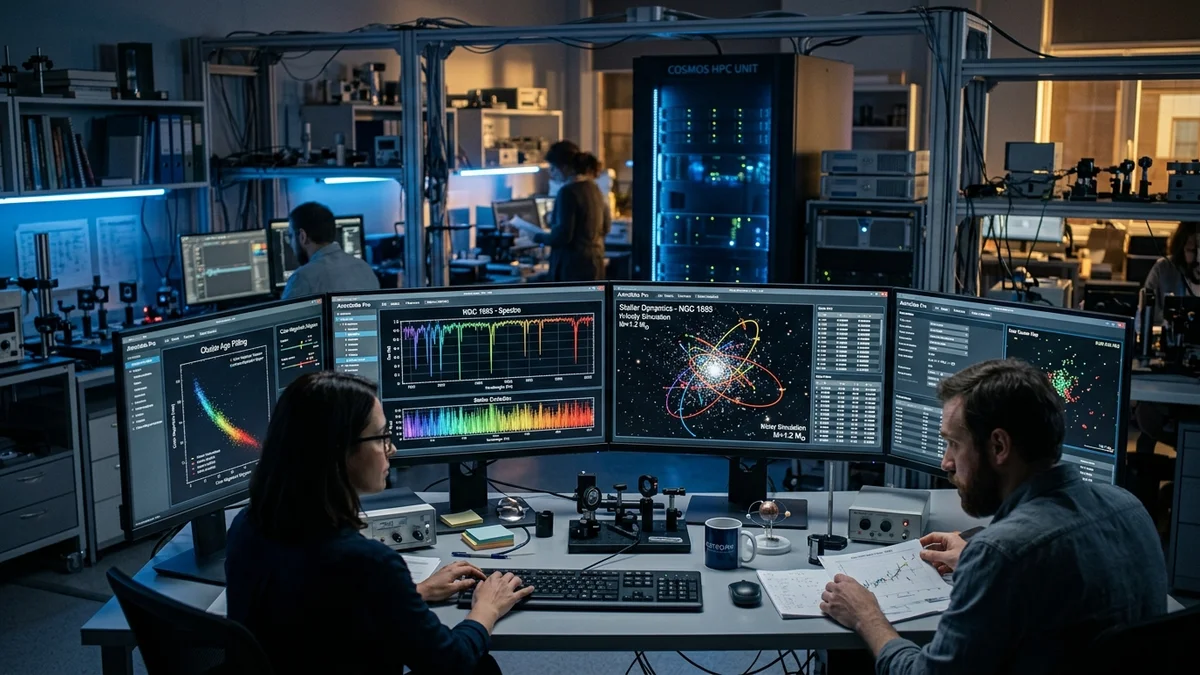
Analyzing these orbital variations requires processing multi-body dynamics models on high-performance supercomputers. Three-dimensional simulation models help reconstruct the orbital history and predict the long-term fate of the binary system. The precision of these mathematical techniques is comparable to that used to track large density anomalies in space. This type of orbital calibration is similar to the equations used to solve the strange temperatures and orbital behaviors of Jupiter's moon Io.
| Parameter for Comparison |
Stellar-Mass Black Hole (oMEGACat BH-2) |
Intermediate-Mass Black Hole |
Supermassive Black Hole |
| Estimated Mass Range |
5 to 100 solar masses (Smaller size) |
100 to 100,000 solar masses |
More than 100,000 solar masses |
| Typical Location |
Dispersed throughout the cluster |
Centers of clusters and dwarf galaxies |
Cores of active large galaxies |
| Detection Method |
Astrometry and orbital oscillations |
Fast central star movements |
X-ray emissions and accretion disks |
| Formation Process |
Gravitational collapse of massive stars |
Continuous merger of smaller stars |
Direct collapse and large-scale accretion |
| Cluster Survival |
Subject to ejection by tidal forces |
Long-term stable central anchor |
Non-existent in globular clusters |
Confirming smaller black holes in Omega Centauri supports the evolutionary model that defines the cluster as the remnant core of a captured dwarf galaxy. In the past, this dwarf galaxy collided with the Milky Way, losing most of its outer stars to gravitational tidal forces. The dense core survived and stabilized into the giant globular cluster we observe today. The presence of an intermediate-mass black hole and several smaller ones confirms this complex galactic heritage.
The internal dynamics of globular clusters act as an accelerator of physical interactions between stars and black holes. Mutual gravitational forces push heavier objects toward the center in a physical process known as mass segregation. Orbital collisions and captures create exotic binary systems that emit gravitational waves detectable by future space-based observatories. Studying systems like oMEGACat BH-2 helps calibrate these low-frequency gravitational wave signatures.
The data gathered in Omega Centauri helps refine the physical constants used to calculate the growth rate of supermassive black holes. By understanding the exact number of stellar-mass black holes retained in these clusters, astrophysicists can deduce the efficiency of cosmic mergers. The discovery establishes archive-based astrometry as the primary tool for mapping dark matter in space. Solar discoveries and other distant systems continue to prove that the cosmos harbors complex dynamic forces that science has only begun to consistently unravel.
Astronomers hope to extend this archive-based astrometric search to other massive globular clusters in the Milky Way. The systematic identification of new invisible binaries will help map the hidden population of stellar remnants in our neighborhood. This ongoing exploration promises to reveal crucial answers about the distribution of stellar mass and gravitational physics in the universe.
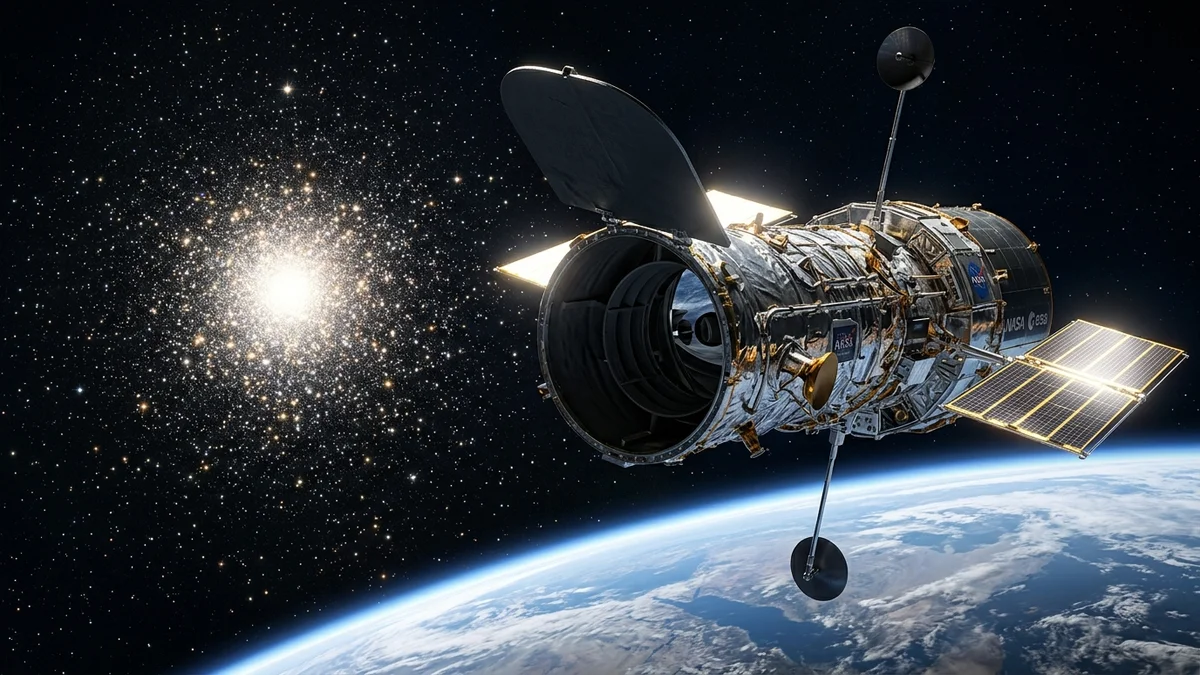
- For official information on the Hubble Telescope mission and archived data, visit the NASA Hubble portal.
- Details on the new observations and spectroscopic data are available on the James Webb Space Telescope (STScI) website.
- The scientific paper describing the discovery of oMEGACat BH-2 was published in the prestigious journal Nature Astronomy.