🌍 Your knowledge portal
science-nature

Mystery of the Metallic Spheres: Giant Space Debris Hits the Australian Coast

📅 2026-07-23⏱️ 6 min read📝
⚡

Quick Summary

A giant metallic sphere found in Western Australia shocked beachgoers and reignited global debates over the real dangers of space debris. On July 16, 2023, beachgoers on the remote shores of Green Head, Western Australia, made a startling discovery that quickly captured global headlines.

Key Takeaways:

  • Local law enforcement acted swiftly to secure the beach, establishing a safety perimeter to protect the public from potential hazards.
  • India's Polar Satellite Launch Vehicle (PSLV) has been a workhorse of the global aerospace industry since its flights in the 1990s.
  • The immediate danger of uncontrolled space debris re-entry lies in the potential for physical impact on populated areas, maritime lanes, or commercial flights.
Mystery of the Metallic Spheres: Giant Space Debris Hits the Australian Coast
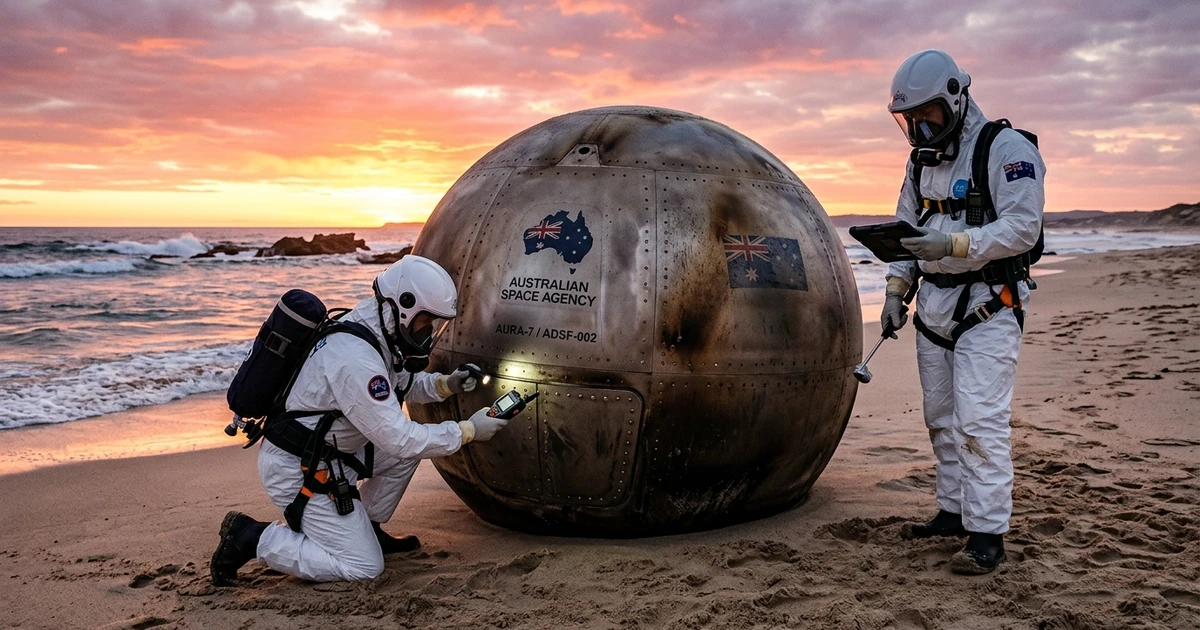
Mystery of the Metallic Spheres: Giant Space Debris Hits the Australian Coast — High-Fidelity Artistic Illustration created by artificial intelligence based on scientific research.

Mystery of the Metallic Spheres: Giant Space Debris Hits the Australian Coast

Metallic Spheres on the Australian Coast

On July 16, 2023, beachgoers on the remote shores of Green Head, Western Australia, made a startling discovery that quickly captured global headlines. They stumbled upon a massive, gold-colored cylindrical metallic structure floating near the shoreline and partially buried in the sand. The object, measuring approximately 2.5 meters in width, immediately sparked intense curiosity and concern among local residents.

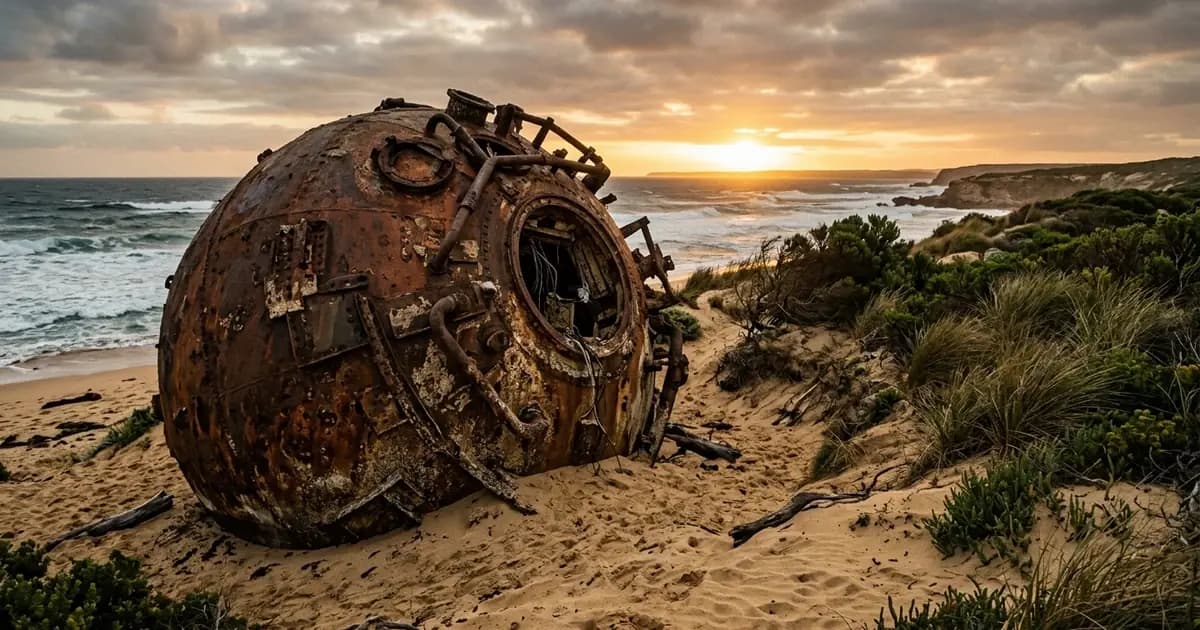
The metallic sphere showed severe signs of corrosion, wear, and structural damage, suggesting it had spent a significant amount of time drifting in the ocean. It was also partially covered in barnacles and marine growth, indicating a long journey through saltwater currents. What began as a local curiosity rapidly escalated into an international security incident as national space agencies were notified.

What Happened #

Local law enforcement acted swiftly to secure the beach, establishing a safety perimeter to protect the public from potential hazards. Materials scientists and military experts, dressed in specialized protective suits, conducted initial on-site tests to detect toxic chemical residues or radiation. Early rumors among locals speculated that the debris could be linked to the missing Malaysia Airlines flight MH370.

However, aerospace engineers and investigators quickly dismissed this theory after analyzing the object's unique structural features and industrial welds. The presence of specialized high-strength alloys and aerospace-grade components pointed directly to an exoatmospheric origin rather than a commercial aircraft. This discovery shifted the focus of the investigation toward global satellite launch logs and space agency databases.

Scientists analyze the metallic spheres

Following preliminary visual analyses and physical measurements, the Australian Space Agency (ASA) confirmed that the item was indeed space debris. Working alongside international partners, experts concluded that the metallic cylinder was a high-pressure propellant vessel. Historical launch data from the region indicated that the component belonged to the upper stage of a rocket launched by a foreign nation.

Definitive confirmation arrived when the Indian Space Research Organisation (ISRO) formally identified the object as part of one of its Polar Satellite Launch Vehicles (PSLV). The heavy titanium tank had survived the extreme friction of re-entry and crashed into the southern Indian Ocean, where it drifted for months. Driven by strong maritime currents and winds, it eventually washed up on the pristine shores of Western Australia.

Context and History #

India's Polar Satellite Launch Vehicle (PSLV) has been a workhorse of the global aerospace industry since its flights in the 1990s. It is widely praised for its reliability in delivering scientific payloads and commercial satellites to polar orbits. To achieve the thrust required for these missions, the rocket employs multiple stages, some of which utilize liquid propellants stored in reinforced tanks.

Once these stages exhaust their fuel supplies, they are detached and jettisoned over designated oceanic exclusion zones to minimize risks to populated landmasses. However, atmospheric variables and orbital mechanics can sometimes cause these discarded stages to drift far from their targeted drop zones. This leads to unpredictable re-entries where massive components fall into random parts of the world's oceans.

During the violent process of re-entering Earth's atmosphere, objects experience friction-generated temperatures that easily exceed 1,600 degrees Celsius. While standard lightweight aluminum structures melt and vaporize under these conditions, components constructed from titanium and stainless steel are far more resilient. High-pressure tanks are specifically engineered to withstand extreme internal and external pressures, allowing them to remain structurally intact.
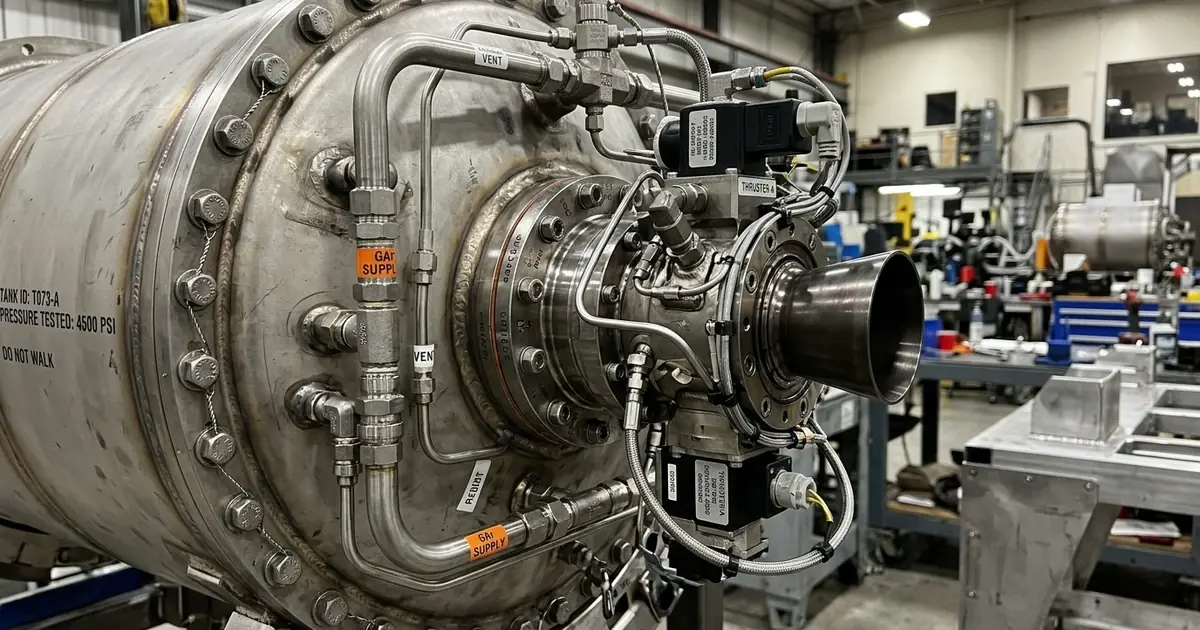
Rocket fuel tank

This exceptional thermal resistance explains why titanium spheres and cylinders are frequently recovered intact following the re-entry of retired spacecraft. Such incidents are becoming increasingly common as the global space economy expands and the number of orbital launches multiplies each year. However, finding such a large piece of debris on a popular public beach highlighted the limits of current space traffic management protocols.

Impact on the Population #

The immediate danger of uncontrolled space debris re-entry lies in the potential for physical impact on populated areas, maritime lanes, or commercial flights. Statistically, the likelihood of a single person being struck by falling space junk remains exceptionally low. However, this probability is steadily rising due to the unprecedented volume of satellite constellations being deployed into low Earth orbit.

Beyond the threat of direct impact, the secondary hazard involves chemical contamination from leftover propellants. Rockets often utilize highly volatile and toxic substances like hydrazine, which is extremely hazardous to human skin, eyes, and respiratory systems. If a pressure vessel containing residual hydrazine ruptures near a community, it can result in a localized environmental and public health crisis.

To better understand the physical scale of this global challenge, the table below highlights notable instances of space debris crashing to Earth in recent decades:

Object Type Impact Location Material/Composition Spacecraft of Origin Safety Risk
Pressure Vessel Green Head, Australia Titanium Alloy PSLV Rocket (India) Moderate
Stage Fragment Alagoas, Brazil Carbon Fiber Falcon 9 Rocket (USA) Low
Solar Panel Skylab, Australia Aluminum and Glass Skylab (NASA) Low
Nuclear Reactor NWT, Canada Enriched Uranium Kosmos 954 (USSR) Extreme
Payload Debris NSW, Australia Carbon Composites Crew Dragon (SpaceX) Low

Dealing with these toxic materials requires strict protocols and immediate intervention from local civil defense agencies. Cordoning off affected coastlines, forests, or agricultural fields is essential to preventing accidental exposure and ecological contamination. Prompt neutralization of chemical residues must be handled by trained experts equipped with specialized tools and protective gear.

What the Involved Parties Say #

In an official statement, representatives from the Indian Space Research Organisation (ISRO) confirmed they were collaborating closely with their Australian counterparts. The Indian agency formally acknowledged ownership of the titanium cylinder and assured the public that the object carried no radioactive hazards. They explained that the rocket stage had been decommissioned in full compliance with international maritime safety guidelines.

However, they noted that unpredictable oceanic currents and winds over several months caused the debris to drift far from its planned impact zone. Conversely, the Australian Space Agency emphasized the urgent need for a more transparent and strict global framework to monitor orbital waste. Australian officials highlighted that coastal nations should not have to bear the risks associated with third-party space missions without better tracking systems.

Metallurgical Forensics and Orbital Re-Entry Mechanics of COPV Tanks #

Forensic metallurgical and structural inspections conducted by the Australian Space Agency (ASA) in coordination with the Indian Space Research Organisation (ISRO) established that the cylindrical object washed ashore at Green Head, Western Australia, is a Composite Overwrapped Pressure Vessel (COPV) from an expendable Polar Satellite Launch Vehicle (PSLV) upper stage. Constructed from a seamless titanium or Inconel alloy liner wrapped in high-tensile carbon-fiber filament, COPVs store pressurized helium or hydrazine propellant at hundreds of atmospheres and routinely survive the 1,600°C plasma heating of atmospheric re-entry.

From an international space law perspective, the recovery of intact orbital debris along inhabited coastlines activates liability and notification protocols under the 1967 Outer Space Treaty and the 1972 Space Liability Convention. As global launch cadences exceed two hundred orbital flights annually, space agencies are mandated to implement controlled de-orbit perigee burns over the South Pacific Oceanic Uninhabited Area (Point Nemo) to prevent surviving titanium pressure spheres from impacting coastal communities.

Next Steps and Conclusion #

The unexpected arrival of the metallic sphere on the Australian coast serves as a powerful reminder of our connection to outer space. The waste we generate in orbit is a physical problem that can no longer be ignored or swept under a cosmic rug. Every launch leaves a potential footprint, and managing this footprint is essential for the future of both space travel and terrestrial safety.

Addressing the crisis of space debris requires a global commitment from governments, scientific bodies, and private aerospace corporations. Only by establishing transparent rules, developing sustainable technologies, and fostering international cooperation can we protect our planet while continuing to reach for the stars. Ensuring that our journey into the unknown remains a path of discovery rather than peril is a responsibility we all share.

Sources and References #

🏷️ Tags:

#metallicspheresAustralia#spacedebrisAustralia#spacepressurevessel#GreenHeadspacedebris#IndianPSLVrocket#spacedebrisfalling#titaniumalloyspace#spacedebrisdanger

📢 Gostou deste artigo?

Compartilhe com seus amigos e nos conte o que você achou nos comentários!

❓Frequently Asked Questions

The mysterious metallic spheres found on Green Head beach are specialized titanium alloy pressure vessels originally designed to store fuel under high pressure inside the third stage of India's Polar Satellite Launch Vehicle (PSLV). These heavy-duty aerospace components are built to survive the extreme thermal stresses and friction of uncontrolled atmospheric re-entry. After falling into the Indian Ocean, ocean currents carried the debris over thousands of kilometers until they washed up on the Australian shore, prompting emergency safety inspections.
Although initial radiation tests conducted by emergency services yielded negative results, these recovered aerospace components pose a moderate chemical hazard due to the nature of rocket propellants. Space launch vehicles commonly use highly toxic and corrosive chemicals, such as hydrazine and nitrogen tetroxide, which can leave persistent residues on the interior metallic surfaces. Because exposure to these substances can cause severe chemical burns and long-term health complications, authorities set up a strict safety perimeter to prevent the public from touching the object.
Under the United Nations Space Liability Convention of 1972, the launching state is strictly liable to pay compensation for damage caused by its space objects on the surface of the Earth. In this particular incident, the Indian Space Research Organisation (ISRO) acknowledged ownership of the titanium pressure vessel and agreed to cooperate with Australian authorities on a formal recovery plan. The two nations are working in tandem to coordinate the safe repatriation of the debris while addressing the administrative costs of local retrieval operations.

Receba novidades!

Cadastre seu email e receba as melhores curiosidades toda semana.

🔒 Sem spam. Cancele quando quiser.

💬 Comentários (0)

Seja o primeiro a comentar! 👋

📚Related Articles

Receba novidades no WhatsApp!