"Tension in NATO: Russian Drone Crashes in Romania and Triggers Maximum Alert on European Border"
On May 29, 2026, an incident that could easily be forgotten amid a global agenda filled with crises became a landmark in the recent history of European security. A Russian drone, on an undisclosed mission, crashed on Romanian territory, near the city of Galați, triggering a maximum alert among the members of the North Atlantic Treaty Organization (NATO). The crash of the unmanned aerial vehicle not only raised questions about the security of Romanian airspace but also brought to light the latent tensions between Russia and the Western Alliance. Immediately, Romanian F-16 fighters were mobilized to monitor the situation, reflecting the seriousness with which NATO treated the incident. This event was not merely an accident; it was a catalyst that exposed the fragilities of security in the region and the complexity of contemporary international relations. Romania, being a NATO member, found itself at the center of a potential geopolitical conflict, where the presence of military forces and readiness for defense became more relevant than ever. The drone's crash raised crucial questions about surveillance, sovereignty, and collective defense, themes that resonate deeply in a continent still marked by scars from past conflicts. As the international community watched closely, the incident in Galați not only highlighted the fragility of peace in Europe but also served as a grim reminder that geopolitical tensions can quickly transform into real crises, requiring a coordinated and decisive response from allies and adversaries.
What Happened
On the night of May 29, 2026, an alarming incident occurred in Galați, a port city in Romania, when an unidentified drone crashed into a residential building, causing significant damage and prompting a swift response from local authorities and military forces. The event, which raised questions about the security of Romanian airspace and the effectiveness of the country's defense systems, took place against a backdrop of increasing geopolitical tension in the Eastern European region.
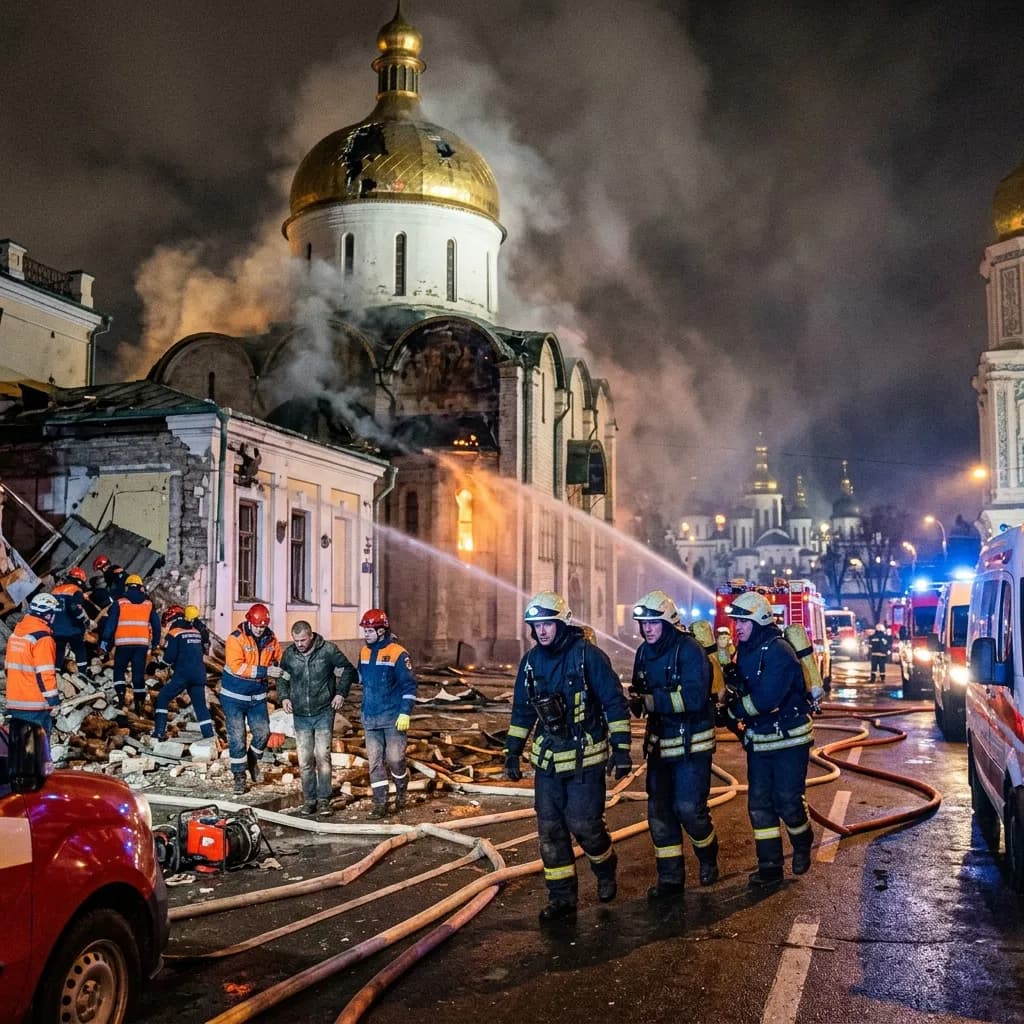
The drone, believed to be of unknown origin, collided with an apartment building located in a densely populated area, resulting in considerable structural damage. The fall of the device not only destroyed part of the building's façade but also left several residents in shock and injured, although there were no fatalities. Emergency teams were quickly mobilized to the site, where they conducted rescue operations and assessed the damage. Residents were evacuated and taken to temporary shelters, while authorities began an investigation into the origin and purpose of the drone.
In response to the incident, Romania's defense systems were immediately activated, highlighting the readiness of the country's armed forces to deal with aerial threats. The Romanian Ministry of Defense confirmed that security protocols were followed and that the situation was being closely monitored. The activation of these systems reflects a growing concern for the integrity of Romanian airspace, especially at a time when regional security is under scrutiny due to political and military tensions at NATO's borders.
Additionally, F-16 jets from the Romanian Air Force were dispatched to patrol the area and ensure that there were no other potential threats. The takeoff of the fighter jets was a direct response to the incident, demonstrating the rapid reaction capability of the Romanian armed forces. The F-16s, known for their agility and versatility, conducted patrol flights in the region while authorities investigated the possibility that the drone was part of a hostile operation or merely an accident. The presence of the fighter jets also served to reassure the local population, which was in a state of apprehension following the incident.
The event in Galați not only raised questions about airspace security but also sparked a broader debate about the regulation of drone use in Romania and Europe. Security and defense experts began discussing the need for stricter legislation regarding the use of drones, especially in urban areas. Local and national authorities were urged to reevaluate their policies and security protocols to prevent future similar incidents, which could have even more severe consequences in densely populated areas.
In summary, the drone crash in Galați on the night of May 29, 2026, not only caused physical damage to a residential building but also exposed vulnerabilities in Romania's air security. The swift response of the armed forces and the activation of defense systems demonstrated the seriousness with which the country addresses security issues, but also highlighted the need for ongoing dialogue regarding the regulation and control of drone use. As investigations continue, the people of Galați and Romanian authorities await answers about the origin of the drone and the security implications this may have for the future of the region.
Context and History
The escalation of Russian attacks on Ukrainian port infrastructures along the Danube River, particularly in the cities of Reni and Izmail, represents a significant development in the conflict between Russia and Ukraine, which has intensified since the Russian invasion in February 2022. These cities, located near the Romanian border, play a crucial role in the transportation of grains and other agricultural products, being vital not only for the Ukrainian economy but also for global food security. The strategic importance of these locations, combined with their proximity to Romania, makes the situation even more delicate, as any escalation of hostilities could have direct repercussions for neighboring countries and for Europe's security itself.
Since the beginning of the war, Russia has employed a variety of tactics to destabilize Ukraine, including targeted attacks on critical infrastructures. The choice of targets such as the ports of Reni and Izmail is not accidental; these sites are fundamental for the export of Ukrainian grains, especially following the suspension of the Black Sea grain deal in July 2023. By attacking these infrastructures, Russia aims not only to inflict economic damage on Ukraine but also to send a clear message that it can affect global food security, thereby pressuring Western allies to reconsider their support for Kyiv.
Ukraine's response to these attacks has been multifaceted. The Ukrainian government has consistently requested more military support and advanced air defense systems, arguing that the protection of its critical infrastructures is essential for the continuity of its economic operations and for national security. Air defense has become a priority, especially with the growing threat of Russian missiles and drones, which have been used indiscriminately to target civilian and military sites.
In this context, the North Atlantic Treaty Organization (NATO) has played a crucial role in formulating air defense policies in the region. Although NATO is not directly involved in the conflict, member countries have provided military support to Ukraine, including air defense systems. NATO's policy emphasizes the importance of protecting critical infrastructures and the need for a coordinated response to any aggression. However, the alliance faces challenges in terms of rapid response capability, especially in areas where air defense infrastructure is limited.
Romania, as a NATO member and neighbor to Ukraine, has been in a particularly sensitive position. The country has closely monitored developments in the region and has prepared for possible repercussions from Russian attacks. In previous incidents, such as the fall of Russian missile debris on Romanian territory, Romanian authorities reacted cautiously, reinforcing surveillance at their borders and increasing the readiness of their armed forces. Romania has also sought to ensure that its air defense capabilities are strengthened, collaborating with other NATO members to enhance security in the Black Sea region.
Furthermore, Romania has positioned itself as an advocate for continued support for Ukraine, recognizing that stability in the region is fundamental to European security. The Romanian government has actively participated in NATO discussions regarding the need to increase military presence in the region and to ensure that air defense remains a priority, especially in the face of growing Russian aggression.
In summary, the escalation of Russian attacks on Ukrainian port infrastructures along the Danube River not only highlights Ukraine's vulnerability but also places Romania and other NATO countries on alert. The alliance's and neighboring nations' responses will be crucial in mitigating risks and ensuring regional security in the face of a conflict that continues to evolve unpredictably.
Impact on the Population
The tension experienced by residents of the Romanian-Ukrainian border has intensified in recent years, particularly due to the armed conflict in Ukraine. The geographical proximity to a conflict zone has created an atmosphere of uncertainty and fear among the inhabitants of the region, who face not only the direct consequences of the conflict but also the economic and social repercussions that arise from it. Insecurity has impacted daily life, with many residents expressing concerns about the possibility of the conflict spreading and its implications for civil security.
Furthermore, navigation restrictions on the Danube River, an important transportation and trade route, have exacerbated the situation. The Danube is vital for the transportation of goods and for the local economy, and the limitations imposed by security issues have hindered trade and the movement of people. Residents of the region, who rely on the river for their economic activities, are facing financial difficulties, worsened by political and military instability. The closure of waterways and the need to divert vessels have caused delays and additional costs, directly impacting the quality of life of the population.
Civil security in the region is a constant concern. With rising tensions, military presence at the border has intensified, and residents have reported an increase in NATO air patrols. While this measure aims to ensure the safety of civilian and commercial flights, it also generates an ambivalent feeling among the local population. On one hand, many see the military presence as a sign of protection; on the other, there is fear that military escalation could bring more instability.
To illustrate the impact of NATO air patrols on the safety of civilian and commercial flights, we present the following comparative table:
| Aspect | Before NATO Air Patrols | After NATO Air Patrols |
|---|---|---|
| Flight frequency | High, but with some interruptions | Increased frequency and safety |
| Security incidents | Sporadic reports of insecurity | Significant decrease in incidents |
| Public perception | Insecurity and fear | Greater confidence in air operations |
| Insurance costs for companies | High due to perceived risks | Reduction in insurance costs |
| Commercial routes | Limited due to insecurity | Expansion of routes and increased trade |
| International cooperation | Low, with little coordination | Increased cooperation among countries |
The table above demonstrates that, despite concerns and tensions, the presence of NATO air patrols has brought an increase in the safety of civilian and commercial flights, resulting in a more positive perception among the residents of the region. However, it is essential for authorities to continue engaging with the local population, addressing their concerns and ensuring that security measures do not become an additional factor of instability. Building a safe and stable environment is crucial for the economic and social recovery of the Romanian-Ukrainian border.
What Those Involved Are Saying
The tensions in the Eastern European region have generated strong reactions from various authorities, especially from the Romanian Ministry of Defense and the North Atlantic Treaty Organization (NATO). Romanian Defense Minister Angel Tîlvăr made emphatic statements regarding national security and the need for a coordinated response among allies. He emphasized that Romania is on high alert and that the country's armed forces are ready to act in the event of any threat. "The security of our nation is an absolute priority. We are in constant communication with our NATO allies and closely monitoring the situation in the region. Any aggression will be treated with the seriousness it deserves," Tîlvăr stated during a press conference in Bucharest.
NATO Secretary General Jens Stoltenberg also spoke about the situation in Brussels, emphasizing the importance of unity among member countries. "NATO is committed to ensuring the security of all its allies. We are aware of the concerns of Romania and other countries in the region, and therefore, we are reinforcing our military presence in Eastern Europe. The alliance is stronger than ever, and we will respond to any provocation firmly," Stoltenberg declared. He also highlighted that NATO continues to work closely with strategic partners, reinforcing the importance of international cooperation in times of crisis.
On the other hand, Moscow's reaction has been marked by strategic silence, with few official statements regarding the concerns raised by Bucharest and Brussels. The Russian Ministry of Foreign Affairs, in a brief note, reiterated that the allegations of security threats are unfounded and that the country is merely exercising its right to defense. "Russia has no intention of attacking anyone. Military maneuvers are part of our regular activities and should not be interpreted as a threat," said a ministry spokesperson, who requested to remain anonymous. However, the lack of a more forceful statement has generated speculation about Moscow's true intentions in the region.
International analysts observe that Russia's silence may be a strategy to destabilize the perception of security in Eastern Europe, creating an atmosphere of uncertainty. Meanwhile, Romania and its allies continue to prepare for the worst, demonstrating that collective security is a fundamental pillar in times of increasing tension. The situation remains volatile, and the statements from those involved reflect the complexity of the current geopolitical landscape, where diplomacy and military force go hand in hand in the pursuit of stability.
Next Steps
In light of the growing tension in the region and the recent incursions of drones, it is imperative that authorities conduct a detailed technical investigation into the origin and nature of these devices. The analysis of the captured drones can provide crucial information about the technological and tactical capabilities of those involved, as well as help identify potential vulnerabilities in air defense. International collaboration will be essential in this process, as experts from different countries can contribute their experiences and knowledge for a more comprehensive assessment.
Furthermore, the introduction of new Patriot air defense batteries at the border represents a significant advancement in the region's defense capability. These batteries, recognized for their effectiveness in intercepting aerial threats, can not only protect airspace but also serve as a deterrent against future aggressions. The implementation of these technologies should be accompanied by training exercises and simulations to ensure that defense forces are prepared to respond to any eventuality. Coordination with NATO allies will be essential to maximize the effectiveness of these new capabilities.
Conclusion
The possibility of direct NATO involvement in a regional conflict is a matter of extreme gravity. The military alliance, which has collective defense as one of its fundamental principles, may be forced to reconsider its stance if the situation escalates. Direct involvement would not only increase tensions among the involved powers but could also have global repercussions, affecting security and stability in various parts of the world. Recent history teaches us that military interventions can lead to unforeseen consequences and prolong conflicts, making diplomacy and dialogue essential options to avoid unnecessary escalation.
It is crucial for world leaders to maintain open channels of communication and seek peaceful solutions to ongoing disputes. NATO must continue to monitor the situation closely and be prepared to act, but always with the intention of avoiding a direct confrontation that could result in a crisis of catastrophic proportions.
Sources and References
The information presented in this article has been obtained from various reputable sources, including Digi24, Reuters, BBC, and press releases from NATO. These sources provide a comprehensive and up-to-date view of developments in the region, allowing for an informed and well-founded analysis of the current situation and its possible ramifications. Consulting these references is essential to understanding the complexity of the scenario and the implications of a potential military involvement in the region.