"World Refugee Day 2026: Alarming Records and Global Humanitarian Challenges"
On June 20, 2026, the world comes together to observe World Refugee Day, a date that this year is marked by an alarming record of forcibly displaced individuals. UN data reveals that over 100 million individuals have been forced to leave their homes due to armed conflicts, persecution, and increasingly, the devastating consequences of climate change. This unprecedented increase is not just a number; it represents interrupted lives, shattered dreams, and disintegrated communities. The refugee crisis reflects the fragility of peace in various parts of the world, where war and violence continue to force families to leave everything behind in search of safety and dignity. Moreover, food insecurity, exacerbated by natural disasters and environmental degradation, has significantly contributed to forced displacement, with millions struggling to survive amid increasingly adverse conditions. In this context, World Refugee Day becomes a crucial moment for us to reflect on the collective responsibility we have towards these individuals and communities. It is an opportunity to amplify their voices, recognize their resilience, and promote concrete actions that seek lasting solutions. In a world facing interconnected global challenges, solidarity and empathy are more necessary than ever. World Refugee Day 2026 is not just a date on the calendar; it is a call to action for all of us, reminding us that the fight for justice and dignity for refugees is a shared responsibility that must be embraced by each of us.
What Happened
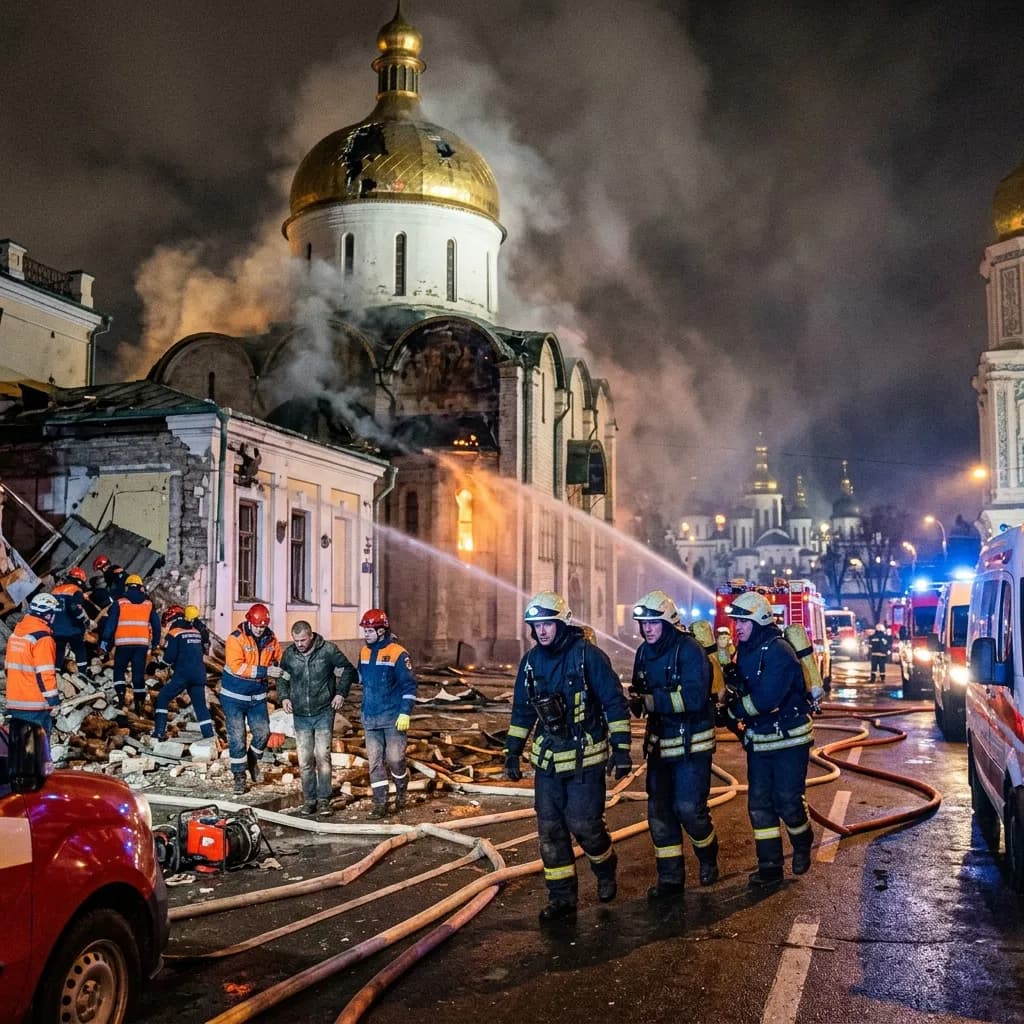
On June 20, 2026, the United Nations High Commissioner for Refugees (UNHCR) released its annual report "Global Trends," which provides a comprehensive analysis of the situation of refugees and displaced persons worldwide. This year, the document highlights an alarming escalation in the number of people forced to leave their homes due to armed conflicts, with special emphasis on the crises affecting Ukraine, Sudan, the Middle East, and Myanmar. The report not only presents statistical data but also reflects on the human impact of these crises, emphasizing the urgent need for international solidarity.
According to the report, the global refugee population has reached a new record, with over 37 million people registered in search of protection. The war in Ukraine, which began in 2022, continues to be one of the main causes of forced displacement, with millions of Ukrainians fleeing to neighboring countries and beyond. The UNHCR notes that despite humanitarian aid efforts, the situation remains critical, with many refugees facing extreme difficulties in accessing basic services such as health and education. The escalation of conflict and political instability in the region have exacerbated the crisis, leading to a continuous increase in the number of people seeking asylum.
In addition to Ukraine, Sudan also stands out as a critical point of forced displacement. The UNHCR report reveals that violence and political instability in the country have resulted in a significant increase in the number of Sudanese seeking refuge in neighboring countries, such as Chad and Egypt. The humanitarian situation in Sudan is described as desperate, with millions of people facing food insecurity and lack of access to medical care. The UNHCR warns that the international community must intensify its efforts to support aid and protection efforts for these vulnerable individuals.
In the Middle East, the situation of Syrian refugees continues to be a pressing concern. Since the onset of the civil war in 2011, millions of Syrians have been forced to leave their homes, and many still live in precarious conditions in countries such as Lebanon, Jordan, and Turkey. The report highlights that, despite some advances in humanitarian assistance, needs continue to outstrip the response capacity. The lack of resources and the growing hostility towards refugees in some communities have hindered the integration and recovery of these populations.
Myanmar, in turn, is facing an unprecedented humanitarian crisis, with the Rohingya minority being one of the most affected. The UNHCR points out that repression and systematic violence against the Rohingyas have resulted in a massive exodus to neighboring countries, such as Bangladesh, where millions live in overcrowded camps and lack adequate assistance. The report emphasizes the need for a renewed commitment from the international community to address the root causes of displacement and ensure that the rights of refugees are respected.
Under this year's official campaign theme, "Solidarity in Times of Crisis," the UNHCR makes a call for collective action. The report highlights solidarity initiatives that have been implemented in various parts of the world, showing that even in times of crisis, compassion and solidarity can prevail. The UNHCR encourages governments, non-governmental organizations, and citizens to come together in support of refugees, promoting policies that ensure protection and dignity for all displaced persons. The central message is clear: the refugee crisis is not just a numbers issue, but a matter of humanity that requires a unified and effective global response.
Context and History
The international protection of refugees has its legal foundations primarily established by the 1951 Convention Relating to the Status of Refugees and its 1967 Protocol. The 1951 Convention was a historic milestone that emerged in a post-World War II context when millions of people were displaced due to conflicts and persecutions. The document defines what a refugee is, establishes the rights that these individuals should have, and outlines the obligations of states concerning them. According to the Convention, a refugee is someone who, due to well-founded fears of persecution for reasons of race, religion, nationality, membership in a particular social group, or political opinions, is outside the country of their nationality and is unable or unwilling to return to it.
United Nations humanitarian agencies, such as the United Nations High Commissioner for Refugees (UNHCR), play a crucial role in implementing and supervising the standards established by the Convention. The UNHCR was created in 1950 with the mission of protecting and assisting refugees, promoting durable solutions to their situations. The agency operates on various fronts, including humanitarian assistance, human rights promotion, and advocacy, while also collaborating with governments and non-governmental organizations to ensure the protection of refugees. The work of the UNHCR is vital, especially in a global scenario where the number of forcibly displaced persons has increased alarmingly.
In recent years, the profile of refugees has transformed significantly, largely due to contemporary environmental crises. Although the 1951 Convention was drafted in a context where armed conflicts and political persecutions were the primary causes of displacement, climate change and environmental disasters have emerged as crucial factors forcing entire populations to leave their homes. Phenomena such as severe droughts, floods, storms, and rising sea levels are displacing millions of people, creating a new category of displaced individuals: "environmental refugees" or "climate displaced persons."
The lack of a clear legal framework to protect these individuals represents a significant challenge for the international community. While international law recognizes the need for protection for those fleeing persecution and conflict, the situation of environmental refugees remains largely unregulated. This raises questions about the responsibilities of states concerning these new groups of displaced persons and the need for a more comprehensive approach that considers the environmental causes of displacement.
Furthermore, the intersection between forced migration and climate change is complex and multifaceted. Often, environmental crises do not act in isolation but in conjunction with socioeconomic, political, and cultural factors that exacerbate the vulnerability of populations. For example, water scarcity due to droughts can lead to local conflicts, forcing communities to migrate. Thus, the protection of refugees must be rethought to include a broader perspective that considers the multiple dimensions of displacement.
In response to this new reality, the international community has begun to explore ways to integrate climate issues into discussions about migration and refuge. The New York Agenda for Refugees and Migrants, adopted in 2016, is an example of an effort to address the global displacement crisis in a more holistic manner, recognizing the need for solutions that include not only the protection of refugees but also the mitigation of the causes that force them to leave their homes.
Therefore, the context and history of international refugee protection, while deeply rooted in the 1951 Convention, are in constant evolution. The growing interconnection between conflicts, persecutions, and environmental crises demands a reassessment of existing norms and a strengthening of the global response to ensure that all displaced individuals, regardless of the cause, receive the necessary protection and assistance.
Impact on the Population
The global refugee crisis has had a significant impact on the populations of host countries, particularly those with middle and low incomes. These countries often face disproportionate pressure regarding their capacity to absorb and integrate newcomers. The arrival of a large number of refugees can overwhelm public services, such as health, education, and housing, which are already operating under limited conditions. Furthermore, competition for jobs may increase tensions between refugees and the local population, exacerbating existing social problems.
Labor market integration programs are essential to help refugees settle and contribute to the economy of the host country. However, many middle and low-income countries lack the adequate resources and infrastructure to implement such programs effectively. The lack of recognition of professional qualifications and language barriers are additional obstacles that hinder the integration of refugees into the labor market. Without adequate support, many refugees end up in informal jobs, with low wages and no labor rights, perpetuating economic and social vulnerability.
Moreover, the xenophobia and prejudice faced by refugees are alarming issues that need to be addressed. Refugees are often seen as a burden on the country's resources or as a threat to local culture. This negative perception can result in discrimination, violence, and social exclusion, further complicating integration efforts. Awareness and education campaigns are essential to combat these stigmas and promote peaceful coexistence between refugees and local communities.
The table below presents a comparison of UNHCR estimates regarding the total number of refugees under mandate and the percentage of successful annual resettlement, before and after a certain period, highlighting the growing need for effective solutions to the refugee crisis.
| Indicators | Before (2020 Estimates) | After (2023 Estimates) |
|---|---|---|
| Total number of refugees under mandate | 26 million | 32 million |
| Percentage of successful annual resettlement | 1.2% | 0.9% |
As shown in the table, the total number of refugees under mandate has significantly increased in recent years, reflecting the intensification of humanitarian crises in various parts of the world. However, the percentage of successful annual resettlement has decreased, indicating that despite the rise in the number of refugees, resettlement opportunities are becoming more limited. This underscores the urgent need for a coordinated global response that not only addresses the immediate needs of refugees but also promotes their integration and protection in host countries.
In summary, the impact of the refugee crisis on the populations of middle and low-income countries is profound and multifaceted. It is crucial for the international community to work together to develop policies that support both refugees and host communities, ensuring that everyone can thrive in a safe and welcoming environment.
What Those Involved Are Saying
The issue of refugees is complex and multifaceted, involving not only international politics but also the intertwined life stories in search of safety and dignity. The UN High Commissioner for Refugees, Filippo Grandi, emphasizes the importance of a coordinated global response to the refugee crisis. In a recent statement, he asserted: “The protection of refugees must be a priority for all countries. They do not choose to be forced to leave their homes; the international community must ensure that their needs are met and that their voices are heard. Solidarity is not just an act of compassion, but a shared responsibility.”
Directors of NGOs working in transit camps also share their perspectives on the situation. Maria Silva, director of an NGO working in a refugee camp in Greece, highlighted: “The resilience of refugees is inspiring. Many of them arrive here with little more than the clothes on their backs, but they have an incredible determination to start over. However, they face immense challenges, from bureaucracy to integration into local communities. We need more support and resources to help them settle and thrive.”
Another director, João Pereira, who leads an organization in a camp in Turkey, added: “The solidarity of local communities has been fundamental. Often, refugees become an integral part of society, contributing their skills and experiences. It is crucial that public policies reflect this reality and promote inclusion rather than exclusion.”
The refugees themselves also have much to say about their experiences. Aisha, a young Syrian who managed to rebuild her life in Germany, shared her story: “When I arrived, I didn’t speak the language and didn’t know anyone. It was a very difficult time, but I found support in community groups and, little by little, I managed to get a job and started studying. Today, I dream of becoming a teacher and helping others like me.”
Another powerful account comes from Ahmed, an Afghan refugee who settled in Canada. He said: “The sense of security I have found here is invaluable. In my country, I lived in fear every day. Here, I can dream again. I want to open a restaurant and share the cuisine of my homeland with Canadians. It is a way to show that, despite the difficulties, culture and friendship can flourish anywhere.”
These voices reflect the reality of millions of refugees around the world. They remind us that behind the statistics, there are stories of struggle, hope, and the relentless pursuit of a better future. Collaboration among governments, NGOs, and communities is essential to ensure that these individuals not only survive but thrive in their new lives.
Next Steps
To address contemporary challenges related to the reception of refugees, it is imperative that significant reforms be made in the funding of humanitarian aid agencies. The allocation of resources must be reassessed to ensure that organizations operating in the field receive the necessary support to meet the growing demands. This includes the establishment of an emergency fund that allows for a rapid response to unexpected crises, as well as ensuring that agencies have access to sustainable long-term funding.
Furthermore, it is essential to establish regional reception agreements that promote shared responsibility among countries. These agreements should be based on principles of solidarity and equity, allowing nations with different capacities to contribute fairly to the protection of refugees. International cooperation must be strengthened, with the creation of mechanisms that encourage the integration of refugees into local communities, thereby promoting social cohesion and economic development.
Finally, combating structural xenophobia is a crucial step in ensuring that refugees are welcomed with dignity and respect. This involves implementing awareness campaigns that challenge negative stereotypes and promote empathy and understanding. Education plays a vital role in this process and should be used as a tool to dismantle prejudices and build more inclusive societies.
Conclusion
Refuge is, above all, a testament to resilience. The stories of refugees are marked by unimaginable challenges, but also by unwavering strength and a desire to rebuild their lives. The collective responsibility of humanity is to recognize and honor this resilience by providing a safe and welcoming environment for those seeking protection. Global solidarity should not only be an aspiration but a daily practice, where each individual and each nation plays an active role in promoting human rights and defending the dignity of all.
The struggle for a world where refugees can live without fear and with hope is a shared responsibility. It is a call to action for governments, civil society organizations, and ordinary citizens. Only through a joint effort can we ensure that refuge is not merely a temporary shelter, but a step toward a more just and humane future for all.
Sources and References
- UNHCR (United Nations High Commissioner for Refugees)
- United Nations
- Amnesty International
- Human Rights Watch