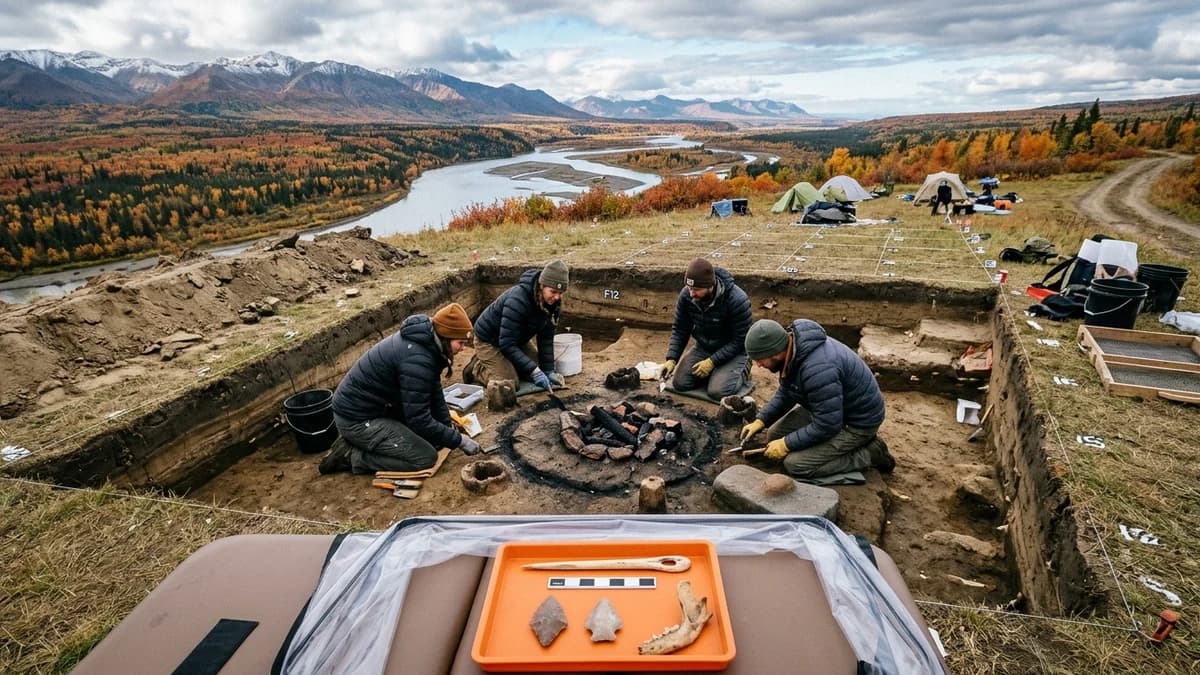
One of the most intensely debated enigmas in global prehistory has finally yielded definitive material proof. An international team of archaeologists led by Dr. Kelly E. Graf, professor of anthropology at the University of Kansas, has published in the esteemed scientific journal Science Advances the comprehensive documentation of the Shég′ Xdaltth′í′ archaeological site in interior Alaska. Radiocarbon dated to 13,800 calibrated years before present, the settlement preserves the oldest confirmed residential habitation structure in the Western Hemisphere, an engineered campfire hearth, more than 80,000 stone artifacts, the oldest eyed bone sewing needle in the Americas, and fossilized remains pointing to the pioneering presence of domesticated dogs at the dawn of the continent.
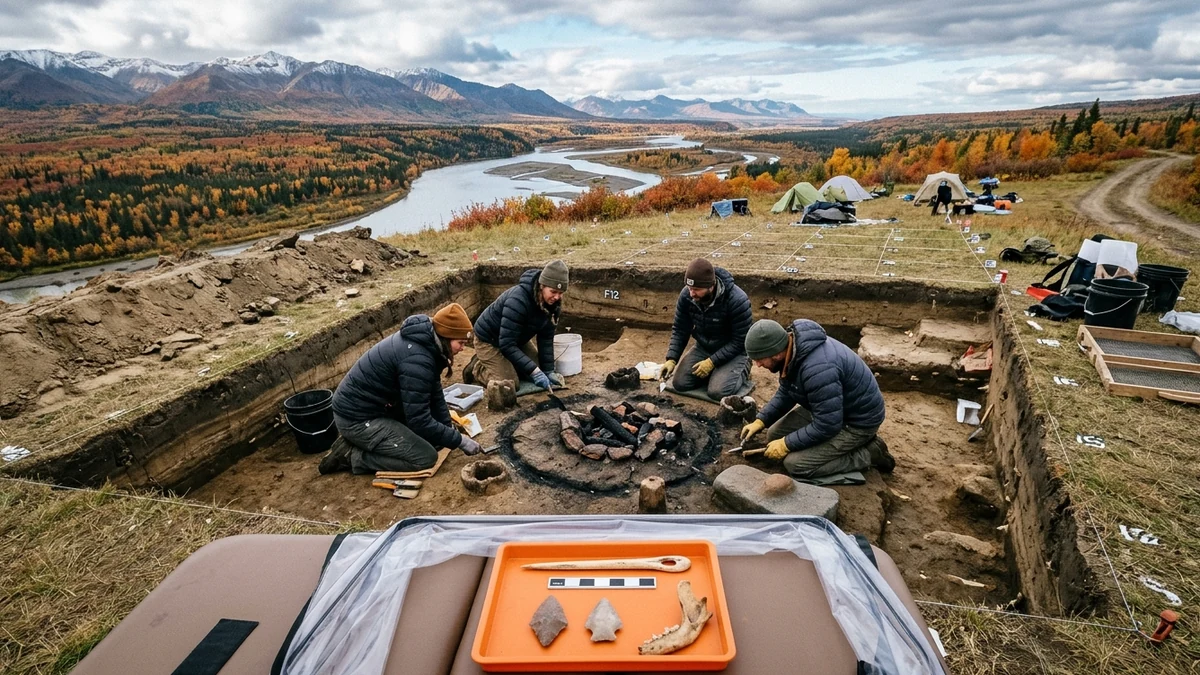
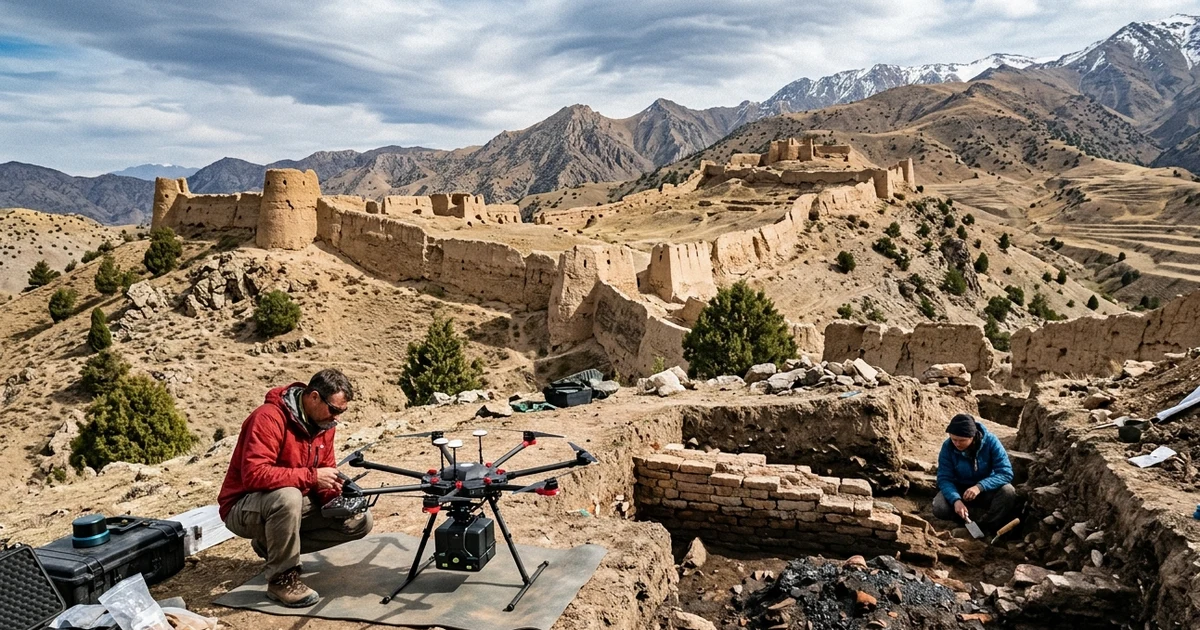
Scientific documentary recreation based on the study published in Science Advances by the University of Kansas: archaeologists excavate the 13,800-year-old living floor at Shég′ Xdaltth′í′, revealing the central hearth, eyed bone needles, and stone projectile points overlooking the Tanana River Valley. (Image: Mundo Incrível / High-Fidelity Artistic Illustration)
The Beringian Enigma and the Dawn of Polar Archaeology
For decades, standard models explaining the initial peopling of the Americas portrayed tiny, highly mobile hunter-gatherer bands rushing across the exposed Bering Land Bridge without settling into prolonged base camps. This view was largely driven by an archaeological record dominated by ephemeral hunting lookouts and temporary butchery stations linked to the Nenana and Denali complexes.
The Shég′ Xdaltth′í′ site, named in the Lower Tanana Athabascan language to mean "They Stayed There", overturned this paradigm by revealing an intensively utilized, deeply stratified domestic settlement. Positioned on an elevated bluffed terrace overlooking the Tanana River, southeast of modern Fairbanks, the camp granted ancient foragers commanding views of migrating game while shielding families from biting subpolar winds.