🌍 Your knowledge portal
Ciencia e Natureza

Preparations for the 2026 Total Solar Eclipse in Europe

📅 2026-08-06⏱️ 6 min read📝
Preparations for the 2026 Total Solar Eclipse in Europe
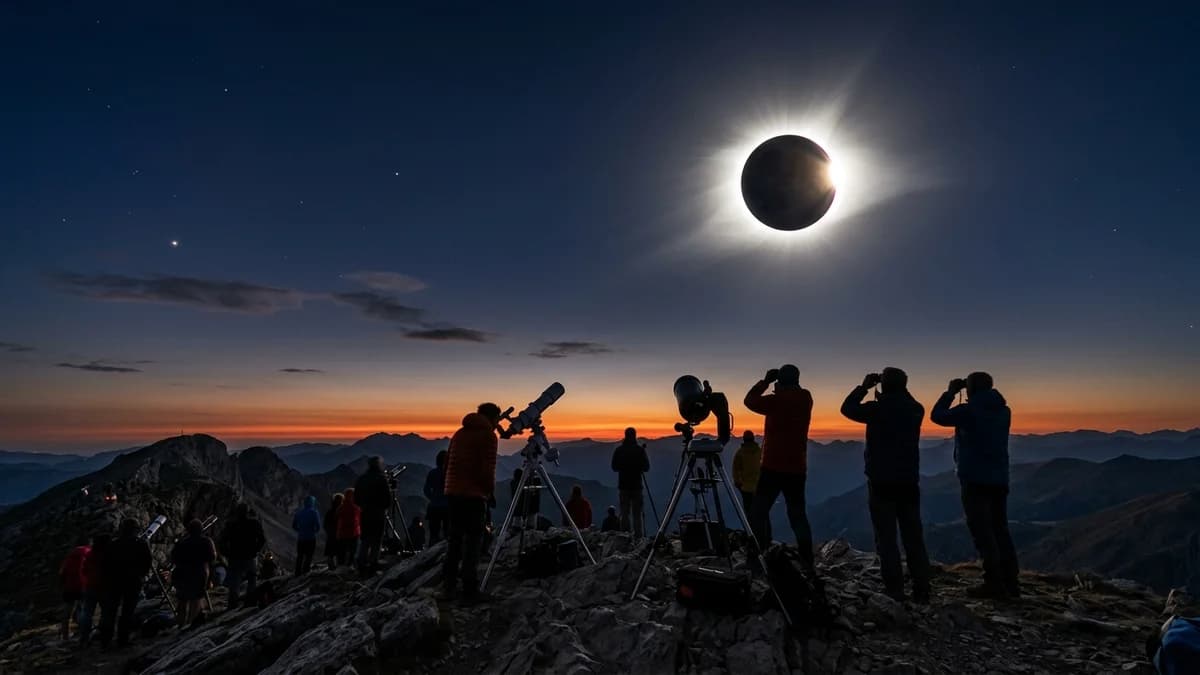
Preparations for the 2026 Total Solar Eclipse in Europe — High-Fidelity Artistic Illustration created by artificial intelligence based on scientific research.
⚡

Quick Summary

Scientists and astronomers worldwide mobilize infrastructure in Greenland and Spain for the major total solar eclipse on August 12, 2026. The great total solar eclipse of August 12, 2026, promises to be one of the most spectacular and important astronomical events of our entire decade in the Northern Hemisphere.

Key Takeaways:

  • The path of the lunar shadow will begin in northern Siberia, cross the deep Arctic Ocean, and advance southward, passing quickly through Greenland and Iceland.
  • The table below compares the main observation parameters in the three geographic regions that will host scientists from around the world.
  • In Greenland, the European Space Agency established a temporary scientific base in an extremely isolated fjord on the east coast of that frozen territory.

Preparations for the 2026 Total Solar Eclipse in Europe

Read Time: 12 minutes

The great total solar eclipse of August 12, 2026, promises to be one of the most spectacular and important astronomical events of our entire decade in the Northern Hemisphere. Scientists, experienced researchers, and amateur astronomers from all corners of the planet are already mobilizing to secure the best observation sites along the path of totality. The band of total darkness will pass mainly through Greenland, Iceland, and Spain, creating a unique opportunity to study the solar atmosphere with new optical instruments.

Logistical preparation for this unprecedented astronomical event began more than two years ago due to the geographic complexity of the selected observation areas. While Greenland offers a wild landscape with low light pollution, mainland Spain presents excellent urban infrastructure and easy access for the general public. Astronomers from renowned universities have already booked entire hotels and chartered special flights to transport tons of sensitive optical equipment and heavy telescopes.
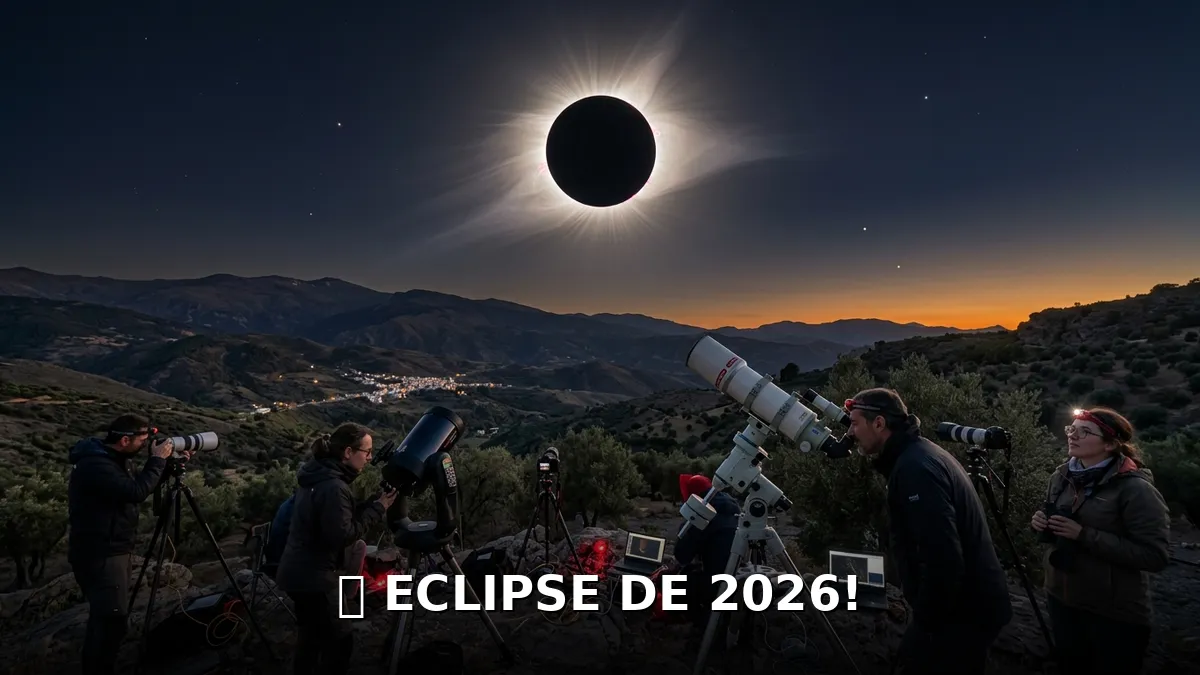
Scientists setting up advanced telescopes under the eclipse sky

The Path of Totality in 2026 #

The path of the lunar shadow will begin in northern Siberia, cross the deep Arctic Ocean, and advance southward, passing quickly through Greenland and Iceland. This northern trajectory offers quite pioneering and challenging observation conditions, where the Sun will be very low on the horizon during the peak moment of totality. Scientists stationed in Greenland will face glacial temperatures and biting winter winds, but the visual reward of recording the solar corona reflected in the Arctic ice is truly immeasurable.
Special lens heating equipment was developed specifically to prevent cameras from freezing during the crucial minutes of the celestial alignment. After leaving the frigid North Atlantic, the path of totality will touch northern Spain and cross the country toward the Mediterranean Sea in the late afternoon. This peculiar dynamic makes the Iberian Peninsula the favorite destination for most professional astrophotographers and university researchers from all over the world.

Historic Spanish cities like Burgos, León, and Zaragoza are located exactly under the central line of the lunar shadow, where total darkness will last nearly two full minutes. In Greenland, the Sun will be at only three degrees of altitude, which can cause severe visual distortions due to the thickness of the Earth's air layer. In central Spain, the solar altitude will vary between ten and fifteen degrees, offering a perfect balance between atmospheric stability and local photographic composition.

Eclipse Visibility Data by Region #

The table below compares the main observation parameters in the three geographic regions that will host scientists from around the world. The data is crucial for selecting the best installation sites for telescopes.

Observation Region Totality Duration Sun Altitude Expected Weather Conditions Transportation Logistics
East Coast (Greenland) 2m 05s 3° to 5° Extreme cold, strong winds Difficult (helicopter/boat only)
West Iceland 2m 10s 6° to 8° Frequent cloud cover, humidity Moderate (paved roads available)
North and Center (Spain) 1m 45s 10° to 15° Dry heat, generally clear skies Easy (airports and high-speed trains)

Scientific Mobilization in Spain and Greenland #

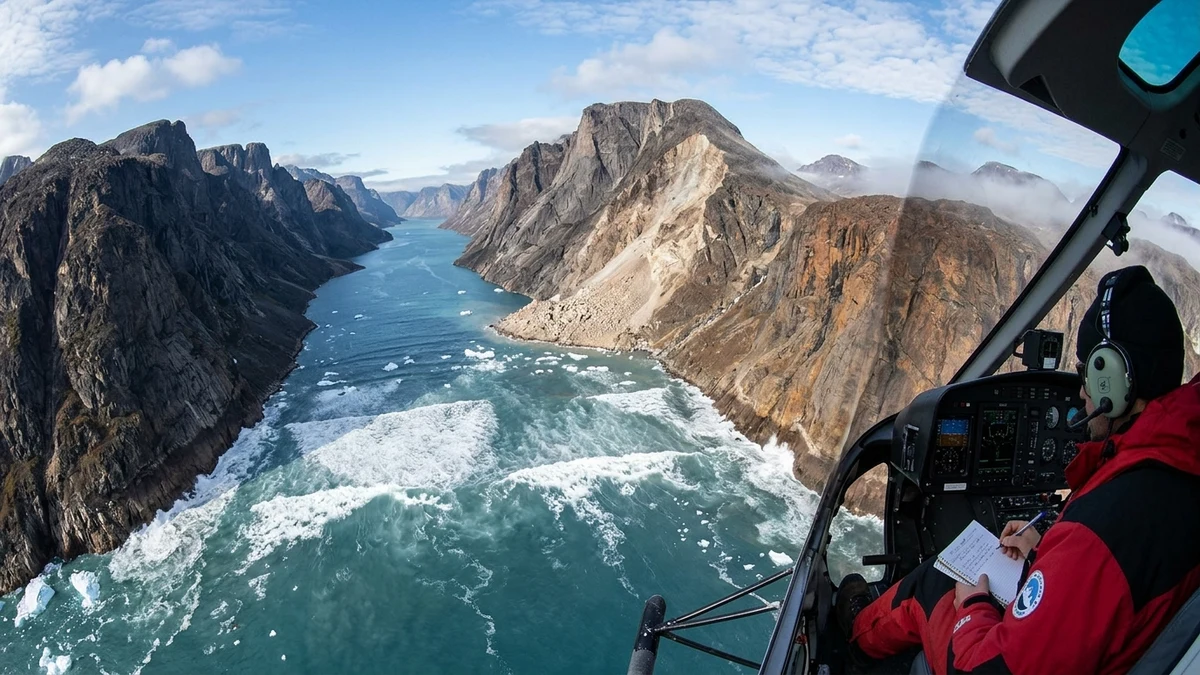
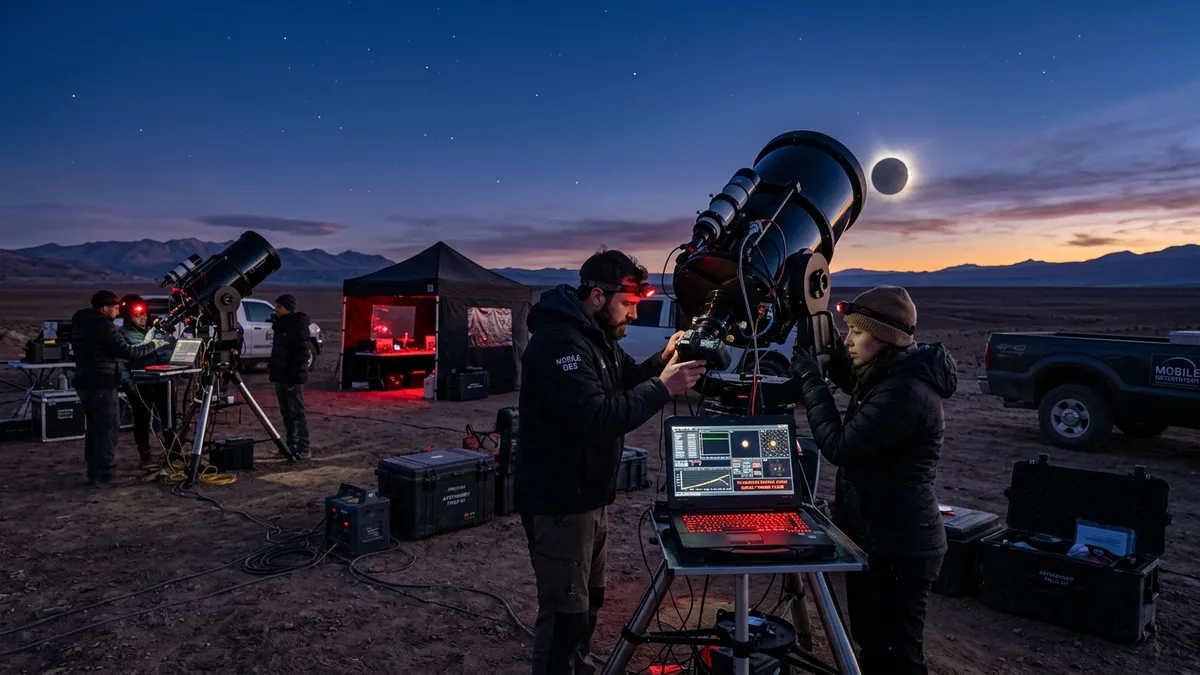
In Greenland, the European Space Agency established a temporary scientific base in an extremely isolated fjord on the east coast of that frozen territory. This research station has independent power generators and high-speed satellite internet to transmit the captured images in real time to partner universities. The researchers intend to focus on studying the internal solar magnetic field using new ultra-fast spectral polarization cameras developed specifically for this mission.

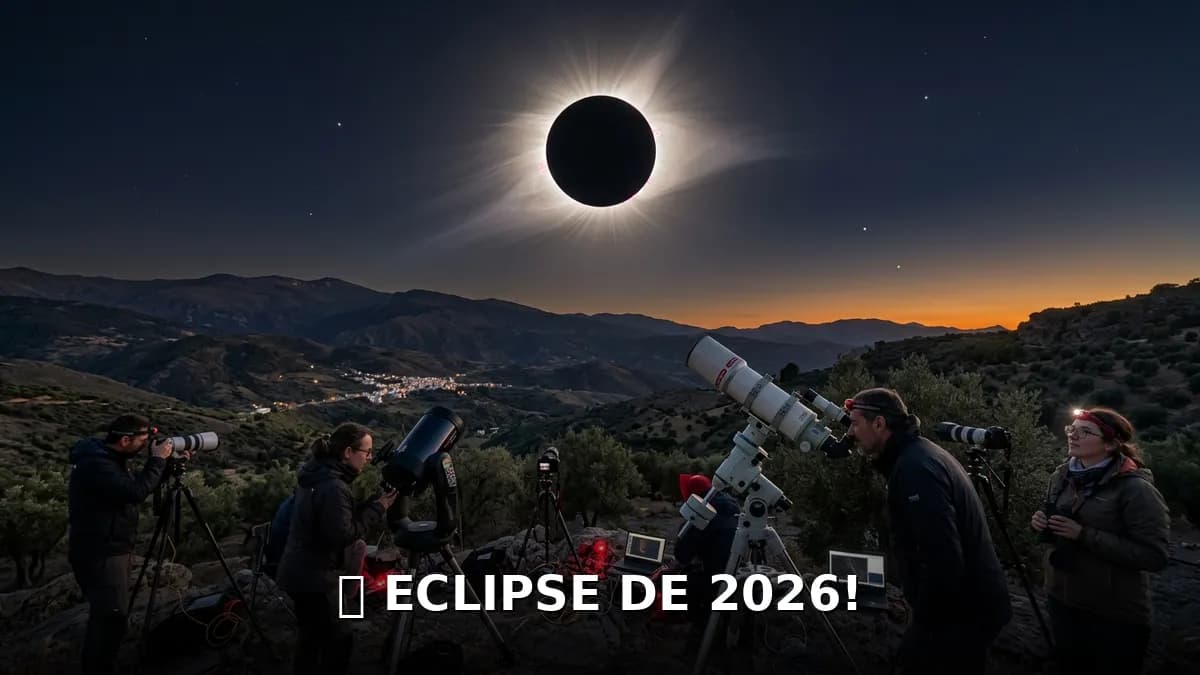
Mobile observatory calibrating telescopes in the Spanish desert

The climatic characteristics of the polar air, extremely dry and free of aerosols, guarantee an astronomical image quality rarely obtained at lower and populated latitudes. Meanwhile, in Spain, the national coordination of astronomy set up a network of thirty automated observation stations throughout the Iberian Peninsula. This automated network was strategically designed to minimize the risk of losing valuable data if passing clouds cover any specific region during the celestial totality.

Spanish scientists will work in close collaboration with teams from the National Solar Observatory of the United States to correlate all physical data obtained on the ground. In addition to official and government scientific research, hundreds of European universities are organizing citizen science projects with the active participation of high school students. Low-cost portable ultraviolet radiation sensors were distributed to dozens of public schools in the provinces that are under the path of totality.

Technologies and Proposed Studies #

One of the main technological innovations of this 2026 eclipse will be the experimental use of autonomous high-altitude drones equipped with electronically stabilized multispectral cameras. These specially designed drones will fly at twenty thousand meters of altitude, staying well above any low cloud or severe atmospheric turbulence of the Earth's troposphere. From this stratospheric and stable position, they will be able to film the outer solar corona without the classic interference of dust and urban light pollution.

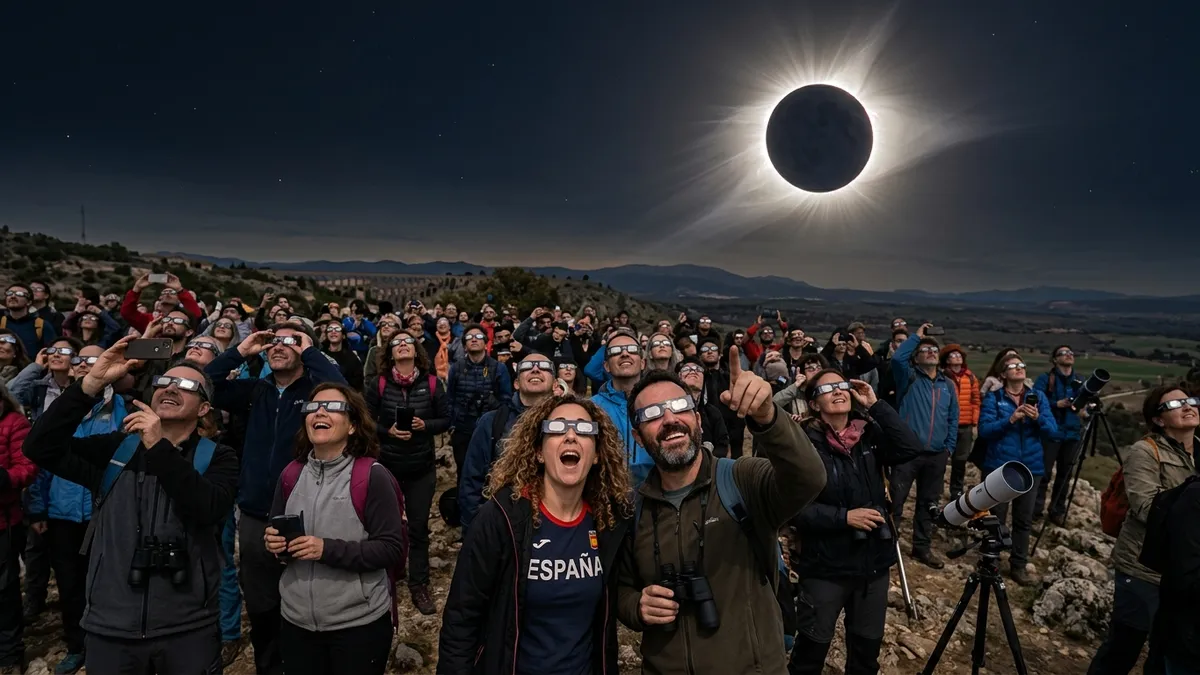
Crowd observing the solar eclipse in Spain

The video data transmitted in real time by the drones will finally help explain why the temperature of the solar corona is millions of degrees higher than the visible surface. Another highly innovative experiment will attempt to detect thermally induced gravity waves in the upper atmosphere using stratospheric weather balloons equipped with ultra-sensitive pressure sensors. The sudden cooling of the Earth's atmosphere caused by the fast lunar shadow creates a thermal shock wave that travels at supersonic speeds through the upper layers.

The diffraction grating spectrographs installed in Spain will be capable of analyzing the spectral line of highly ionized iron at rapid microsecond intervals. This detailed spectrographic analysis will reveal the complex dynamics of the solar magnetic loops that emerge from the photosphere and support the giant plasma prominences. Understanding these intricate magnetic processes is absolutely vital to improve our global forecasting systems for severe geomagnetic storms and coronal mass ejections.

Astronomical Tourism and Safety Challenges #

Astronomical tourism is expected to generate hundreds of millions of euros in the affected provinces and represents a monumental public safety challenge for local authorities. Estimates suggest that more than three million foreign visitors will travel to Spanish territory exclusively to witness the precious minutes of absolute totality. The Spanish National Police and the Civil Defense developed an integrated contingency plan to prevent severe traffic gridlock on the main federal highways.

Emergency field hospitals and drinking water distribution posts will be strategically set up along all highways with the highest flow of vehicles. Government authorities are also tirelessly warning the general population about the severe dangers of observing the Sun without internationally certified eye filters. Special eye filters made of black polymer are being distributed free of charge in hundreds of schools and community centers by municipal governments.

Massive advertising campaigns on public television and social media platforms teach the public how to safely build indirect solar projection boxes. Traditional hotels, rural guesthouses, and official campsites in the central provinces of Spain already report full occupancy more than six months before the event. Owners of large rural areas are renting private plots of land so that amateur astrophotographers can set up their camps and telescopes with solar batteries.

Conclusion #

The general mobilization for the great solar eclipse of 2026 reflects our relentless quest to decipher the deep mysteries that govern the physical behavior of stars. The data collected during this brief period of total darkness will be crucial to validate theoretical models of long-term stellar dynamics developed by universities. This international cooperation event demonstrates the strength of scientific unity between countries for the collective technological advancement of all humanity.

For readers interested in other recent and fascinating astronomical discoveries, it is well worth exploring the new scientific studies on advanced lunar seismography. Another indispensable reading refers to the recent detection of the wandering black hole that is generating intense academic debates about the propagation of gravitational waves in our galaxy. Both articles show that the frontier of human knowledge about the cosmos continues to expand in an impressive way every day.


Sources and References #

🏷️ Tags:

#2026solareclipse#totalsolareclipseSpain#solareclipseGreenland#astronomy#solarcorona#spacescience#Europeaneclipsetourism

📢 Gostou deste artigo?

Compartilhe com seus amigos e nos conte o que você achou nos comentários!

❓Frequently Asked Questions

The path of totality for this eclipse will cross remote regions of the Arctic Ocean, including the eastern coast of Greenland, western Iceland, and a large portion of Spanish territory. In each of these areas, scientists from various countries are setting up observation stations equipped with spectrographs to record the solar corona. It is crucial that enthusiasts plan their travel well in advance to secure spots in areas with clear sky forecasts.
This eclipse will be the first to cover continental Europe since 1999 and will provide crucial data on the magnetic structure of the lower solar corona. The solar corona is the outer layer of our star's atmosphere and presents thermal mysteries that continue to challenge modern astrophysicists. Thanks to the advanced technology available in 2026, researchers will be able to obtain high-resolution images using artificial intelligence applied to fast photometry.
Observers in Greenland will face extreme temperatures and a lack of basic urban infrastructure, which requires highly planned and self-sufficient expeditions. On the other hand, in Spain, the main concern is atmospheric instability in the late afternoon, which can cause local convective clouds. Both situations demand that scientific teams use mobile stations to quickly change positions if the weather conditions shift.

Receba novidades!

Cadastre seu email e receba as melhores curiosidades toda semana.

🔒 Sem spam. Cancele quando quiser.

💬 Comentários (0)

Seja o primeiro a comentar! 👋

📚Related Articles

200-Meter Greenland Megatsunami Vibrated Earth for 9 Days: Science Study Decodes Global EnigmaCiencia e Natureza

200-Meter Greenland Megatsunami Vibrated Earth for 9 Days: Science Study Decodes Global Enigma

Catastrophic mountain collapse in Dickson Fjord generated a 200-meter wave trapped in a seiche that shook the entire planet every 92 seconds for over a week.

⏱️9 minLer mais →
mRNA Cancer Vaccine: Trial Cuts Melanoma Recurrence by 42% in Phase 3Ciencia e Natureza

mRNA Cancer Vaccine: Trial Cuts Melanoma Recurrence by 42% in Phase 3

Phase 3 clinical trial results at the ESMO Congress reveal that the personalized mRNA-4157 vaccine prevents recurrence and metastasis in high-risk melanoma.

⏱️10 minLer mais →
James Webb Telescope Detects Merger of Supermassive Black Holes at Cosmic DawnCiencia e Natureza

James Webb Telescope Detects Merger of Supermassive Black Holes at Cosmic Dawn

Astronomers confirm the most distant collision between supermassive black holes in galaxy ZS7, unraveling the rapid growth of cosmic titans in the young universe.

⏱️6 minLer mais →
CERN NA62 Experiment Observes Ultra-Rare Kaon Decay and Opens New Window in PhysicsCiencia e Natureza

CERN NA62 Experiment Observes Ultra-Rare Kaon Decay and Opens New Window in Physics

Physicists at CERN achieve five-sigma statistical significance in measuring the rarest decay of the Standard Model, opening doors to physics beyond the known.

⏱️5 minLer mais →
James Webb Telescope Reveals Sand Clouds and Water Vapor on Exoplanet WASP-107bCiencia e Natureza

James Webb Telescope Reveals Sand Clouds and Water Vapor on Exoplanet WASP-107b

Spectroscopic observations from JWST unveil the atmospheric composition of WASP-107b, revealing silicate rain and sulfur dioxide on a low-density world.

⏱️5 minLer mais →
Astronomers Confirm Earth-Sized Exoplanet in Habitable Zone of Nearby StarCiencia e Natureza

Astronomers Confirm Earth-Sized Exoplanet in Habitable Zone of Nearby Star

International teams confirm the characteristics of Gliese 12 b, a temperate exoplanet 40 light-years away with potential for liquid water and atmosphere.

⏱️6 minLer mais →
Receba novidades no WhatsApp!