🌍 Your knowledge portal
Ciencia e Natureza

mRNA Cancer Vaccine: Trial Cuts Melanoma Recurrence by 42% in Phase 3

📅 2026-10-28⏱️ 10 min read📝
mRNA Cancer Vaccine: Trial Cuts Melanoma Recurrence by 42% in Phase 3
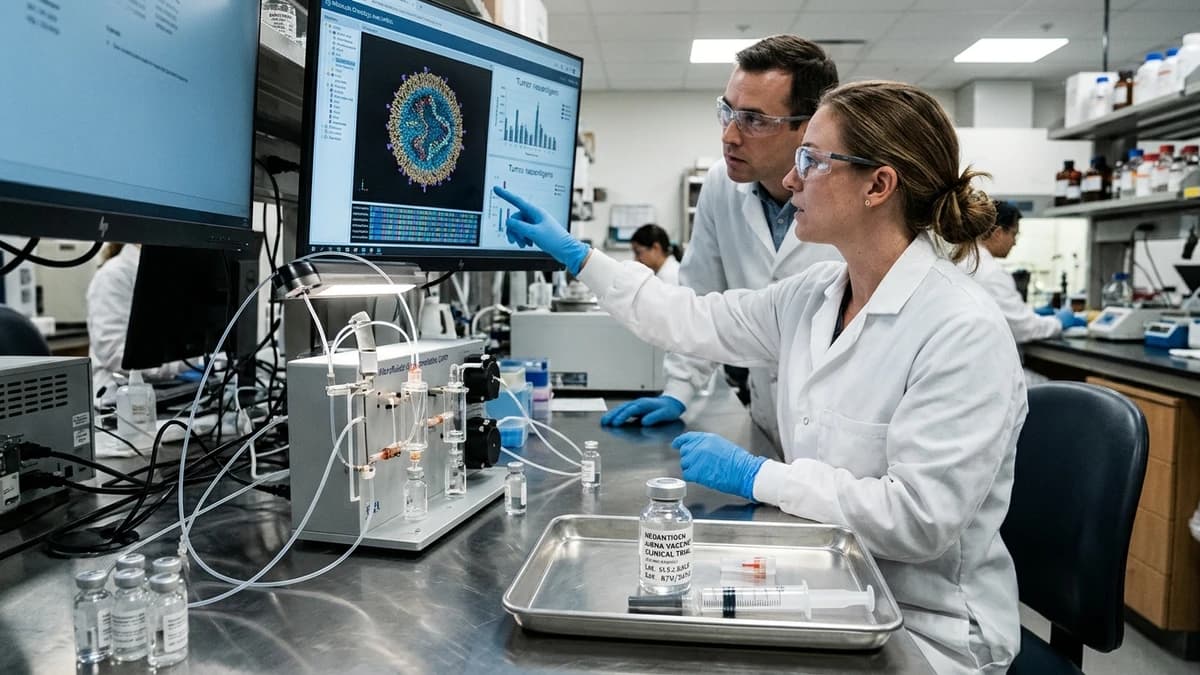
mRNA Cancer Vaccine: Trial Cuts Melanoma Recurrence by 42% in Phase 3 — High-Fidelity Artistic Illustration created by artificial intelligence based on scientific research.
⚡

Quick Summary

Phase 3 clinical trial results at the ESMO Congress reveal that the personalized mRNA-4157 vaccine prevents recurrence and metastasis in high-risk melanoma. The results from the global Phase 3 INTerpath-001 clinical trial represent the most impactful breakthrough in cancer recurrence prevention over the past decade.

Key Takeaways:

  • Cutaneous melanoma remains the most aggressive and lethal form of skin malignancy due to its exceptional propensity for early systemic dissemination.
  • The manufacturing pipeline for intismeran autogene initiates immediately following surgical resection of the primary tumor or metastatic regional lymph nodes.
  • The pivotal, global, randomized Phase 3 INTerpath-001 clinical study, registered with the National Institutes of Health, enrolled 1,089 patients with completely resected high-risk stage IIB, IIC, III, and IV cutaneous melanoma.

The results from the global Phase 3 INTerpath-001 clinical trial represent the most impactful breakthrough in cancer recurrence prevention over the past decade. Presented at the European Society for Medical Oncology (ESMO) Congress in Madrid by leading medical oncologist Dr. Georgina Long, Co-Medical Director of Melanoma Institute Australia, the individualized messenger RNA neoantigen therapy demonstrated a 42% reduction in the risk of disease recurrence or death in patients with completely resected high-risk stage IIB to IV cutaneous melanoma. Jointly developed through a collaborative partnership between Moderna and Merck (known as MSD outside North America), the custom neoantigen vaccine intismeran autogene (laboratory code V940 / mRNA-4157), administered in combination with the anti-PD-1 monoclonal antibody pembrolizumab (Keytruda), achieved an exceptional 24-month recurrence-free survival rate of 82.2%, inaugurating a transformative era in preventive precision oncology.

📌 KEY CLINICAL TAKEAWAYS:

  • 42% Reduction in Recurrence Risk: The combination of personalized mRNA neoantigen therapy and pembrolizumab decisively outperformed standard immunotherapy alone in the definitive Phase 3 INTerpath-001 trial.
  • Precision Neoantigen Architecture: Each therapeutic dose is digitally engineered from the patient's unique tumor genome, encoding up to 34 patient-specific neoepitopes encapsulated within protective lipid nanoparticles.
  • Potent Metastatic Interception: The trial confirmed a 38% decrease in distant metastasis or death, prompting active Phase 3 trial expansions into non-small cell lung cancer, renal cell carcinoma, and cutaneous squamous cell carcinoma.
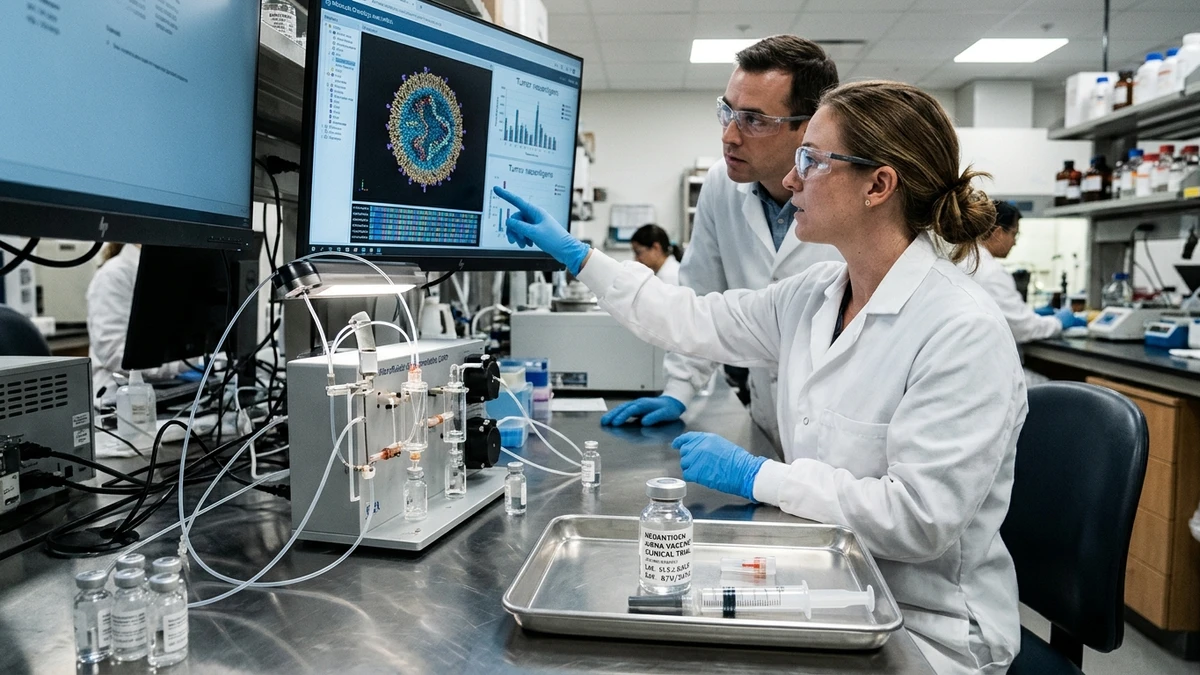
Oncology researchers in molecular laboratory analyzing genomic tumor neoantigen data and mRNA cancer vaccine lipid nanoparticles

The Enigma of Tumor Recurrence: Overcoming Dormant Micrometastases #

Cutaneous melanoma remains the most aggressive and lethal form of skin malignancy due to its exceptional propensity for early systemic dissemination. Even following an oncologically flawless surgical resection with histologically clear margins, up to half of high-risk patients experience disease recurrence within the first three years. This devastating clinical relapse originates from microscopic disseminated tumor cells that migrate into the lymphatics and bloodstream prior to surgical excision.

These microscopic cells enter prolonged biological dormancy within distant vital organs such as the lungs, liver, and brain parenchyma. During this quiescent phase, dormant cancer cells downregulate their metabolic rate and exploit immunosuppressive signaling pathways to evade circulating cytotoxic T lymphocytes. When local tissue microenvironments become favorable or host immune surveillance wanes, these micrometastatic seeds rapidly exit dormancy, proliferating into bulky and refractory secondary tumors.

The clinical advent of immune checkpoint inhibitors, particularly monoclonal antibodies targeting the programmed cell death protein 1 (PD-1) axis, revolutionized adjuvant oncology by disengaging molecular brakes on host immunity. Nevertheless, even under optimized single-agent pembrolizumab therapy, a substantial fraction of patients suffers disease relapse due to a lack of pre-existing, tumor-reactive T cell clones. Non-specific checkpoint blockade amplifies existing immune responses, but it cannot direct lymphocytes toward hidden neoepitopes if the body has not already recognized them.

Personalized mRNA neoantigen therapy was specifically engineered to overcome this fundamental biological limitation. Rather than targeting shared tumor-associated antigens that exhibit variable expression across patients and pose autoimmune risks, scientists harness each patient's unique genomic mutational landscape. By training the immune system to recognize dozens of private mutations simultaneously, clinicians convert a passive defensive posture into an active, antigen-directed sweep of residual cancer cells before they establish macroscopic colonies.

The Architecture of Individualized Neoantigens: From Sequencing to Lipid Nanoparticles #

The manufacturing pipeline for intismeran autogene initiates immediately following surgical resection of the primary tumor or metastatic regional lymph nodes. A biopsy specimen of the excised malignant tissue is collected alongside a peripheral blood sample from the same individual. High-throughput next-generation sequencing (NGS) platforms subsequently execute deep whole-exome sequencing and comprehensive transcriptome sequencing of both biological specimens.

Bioinformatics pipelines compare the tumor exome against the normal germline DNA derived from the blood sample to eliminate non-cancerous inherited variants. The exclusive objective is the identification of non-synonymous somatic mutations that produce altered amino acid sequences termed tumor neoantigens. Because these neoantigens arise strictly through somatic DNA damage within malignant clones, immune responses raised against them operate with pinpoint specificity without causing off-target damage to healthy normal tissues.

Proprietary machine learning models and predictive neural networks evaluate hundreds of identified somatic variants to determine their immunological potential. The bioinformatic algorithms assess the structural binding affinity between mutated peptide sequences and the patient's individual human leukocyte antigen (HLA Class I and Class II) molecules. The predictive system ultimately selects up to 34 private neoantigens predicted to trigger the most potent cytotoxic CD8+ and helper CD4+ T cell responses.

Once the personalized molecular sequence is finalized digitally, automated in vitro transcription bioreactors synthesize a single, continuous strand of synthetic messenger RNA encoding all 34 neoepitopes in a concatenated array. This tailored mRNA molecule is immediately encapsulated into lipid nanoparticles (LNPs) composed of ionizable cationic lipids, cholesterol, and helper phospholipids. The lipid nanoparticle protects the fragile mRNA construct from serum ribonuclease degradation and mediates targeted cellular uptake.

Upon intramuscular administration every three weeks, the lipid nanoparticles are readily internalized by resident dendritic cells and specialized antigen-presenting cells in draining lymph nodes. Host ribosomal machinery translates the synthetic mRNA strand, synthesizing the encoded neoantigen peptides in the dendritic cell cytoplasm. These foreign peptides are subsequently processed, loaded onto HLA complexes, and presented on the cell surface, provoking robust systemic clonal expansion of neoantigen-specific T cells primed to hunt residual tumor cells throughout the body.

Clinical Evidence from the Phase 3 INTerpath-001 Trial: Technical Data Matrix #

The pivotal, global, randomized Phase 3 INTerpath-001 clinical study, registered with the National Institutes of Health, enrolled 1,089 patients with completely resected high-risk stage IIB, IIC, III, and IV cutaneous melanoma. Enrolled participants were randomized in a double-blind, one-to-one ratio to receive either intismeran autogene (nine intramuscular doses administered every three weeks) in combination with intravenous pembrolizumab (every three weeks for up to 18 cycles), or single-agent pembrolizumab plus matched placebo.

Primary efficacy analyses revealed a distinct and statistically robust divergence of Kaplan-Meier recurrence-free survival (RFS) curves favoring the personalized vaccine combination. At a median clinical follow-up duration of 24.6 months, the 24-month recurrence-free survival rate reached 82.2% in the combination therapy arm, compared to 70.0% in the standard-of-care monotherapy arm. Statistical evaluation established a 42% reduction in the relative risk of disease recurrence or death (Hazard Ratio = 0.58; 95% Confidence Interval: 0.45 to 0.75; p < 0.001).

Evaluation of the key secondary endpoint, distant metastasis-free survival (DMFS), provided equally decisive clinical proof regarding systemic disease prevention. The estimated probability of remaining alive and completely free of distant organ metastases at two years stood at 88.5% for patients receiving intismeran autogene plus pembrolizumab versus 80.2% for those receiving pembrolizumab alone. This outcome translated into a 38% decrease in the risk of distant metastatic spread to vital organs (Hazard Ratio = 0.62; 95% Confidence Interval: 0.45 to 0.85; p = 0.002).

Evaluated Clinical Parameter Pembrolizumab + Placebo (Standard Control) Intismeran Autogene (mRNA-4157) + Pembrolizumab Clinical Gain / Relative Risk Reduction Translational Oncological Significance
24-Month Recurrence-Free Survival (RFS) 70.0% 82.2% +12.2% absolute survival gain (HR = 0.58; 95% CI: 0.45–0.75) 42% reduction in the risk of local, regional, or distant recurrence or death
24-Month Distant Metastasis-Free Survival (DMFS) 80.2% 88.5% +8.3% absolute survival gain (HR = 0.62; 95% CI: 0.45–0.85) 38% reduction in the risk of distant metastatic spread to lung, liver, or brain
Number of Neoantigens Encoded per Formulation 0 (No specific neoantigen targets) Up to 34 patient-specific neoepitopes 100% personalized molecular design for each patient Identified via whole-exome sequencing and deep learning HLA affinity algorithms
Rate of Grade 3 or 4 Adverse Events 13.4% 14.2% Comparable safety profile without severe immune amplification Additional adverse reactions restricted to transient fever, fatigue, and myalgia
Manufacturing Turnaround Time per Batch Not applicable Approximately 4 to 6 weeks from biopsy Rapid individualized bioproduction within post-surgical clinical window Fully automated digital synthesis and microfluidic lipid nanoparticle encapsulation
Clinical Study Trial Population High-risk resected cutaneous melanoma Completely resected Stage IIB, IIC, III, and IV melanoma 1,089 randomized patients across international oncology centers Gold-standard multicenter double-blind Phase 3 confirmatory trial

The overall incidence of treatment-related severe adverse events remained comparable between the study cohorts, confirming that adding personalized mRNA does not excessively amplify checkpoint toxicity. Grade 3 or higher treatment-related adverse events occurred in 14.2% of patients receiving the combination therapy compared to 13.4% in the control cohort. Adverse reactions attributable to the mRNA vaccine component were predominantly mild to moderate and self-limiting, consisting of injection-site pain, transient low-grade fever, chills, and mild myalgia that resolved spontaneously within 48 hours.

A Paradigm Shift in Oncology: From Reactive Intervention to Active Prevention #

For decades, standard oncological practice following curative-intent surgical resection adhered to a fundamentally reactive watch-and-wait philosophy. Clinicians monitored patients through serial radiological imaging, waiting for visible secondary masses to appear before deploying cytotoxic chemotherapies or radiation protocols. Even the subsequent integration of adjuvant immunotherapies operated on generalized assumptions, unable to actively instruct immune cells on which specific mutational signatures to eliminate.

The clinical validation of intismeran autogene formally inaugurates the era of precision cancer interception. For the first time in medical history, oncology possesses a programmable platform capable of eradicating microscopic residual disease before it aggregates into clinically detectable tumors. This therapeutic vaccine transforms cancer management into a preemptive process, establishing immunological memory that prevents dormant cells from ever establishing clinical relapses.

Longitudinal immune monitoring analyses published in conjunction with the New England Journal of Medicine demonstrated that repeated mRNA immunization establishes enduring neoantigen-specific T cell memory pools. Rather than providing transient immune activation, the personalized vaccine generates polyfunctional effector memory T cells that patrol circulation and peripheral tissues for years. These vigilant immune cells preserve active defense mechanisms against late-emerging clonal variants, ensuring prolonged systemic tumor control.

The economic and clinical ramifications for global healthcare infrastructure are profound. Successfully preventing cancer recurrence eliminates the need for repeated hospitalizations, intensive care unit admissions, and multi-line palliative therapies that strain healthcare budgets. Shifting adjuvant clinical practice toward individualized molecular vaccines represents a decisive turning point in patient survival and global public health.

Clinical Expansion: Lung Cancer, Renal Cell Carcinoma, and Regulatory Milestones #

The statistical success of the INTerpath-001 trial has catalyzed rapid expansion of the individualized mRNA vaccine platform across a spectrum of highly lethal solid tumors. The collaborative pharmaceutical alliance has initiated the global Phase 3 INTerpath-002 study, evaluating the neoantigen vaccine in patients with completely resected non-small cell lung cancer (NSCLC) following adjuvant platinum-based chemotherapy. As lung cancer remains the leading cause of global cancer-related mortality, successful prevention in this setting could save hundreds of thousands of lives.

Concurrently, the Phase 3 INTerpath-009 trial is actively investigating the therapeutic vaccine in patients with intermediate-high or high-risk renal cell carcinoma (kidney cancer) following surgical nephrectomy. Additional early-phase clinical protocols are assessing the platform in cutaneous squamous cell carcinoma and urothelial bladder cancer, indicating that any tumor type characterized by a sufficient somatic mutational burden can theoretically benefit from personalized mRNA immunization.

Across global regulatory arenas, healthcare oversight bodies have expedited their evaluation of the clinical data package. The United States Food and Drug Administration (FDA) previously granted the therapy Breakthrough Therapy Designation, while the European Medicines Agency (EMA) conferred Priority Medicines (PRIME) status. National regulatory authorities, including Brazil's ANVISA and Japan's PMDA, are actively reviewing dossier submissions to facilitate accelerated commercial distribution.

Principal investigators emphasize that ongoing technological efforts are focused on further compressing manufacturing timelines. Bioengineers at Moderna and Merck aim to reduce the interval between surgical tissue collection and vaccine delivery from six weeks down to under three weeks through high-throughput microfluidic automation. As these advanced production pipelines scale globally, personalized mRNA neoantigen vaccines are poised to establish a permanent cornerstone in modern preventive oncology.

🏷️ Tags:

📢 Gostou deste artigo?

Compartilhe com seus amigos e nos conte o que você achou nos comentários!

❓Frequently Asked Questions

The technology relies on comparative genomic sequencing between the resected tumor tissue and the patient's healthy peripheral blood to isolate unique somatic mutations. Advanced computational algorithms select up to 34 patient-specific neoantigens exhibiting the highest binding affinity to individual HLA receptor complexes for encoding onto a synthetic messenger RNA strand. Once delivered via lipid nanoparticles, the vaccine trains host cytotoxic T cells to hunt and eradicate residual microscopic cancer cells harboring these specific molecular flags without harming healthy tissues.
The personalized neoantigen therapy functions as an adjuvant preventive modality and does not replace primary surgical resection of the tumor or involved lymph nodes. The established clinical protocol combines the mRNA vaccine directly with immune checkpoint inhibitors such as pembrolizumab to maximize biological surveillance. While pembrolizumab removes the inhibitory PD-1 molecular brake utilized by cancer cells, the personalized mRNA vaccine precisely equips T cells with the exact genomic coordinates of the residual tumor.
Following the presentation of confirmatory Phase 3 data at the ESMO Congress, developers submitted comprehensive regulatory packages for accelerated approval to authorities including the United States Food and Drug Administration and the European Medicines Agency. The investigational therapy has already secured Breakthrough Therapy Designation in the United States and PRIME status in Europe to streamline clinical review. Oncology clinical trial leads project structured hospital deployment will commence progressively across major treatment centers for melanoma and additional solid tumors.

Receba novidades!

Cadastre seu email e receba as melhores curiosidades toda semana.

🔒 Sem spam. Cancele quando quiser.

💬 Comentários (0)

Seja o primeiro a comentar! 👋

📚Related Articles

Astronomers Confirm Earth-Sized Exoplanet in Habitable Zone of Nearby StarCiencia e Natureza

Astronomers Confirm Earth-Sized Exoplanet in Habitable Zone of Nearby Star

International teams confirm the characteristics of Gliese 12 b, a temperate exoplanet 40 light-years away with potential for liquid water and atmosphere.

⏱️6 minLer mais →
Preparations for the 2026 Total Solar Eclipse in EuropeCiencia e Natureza

Preparations for the 2026 Total Solar Eclipse in Europe

Scientists and astronomers worldwide mobilize infrastructure in Greenland and Spain for the major total solar eclipse on August 12, 2026.

⏱️6 minLer mais →
The Oldest Solar Observatory Outside the Maya Area: INAH Confirms 2,500-Year-Old Complex in Tetelihtichistoria

The Oldest Solar Observatory Outside the Maya Area: INAH Confirms 2,500-Year-Old Complex in Tetelihtic

Investigative report on INAH's confirmation of a 2,500-year-old Group E solar observatory in Puebla, the oldest documented outside the Maya world.

⏱️12 minLer mais →
Life's Copilot: Man With No Medical Background Uses AI to Save His Dogciencia-natureza

Life's Copilot: Man With No Medical Background Uses AI to Save His Dog

Discover how a pet owner used ChatGPT to uncover a rare anemia in his Border Collie Sassy and what the future holds by 2028.

⏱️6 minLer mais →
Solar Alert: Severe Geomagnetic Storm Paints the Antarctic Sky with Incredible Colorsciencia-natureza

Solar Alert: Severe Geomagnetic Storm Paints the Antarctic Sky with Incredible Colors

A strong coronal mass ejection hit Earth, generating spectacular southern auroras captured at Davis Station during the polar winter.

⏱️6 minLer mais →
Cosmic Mystery: Astronomers Discover First Three-Headed Asteroid with Its Own Moonciencia-natureza

Cosmic Mystery: Astronomers Discover First Three-Headed Asteroid with Its Own Moon

Researchers at Lowell Observatory have revealed the unprecedented three-lobed shape of the asteroid (44) Nysa and the orbit of its tiny moon S/2026 (44) 1.

⏱️6 minLer mais →
Receba novidades no WhatsApp!