🌍 Your knowledge portal
Ciencia e Natureza

Astronomers Confirm Earth-Sized Exoplanet in Habitable Zone of Nearby Star

📅 2026-09-07⏱️ 6 min read📝
⚡

Quick Summary

International teams confirm the characteristics of Gliese 12 b, a temperate exoplanet 40 light-years away with potential for liquid water and atmosphere. An international team of astrophysicists has confirmed the detailed characterization of one of the most fascinating exoplanets discovered in recent years.

Key Takeaways:

  • Initial detection carried out by NASA's TESS satellite was complemented by precise measurements from the infrared spectrometer on the Subaru Telescope.
  • For a planet to harbor liquid water on its surface, it must receive the appropriate amount of radiation from its parent star.
  • Astrophysicists consider Gliese 12 b an ideal candidate for studying the evolutionary divergence between rocky worlds in the universe.
Astronomers Confirm Earth-Sized Exoplanet in Habitable Zone of Nearby Star
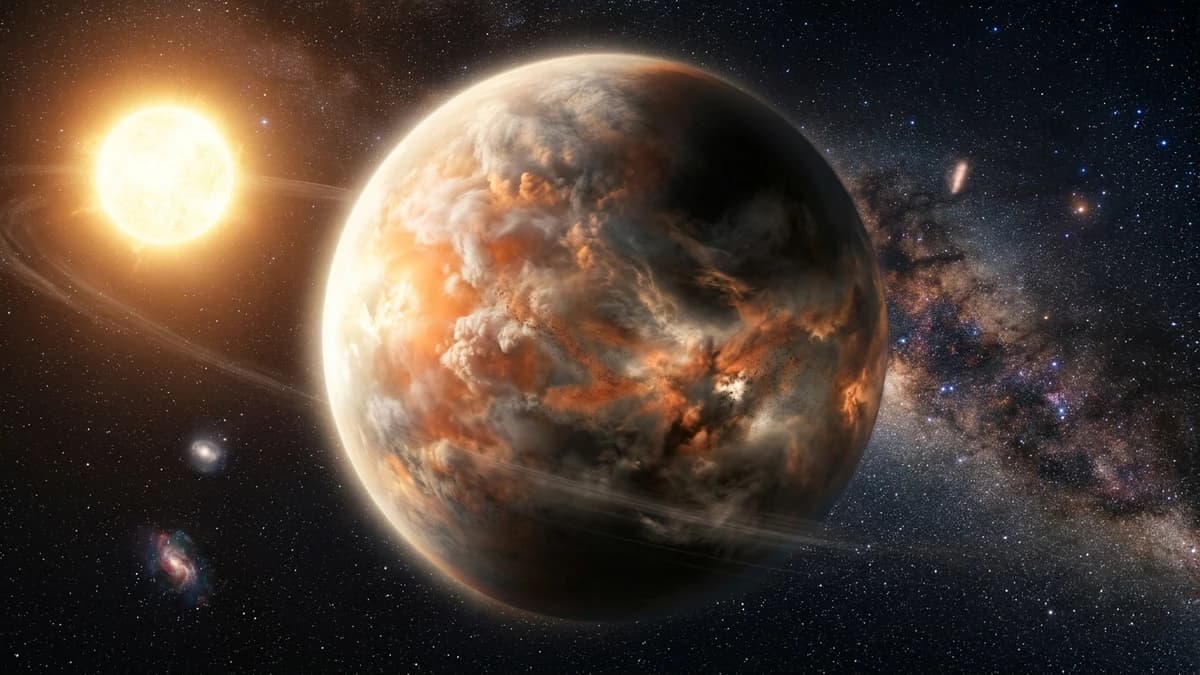
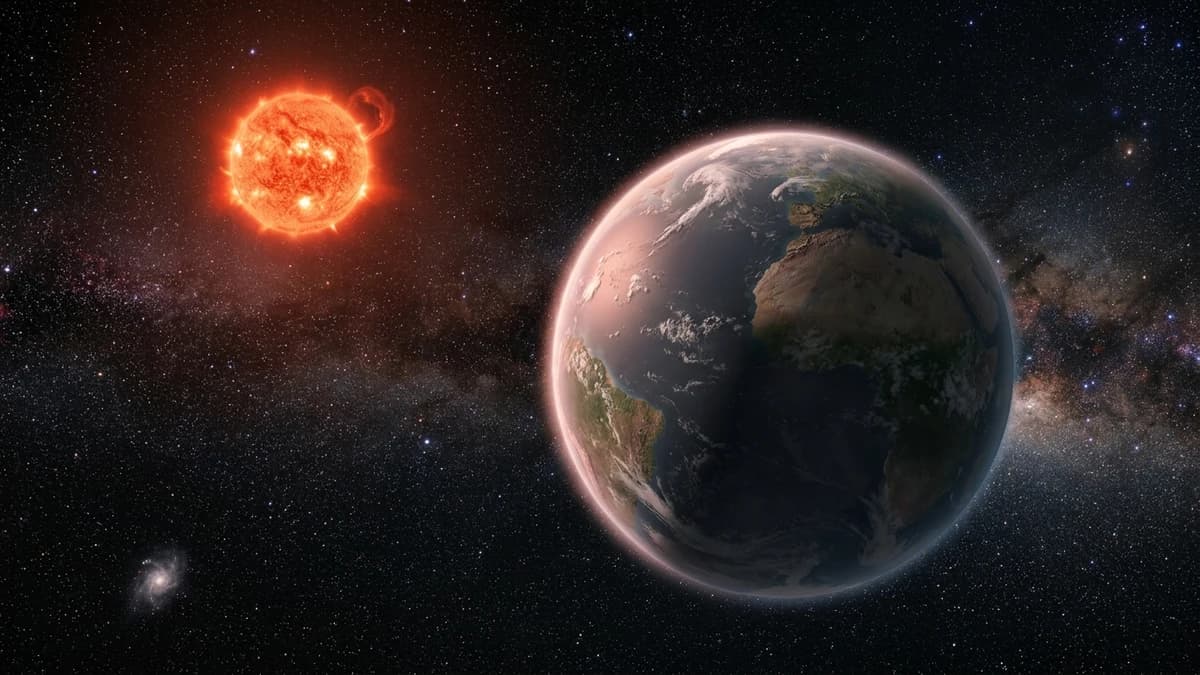
Astronomers Confirm Earth-Sized Exoplanet in Habitable Zone of Nearby Star — High-Fidelity Artistic Illustration created by artificial intelligence based on scientific research.

Discovery of a Temperate World 40 Light-Years Away #

An international team of astrophysicists has confirmed the detailed characterization of one of the most fascinating exoplanets discovered in recent years. Named Gliese 12 b, the alien world possesses a diameter equivalent to ninety-six percent of Earth's size. It orbits a red dwarf star located in the constellation Pisces, relatively close to our solar system.

Initial detection carried out by NASA's TESS satellite was complemented by precise measurements from the infrared spectrometer on the Subaru Telescope. The gathered data indicates that the planet completes one orbit around its star every twelve and a half days. This extremely compact orbit reflects the lower mass and lower luminosity of the host star.

The most exciting factor for the scientific community is the planet's estimated equilibrium temperature, calculated at approximately forty-two degrees Celsius. This moderate thermal condition positions Gliese 12 b as the nearest transiting Earth-sized temperate world located to date. This discovery sets unprecedented precedents for the direct study of atmospheres on rocky extrasolar worlds.

+------------------------------------+----------------------------------+------------------------------------+
| Astrophysical Parameter            | Exoplanet Gliese 12 b            | Planet Earth (Reference)           |
+------------------------------------+----------------------------------+------------------------------------+
| Relative Radius                    | 0.96 Earth Radius (96%)          | 1.00 Earth Radius (100%)           |
| Orbital Period                     | 12.8 Earth Days                  | 365.25 Earth Days                  |
| Host Star                          | M-type Red Dwarf (Gliese 12)     | G-type Yellow Dwarf (Sun)          |
| Distance from Earth                | 40 Light-Years (12 Parsecs)      | 0 Light-Years                      |
| Equilibrium Temperature            | ~42 °C (315 Kelvin)              | ~15 °C (Global Average)            |
+------------------------------------+----------------------------------+------------------------------------+

The Importance of the Habitable Zone and Stellar Stability #

For a planet to harbor liquid water on its surface, it must receive the appropriate amount of radiation from its parent star. Although Gliese 12 b orbits much closer to its star than Earth orbits the Sun, the lower temperature of the red dwarf compensates for this proximity. The resulting energy balance creates an environment theoretically compatible with liquid oceans.

Red dwarf stars frequently exhibit intense magnetic storms and X-ray flares that can erode planetary atmospheres within short cosmic timescales. However, observations published in Nature Astronomy demonstrate that the star Gliese 12 is extraordinarily inactive and calm. It exhibits remarkably low levels of chromospherical activity compared to other known red dwarfs.

This stellar stability significantly increases the chances that the planet has preserved its gaseous envelope over billions of years. Without devastating stellar winds, the retention of volatile compounds becomes viable to support a stable climate. Astrophysicists celebrate the rarity of finding such a quiet and accessible system for continuous observations.

Comparison with Venus and the Mystery of Atmospheric Evolution #

Astrophysicists consider Gliese 12 b an ideal candidate for studying the evolutionary divergence between rocky worlds in the universe. In our own solar neighborhood, Earth and Venus possess similar masses but evolved into radically opposite environments over time. Understanding the tipping point between habitability and runaway greenhouse effect is one of astrobiology's ultimate goals.

While Earth developed a mild climate and abundant oceans, Venus transformed into a furnace beneath a dense blanket of carbon dioxide. Gliese 12 b receives about one and a half times more radiation from its star than Earth receives from the Sun. This places it precisely on the boundary between the climatic parameters of Earth and Venus.

Scientific investigations seek to determine whether the planet retained primordial oceans or suffered an irreversible loss of water through atmospheric escape. Understanding this dynamics will help refine the definition of habitability in extrasolar systems across the galaxy. Technical progress directly complements recent investigations into the atmosphere detected on exoplanet LHS 1140b and other gaseous signatures.

Spectroscopic Analysis with the James Webb Space Telescope #

The proximity of forty light-years makes Gliese 12 b a top-priority target for transmission spectroscopy observations with the James Webb Space Telescope. When the planet transits in front of its star, starlight filters through the atmospheric gases. This process generates characteristic absorption lines that reveal atmospheric chemistry.

Researchers affiliated with the Royal Astronomical Society are preparing observation proposals to trace primordial elements. Measurements will focus on searching for water vapor, carbon dioxide, methane, and nitrogen in the upper atmosphere. Detecting these molecules will indicate whether the planet holds a retained atmosphere with biological potential.

If the presence of a thick atmosphere is confirmed, climate models can simulate the planet's actual surface conditions. Conversely, the absence of a dense atomic signal would indicate an airless world or one shrouded in high clouds of refractory aerosols. Regardless of the outcome, findings will redefine our view of rocky planets around red dwarfs.

High-Precision Detection Methods and Spectrometry #

Confirming the mass and density of Gliese 12 b required years of calibration at leading ground-based observatories across the globe. Instruments such as the CARMENES spectrograph in Spain and IRD in Japan measured tiny variations in the star's radial velocity. These gravitational wobbles reveal the gravitational pull exerted by the planet during its orbit.

These subtle wobbles allowed scientists to impose strict constraints on the exoplanet's mass, confirming its predominantly rocky and metallic composition. Combining the radial velocity method with the transit method yields the mean density needed to rule out inflated gas worlds. This precision is essential to ensure that the planet is truly a terrestrial analogue.

Furthermore, statistical modeling eliminated false positives caused by starspots or chromospheric activity from the host star. Data accuracy reflects the maturation of modern astrometry techniques applied to mapping our galactic neighborhood. The astronomical community now possesses robust tools to validate rocky exoplanets without ambiguity.

Internal Geological Structure and Plate Tectonics Dynamics #

The calculated density of Gliese 12 b suggests an internal structure composed of an iron-nickel metallic core surrounded by a silicate mantle. In Earth-sized planets, residual internal heat can drive volcanism and plate tectonics. These geological processes are crucial for carbon recycling and maintaining a stable atmosphere over billions of years.

Without tectonic activity, a planet risks losing its magnetic field and suffering rapid core cooling. Scientists use thermodynamic simulations to evaluate whether Gliese 12 b has sufficient mantle convection to generate a dynamo effect. If a protective magnetic field is present, the surface will be shielded against harmful cosmic radiation.

This magnetic shielding would be vital for preserving potential ecosystems or complex organic structures on the surface. Future thermal emission measurements in the mid-infrared will help constrain the amount of heat escaping from the planet's interior. With this data, geophysicists will better understand the structural evolution of terrestrial-mass exoplanets.

Impact of Reduced Ultraviolet Radiation on Astrobiology #

One of the main challenges to habitability around red dwarfs is the intense ultraviolet radiation emitted by young stars. However, Gliese 12 is estimated to be over five billion years old. Its UV emission has decreased considerably, providing a much calmer stellar environment for its orbiting planets.

Low incidence of high-energy photons reduces the photodissociation of water molecules in the upper atmosphere. In younger systems, intense UV radiation splits water into hydrogen and oxygen, allowing hydrogen to escape into space. Gliese 12 b may have escaped this tragic fate due to the aging and calming of its host star.

Consequently, the planet offers a unique window of opportunity to find remnant oceans or subsurface water reservoirs. This characteristic makes it incomparably more attractive than other rocky worlds subject to relentless stellar bombardment. Astrobiology thus gains a stellar candidate of immense investigative value.

The Future of Searching for Biosignatures in the Cosmos #

The characterization of Gliese 12 b represents a significant milestone in the search for habitable planets outside our Solar System. Although the presence of life remains in the realm of scientific hypotheses, the discovery validates the effectiveness of new instruments in locating promising targets. International cooperation between different observatories proved to be the key to major breakthroughs.

In coming decades, giant telescopes under construction on Earth, such as the E-ELT in Chile, will work alongside orbital observatories to capture direct images of these worlds. Direct spectral analysis will be capable of detecting chemical imbalances in the atmosphere associated with actual biological processes. Coexisting molecules like ozone and methane would serve as strong indicators of biological activity.

Understanding the environment of Gliese 12 b will yield fundamental answers regarding how frequently Earth-like worlds form across the Milky Way. Every new measurement brings humanity closer to comprehending our own rarity or abundance in the vast observable universe. The journey to answer whether we are alone in the cosmos gains a decisive chapter with the continued study of Gliese 12 b.

📢 Gostou deste artigo?

Compartilhe com seus amigos e nos conte o que você achou nos comentários!

❓Frequently Asked Questions

Exoplanet Gliese 12 b stands out for possessing dimensions nearly identical to Earth and orbiting in the habitable zone of a calm red dwarf star just 40 light-years away. Its estimated equilibrium temperature of around 42 degrees Celsius permits the stability of liquid water on its surface if a protective atmosphere exists. Furthermore, its cosmic proximity and the absence of violent stellar flares facilitate the study of its atmospheric composition using the James Webb Space Telescope.
Scientists utilize the planetary transit method by observing the periodic dimming of the host star brightness when the planet crosses in front of it. The size of the exoplanet is calculated directly from the proportion of light blocked during the orbital transit. Temperature is estimated by combining the amount of radiation received from the dwarf star with the orbital distance, enabling precise computational models regarding its thermal balance.
Preliminary spectroscopic analyses aim to determine whether Gliese 12 b retains a nitrogen-rich atmosphere with water vapor or suffered a runaway greenhouse effect like Venus. Located at the inner edge of the habitable zone, the planet represents a crucial astrophysical laboratory for understanding planetary evolution. Data gathered by international observatories will help answer why worlds of similar sizes develop vastly divergent climates.

Receba novidades!

Cadastre seu email e receba as melhores curiosidades toda semana.

🔒 Sem spam. Cancele quando quiser.

💬 Comentários (0)

Seja o primeiro a comentar! 👋

📚Related Articles

Rubin Mapping of the COSMOS Field Reveals Unprecedented Details of the UniverseScience and Nature

Rubin Mapping of the COSMOS Field Reveals Unprecedented Details of the Universe

The Vera Rubin Observatory obtains an ultra-deep image of the COSMOS field, mapping over 650,000 galaxies and 50,000 stars.

⏱️6 minLer mais →
Atmosphere Detected on Exoplanet LHS 1140 bscience-nature

Atmosphere Detected on Exoplanet LHS 1140 b

Scientists confirm the detection of a stable atmosphere on exoplanet LHS 1140 b, opening unprecedented paths for the search of extraterrestrial life in space in 2026.

⏱️6 minLer mais →
Webb Telescope Unveils Salty Clouds on Pink Planetciencia-natureza

Webb Telescope Unveils Salty Clouds on Pink Planet

Astronomers using the James Webb Space Telescope confirm exotic chemistry and the presence of salt clouds in the atmosphere of the mysterious pink giant exoplanet GJ 504 b.

⏱️7 minLer mais →
CERN NA62 Experiment Observes Ultra-Rare Kaon Decay and Opens New Window in PhysicsCiencia e Natureza

CERN NA62 Experiment Observes Ultra-Rare Kaon Decay and Opens New Window in Physics

Physicists at CERN achieve five-sigma statistical significance in measuring the rarest decay of the Standard Model, opening doors to physics beyond the known.

⏱️5 minLer mais →
Preparations for the 2026 Total Solar Eclipse in EuropeCiencia e Natureza

Preparations for the 2026 Total Solar Eclipse in Europe

Scientists and astronomers worldwide mobilize infrastructure in Greenland and Spain for the major total solar eclipse on August 12, 2026.

⏱️6 minLer mais →
James Webb Space Telescope Directly Images Cold Exoplanet 14 Herculis cscience-nature

James Webb Space Telescope Directly Images Cold Exoplanet 14 Herculis c

The James Webb Space Telescope captures a direct image of 14 Herculis c, a mature gas giant 60 light-years away with a freezing -3°C temperature in a chaotic orbit.

⏱️7 minLer mais →
Receba novidades no WhatsApp!