🌍 Your knowledge portal
Ciencia e Natureza

The Largest Marine Reptile in History: 11-Year-Old Girl Discovers 25-Meter Fossil That Dwarfs Megalodon

📅 2026-10-31⏱️ 8 min read📝
The Largest Marine Reptile in History: 11-Year-Old Girl Discovers 25-Meter Fossil That Dwarfs Megalodon
The Largest Marine Reptile in History: 11-Year-Old Girl Discovers 25-Meter Fossil That Dwarfs Megalodon — High-Fidelity Artistic Illustration created by artificial intelligence based on scientific research.
⚡

Quick Summary

Discovery of a 2-meter fossilized jawbone in Somerset reveals Ichthyotitan severnensis, a 202-million-year-old ocean colossus rivaling the blue whale. On an overcast afternoon along the rugged rocky shoreline of Blue Anchor in Somerset, England, an 11-year-old girl named Ruby Reynolds and her father, Justin, were scouring the beach for petrified shells when a large, dark cylindrical shape protruding from a fractured mudstone slab caught their attention.

Key Takeaways:

  • The scientific journey leading to the christening of Ichthyotitan severnensis began in 2016.
  • In diapsid reptiles and marine tetrapods, the surangular bone occupies the posterior dorsal portion of the lower jaw, anchoring powerful adductor jaw musculature and articulating with the quadrangular hinge of the cranium.
  • The titanic proportions of Ichthyotitan severnensis pose fascinating biomechanical and physiological questions.

On an overcast afternoon along the rugged rocky shoreline of Blue Anchor in Somerset, England, an 11-year-old girl named Ruby Reynolds and her father, Justin, were scouring the beach for petrified shells when a large, dark cylindrical shape protruding from a fractured mudstone slab caught their attention. What initially appeared to be an intriguing rock formation proved to be the tip of a fossilized bone of staggering proportions: an intact section of the lower jaw belonging to the largest marine reptile ever discovered in Earth's history. The accidental find triggered an exhaustive paleontological excavation and anatomical investigation directed by vertebrate paleontologist Dr. Dean Lomax of the University of Bristol, culminating in the formal description of a colossal new prehistoric species in the journal PLOS ONE: Ichthyotitan severnensis — the "Giant Fish Lizard of the Severn."

Based on precise allometric measurements of the surangular bone — a structural mandibular element exceeding two continuous meters in length —, researchers determined that the apex predator reached an astonishing 25 meters (82 feet) from snout to tail. To put this colossal creature into perspective, Ichthyotitan matched in physical linear length the largest adult blue whales (Balaenoptera musculus), dwarfed the apex shark Megalodon (Otodus megalodon) by more than seven meters, and completely eclipsed any Cretaceous mosasaur or Jurassic pliosaur. The 202-million-year-old titan reshapes marine evolutionary biology, demonstrating that the pinnacle of ocean gigantism evolved during the late Triassic period, tens of millions of years before giant sauropod dinosaurs conquered terrestrial landscapes.

The Lilstock Mystery and the Breakthrough Discovery in Somerset #

The scientific journey leading to the christening of Ichthyotitan severnensis began in 2016. In that year, veteran fossil collector Paul de la Salle discovered an isolated one-meter-long fossilized bone bar at Lilstock, also along the Somerset coast. When De la Salle and Dr. Dean Lomax studied the specimen, they identified it as a partial surangular bone from an unknown colossal ichthyosaur. However, because it was an isolated, incomplete fragment, the scientific team cautiously refrained from naming a new species, classifying it as an indeterminate giant marine reptile.
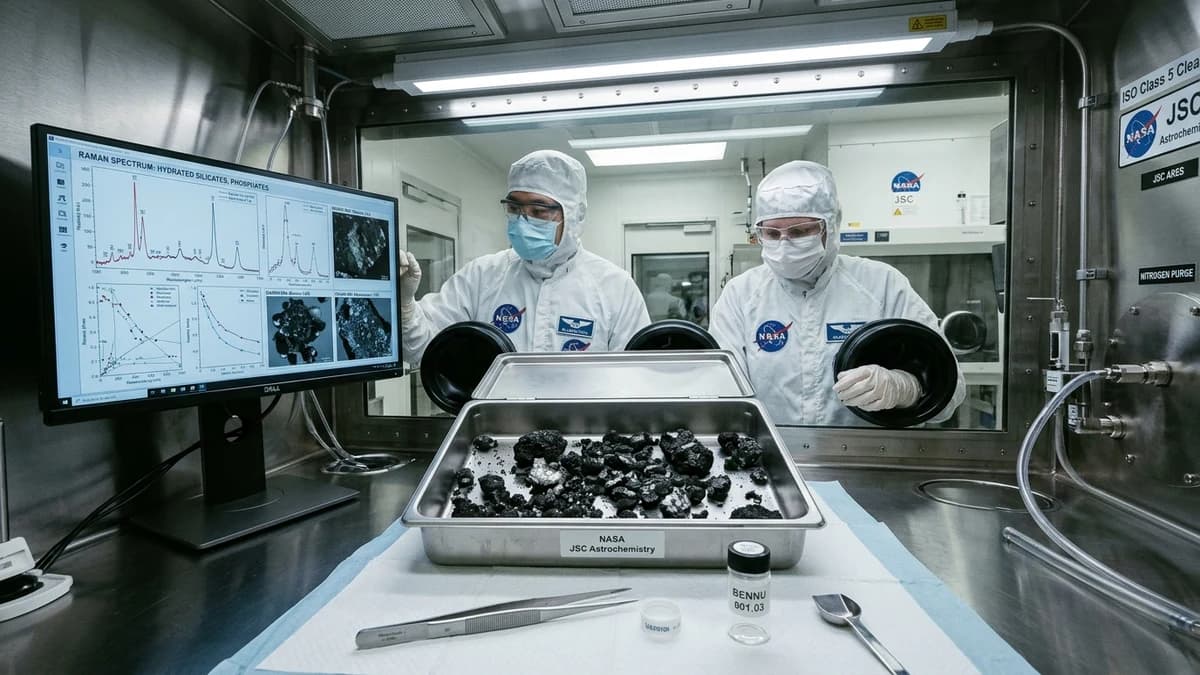
Confirming the existence of a new prehistoric taxon demanded a second, independent discovery to prove that the massive dimensions were not an anomalous individual pathology, but a consistent anatomical feature of an undiscovered reptile lineage. That second geological miracle occurred when Ruby and Justin Reynolds discovered their first bone fragments at Blue Anchor, just ten kilometers from the original Lilstock site.

Upon reviewing the high-resolution field photographs sent by the Reynolds family, Dr. Lomax assembled a specialized team of paleontologists from the Natural History Museum London and The Geological Society of London. Through carefully planned excavations coordinated with the Severn estuary's extreme tidal cycles, the team quarried rock slabs weighing hundreds of kilograms. Back inside the conservation laboratories at the University of Bristol, skilled preparators cleared the surrounding shale matrix, revealing that the recovered sections interlocked seamlessly into a complete right surangular bone measuring 2.05 meters in length.

Anatomy of a Triassic Titan: How a Jawbone Unveils a 25-Meter Leviathan #

In diapsid reptiles and marine tetrapods, the surangular bone occupies the posterior dorsal portion of the lower jaw, anchoring powerful adductor jaw musculature and articulating with the quadrangular hinge of the cranium. In predatory ichthyosaurs belonging to the family Shastasauridae, the surangular maintains a remarkably stable isometric relationship with total skull length and overall body proportions.

To calculate the true physical scale of Ichthyotitan severnensis, paleontologists employed the complete articulated skeleton of Shonisaurus sikanniensis as a direct anatomical baseline. Excavated from remote alpine strata in British Columbia, Canada, the Canadian specimen measures 21 meters in length and features a surangular bone measuring approximately 1.60 meters. The newly recovered Somerset jawbone is nearly 25 percent longer, substantially thicker in cross-section, and exhibits deeper neurovascular grooves.

Applying validated allometric scaling algorithms verified by synchrotron micro-computed tomography, the research team calculated that the complete skull of Ichthyotitan measured between 3.8 and 4.2 meters in length. Conservative postcranial projections place its total body length between 24 and 26 meters, cementing its status as the most gigantic marine predator ever documented in vertebrate paleontology.

Biomechanics and the Metabolic Physics of Triassic Ocean Gigantism #

The titanic proportions of Ichthyotitan severnensis pose fascinating biomechanical and physiological questions. As an air-breathing pelagic tetrapod, the creature was obligated to surface regularly to replenish oxygen reserves, much like modern baleen and toothed whales. Its streamlined, fusiform body, long stabilizing pectoral flippers, and rigid lower caudal fin allowed it to navigate the prehistoric ocean with exceptional hydrodynamic efficiency.

Microscopic histological analysis of thin petrified bone slices conducted with the University of Bonn and the British Geological Survey revealed rapid periosteal vascular growth rates. Dense primary osteonal networks traversed the cortex, displaying intense remodeling and dense Haversian systems indicative of elevated metabolic rates — strong evidence for sustained gigantothermy or active homeothermy that enabled the reptile to regulate its internal core temperature in cold, open-ocean waters.

Crucially, active longitudinal vascularization observed along the outermost periosteal rim at the time of death demonstrates that the Somerset individual was still growing actively when it perished. This reveals that fully mature, older adults of Ichthyotitan severnensis may have exceeded 26 meters in length, pushing the biological structural limits of vertebrate skeletal biology.

Comparative Anatomy: The Titans of the Deep #

To appreciate the scientific magnitude of Ichthyotitan severnensis, the following technical table compares the Somerset colossus against the most famous giant marine animals across Earth's evolutionary history:

Ocean Colossus / Species Geological Epoch / Age Maximum Estimated Length Estimated Body Mass Trophic Niche / Hunting Strategy
Ichthyotitan severnensis Late Triassic (~202 Ma) 24 to 26 meters 70 to 90 metric tons Apex macro-carnivore / Giant squid & pelagic fish
Balaenoptera musculus (Blue Whale) Holocene / Modern Day 25 to 30 meters 100 to 180 metric tons Filter feeder / Macro-zooplankton & krill
Shonisaurus sikanniensis Late Triassic (~215 Ma) 21 meters 40 to 55 metric tons Deep-diving cephalopod specialist
Otodus megalodon (Megalodon) Miocene to Pliocene (23 to 3.6 Ma) 15 to 18 meters 50 to 65 metric tons Apex predator / Whales, pinnipeds, and large fish
Mosasaurus hoffmannii Late Cretaceous (~66 Ma) 13 to 17 meters 15 to 25 metric tons Coastal apex predator / Turtles and marine reptiles
Liopleurodon ferox (Pliosaur) Middle Jurassic (~160 Ma) 6 to 10 meters 4 to 8 metric tons Ambush predator in warm shallow epicontinental seas

This comparison shatters the popular misconception that the dinosaur-dominated Jurassic and Cretaceous periods held an exclusive monopoly on planetary megafauna. While early terrestrial dinosaurs of the late Triassic were modest, agile predators barely reaching two to three meters in length (such as Coelophysis), ichthyosaurs in the global ocean had already conquered the crown of the largest living organisms on Earth.

On the Eve of Armageddon: The End-Triassic Mass Extinction #

The geological timing of Ichthyotitan severnensis infuses its discovery with profound evolutionary drama. The fossil was extracted directly from the fossiliferous mudstone beds of the Westbury Formation, dated with high-precision uranium-lead isotopic geochronology to 202 million years ago during the terminal Rhaetian stage.

Merely a few hundred thousand years after the Somerset individual lived, the initial breakup of the supercontinent Pangea triggered the catastrophic basaltic eruptions of the Central Atlantic Magmatic Province (CAMP). Trillions of tons of volcanic carbon dioxide and sulfur dioxide were released into the atmosphere, causing runaway global heating, pervasive marine anoxia, and severe ocean acidification — the cataclysmic End-Triassic Mass Extinction.

More than 76% of all marine and terrestrial species were eradicated. The giant shastasaurid ichthyosaurs, including Ichthyotitan, were wiped out completely as open-water pelagic ecosystems collapsed. While smaller, dolphin-like neoichthyosaurian lineages survived into the Jurassic, the specialized lineage of 25-meter predatory marine reptiles never returned, leaving a macro-predatory ecological void that remained vacant until the radiation of cetaceans during the Cenozoic era.

Citizen Science and the Paleontological Future of the Severn Coast #

Ruby Reynolds' formal scientific co-authorship on the published PLOS ONE paper stands as a celebrated triumph for global citizen science. Discovering the largest marine reptile in planetary history at age 11 underscores the invaluable collaboration between amateur enthusiasts, young explorers, and academic research institutions.

The Bristol Channel and the Somerset shoreline remain one of the most prolific fossil coastlines in Western Europe. The Severn estuary experiences the second-highest tidal range on Earth, with tidal surges sweeping up to 15 vertical meters every 12 hours. These powerful tides continuously scour the dark Jurassic and Triassic shale cliffs, exposing fossilized treasures that would otherwise be destroyed by wave action within months if left uncollected.

The Bristol Museum and Art Gallery is currently designing interactive 3D exhibits and life-sized 25-meter reconstructions to bring the public face-to-face with the true ruler of the Triassic oceans. The "Giant Fish Lizard of the Severn" not only fills an essential missing link in Earth's history, but proves that monumental scientific discoveries are sometimes waiting just beneath our footsteps during a routine family stroll along the beach.

🏷️ Tags:

📢 Gostou deste artigo?

Compartilhe com seus amigos e nos conte o que você achou nos comentários!

❓Frequently Asked Questions

Scientifically, *Ichthyotitan severnensis* was not a dinosaur. It was an advanced member of the order Ichthyosauria, a distinct evolutionary lineage of air-breathing diapsid marine tetrapods that adapted exclusively to oceanic life. Dinosaurs were primarily terrestrial archosaurs with erect, pillar-like limb postures adapted for locomotion on land. In contrast, ichthyosaurs evolved streamlined, torpedo-shaped fusiform bodies, specialized paddle-like flippers, vertical shark-like tail fins, and the ability to give birth to live young directly in open water, never returning to land to lay eggs.
The 25-meter size determination is rooted in direct, scaling anatomical comparisons of the 2.05-meter surangular jawbone against the articulated skeleton of *Shonisaurus sikanniensis* (which measured 21 meters with a 1.6-meter surangular). Using validated allometric scaling algorithms and micro-computed tomography modeling, the international team calculated a cranial length of approximately four meters and a total physical body length between 24 and 26 meters. Microscopic bone histology confirmed that the recovered specimen was an actively growing subadult, indicating that fully mature individuals reached or exceeded the 25-meter benchmark.
The warm epicontinental shelf seas of late Triassic Europe supported extraordinary marine productivity, driven by intense oceanic upwelling along the western margins of Pangea. Vast swarms of fast-swimming cephalopods (such as belemnites and ammonites) and diverse pelagic schooling fish populated the water column. *Ichthyotitan* possessed powerful, elongated jaws suited for grasping or suction-feeding upon schooling pelagic prey, functioning as a high-tier apex consumer comparable to the ecological role played by modern sperm whales in deep oceanic trenches.

Receba novidades!

Cadastre seu email e receba as melhores curiosidades toda semana.

🔒 Sem spam. Cancele quando quiser.

💬 Comentários (0)

Seja o primeiro a comentar! 👋

📚Related Articles

James Webb Telescope Detects Merger of Supermassive Black Holes at Cosmic DawnCiencia e Natureza

James Webb Telescope Detects Merger of Supermassive Black Holes at Cosmic Dawn

Astronomers confirm the most distant collision between supermassive black holes in galaxy ZS7, unraveling the rapid growth of cosmic titans in the young universe.

⏱️6 minLer mais →
CERN NA62 Experiment Observes Ultra-Rare Kaon Decay and Opens New Window in PhysicsCiencia e Natureza

CERN NA62 Experiment Observes Ultra-Rare Kaon Decay and Opens New Window in Physics

Physicists at CERN achieve five-sigma statistical significance in measuring the rarest decay of the Standard Model, opening doors to physics beyond the known.

⏱️5 minLer mais →
James Webb Telescope Reveals Sand Clouds and Water Vapor on Exoplanet WASP-107bCiencia e Natureza

James Webb Telescope Reveals Sand Clouds and Water Vapor on Exoplanet WASP-107b

Spectroscopic observations from JWST unveil the atmospheric composition of WASP-107b, revealing silicate rain and sulfur dioxide on a low-density world.

⏱️5 minLer mais →
Astronomers Confirm Earth-Sized Exoplanet in Habitable Zone of Nearby StarCiencia e Natureza

Astronomers Confirm Earth-Sized Exoplanet in Habitable Zone of Nearby Star

International teams confirm the characteristics of Gliese 12 b, a temperate exoplanet 40 light-years away with potential for liquid water and atmosphere.

⏱️6 minLer mais →
Preparations for the 2026 Total Solar Eclipse in EuropeCiencia e Natureza

Preparations for the 2026 Total Solar Eclipse in Europe

Scientists and astronomers worldwide mobilize infrastructure in Greenland and Spain for the major total solar eclipse on August 12, 2026.

⏱️6 minLer mais →
The Oldest Solar Observatory Outside the Maya Area: INAH Confirms 2,500-Year-Old Complex in Tetelihtichistoria

The Oldest Solar Observatory Outside the Maya Area: INAH Confirms 2,500-Year-Old Complex in Tetelihtic

Investigative report on INAH's confirmation of a 2,500-year-old Group E solar observatory in Puebla, the oldest documented outside the Maya world.

⏱️12 minLer mais →
Receba novidades no WhatsApp!