🌍 Your knowledge portal
Ciencia e Natureza

Asteroid Bennu Samples Returned by NASA Reveal Ocean World Salts and the Origins of Life

📅 2026-10-30⏱️ 8 min read📝
Asteroid Bennu Samples Returned by NASA Reveal Ocean World Salts and the Origins of Life
Asteroid Bennu Samples Returned by NASA Reveal Ocean World Salts and the Origins of Life — High-Fidelity Artistic Illustration created by artificial intelligence based on scientific research.
⚡

Quick Summary

Pristine analysis in NASA cleanrooms reveals pure magnesium-sodium phosphate, abundant water, and organic building blocks in OSIRIS-REx asteroid samples. More than 200 million miles from Earth, floating through the cold vacuum of interplanetary space, the carbonaceous asteroid Bennu held a pristine geological record that had remained untouched since the birth of our solar system 4.5 billion years ago.

Key Takeaways:

  • To safeguard the chemical purity of Bennu's regolith, NASA constructed a specialized ISO Class 5 cleanroom laboratory at the Johnson Space Center.
  • The most startling discovery emerged when focused electron microprobe beams swept across bright, translucent coatings crusting several millimeter-sized pebbles.
  • Beyond the mineral evidence of ancient water, cosmochemists mapped the asteroid's organic inventory with unprecedented molecular sensitivity.

More than 200 million miles from Earth, floating through the cold vacuum of interplanetary space, the carbonaceous asteroid Bennu held a pristine geological record that had remained untouched since the birth of our solar system 4.5 billion years ago. In September 2023, following a seven-year mission across deep space, NASA's OSIRIS-REx spacecraft released a sample return capsule that parachuted into the Utah desert, delivering 121.6 grams (4.29 ounces) of pristine extraterrestrial material — more than double the mission's baseline requirement. The subsequent exhaustive laboratory investigation, conducted by international consortiums coordinated at NASA's Johnson Space Center in Houston and published in Meteoritics & Planetary Science and Nature Astronomy, has upended longstanding models of planetary formation and the emergence of life on Earth. Beneath superficial coatings of dark, crumbly carbonaceous regolith, scientists discovered something never before found in fallen meteorites: thick, glistening veins of pure magnesium-sodium phosphate, an evaporitic mineral that requires an active, alkaline hydrothermal ocean inside an ancient parent world to precipitate.

The revelation marks not merely an engineering triumph for deep-space sample return, but an epochal breakthrough in cosmochemistry. For the first time, researchers analyzed primordial asteroid material unmarred by the scorching thermal ablation of atmospheric entry, untouched by Earth's rain, oxygen, or microbial contamination. The verdict from high-resolution transmission electron microscopy and X-ray diffraction is unambiguous: asteroid Bennu is the shattered remnant of an ancient oceanic world, a frozen time capsule demonstrating that the essential ingredients for biochemistry were abundant in the solar nebula within the first few million years of solar system history.

The OSIRIS-REx Odyssey and Unlocking the Cosmic Vault in Houston #

To safeguard the chemical purity of Bennu's regolith, NASA constructed a specialized ISO Class 5 cleanroom laboratory at the Johnson Space Center. Inside sealed gloveboxes purged continuously with ultra-pure semiconductor-grade nitrogen gas, planetary curators processed the Touch-and-Go Sample Acquisition Mechanism (TAGSAM) head, which had briefly tapped the surface of Bennu's Nightingale crater in October 2020.
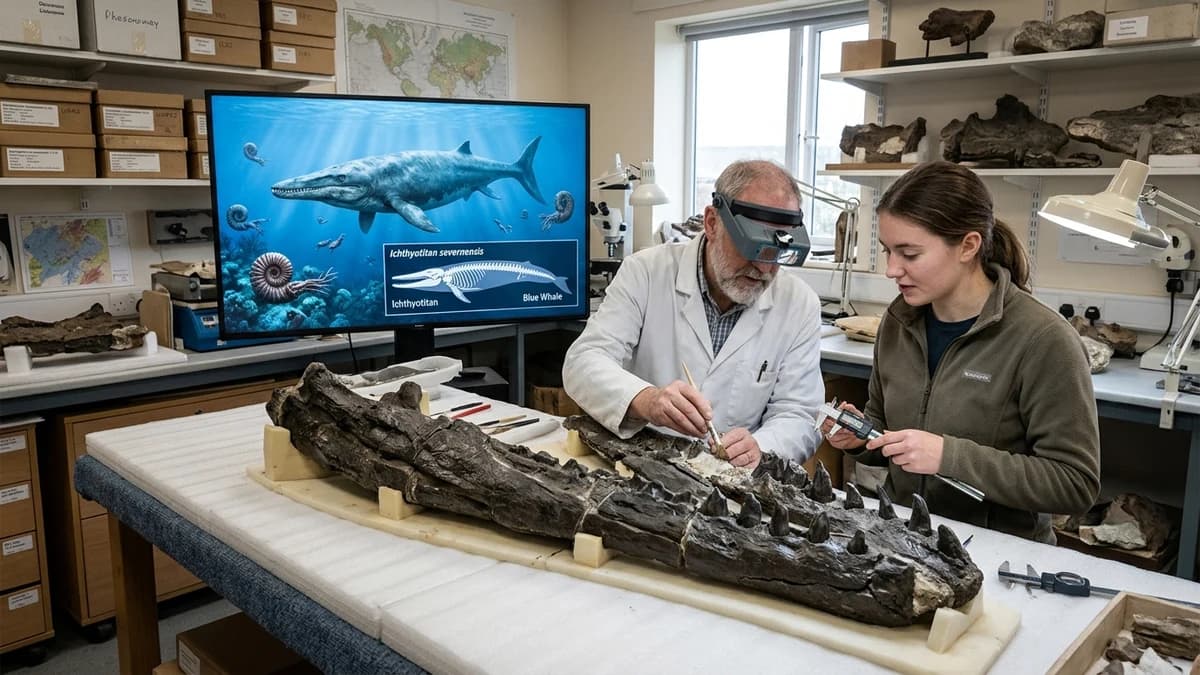
Unlocking the curation canister required months of delicate mechanical precision after two stubborn fasteners seized under deep-space vacuum conditions, necessitating the custom fabrication of non-magnetic surgical-steel tools to prevent metallic contamination. When the canister lid was finally lifted under directional surgical LED lighting, scientists beheld a dense accumulation of charcoal-black dust and dark micro-pebbles sparkling with crystalline inclusions.

From the 121.6 grams secured, curated micro-aliquots were distributed to elite planetary science institutions, including teams at the University of Arizona and the Lunar and Planetary Institute. Non-destructive micro-computed tomography, Raman spectroscopy, and synchrotron X-ray diffraction revealed an extraordinarily porous matrix where nearly ten percent of the total mass consists of water chemically locked within the crystalline lattice of hydrated phyllosilicate clays.

The Magnesium-Sodium Phosphate Enigma: Footprints of an Ancient Ocean #

The most startling discovery emerged when focused electron microprobe beams swept across bright, translucent coatings crusting several millimeter-sized pebbles. Crystallographic analysis established that the crystalline white material was pure, monoclinic magnesium-sodium phosphate.

This specific mineral phase is completely absent from the global catalog of meteorites recovered on Earth's surface. The explanation is physical and chemical: magnesium-sodium phosphate is exceptionally brittle and highly soluble in cold water. Any meteorite plunging through Earth's atmosphere experiences violent thermal friction exceeding 1,500 °C, and any surviving fragments landing on the ground rapidly absorb atmospheric moisture, dissolving and altering fragile salt crusts long before geologists can collect them.

In terrestrial and planetary geochemistry, the precipitation of pure magnesium-sodium phosphate demands a prolonged, stable hydrothermal environment: warm, alkaline liquid water (ranging between 50 °C and 150 °C) super-saturated with dissolved sodium, magnesium, and orthophosphate ions percolating through porous rock. This environment mirrors the alkaline hydrothermal vent systems found along Earth's mid-ocean ridges and inside the global subsurface ocean of Saturn's moon Enceladus. Its presence on Bennu proves that the asteroid did not coalesce as a dry clump of dust, but was birthed through the catastrophic destruction of an ancient proto-planet possessing a vast, internal hydrothermal ocean.

A Primordial Organic Factory: Amino Acids and Genetic Precursors #

Beyond the mineral evidence of ancient water, cosmochemists mapped the asteroid's organic inventory with unprecedented molecular sensitivity. Bennu boasts a total carbon concentration of approximately 4.7% by weight — the highest carbon content ever measured in a curated extraterrestrial sample.

Ultra-high-performance liquid chromatography and high-resolution mass spectrometry revealed an extensive suite of prebiotic compounds. Researchers identified dozens of distinct amino acids, including glycine, alanine, glutamic acid, and aspartic acid — molecules utilized universally by terrestrial biology to construct proteins. Critically, Bennu's amino acids occur as nearly racemic mixtures (equal proportions of left-handed L and right-handed D enantiomers), conclusively proving that they formed through abiotic chemical synthesis in an extraterrestrial hydrothermal brine, rather than through terrestrial biological contamination.

Even more profound was the definitive detection of purine and pyrimidine nitrogenous bases, specifically including uracil and adenine. These aromatic heterocyclic molecules constitute the fundamental genetic alphabet used in RNA and DNA. The fact that these genetic letters were synthesized abiotically and preserved intact inside clay micropores for 4.5 billion years confirms that the molecular starter-kit for life was mass-produced across the solar system long before Earth cooled sufficiently to form stable oceans.

Systematic Comparison: Pristine Bennu vs. Traditional Fallen Meteorites #

The empirical divergence between pristine materials retrieved in deep space and meteorites recovered after atmospheric entry illustrates why direct sample return missions are indispensable for modern science.

The following technical table contrasts the geochemical metrics and astrobiological implications of Bennu's pristine samples against standard carbonaceous chondrites:

Geochemical & Analytical Parameter Pristine Bennu Samples (OSIRIS-REx) Typical Fallen Carbonaceous Meteorite (e.g., Murchison) Astrobiological Impact & Planetary Provenance
Total Elemental Carbon Content ~4.7% by weight (historic sample record) ~1.5% to 2.2% by weight Exceptional abundance of unburned, pristine organic carbon in space
Magnesium-Sodium Phosphate Crusts Intact crystalline veins and aggregates Absent (vaporized in entry or dissolved by rain) Conclusive proof of alkaline hydrothermal circulation in an ocean world
Hydrated Clay Fraction (Phyllosilicates) > 50% of total mineral volume Variable; degraded by terrestrial oxidation Confirms extensive, deep aqueous alteration inside the parent body
Amino Acid Enantiomeric Ratios Stable, abiotic racemic mixtures (50:50 L/D) Often biased by modern terrestrial bio-spores Universal abiotic pathway for protein precursor synthesis in deep space
RNA/DNA Nucleobases Detected Uracil, adenine, and guanine precursors Disputed due to immediate surface contamination Proves the building blocks of genetic code predate Earth's formation
Atmospheric & Terrestrial Weathering Zero (sealed under nitrogen since space capture) Weeks to decades of soil and air exposure Pristine isotopic composition preserved continuously for 4.5 billion years

Hydrogen isotopic analysis of Bennu's hydrated clays provided another pivotal discovery. The deuterium-to-hydrogen (D/H) isotopic ratio measured in Bennu's phyllosilicates matches the isotopic signature of Earth's modern oceans with mathematical fidelity. This precise isotopic correlation decisively refutes the hypothesis that comets delivered the bulk of Earth's oceans (cometary water exhibits vastly higher D/H ratios) and confirms that Earth's water was delivered through steady bombardment by hydrous carbonaceous asteroids like Bennu.

The Shattered Parent Body: The Cataclysm That Birthed Bennu #

By modeling the thermodynamic evolution of Bennu's minerals, NASA geochemists concluded that the 500-meter-wide rubble pile orbiting between Earth and Mars could not have generated this complex chemistry on its own. Bennu lacks the gravitational mass required to generate internal radiogenic heat and maintain liquid water under pressure.

Therefore, Bennu is a surviving fragment of a vastly larger planetary body — a differentiated planetesimal or proto-planet measuring between 100 and 200 kilometers in diameter that orbited in the main asteroid belt 4.5 billion years ago. This primordial world accumulated short-lived radionuclides, such as aluminum-26 and iron-60, whose decay melted its interior water ice and drove global hydrothermal convection.

Between one and two billion years ago, a catastrophic collision with another massive asteroid shattered this ancient ocean world into billions of drifting fragments. A small fraction of this debris coalesced under weak mutual gravity into the loose "rubble pile" we now call Bennu. The veins of salt and clay documented today by NASA are the frozen scars of hydrothermal vents that flowed inside that extinct primordial world.

Planetary Defense and the Search for Extraterrestrial Life #

The discoveries from Bennu resonate across two frontiers of modern space exploration: planetary defense and the search for extraterrestrial habitability. Bennu is currently classified as one of the most hazardous known near-Earth asteroids, with a 1-in-2,700 cumulative probability of impacting Earth in the year 2182.

Recognizing that Bennu is not a solid monolith, but a hyper-porous gravel agglomeration with a density barely greater than water (1.19 g/cm³) and over 50% void space, fundamentally changes future deflection strategies. A standard kinetic impactor could be absorbed by the porous interior, underscoring the need for gravity tractors or laser ablation techniques tailored specifically to water-rich carbonaceous rubble piles.

In astrobiology, proving that alkaline hydrothermal environments and soluble phosphates were ubiquitous in the early solar system accelerates the search for life in outer solar system ocean worlds like Europa and Enceladus. If the entire biochemical starter pack — liquid water, geothermal energy, phosphates, amino acids, and RNA bases — developed spontaneously in primordial planetesimals, the emergence of life on habitable exoplanets across the Milky Way becomes a natural geobiological imperative rather than an astronomical anomaly.

🏷️ Tags:

📢 Gostou deste artigo?

Compartilhe com seus amigos e nos conte o que você achou nos comentários!

❓Frequently Asked Questions

Meteorites that fall naturally to Earth endure violent hypersonic atmospheric entry, where surface temperatures exceed 1,500 °C (2,700 °F), incinerating volatile organic compounds and melting outer crusts into glass. Upon striking the ground, meteorites immediately absorb atmospheric oxygen, humidity, soil bacteria, and airborne pollen, corrupting the sample within hours. In contrast, OSIRIS-REx captured Bennu's material directly in deep space, sealed it hermetically in a nitrogen-purged capsule, and curated it in ultra-sterile cleanrooms. Every atom, amino acid, and salt crystal remains pristine, offering an uncontaminated window into the solar system's birth 4.5 billion years ago.
The discovery of pure magnesium-sodium phosphate demonstrates that early solar system bodies were not dry, inert agglomerations of dust, but dynamic worlds that hosted complex hydrothermal systems within the first few million years of solar system formation. Precipitating this mineral requires warm, alkaline water rich in dissolved salts circulating through fractured rock powered by radioactive decay heat. This confirms that environments identical to terrestrial deep-sea hydrothermal vents operated inside ancient dwarf planets before Earth completed its planetary accretion, providing the ideal chemical incubator for prebiotic molecules.
There is absolutely zero risk of biological pathogens, extraterrestrial viruses, or invasive organisms in the Bennu samples. Bennu is an airless, waterless asteroid in modern times, exposed to the harsh vacuum of space, severe thermal swings from -100 °C to +120 °C, and billions of years of sterilizing cosmic rays and solar radiation. The molecules identified are non-living, inanimate prebiotic building blocks — the chemical precursors of matter, such as amino acids and phosphate salts —, not living or self-replicating cells. All curation procedures at NASA's Johnson Space Center follow rigorous international planetary protection protocols, guaranteeing absolute safety for researchers and the terrestrial biosphere.

Receba novidades!

Cadastre seu email e receba as melhores curiosidades toda semana.

🔒 Sem spam. Cancele quando quiser.

💬 Comentários (0)

Seja o primeiro a comentar! 👋

📚Related Articles

James Webb Telescope Detects Merger of Supermassive Black Holes at Cosmic DawnCiencia e Natureza

James Webb Telescope Detects Merger of Supermassive Black Holes at Cosmic Dawn

Astronomers confirm the most distant collision between supermassive black holes in galaxy ZS7, unraveling the rapid growth of cosmic titans in the young universe.

⏱️6 minLer mais →
CERN NA62 Experiment Observes Ultra-Rare Kaon Decay and Opens New Window in PhysicsCiencia e Natureza

CERN NA62 Experiment Observes Ultra-Rare Kaon Decay and Opens New Window in Physics

Physicists at CERN achieve five-sigma statistical significance in measuring the rarest decay of the Standard Model, opening doors to physics beyond the known.

⏱️5 minLer mais →
James Webb Telescope Reveals Sand Clouds and Water Vapor on Exoplanet WASP-107bCiencia e Natureza

James Webb Telescope Reveals Sand Clouds and Water Vapor on Exoplanet WASP-107b

Spectroscopic observations from JWST unveil the atmospheric composition of WASP-107b, revealing silicate rain and sulfur dioxide on a low-density world.

⏱️5 minLer mais →
Astronomers Confirm Earth-Sized Exoplanet in Habitable Zone of Nearby StarCiencia e Natureza

Astronomers Confirm Earth-Sized Exoplanet in Habitable Zone of Nearby Star

International teams confirm the characteristics of Gliese 12 b, a temperate exoplanet 40 light-years away with potential for liquid water and atmosphere.

⏱️6 minLer mais →
Preparations for the 2026 Total Solar Eclipse in EuropeCiencia e Natureza

Preparations for the 2026 Total Solar Eclipse in Europe

Scientists and astronomers worldwide mobilize infrastructure in Greenland and Spain for the major total solar eclipse on August 12, 2026.

⏱️6 minLer mais →
The Oldest Solar Observatory Outside the Maya Area: INAH Confirms 2,500-Year-Old Complex in Tetelihtichistoria

The Oldest Solar Observatory Outside the Maya Area: INAH Confirms 2,500-Year-Old Complex in Tetelihtic

Investigative report on INAH's confirmation of a 2,500-year-old Group E solar observatory in Puebla, the oldest documented outside the Maya world.

⏱️12 minLer mais →
Receba novidades no WhatsApp!