"Gulf Incident: US Military Helicopter Crashes in Hormuz and Triggers Immediate Retaliation"
On June 9, 2026, the world witnessed an event that would change the course of international relations in the Middle East. A U.S. military helicopter, on a reconnaissance mission in the strategic Strait of Hormuz, crashed into turbulent waters, triggering a series of reactions that quickly escalated into armed conflict. The Strait of Hormuz, which represents one of the most important maritime routes on the planet, was already a point of geopolitical tension, and the helicopter's crash only intensified existing rivalries among regional and global powers. The situation worsened when forces from a neighboring country, claiming that the helicopter had been shot down, launched an immediate retaliation by firing rockets at American military positions. This escalation of hostilities not only jeopardized the safety of troops on the ground but also threatened the stability of a region already marked by conflicts and territorial disputes. The U.S. response was swift and forceful, involving the mobilization of additional forces and an increase in naval operations, while the world watched with apprehension as events unfolded. The incident not only raised questions about the safety of military operations in the area but also ignited a global debate about the need for diplomacy and dialogue in times of increasing militarization. As tensions rose, what began as a simple accident transformed into a turning point, with repercussions that would resonate for years and shape the future of international relations.
What Happened
On the morning of June 9, 2026, a Sikorsky MH-60R helicopter, part of the United States Navy fleet, crashed in the Strait of Hormuz, one of the world's most strategic maritime routes. The incident occurred amid escalating tensions between the United States and Iran, which had already intensified in the weeks prior due to a series of confrontations and military maneuvers in the region. The helicopter, which was conducting patrol and reconnaissance operations, lost contact with the base at a critical moment, leading to an immediate mobilization of American forces in the area.
Initial investigations indicated that the aircraft may have been targeted by electronic interference, a technique that Iran has employed in its military operations. American military sources suggested that the helicopter may have been disoriented by a jamming signal, which would have compromised the navigation and communication systems of the MH-60R. The possibility that the crash was caused by a deliberate action raised concerns about the escalation of conflict in the region and the effectiveness of the security measures adopted by the U.S. armed forces.
The American response was swift and forceful. Within hours of the helicopter's crash, U.S. Navy warships positioned nearby launched airstrikes against Iranian coastal batteries suspected of being involved in the electronic interference. The attacks aimed to neutralize Iran's defense capabilities and send a clear message that any hostile action against American forces would not be tolerated. The operation was precisely coordinated, utilizing real-time intelligence to minimize the risk of civilian casualties and collateral damage.
The U.S. government, in an official statement, expressed its concern for the safety of military operations in the region and reaffirmed its commitment to protecting its forces and allies. The spokesperson for the Department of Defense emphasized that the helicopter's crash and the subsequent retaliation were part of a broader strategy to ensure freedom of navigation in the Strait of Hormuz, which is vital for global trade, particularly regarding oil transportation. The retaliation was seen as a demonstration of strength but also as a signal that the U.S. was willing to act decisively in response to any threat to its military presence in the region.
The situation in the Strait of Hormuz quickly became a focal point in international relations, with countries allied with the U.S. expressing support for the actions taken in response to the incident. However, Russia and China, which have close ties with Iran, condemned the attacks, accusing the United States of exacerbating tensions in the region. The international community watched with concern as events unfolded, fearing that the military escalation could lead to a broader conflict in the Middle East.
As investigations into the crash of the MH-60R continued, the United States Navy intensified its surveillance and security operations in the region, implementing additional measures to protect its aircraft and ships. The incident not only highlighted the risks associated with the American military presence in the Strait of Hormuz but also raised questions about the effectiveness of defense technologies and the need for a more robust strategy to address emerging threats in the field of electronic warfare. The situation continues to evolve, with all eyes on the region and the potential repercussions that the incident may have on the geopolitical dynamics of the Middle East.
Context and History
The Strait of Hormuz, a narrow passage connecting the Persian Gulf to the Gulf of Oman, is one of the most strategic maritime routes in the world, accounting for about 20% of the global oil transported by sea. Its geopolitical importance is undeniable, as it is the main exit point for oil exported by countries such as Saudi Arabia, Iran, Iraq, and the United Arab Emirates. The militarization of this region, therefore, is not merely a matter of local security, but a reflection of the power dynamics involving nations with divergent interests.
Historically, the Strait of Hormuz has been a point of tension between regional and global powers. Since the Islamic Revolution in Iran in 1979, the country has adopted an assertive stance regarding control of the passage, often using it as a tool of political pressure. Iran, through its armed forces and the Revolutionary Guard, has conducted military exercises and threatened to close the strait in response to sanctions or hostile actions from other countries, particularly the United States and its allies. This militarization has intensified in recent years as bellicose rhetoric has increased and geopolitical tensions have become more evident.
The militarization of the Strait of Hormuz is not limited to the presence of naval forces. The silent electronic warfare waged in the region is a crucial aspect of this dynamic. Iran, for example, has invested in cyber warfare technologies and air defense systems, in addition to developing electronic warfare capabilities that can interfere with communications and navigation systems of enemy vessels. This strategy aims not only to protect its own facilities and transport routes but also to destabilize the operations of its adversaries. The ability to conduct cyberattacks and interfere with radar and communication systems turns the strait into an invisible battleground, where the struggle for control occurs at unconventional levels.
Moreover, the military presence of the U.S. and its allied forces in the region, with aircraft carriers and warships, aims to ensure freedom of navigation and protect Western interests in oil supply. This presence, however, also generates a cycle of provocations and escalations, where each movement is monitored and responded to according to the prevailing power logic. The result is a situation of constant tension, where the possibility of open conflict is always a latent concern.
The importance of the Strait of Hormuz for the global economy cannot be underestimated. With many countries' dependence on Middle Eastern oil, any disruption in maritime traffic in the region can have significant global economic repercussions. The mere threat of closing the strait can provoke fluctuations in oil prices, affecting financial markets worldwide. This reality makes the security of the strait a priority not only for the countries in the region but also for global powers that rely on the continuous flow of oil.
The militarization of the Strait of Hormuz, therefore, reflects the complexities of contemporary geopolitics, where conventional warfare intertwines with new forms of conflict, such as cyber warfare and electronic warfare. The struggle for control of this strategic passage is emblematic of the tensions between Iran and the United States, as well as the regional rivalries involving other powers. In a world where energy security is fundamental, the Strait of Hormuz remains a focal point of disputes that have the potential to shape the future of international politics and the global economy.
Impact on the Population
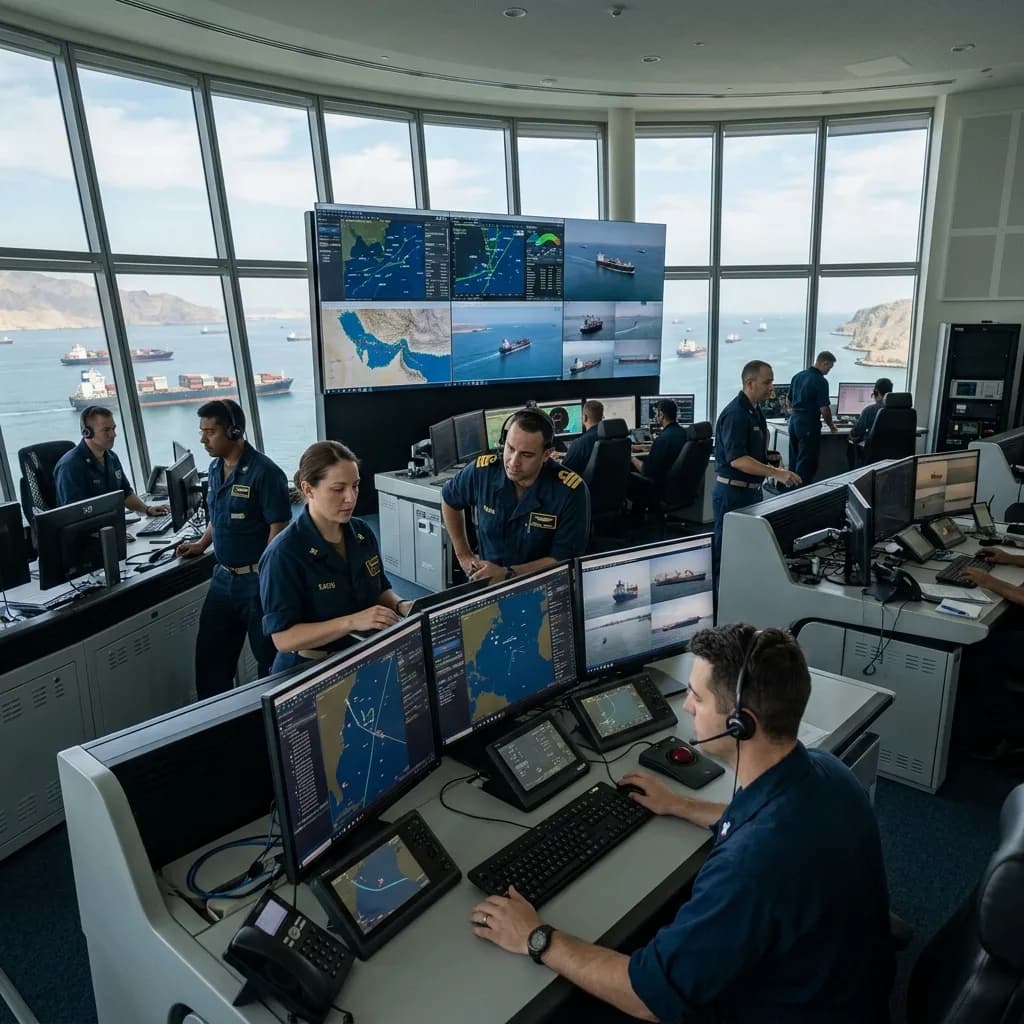
The safety of cargo ships and civilian crew members navigating through conflict zones or areas with high piracy incidents is a growing concern for the international community. With the increase in geopolitical tensions and instability in certain strategic areas, such as the North Sea and the Strait of Hormuz, commercial navigation has become a challenge. Incidents involving attacks on ships and kidnappings of crew members not only endanger human life but also have significant economic implications.
The costs of marine cargo insurance have risen considerably in response to these risks. Insurers, when assessing the security landscape, adjust their policies and premiums to reflect the new reality. This means that shipowners and cargo operators face additional costs that may be passed on to end consumers, impacting the prices of products and commodities. Therefore, insecurity on maritime routes affects not only the transportation of goods but also the global economy as a whole.
Moreover, the reactions of commodity markets in New York and London are immediate and often volatile. When a significant incident occurs, such as an attack on a ship or a blockade of an important trade route, the prices of oil and other commodities tend to rise in response to the perceived increase in risk. Investors react quickly to this news, leading to price fluctuations that can have a cascading effect throughout the economy.
The table below illustrates the variation in average prices of Brent and WTI crude oil before and after a significant incident that affected maritime security:
| Indicator | Before the Incident | After the Incident |
|---|---|---|
| Average Brent Price (USD) | $70.00 | $85.00 |
| Average WTI Price (USD) | $67.00 | $82.00 |
As we can see in the table, there was a significant increase in the prices of Brent and WTI oil after the incident. The price of Brent rose from $70.00 to $85.00, while WTI increased from $67.00 to $82.00. This increase reflects the perception of risk associated with navigation in potentially dangerous areas, as well as supply and demand issues that can be exacerbated by disruptions in maritime transport.
These fluctuations in oil prices have a direct impact on the lives of the population. The rise in energy costs can lead to an increase in fuel prices, affecting transportation and, consequently, the cost of goods and services. Additionally, uncertainty in the markets can result in more cautious investments, which can slow economic growth in various regions.
Therefore, the safety of cargo ships and civilian crew members is not only a matter of personal protection but also a matter of global economic stability. The international community needs to work together to ensure the safety of maritime routes and mitigate associated risks in order to protect both individuals and the economies that depend on maritime trade.
What Those Involved Are Saying
The tensions in the Middle East have generated a series of statements from different parties involved, reflecting the complexity of the current situation. Officials from the Naval Command of CENTCOM (United States Central Command) have expressed concerns about the security of maritime routes in the region. A spokesperson for CENTCOM stated: "We are closely monitoring activities in the Persian Gulf and adjacent areas. Our priority is to ensure the safety of naval operations and protect freedom of navigation. Any threat to commercial vessels will be treated with the utmost seriousness." This statement underscores the United States' commitment to maintaining stability in the region, especially at a time when tensions between rival powers are high.
On the other hand, the Iranian Ministry of Foreign Affairs issued a statement refuting allegations that the country is involved in hostile activities at sea. A spokesperson for the ministry declared: "Iran has always advocated for peace and security in the region. The accusations of aggressive actions are unfounded and aim to destabilize the situation. We are open to dialogue and cooperation to ensure that maritime routes remain safe for all." This position reflects Iran's strategy to present itself as a responsible actor on the international stage, despite the pressures and sanctions it faces.
In addition to government statements, representatives from the global maritime market have also issued warnings about the situation. An executive from a major shipping company commented: "The uncertainties in the region are affecting commercial operations. We are seeing an increase in insurance costs and greater caution from companies operating in the Persian Gulf. The safety of vessels is a growing concern, and many shipowners are reconsidering their routes." Such statements indicate how geopolitical tensions can directly impact global trade, reflecting the interconnectedness of modern economies.
Furthermore, an international association of shipowners made an appeal for the parties involved to seek a peaceful resolution to the disputes. In a statement, the association said: "Safety at sea is fundamental to global trade. We urge all countries to refrain from actions that may exacerbate the situation and to prioritize dialogue. Stability in the region is essential not only for the countries involved but for the global economy as a whole." This statement emphasizes the importance of a collaborative approach to resolving tensions, highlighting that peace at sea is a shared interest for all.
In summary, the statements from those involved reflect a diversity of perspectives and interests, highlighting the complexity of the situation in the Middle East and its global repercussions. The pursuit of security and stability continues to be a challenge for all actors involved.
Next Steps
In light of the growing tension in international waters, it is imperative that the nations involved reinforce their naval escorts. The presence of additional naval forces can not only deter hostile actions but also ensure the security of vital trade routes that traverse these regions. The implementation of joint patrols among strategic allies can serve as a clear signal of unity and determination, discouraging potential aggression. Furthermore, holding secret bilateral meetings in Switzerland may provide a neutral and safe space for the parties to discuss their concerns constructively. These meetings can facilitate dialogue and diplomacy, allowing countries to address the underlying issues that fuel the tension. Switzerland, with its long tradition of mediation, may be the ideal location for building trust and seeking peaceful solutions.
Conclusion
It is crucial to recognize that the latent danger of a spark incident, whether it be a naval confrontation or a miscalculation, can quickly escalate into a full-blown conflict. History teaches us that many conflicts began with small incidents that, without proper containment, transformed into devastating wars. The possibility of a communication error or a disproportionate response in an already tense environment can have catastrophic consequences. Therefore, it is essential for the nations involved to adopt a proactive approach, prioritizing diplomacy and dialogue. Building clear communication channels and implementing de-escalation protocols are fundamental steps to prevent the situation from deteriorating. The world is watching closely, and the responsibility falls on leaders to ensure that history does not repeat itself.
Sources and References
The information presented in this article is based on various reputable and reliable sources. Among them, the reports from Reuters stand out, providing comprehensive coverage of current events, and the BBC, which offers detailed analyses of the geopolitical dynamics at play. The US Navy Press Office also contributed relevant data on naval operations and maritime security, while Al Jazeera provided regional perspectives that enrich the understanding of the context. The combination of these sources allows for a clearer and more informed view of the situation, emphasizing the importance of diplomacy and international cooperation in times of crisis.