🌍 Your knowledge portal
Science and Nature

Extraterrestrial Geometry: Curiosity Discovers Honeycomb Pattern on Mars Soil

📅 2026-08-01⏱️ 6 min read📝
Extraterrestrial Geometry: Curiosity Discovers Honeycomb Pattern on Mars Soil
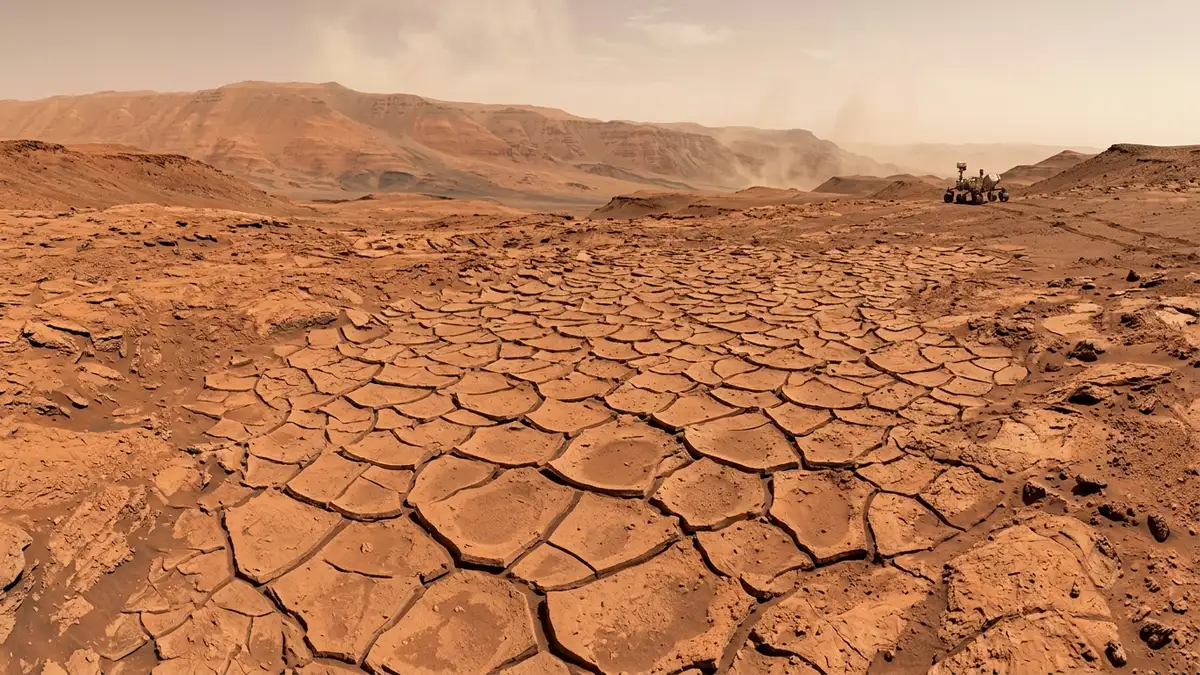
Extraterrestrial Geometry: Curiosity Discovers Honeycomb Pattern on Mars Soil — High-Fidelity Artistic Illustration created by artificial intelligence based on scientific research.
⚡

Quick Summary

Fossilized hexagonal mud fractures identified by NASA's Curiosity at Gale Crater provide direct evidence of cyclical wet and dry seasons on ancient Mars. The exploration of the Red Planet has just revealed one of the most fascinating geological evidences about its hydrological past and the possibility of primitive life.

Key Takeaways:

  • The existence of these honeycomb-shaped drying cracks suggests that Mars' climate was once much more dynamic.
  • The continuous collection of geological data by robots on the Martian surface complements observations made by satellites in orbit.
  • Geochemical spectroscopy performed by Curiosity's ChemCam laser-induced breakdown spectrometer and Alpha Particle X-Ray Spectrometer (APXS) at the base of Mount Sharp demonstrates that the centimeter-scale hexagonal honeycomb…

Extraterrestrial Geometry: Curiosity Discovers Honeycomb Pattern on Mars Soil

Polygonal Fracture Field on Mars

The exploration of the Red Planet has just revealed one of the most fascinating geological evidences about its hydrological past and the possibility of primitive life. NASA's Curiosity rover, which has been investigating Gale Crater since 2012, came across an impressive field of geometric fractures in the soil. Located in a basin nicknamed Valle Grande, these polygonal cracks resemble a perfect honeycomb.

The individual geometric formations measure between 4 and 8 centimeters in width and extend for hundreds of square meters across the sandy terrain. Curiosity captured high-resolution images of the phenomenon while climbing the slopes of a neighboring butte named Miraflores. Mission scientists on Earth were thrilled by the level of preservation and symmetry of the Martian sedimentary structures.

According to initial reports released by NASA, these geometric cracks formed in the sandstone when the region still harbored deep temporary lakes. The contraction process of wet clay under strong solar heat is the most accepted explanation for the emergence of such regular patterns. The event constitutes the first direct physical evidence of stable and repetitive seasonal cycles occurring in the remote geological past of Mars.

The government and the international scientific community consider this discovery a milestone for astrobiology and for future manned exploration plans. The robotic probe used its spectrographic tools to analyze the deep chemical composition of the mineral cracks in the Martian soil. The initial results revealed a high concentration of sulfate salts mixed with the dehydrated red clay.


The Impact of Climate Alternation on the Evolution of Organic Molecules #

The existence of these honeycomb-shaped drying cracks suggests that Mars' climate was once much more dynamic. Instead of a continuous arid desert, the planet experienced regular periods of extreme moisture followed by intense droughts. This cyclical pattern of wetting and rapid dehydration is considered by biologists to be a crucial requirement for the formation of complex organic polymers.

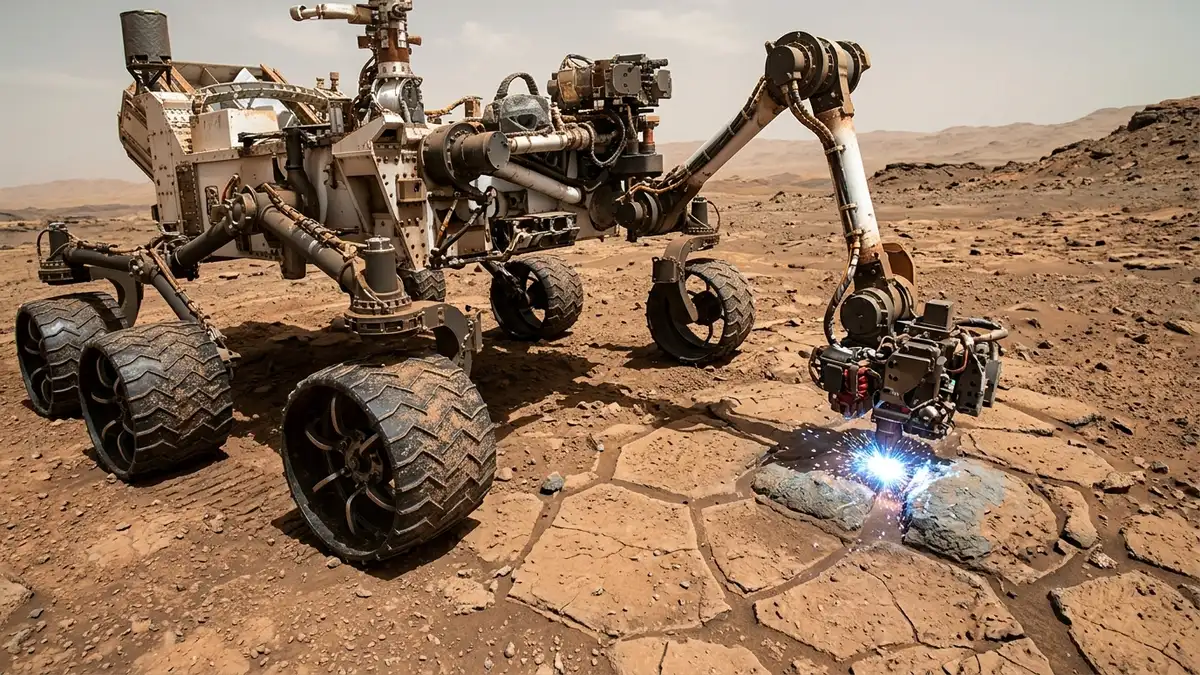
Curiosity Analyzing Mars Soil with Laser

In terrestrial laboratories, the controlled alternation between water and drought allows simple carbon molecules to join together to form RNA chains. This chemical process may have been the initial spark for the emergence of the first single-celled life on our own planet billions of years ago. The discovery in Valle Grande shows that Mars presented the same favorable conditions at the exact period when life arose on Earth.

Additional analyses by Curiosity focused on the bright mineral veins that fill the junctions of each geometric polygon. These cracks acted as conduit channels for groundwater saturated with mineral salts during the decline of the Martian lakes. When the water evaporated completely for the last time, the salts precipitated and sealed the perfect geometry of the sandstone cracks.

The dynamics of these ancient lakes prove that Mars' atmosphere was once thick enough to maintain stable liquid water. Researchers estimate these polygonal formations to be more than 3.6 billion years of preserved geological age. The study of these rocks allows reconstructing the history of atmospheric loss that transformed Mars into the frozen and hostile desert we see today.


Comparative Table of Relevant Geological Sites on Mars #

The table below compares the major sedimentary discoveries made by NASA rovers indicating the historical presence of water on Mars:

Mars Location Responsible Mission Year of Discovery Detected Geological Structure Implications for Life
Valle Grande (Gale Crater) Curiosity Rover 2026 Polygonal honeycomb cracks (clay and sulfate) Proves stable dry and wet seasonal cycles
Yellowknife Bay Curiosity Rover 2013 Freshwater lake mudstone with essential minerals Ideal habitable environment for ancient microbes
Jezero Delta Perseverance Rover 2021 River delta deposits rich in carbonates and silica Excellent preservation of microbial biosignatures
Home Plate (Gusev Crater) Spirit Rover 2007 Pure silica deposits generated by hydrothermal vents Active thermal environments conducive to extreme life

The Role of Rovers in Mapping the Martian Past #

The continuous collection of geological data by robots on the Martian surface complements observations made by satellites in orbit. Curiosity continues to demonstrate remarkable durability, exceeding the expectations of space systems engineers worldwide. Its scientific journey paved the way for more complex missions that seek to bring physical samples of Martian soil to Earth.
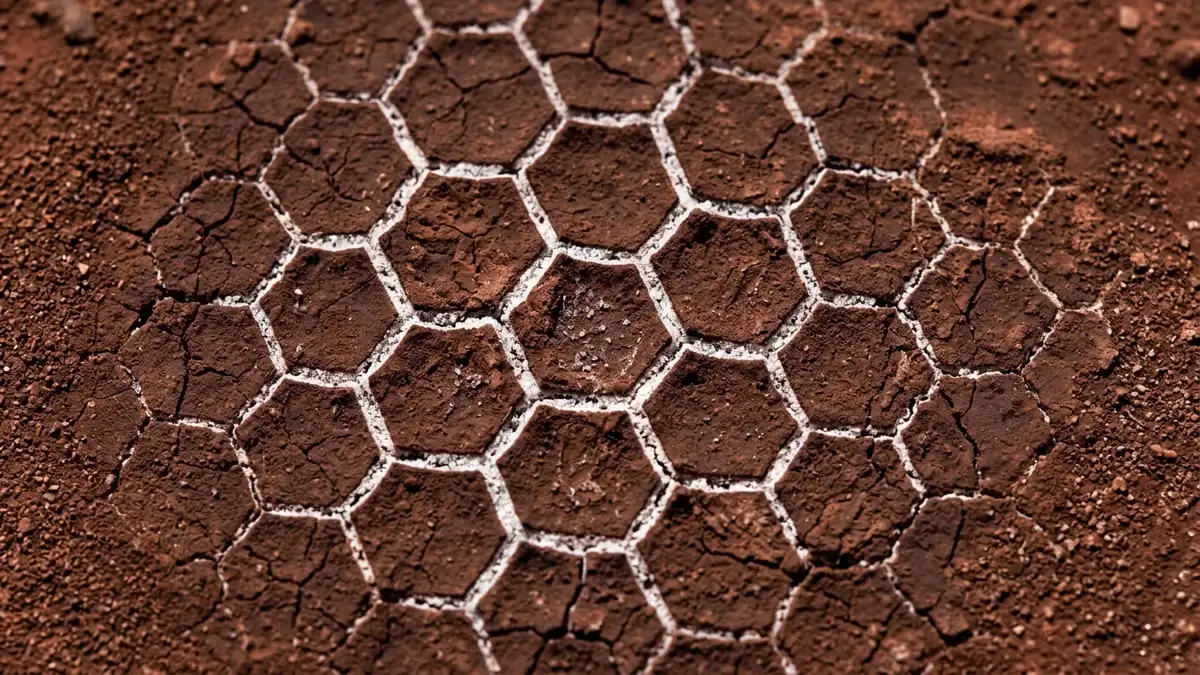
Geological Detail of Martian Honeycomb

The precision of the optical instruments installed on Curiosity's robotic arm allowed examining the micrometric texture of the sulfate minerals. These salt minerals function as time capsules that preserve the chemistry of ancient Martian water from billions of years ago. Each analyzed honeycomb pattern represents a written page of the climate history of an intriguing neighboring world.

This information is transmitted back to our planet through the space agency's sophisticated global network of antennas. Recent incidents on Earth, such as the NASA Station Evacuation in Spain, show the importance of maintaining active redundant networks. Thanks to the international cooperation of the Deep Space Network stations, data collection from Mars remains immune to local disasters on Earth.

Furthermore, new remote sensing instruments equipping future missions, such as the Nancy Grace Roman Space Telescope, will help unravel deep space. The astrobiological discoveries in Valle Grande encourage continuous investments in the development of new imaging and laser spectrometry technologies. The Martian geological honeycomb is just another piece in the ongoing puzzle of our search for life beyond Earth. Space science will continue to advance at a rapid pace, redefining our place in the cosmos with each new discovery.

Evaporitic Sulfate Diagnesis, Polygonal Desiccation Mechanics, and Prebiotic RNA Polymerization in Gale Crater #

Geochemical spectroscopy performed by Curiosity's ChemCam laser-induced breakdown spectrometer and Alpha Particle X-Ray Spectrometer (APXS) at the base of Mount Sharp demonstrates that the centimeter-scale hexagonal honeycomb ridges formed at a stratigraphic transition between clay-bearing lacustrine mudstones and sulfate-rich evaporites. Around 3.7 billion years ago, as Mars gradually lost its magnetosphere and thick carbon dioxide atmosphere, the ancient lake inside Gale Crater transitioned from a perennial body of water into an ephemeral playa subjected to thousands of seasonal wet-dry cycles. Repeated capillary rise of brines saturated with calcium and magnesium sulfates cemented the mud-crack perimeters into erosion-resistant stone walls, transforming soft desiccation polygons into permanent three-dimensional mineral lattices.

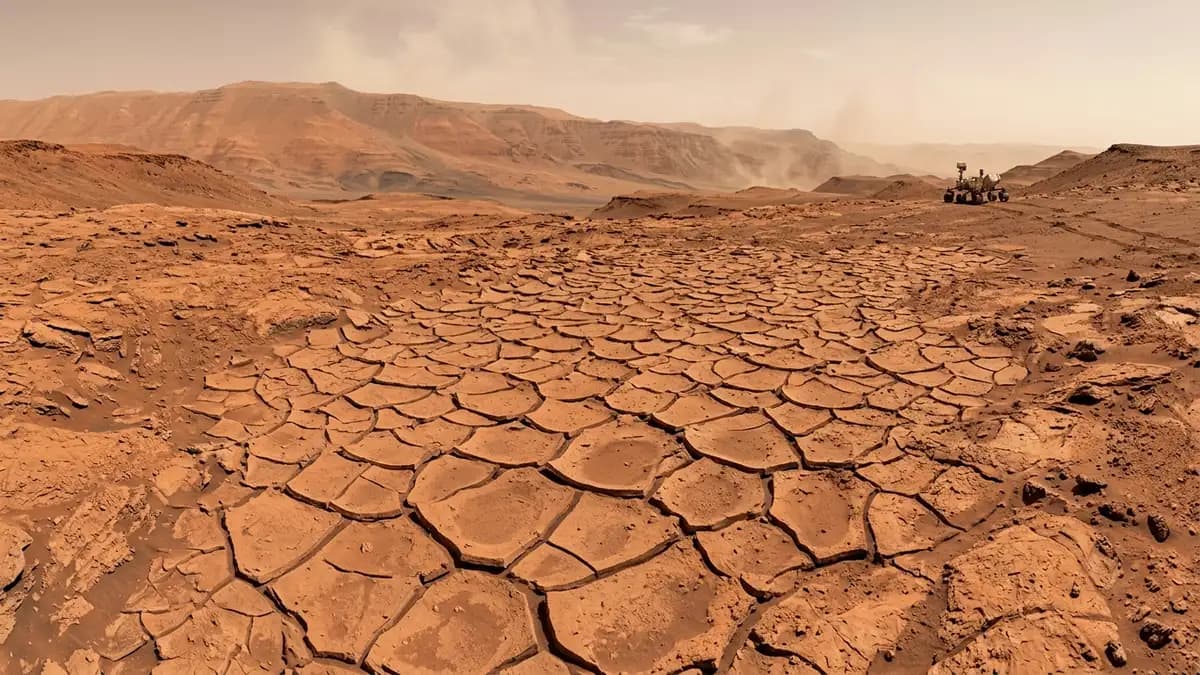
From an astrobiological perspective, these cyclic wetting and drying micro-compartments resolve the 'water paradox' that has long challenged theories of abiogenesis on both early Earth and ancient Mars. While bulk liquid water is necessary to dissolve simple organic monomers delivered by carbonaceous chondrites, excess water thermodynamically opposes the condensation reactions required to link ribonucleotides into RNA chains or amino acids into polypeptides. Inside Gale Crater's hexagonal mud-crack cells, daytime evaporation concentrated organic precursors alongside catalytic phyllosilicate clays during dry phases, while gentle seasonal rehydration encapsulated the newly formed polymers without dispersing them—creating a planetary-scale prebiotic reactor.


References and Authoritative Sources #

🏷️ Tags:

📢 Gostou deste artigo?

Compartilhe com seus amigos e nos conte o que você achou nos comentários!

❓Frequently Asked Questions

The honeycomb patterns discovered by the Curiosity rover on Martian soil are polygonal geological fractures formed by geometrically regular contraction cracks in sandstone. Measuring between 4 and 8 centimeters in width, these sedimentary structures indicate that the soil of the Valle Grande basin was once composed of wet clay. As the water of the ancient lakes evaporated under intense solar heat, the clay underwent dehydration and contracted, breaking into symmetric hexagonal shapes very similar to terrestrial honeycombs.
This geological discovery proves the existence of ancient seasonal cycles because the formation of symmetric polygonal junctions in sandstone requires the soil to undergo repeated rapid wetting and drying processes. In stable and permanent lakes, the clay remains smooth, while in permanently dry locations, the cracks do not close. The continuous repetition of the cracks filled by sulfate salt minerals demonstrates that the Valle Grande region possessed a dynamic ancient climate with well-defined wet and dry seasons.
The cyclical climate alternation is extremely important for astrobiology because rapid wetting and drying processes are considered crucial catalysts for the evolution of complex prebiotic molecules. In environments subjected to these cycles on Earth, simple carbon molecules can naturally group together to form stable biological polymers such as RNA. Therefore, the presence of geometric soils on Mars indicates that the Red Planet offered ideal chemical conditions for the emergence of elemental life billions of years ago.

Receba novidades!

Cadastre seu email e receba as melhores curiosidades toda semana.

🔒 Sem spam. Cancele quando quiser.

💬 Comentários (0)

Seja o primeiro a comentar! 👋

📚Related Articles

Centennial Encounter: Comet Tempel 2 Makes Its Closest Approach to Earth in 100 YearsScience and Nature

Centennial Encounter: Comet Tempel 2 Makes Its Closest Approach to Earth in 100 Years

The periodic comet 10P/Tempel 2 makes its closest approach to Earth in a century in early August 2026, mobilizing astronomers worldwide.

⏱️5 minLer mais →
Storm Alert: Cold Front Advances and Triggers Extreme Thermal Shock in MSScience and Nature

Storm Alert: Cold Front Advances and Triggers Extreme Thermal Shock in MS

The advance of a subpolar cold air mass collided with the heat of the Pantanal, generating wind gusts of 70 km/h and potential danger alerts in Mato Grosso do Sul.

⏱️5 minLer mais →
James Webb Telescope Shatters Cosmic Record by Detecting JADES-GS-z14-0, the Most Distant Galaxy in the UniverseScience and Nature

James Webb Telescope Shatters Cosmic Record by Detecting JADES-GS-z14-0, the Most Distant Galaxy in the Universe

With a historic redshift z=14.32 and unexpected luminosity 290 million years after the Big Bang, the galaxy reveals oxygen and challenges modern astrophysics.

⏱️6 minLer mais →
NASA’s "Big Bang": The Risky Command That Saved Voyager 2 in Interstellar SpaceScience and Nature

NASA’s "Big Bang": The Risky Command That Saved Voyager 2 in Interstellar Space

Discover how NASA engineers performed an emergency electrical maneuver to extend Voyager 2's lifespan 20 billion km from Earth.

⏱️6 minLer mais →
Rubin Mapping of the COSMOS Field Reveals Unprecedented Details of the UniverseScience and Nature

Rubin Mapping of the COSMOS Field Reveals Unprecedented Details of the Universe

The Vera Rubin Observatory obtains an ultra-deep image of the COSMOS field, mapping over 650,000 galaxies and 50,000 stars.

⏱️6 minLer mais →
The Giant's Fragility: Why Do Ice Storms Paralyze Texas?Science and Nature

The Giant's Fragility: Why Do Ice Storms Paralyze Texas?

Investigative report details the effects of extreme cold in Texas, explains the causes of the power grid collapse, and revisits the 2021 blizzard.

⏱️6 minLer mais →
Receba novidades no WhatsApp!