Cosmic Collision: SpaceX Falcon 9 Rocket Stage Impacts the Moon and Creates a New Crater
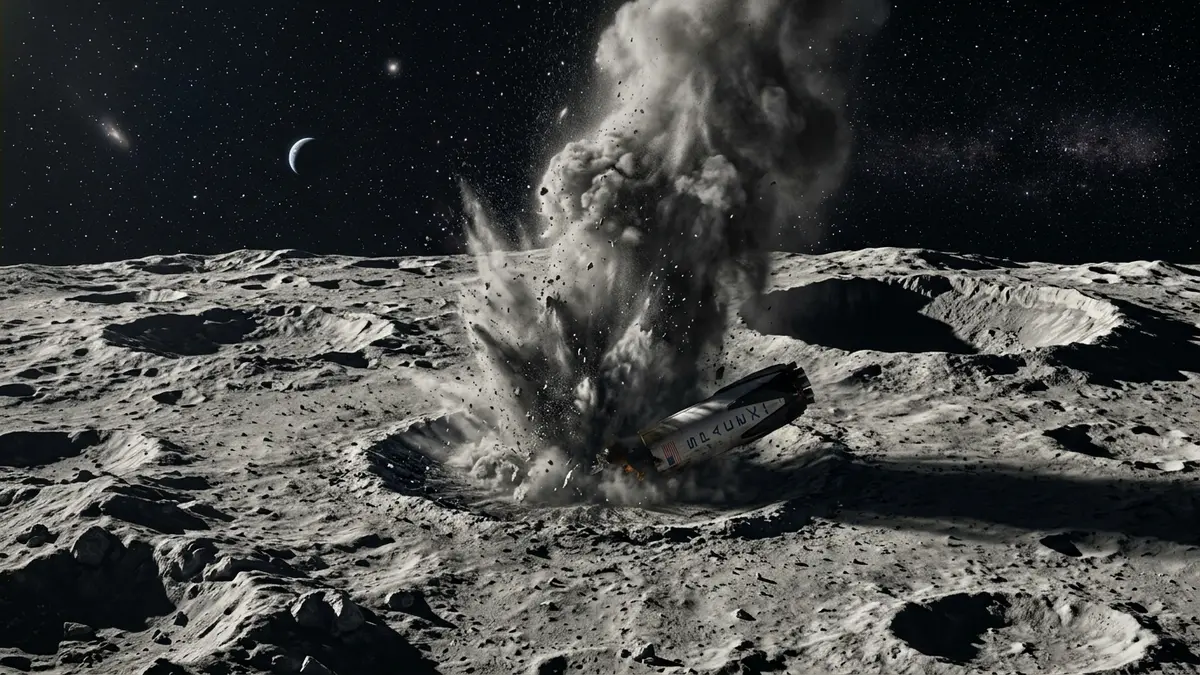
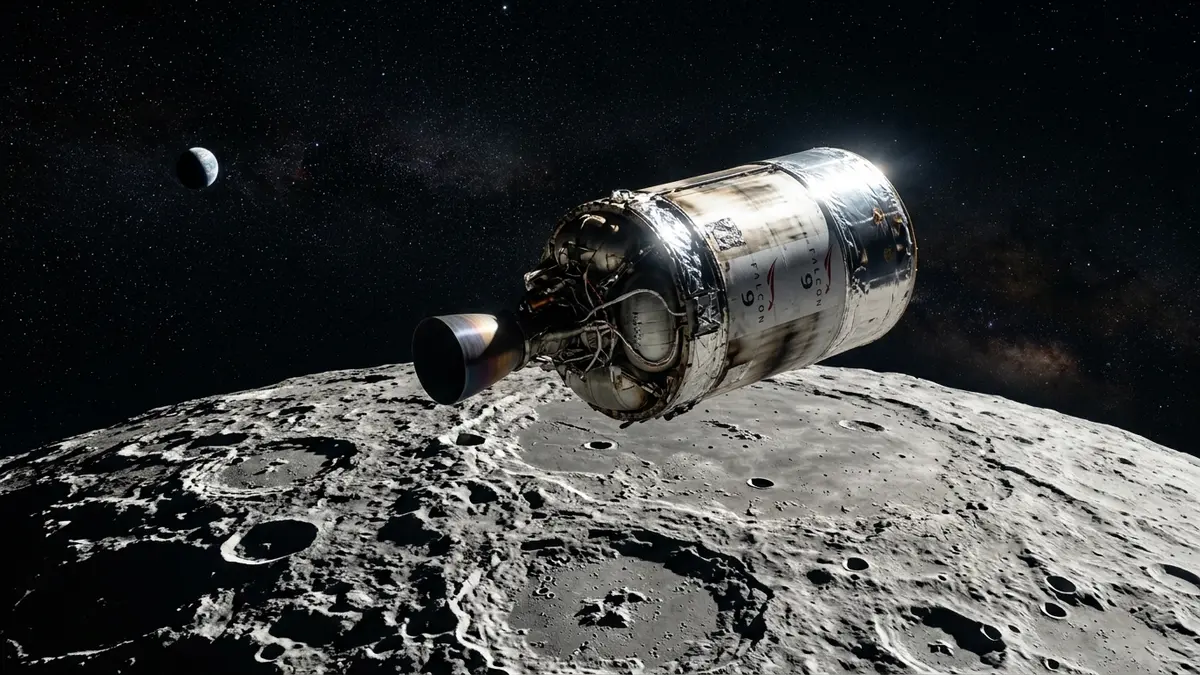
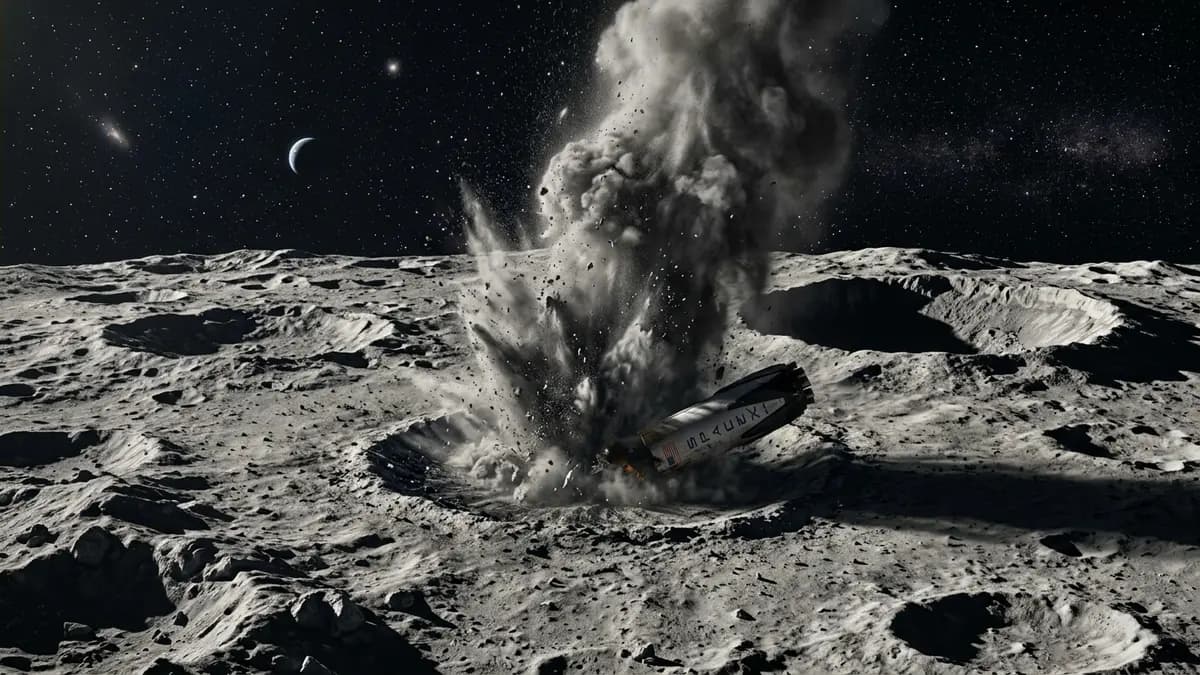
An unprecedented cosmic event has captured the attention of the global scientific community and reignited urgent debates regarding the massive volume of space debris currently drifting uncontrollably through the solar system. On August 5, 2026, a spent second stage of a SpaceX Falcon 9 rocket collided violently with the dusty surface of the Moon. This high-speed impact occurred in a rugged highland region near the Einstein and Bell craters, which are located on the western hemisphere of our satellite, producing a dust plume visible to orbital optical instruments.
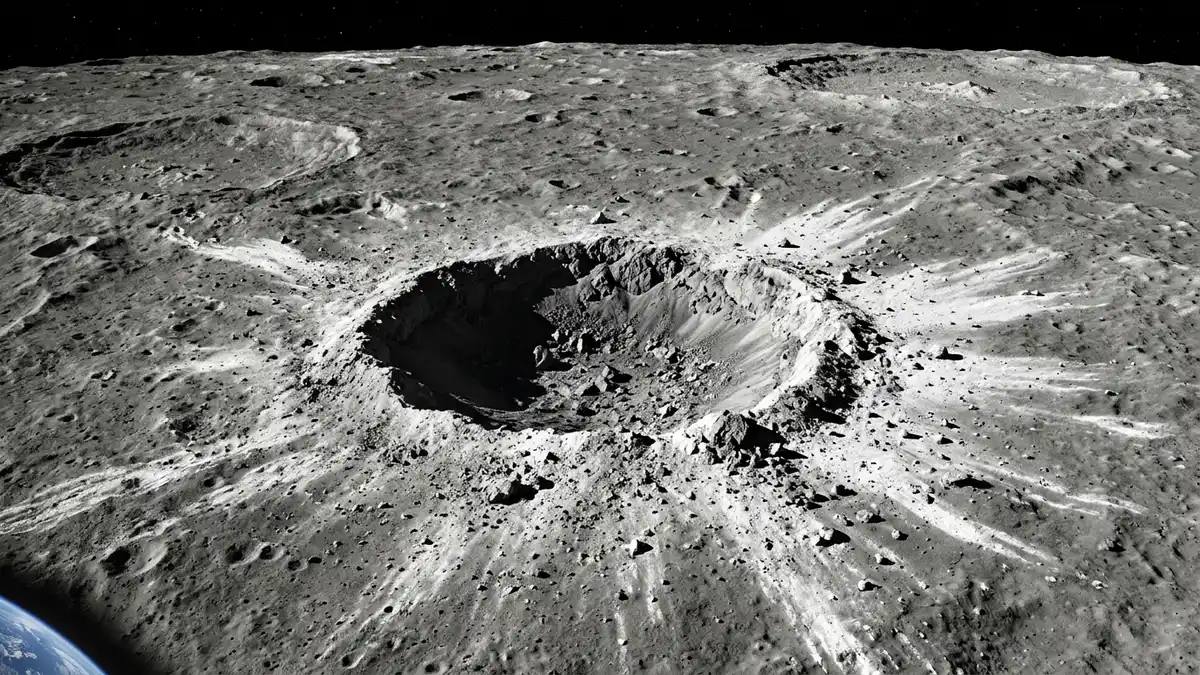
Astronomers from multiple international research institutions had been tracking the chaotic trajectory of the heavy metal booster for several months, calculating its orbital approach and predicting the mechanical collision with a minimal margin of physical error. The estimated impact velocity exceeded the impressive speed of nine thousand three hundred kilometers per hour at the exact moment of collision in the absolute lunar vacuum. The immense kinetic energy released during the crash was more than sufficient to excavate a deep new crater estimated by three-dimensional sensors to be between twenty and thirty meters in diameter.
Advanced scientific instruments installed onboard orbital probes that continuously circle the Moon captured precise imagery of the large dust plume that rose immediately following the violent mechanical collision. Scientists from various top-tier space agencies began analyzing the emission spectra of the ejected lunar dust to identify the potential presence of subterranean volatile compounds and rare water ice. This unexpected collision functions as a perfect natural physical experiment to reveal hidden secrets of deep lunar geology that would otherwise require highly expensive drilling hardware.