
No modern American president has reshaped the global geopolitical chessboard with such speed and audacity. Donald Trump, across just two terms, redefined the American economy, toppled regimes once considered untouchable, confronted regional powers, and redrawn the boundaries of global influence. By March 2026, the result of his actions is a planet unrecognizable from what existed in January 2017.
This article is not an opinion piece. It is a factual and chronological record of everything Trump has accomplished so far — economic achievements, military operations, regimes that fell, and a deep analysis of the before and after for each affected country. We've divided it into sections so you can grasp the full magnitude of what happened.
Part I: The Economic Revolution — Numbers Nobody Expected
1st Term (2017-2021): The Pre-Pandemic Boom
Before any discussion of foreign policy, we must acknowledge what happened to the American economy under Trump. The numbers speak for themselves:
| Indicator | Before Trump (2016) | Under Trump (2019) | Change |
|---|---|---|---|
| Unemployment | 4.7% | 3.5% (50-year low) | -25.5% |
| New jobs | — | +7 million | — |
| Median family income | $59,039 | $68,703 | +$9,664 (+16.4%) |
| GDP Growth | 1.6% | 2.3% (average) | +43.7% |
| Stock market (Dow Jones) | 19,827 | 28,538 | +44% |
| Opportunity Zones | 0 | 8,764 zones | $75 billion invested |

The Tax Cuts and Jobs Act of 2017
The biggest tax reform in 30 years cut the corporate rate from 35% to 21% and doubled the standard deduction for families. The impact was immediate:
- $3.2 trillion in tax cuts approved
- Standard deduction doubled from $6,350 to $12,000
- Child tax credit increased from $1,000 to $2,000
- 500,000+ jobs created by Opportunity Zones alone
Critics argue that the cuts disproportionately benefited the wealthy and increased the federal deficit by $1.9 trillion. Supporters respond that federal revenue increased due to economic growth, even with lower tax rates. The truth, as always, lies in the data — and both sides find numbers to support their arguments.
The USMCA Agreement: Replacing NAFTA
Trump withdrew the U.S. from NAFTA (1994) and renegotiated the trade agreement with Mexico and Canada, creating the United States-Mexico-Canada Agreement (USMCA). Key changes:
- Rules of origin requiring 75% North American content for automobiles (previously 62.5%)
- Minimum wages for automotive workers in Mexico
- Expanded intellectual property protections
- Access to the Canadian dairy market
2nd Term (2025-present): The Amplified Return
Trump's second term, beginning January 2025, accelerated first-term policies with striking results:
| Indicator | Result (Through Mar 2026) |
|---|---|
| Private sector jobs created | +654,000 |
| Net migration | Negative for the first time (2.6M+ removed) |
| Fentanyl at the border | -50% in seizures (indicating decline in flow) |
| New trade agreements | 7 countries |
| Tax on tips | Eliminated |
| Tax on overtime | Eliminated |
| Tax on Social Security | Eliminated |
| LNG exports | Capacity expanding to double by 2029 |
The "Working Families Tax Cut" program implemented the promises of "No Tax on Tips, No Tax on Overtime, No Tax on Social Security" — directly affecting 40+ million American workers. Anti-crime task forces in Washington D.C. and Memphis significantly reduced homicides.
Part II: Iran — The Fall of the Most Powerful Regime in the Middle East
BEFORE: Khamenei's Iran (1989-2026)
To understand what Trump did in Iran, it's essential to grasp what Iran was before. The Iranian theocratic regime, under Ayatollah Ali Khamenei, was one of the most influential — and feared — forces in the Middle East:
The Regime from Within:
- Absolute theocracy: Khamenei, as Supreme Leader, held power over the judiciary, armed forces, media, and nuclear policy
- Nuclear program: 60% uranium enrichment achieved, steps away from a bomb
- Proxy network: Hezbollah (Lebanon), Houthis (Yemen), militias in Iraq and Syria — a "proxy war" against Israel and the U.S.
- Internal repression: Mahsa Amini protests (2022) brutally crushed; over 500 killed and 20,000 arrested
- Terror financing: Billions of dollars annually donated to Hezbollah, Hamas, and Iraqi militias
- Collapsing economy: Inflation above 40%, youth unemployment above 25%, Iranian rial losing 80% of value in a decade
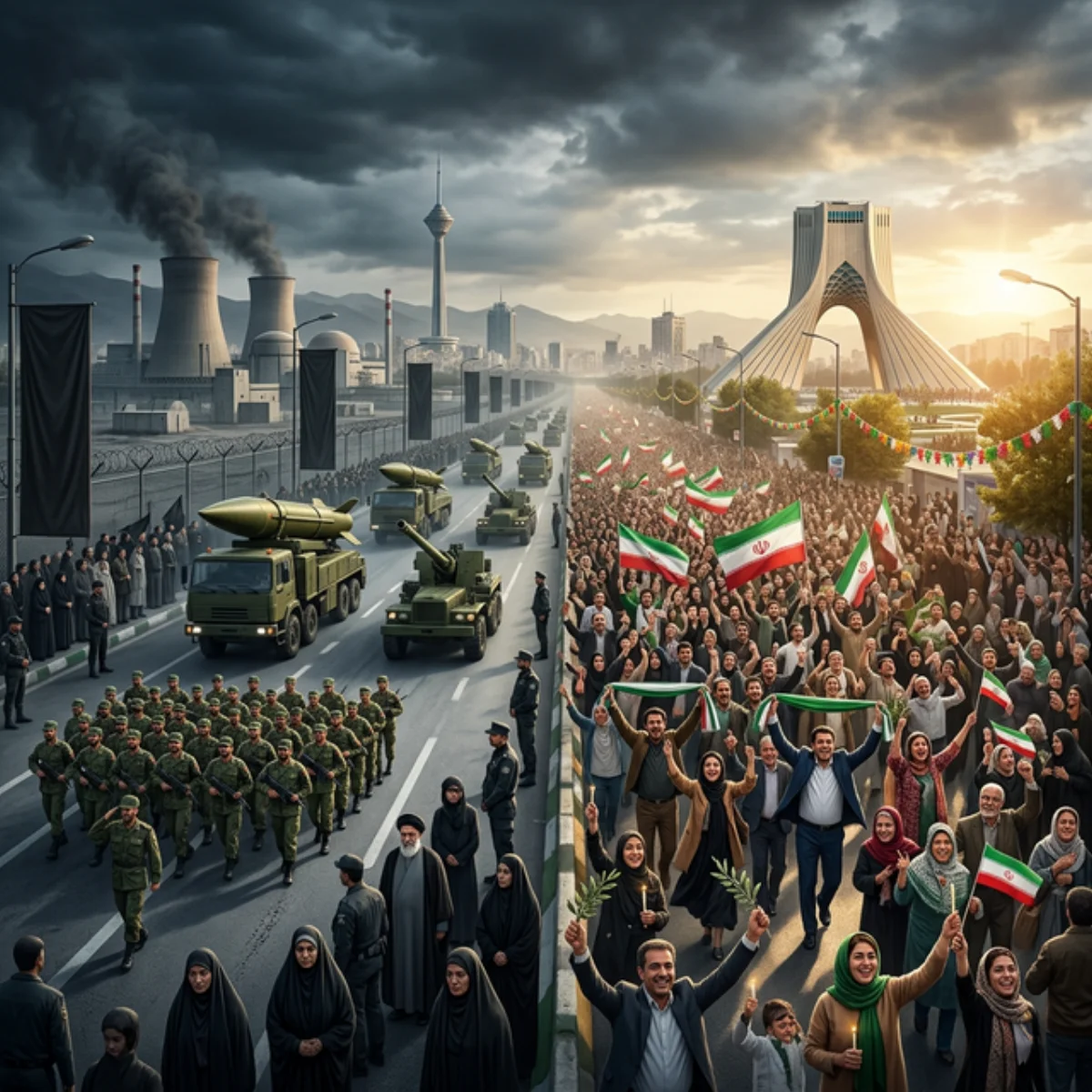
The Iranian people, in turn, were predominantly young (60% under 30), educated, internet-connected, and increasingly hostile to the regime. The 2022-2023 protests — under the slogan "Woman, Life, Freedom" — showed that Iranian civil society was ready for a change the regime would never allow peacefully.
Military Action: Two Decisive Operations
Operation Midnight Hammer — June 2025
The first significant military operation destroyed Iran's nuclear program. Surgical airstrikes, using B-2 bombers and cruise missiles, hit enrichment facilities at Natanz, Fordow, and Isfahan. A decades-old nuclear program was eliminated in one night.
Trump posted on Truth Social: "Regime Change. Make Iran Great Again." — signaling publicly for the first time that regime change was an objective.
Operation Epic Fury — February 2026
The second operation, conducted in coordination with Israel, was even more devastating:
- February 28, 2026: U.S. and Israel launch Operation Roaring Lion/Epic Fury
- Massive airstrikes against Tehran, Isfahan, Shiraz, and IRGC bases
- Most impactful result: Death of Ayatollah Ali Khamenei, Supreme Leader since 1989
- Top IRGC (Islamic Revolutionary Guard Corps) commanders eliminated
- Iranian military infrastructure severely degraded
AFTER: Post-Khamenei Iran
The current situation (March 2026) is one of chaotic transition:
| Aspect | Current Status |
|---|---|
| Government | Interim Leadership Council (legitimacy questioned) |
| 40 days of mourning | Period of social and military mobilization |
| Retaliation | 708 projectiles launched against 6 Gulf countries |
| Proxies | Hezbollah, Houthis, and militias activated on 5 fronts |
| Nuclear program | Destroyed |
| Economy | Worsening of pre-existing crisis |
| Society | Divided between grief/anger and hope for change |
What can improve:
- End of theocracy opens possibility for civilian, democratic government
- Young generation can lead political reform
- End of nuclear program eliminates risk of regional arms race
- Resources previously spent on proxies can be redirected to the economy
What can worsen:
- Power vacuum may generate civil war
- Radical IRGC factions may seize full control
- Continued proxy retaliation may destabilize the entire region
- American public opinion is predominantly against intervention (February 2026 polls)
Part III: Venezuela — The End of Maduro's Narco-State
BEFORE: Maduro's Venezuela (2013-2026)
Venezuela under Nicolás Maduro is, without exaggeration, one of the greatest humanitarian catastrophes in modern Latin American history:
The Venezuelan Collapse in Numbers:
| Indicator | Data |
|---|---|
| GDP | 75% decline between 2013-2023 (largest collapse outside a war zone) |
| Hyperinflation | Peak of 1,000,000%+ in 2018 |
| Refugees | 7.7+ million Venezuelans fled the country |
| Extreme poverty | 76.6% of the population |
| Homicides | Rate of 45.6 per 100K inhabitants (one of the highest in the world) |
| Child malnutrition | 33% of children under 5 |
| Political prisoners | 300+ documented by international NGOs |
Maduro governed what was effectively a narco-state. The U.S. offered $15 million in rewards for information leading to his capture, with formal charges of narco-terrorism and drug trafficking in American federal courts. The regime was sustained by alliance with Cuba, Russian financing, and Chinese weapons purchases.
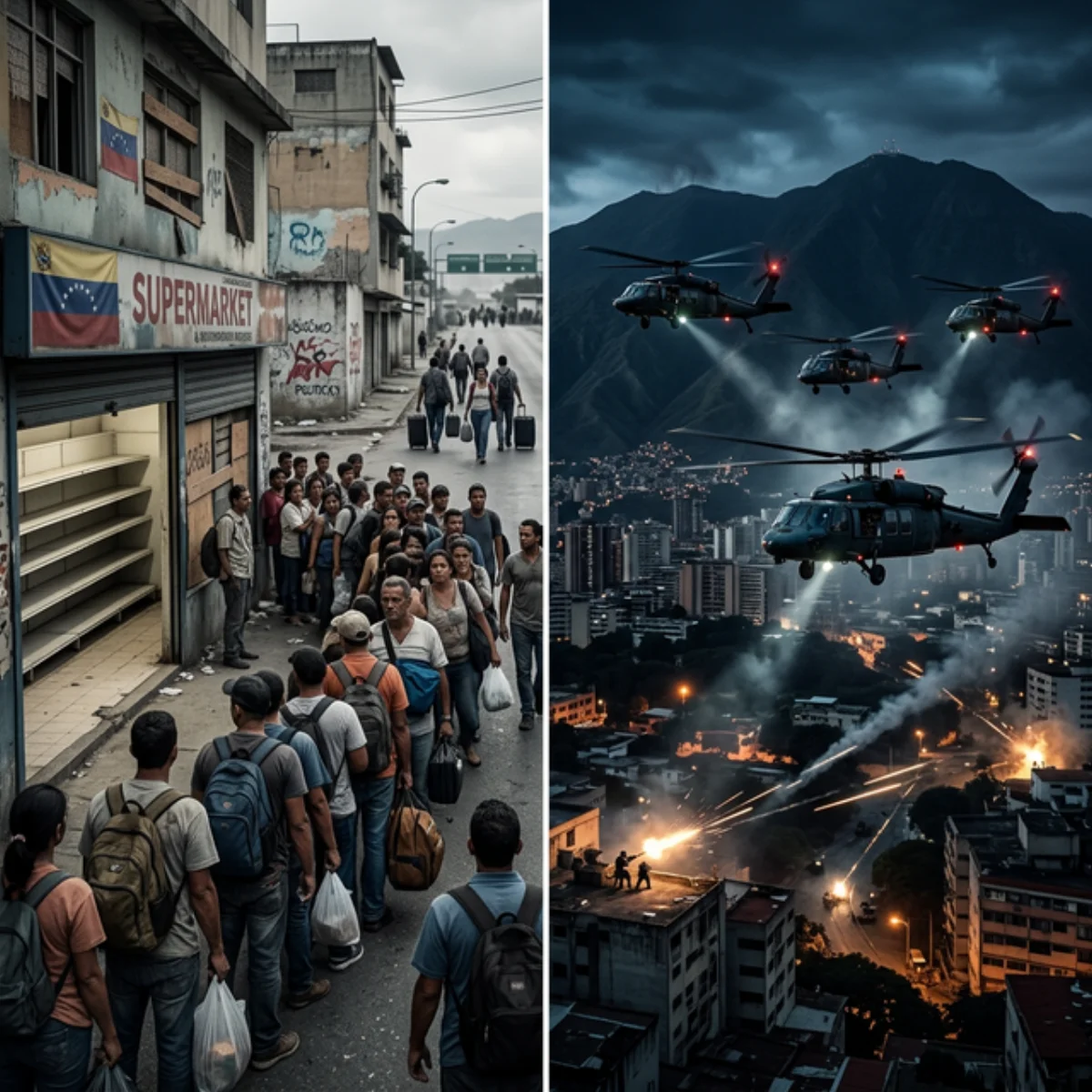
The 2025 Escalation and Operation Absolute Resolve
The chronology of Maduro's fall:
| Date | Event |
|---|---|
| 2025 (throughout) | Trump designates Venezuelan gangs as "Foreign Terrorist Organizations" |
| Jul-Nov 2025 | Secret U.S.-Maduro negotiations over oil reserves |
| Dec 2025 | Maritime blockade of Venezuelan tankers; CIA operates inside Venezuela |
| Jan 3, 2026 | Operation Absolute Resolve — U.S. military strike on Venezuela |
| Jan 3, 2026 | Explosions in Caracas; siege of Maduro's compound; Delta Force and CIA |
| Jan 3, 2026 | Maduro and Cilia Flores captured |
| Jan 4, 2026 | Maduro and wife transported to NYC to face charges |
| Jan 5, 2026 | Delcy Rodríguez assumes as interim president |
| Jan 2026 | Amnesty bill approved; hundreds of political prisoners released |
AFTER: Post-Maduro Venezuela
The current situation is one of fragile transition:
What's happening:
- Interim government of Delcy Rodríguez, with declared U.S. oversight
- U.S. promises to "run the country" until a transition can be arranged
- Oil quarantine maintained with American military presence
- Amnesty law freed hundreds of political prisoners
- Trump declared that oil revenues would benefit Venezuelans, American oil companies, and the U.S. as reimbursement
What can improve:
- End of the narco-state and regime-run trafficking networks
- Access to oil reserves (world's largest) for reconstruction
- Potential return of millions of refugees
- Possibility of free elections for the first time in over a decade
- Release of political prisoners and end of repression
What can worsen:
- Armed resistance from Chavismo loyalists
- Prolonged American military presence generates resentment
- Control of oil resources is internationally controversial
- Lack of institutional infrastructure for democracy after decades of authoritarianism
- International community divided on intervention legitimacy
Part IV: Other Countries — The Donroe Doctrine in Action
Beyond Iran and Venezuela, Trump projected American power over multiple other countries and territories. The so-called "Donroe Doctrine" — an expanded and aggressive version of the original Monroe Doctrine — aims to reassert American dominance over the Americas and beyond.
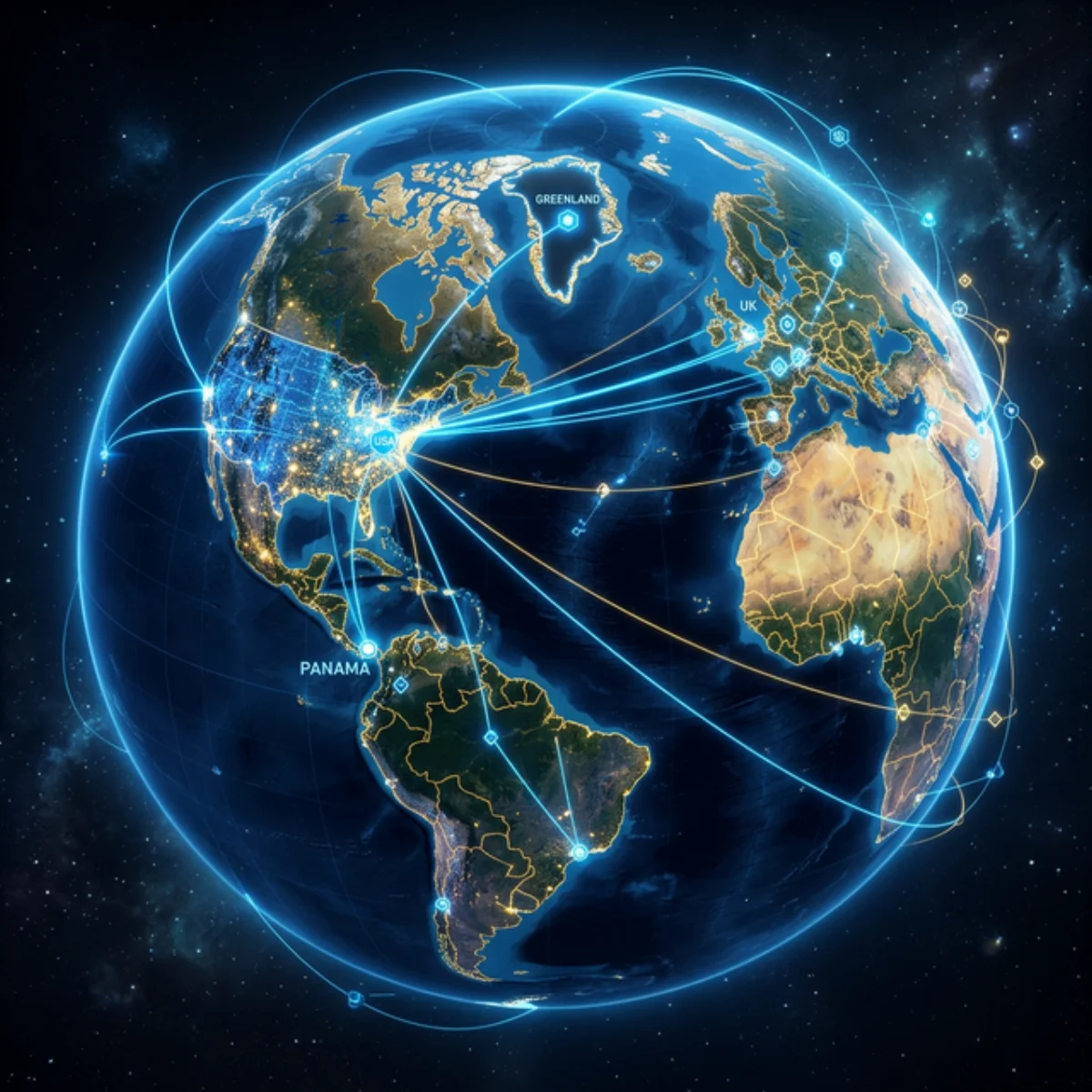
Panama and the Canal
The Panama Canal, returned to Panama in 1999, returned to the spotlight with Trump expressing interest in "taking it back." Military planners considered forceful recovery options, leading Panama to make significant concessions.
| Aspect | BEFORE | AFTER |
|---|---|---|
| Control | Full Panamanian sovereignty | American concessions under pressure |
| Fees | Set by Panama | Negotiations under coercion |
| Military presence | Zero American | Threat of return |
| Bilateral relationship | Cooperative | Tense and asymmetric |
Greenland
Trump openly expressed his desire to annex Greenland, an autonomous territory of Denmark. The justification was strategic: access to Arctic routes, rare mineral resources, and military positioning.
Denmark refused. Trump threatened economic and diplomatic consequences. The situation remains tense, with Greenland strengthening independence movements — ironically, not to join the U.S., but to gain more autonomy from Denmark.
Cuba
Pressure on Cuba was intensified with:
- Reinforcement of economic sanctions
- State sponsor of terrorism designation maintained
- Blocking of remittances and travel
- "Liberation" rhetoric for the Cuban people
Mexico and Canada
While not involving regime change, both countries faced significant pressure:
| Country | Type of Pressure | Result |
|---|---|---|
| Mexico | Trade war, mass deportations, anti-cartel pressure | Forced border cooperation |
| Canada | Tariffs, trade threats, USMCA disputes | Commercial concessions |
Other Military Actions
Beyond the main operations, bombings were reported in:
- Yemen (against Houthis)
- Iraq (against pro-Iran militias)
- Nigeria (against insurgents)
- Somalia (against Al-Shabaab)
Part V: The First Term — Foreign Policy and Legacy
Abraham Accords: The Peace Nobody Expected
Perhaps the most significant diplomatic achievement of the first term, the Abraham Accords normalized relations between Israel and:
- United Arab Emirates
- Bahrain
- Morocco
- Sudan
For the first time in decades, Arab nations officially recognized Israel. The agreement broke the consensus that Israeli-Palestinian peace was a prerequisite for any regional normalization.
Other First Term Milestones
| Achievement | Year | Significance |
|---|---|---|
| Meeting with Kim Jong-un | 2018-2019 | First sitting U.S. president to step foot in North Korea |
| Withdrawal from Iran nuclear deal | 2018 | Set the stage for future military actions |
| Recognition of Jerusalem | 2017 | Embassy transferred, status quo broken |
| Creation of Space Force | 2019 | 6th branch of the Armed Forces |
| First Step Act | 2018 | Criminal justice reform |
| Operation Warp Speed | 2020 | COVID vaccines in record time |
| 3 Supreme Court justices | 2017-2020 | Gorsuch, Kavanaugh, Barrett — conservative majority |
| 234 federal judges | 2017-2020 | Highest number for a 1st term since 1981 |
Right to Try and Healthcare
The "Right to Try" legislation allowed terminally ill patients to access experimental treatments. An executive order protecting patients with pre-existing conditions was signed.
Part VI: Comparative Analysis — The Global Before and After
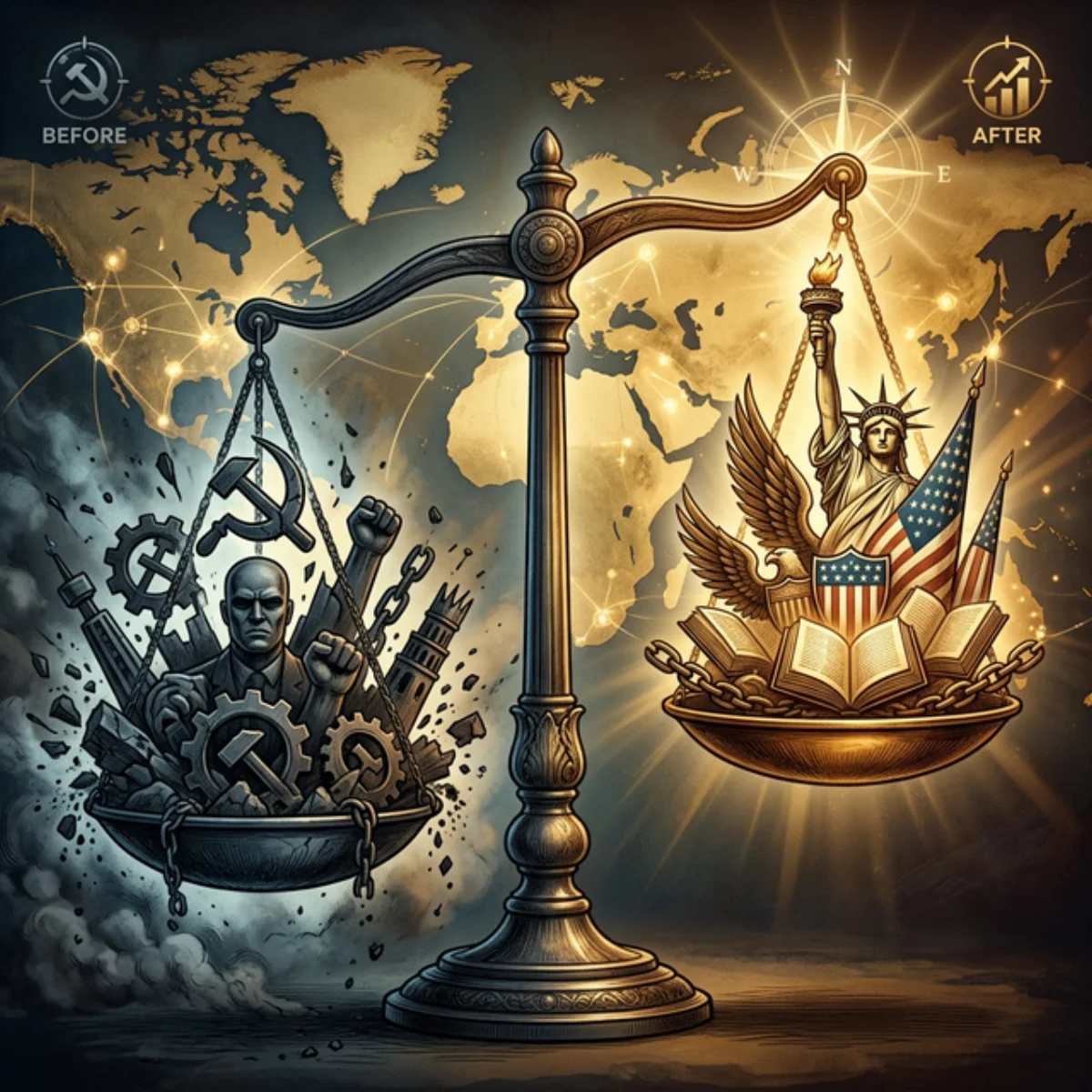
Summary Table: Before and After for Each Country
| Country | BEFORE Trump | AFTER Trump | Status (Mar 2026) |
|---|---|---|---|
| Iran | Nuclear theocracy with global proxy network | Nuclear program destroyed, leader killed | Chaotic transition |
| Venezuela | Narco-state with Maduro in power | Maduro imprisoned in NYC | Interim government under U.S. oversight |
| Panama | Full sovereignty over Canal | Concessions under American pressure | Diplomatic tension |
| Greenland | Autonomous territory of Denmark | Target of annexation attempt | Diplomatic impasse |
| Cuba | Castro regime with partial opening | Reinforced sanctions | Economic isolation |
| Mexico | Independent migration policy | Forced border cooperation | Tense but functional relationship |
| Israel | Ally with restrictions | Ally without restrictions + joint operations | Maximum military partnership |
| North Korea | Active nuclear threat | Dialogue established (1st term) | Status quo maintained |
The Human Cost
No analysis would be complete without considering the human price of these actions:
- Iran: 555+ dead in March 2026 strikes, including 150-180 in girls' school in Minab
- Venezuela: Military and civilian casualties during Operation Absolute Resolve (unconfirmed numbers)
- Deportations: 2.6+ million people removed from the U.S.
- Public opinion: February 2026 polls show significant disapproval of military actions against Iran
What Can Improve Going Forward
- Democratic transitions in Iran and Venezuela, if conducted with genuine international support
- Reduction of nuclear threats with Iran's program destroyed
- End of state-run drug trafficking from Venezuela
- Return of refugees to their Venezuelan homes
- Continued American economic growth with favorable tax policies
The Risks Ahead
- Power vacuum in Iran may generate civil war or an even more radical state
- Proxy retaliation may escalate into regional war
- Intervention precedent may destabilize the international order
- Global resentment against the U.S. may strengthen adversaries like China and Russia
- Economic cost of military operations is unsustainable long-term
Conclusion: The Man Who Redrew the Map
Regardless of political position, it is impossible to deny that Donald Trump changed the world. Whether for better or worse, the judgment belongs to history — and history is being written right now, as you read this article.
The regimes of Iran and Venezuela, which for decades seemed immune to external pressure, were toppled in a matter of months. The Panama Canal and Greenland are on the American imperial radar. The U.S. economy grew while rivals faltered.
But the costs — in human lives, in the sovereignty of nations, in precedents for future interventions — are incalculable. Is the world Trump built safer or more dangerous? Freer or more dominated? The answers to these questions will define not just a president's legacy, but the course of civilization in the 21st century.
One thing is certain: the world before and after Trump are two different planets.
Read Also
- Middle East War Escalation: Apocalyptic Scenarios
- U.S. and Israel Attack Iran: Operation Roaring Lion
- Iran Attacks Dubai and the Persian Gulf: The Retaliation
- World War III: Possible Scenarios
- The 10 Greatest Military Powers in the World in 2026
References and Sources
- The White House — President Trump's Accomplishments (2025)
- The Guardian — Iran strikes and death of Khamenei (March 2026)
- Al Jazeera — Operation Epic Fury: Full analysis
- Time — Trump's Donroe Doctrine and Venezuela intervention
- CFR — Operation Absolute Resolve: Venezuela timeline
- Wikipedia — 2026 United States invasion of Venezuela
- PBS — Maduro captured by U.S. forces
- Washington Post — Iran death toll and aftermath
- Brookings Institution — Trump's Latin America policy
- Ballotpedia — Trump first term achievements
- National Archives — Economic achievements (2017-2021)
- America.gov — Second term policy outcomes
- El País — Iran regime change analysis
- NY Magazine — Iran military operation assessment
- Arab Center DC — Public opinion on Iran strikes


