🌍 Your knowledge portal
historia

Roman Imperial Baths Discovered in Maximinus Daza's Palace in Serbia

📅 2026-09-04⏱️ 14 min read📝
⚡

Quick Summary

Archaeologists in Serbia discovered a lavish 4th-century imperial bath complex in the palace of Maximinus Daza, revealing secrets of ancient Roman architecture. The discovery of a luxurious Roman imperial bath complex in Serbia is rewriting the architectural history of the late Roman Empire, offering fascinating new perspectives on the period.

Key Takeaways:

  • The extremely meticulous and painstaking scientific analysis of the resplendent remains of the dazzling imported luxury marble pools has undoubtedly revealed countless and fascinating details of practical engineering about the…
  • The Vrelo-Šarkamen archaeological site, located in the green hills of modern-day Serbia, has been a focus of intense historical research and rigorous excavations for several decades.
  • The Tetrarchy, an innovative system of government instituted by the emperor Diocletian to try to stabilize the vast and fractured Roman Empire, radically changed the architectural landscape of the ancient world.
Roman Imperial Baths Discovered in Maximinus Daza's Palace in Serbia
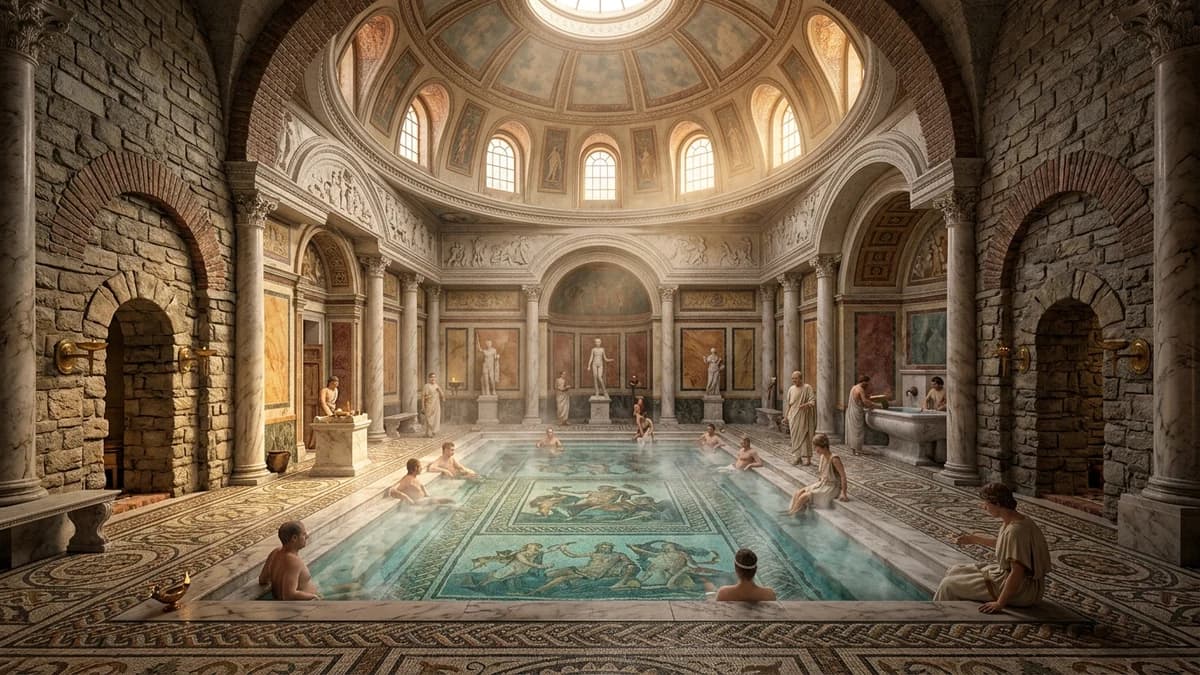
Roman Imperial Baths Discovered in Maximinus Daza's Palace in Serbia — High-Fidelity Artistic Illustration created by artificial intelligence based on scientific research.

The discovery of a luxurious Roman imperial bath complex in Serbia is rewriting the architectural history of the late Roman Empire, offering fascinating new perspectives on the period. Archaeologists have excavated parts of the palace of the Roman emperor Maximinus Daza, revealing incredibly preserved structures at the Vrelo-Šarkamen archaeological site, a location that has proven to be an inexhaustible source of historical wealth. This monumental discovery highlights the extravagant luxury and unparalleled technological ingenuity of the 4th-century imperial elite. The bath complex, known in antiquity as a balneum, offers a fascinating glimpse into the private life and hygienic customs of antiquity's most powerful leaders.

The Vrelo-Šarkamen archaeological site, located in the green hills of modern-day Serbia, has been a focus of intense historical research and rigorous excavations for several decades. This strategic geographical region was the birthplace of numerous Roman emperors during late antiquity, a time of immense political and social turmoil. Maximinus Daza, who ruled during the turbulent period of the Roman Tetrarchy, ordered the construction of this magnificent palace as a monumental symbol of his absolute power and vast influence in the region. The recent finding of private baths inside one of the massive fortification towers of the palace underlines the crucial importance of the site not only as a residence of incalculable prestige but also as an insurmountable stronghold of security.

The Tetrarchy, an innovative system of government instituted by the emperor Diocletian to try to stabilize the vast and fractured Roman Empire, radically changed the architectural landscape of the ancient world. During this volatile time, the construction of heavily fortified palace complexes became a hallmark of the ruling emperors, who desperately needed safe havens away from the volatile and often dangerous original capital, Rome. Maximinus Daza built his colossal palace in Vrelo-Šarkamen meticulously following this architectural trend that blended strict military purposes with extravagant civilian luxuries. The integration of a complete bath complex in the main defense tower brilliantly demonstrates how the primary need for military security was harmoniously combined with the extreme comfort and opulence expected by an imperial monarch.

The discovered thermal complex is notable not only for its unusual and audacious location, but also for its incredible and intricate architectural and engineering complexity. It featured a highly advanced underground heating system, widely known as a hypocaust, which circulated hot air under the thick mortar floors and through ceramic ducts inserted into the stone walls. This ingenious system ensured that the vast environments invariably maintained pleasant temperatures, even during the harsh and unforgiving Balkan winters that often paralyzed the region. The hypocaust, which consumed enormous amounts of firewood and required constant maintenance by a legion of servants, was an extreme luxury, reserved almost exclusively for the majestic residences of the highest elite of the Roman empire.

Archaeologists and researchers were absolutely amazed to discover the surprisingly well-preserved remains of three magnificent marble pools within the excavated residential complex. These imposing pools were constructed with top-quality white and colored marble, imported at great cost and effort from various distant regions of the vast Roman Empire, indicating the immense wealth of the emperor and his extensive international trade networks. The unquestionable presence of three distinct pools strongly suggests the existence of the traditional and elaborate Roman bath rooms that comprised the hygiene ritual of the time: the frigidarium (the stimulating cold pool), the tepidarium (the relaxing warm pool), and the caldarium (the invigorating hot pool). This progressive sequence of thermal immersion was considered absolutely essential for maintaining good physical health, mental vigor, and general relaxation in sophisticated Roman elite culture.

The luxurious use of precious imported marble was by no means limited only to the internal lining of the pools, extending profusely also to the wide floors and high walls of the entire thermal enclosure, creating a dazzling visual spectacle. The shimmering reflection of sunlight on the incredibly polished surfaces of gleaming marble created a resplendent, ethereal, and almost divine environment, precisely designed to deeply impress any illustrious visitor and constantly reaffirm the unquestionable divine status of the reigning emperor. Vibrant fragments of finely crafted mosaics and pieces of colorful frescoes found near the ruins suggest that the upper walls and majestic vaulted ceilings were also richly decorated with dramatic mythological scenes. This impressive level of meticulous artistic detail reinforces the fundamental idea that the simple act of the Roman bath was conceived to be an overwhelming and complete sensory experience, engaging all the senses in a whirlwind of aesthetic and physical pleasure.

The recent and exciting discovery has profound and lasting implications for our overall understanding of the complex defensive architecture and luxurious Roman residential constructions of the time. Traditionally, the famous Roman baths (commonly referred to as thermae in historical literature) were immense, expansive structures completely separate from dwellings, often erected as grandiose public works or built as extensive annex buildings to the large and prosperous rural villas of wealthy patricians. The brilliant and surprising incorporation of a complete and functional balneum within the robust structure of a solid military fortification tower indicates a remarkably creative and ingenious adaptation to the growing and pressing strict security needs of that dangerous era, and all this without sacrificing an ounce of beloved civilian comfort. This masterful and unprecedented fusion of an impenetrable stone military fortress with a hedonistic aquatic pleasure palace is perfectly emblematic of the incredibly troubled and contradictory period in which the controversial Maximinus Daza reigned supreme.

The controversial Emperor Maximinus Daza is often infamously remembered for his relentless frontier military campaigns and his harsh religious persecutions of early Christians, but this surprising palatial discovery certainly casts a new and favorable light on his refined personal tastes. Despite his consolidated and terrible historical reputation as a ruthless and often brutal leader on the battlefield, the meticulous and luxurious construction of his majestic palace in Vrelo-Šarkamen reveals, without a shadow of a doubt, a man deeply invested in refined classical culture and the immensely civilized typically Roman lifestyle. The massive financial and logistical investment in a formidable engineering infrastructure and stunning beauty in his provincial homeland was a common political strategy, a way for astute emperors to permanently solidify their lasting legacy and generously reward the loyal provinces that supported them militarily and economically. The formidable and stunning imperial palace simultaneously served as an impregnable defensive fortress against barbarian invaders and as an eternal stone monument to his own unquestionable success, ensuring that his name would resonate gloriously through the coming centuries, far beyond the inherent instability of his volatile reign.

The painstaking archaeological excavations conducted at the Vrelo-Šarkamen site have consistently utilized cutting-edge technology, encompassing advanced methods that included modern high-resolution 3D laser scanning and precise ground-penetrating radar equipment. These revolutionary and entirely non-invasive techniques allowed talented field researchers to carefully map the complex and hidden subterranean structures of the vast palace complex with surgical precision even before they began digging the time-hardened earth. The careful and time-consuming surgical removal of thick millennial layers of accumulated earth finally revealed the complex and impressive system of robust air ducts and massive brick furnaces that effectively powered the vital and prodigious machinery of the hypocaust beneath the floors of the luxurious imperial balneum of yesteryear. The exceptional miraculous preservation of these fragile fundamental structural elements is considered incredibly rare in today's archaeological scene and, for this reason, offers a rich case study, immensely valuable and enlightening, intended for both curious modern architects and dedicated and scholarly historians of complex ancient engineering, illuminating a past once shrouded in uncertainty.

The vibrant nation of contemporary Serbia proudly houses in its territory dozens of impressive Roman sites of undeniable and vast global importance, formidable structures that unequivocally reflect the prominent and crucial central geostrategic role of the Balkan region, especially throughout the turbulent final phase of the imposing classical era of the grandiose empire. Aware of its vast unexplored heritage, the modern country, governed by forward-thinking administrations, is actively and energetically promoting the flourishing of dedicated archaeological research to succeed in discovering, studying, and, primarily, diligently safeguarding and protecting for the future this exceptionally rich cultural heritage. The dazzling historical site of Vrelo-Šarkamen has been formally and rightly recognized by government authorities as an immense protected area of the highest priority historical interest, and extensive architectural and logistical plans are currently accelerating to soon transform the grandiose marvel of the excavated site into a notable accessible and fascinating archaeological park intended for the use of the international public. This will undoubtedly not only significantly boost the growing historical tourism that greatly benefits the regional economy substantially, but will also provide, in the long term, an educational platform of immeasurable, invaluable and vital value, for the direct benefit of successive generations of future students, enthusiastic historians and avid dedicated enthusiasts of the imposing secular grandeur of fascinating Ancient Rome.

Comparison of Thermal Complex Types in Antiquity #

Feature Roman Public Baths (Thermae) Imperial Private Baths (Balneae) Late Byzantine Baths
Access and Use Open to the general public for a small fee, acting as community social centers. Strictly exclusive use by the emperor, his family, and high-ranking guests. More restricted use, often associated with monasteries or smaller urban elites.
Scale and Size Massive complexes occupying several city blocks, designed for thousands of simultaneous users. Intimate scale, optimized for privacy and luxury, generally integrated into the main residence. Reduced scale, focusing more on the basic function of hygiene than on prolonged leisure.
Decoration and Luxury Monumental, with large statues, extensive mosaics, and grandiose architecture to impress the masses. Concentrated extreme luxury, using rare marbles, detailed frescoes, and high-quality precious materials. More subdued and pragmatic decoration, often repurposing materials from earlier Roman structures.
Heating Systems Massive industrial hypocausts, requiring dozens of slaves and enormous amounts of wood. Highly efficient and refined hypocausts, designed to heat compact spaces rapidly. Smaller and simplified heating systems, reflecting limited economic resources at the time.

The extremely meticulous and painstaking scientific analysis of the resplendent remains of the dazzling imported luxury marble pools has undoubtedly revealed countless and fascinating details of practical engineering about the impressive efficiency in the intelligent and precise drainage of enormous volumes of water and the formidable management of water resources in the vicinity of the great palace of the powerful Emperor Maximinus Daza. The constant and vital abundant supply of crystal-clear and running water that flowed incessantly to feed the opulent pools was more than likely intelligently guaranteed by an extensive and well-designed local ashlar aqueduct, a structure whose ingenious millennial existence, although today obscured by the brutal passage of time, brought vigorous fresh water directly from the inexhaustible and limpid nearby mountain springs unfailingly and directly to the upper pipes of the large and inaccessible palatial tower from where it poured copiously. The advanced complete structural system of complex plumbing formed by thick modular ducts of heavy malleable lead, whose pieces and numerous and heavy vital fragments of thick sealing joints were finally recovered by the diligent excavating archaeologists, magnificently illustrates the invaluable capacity of complex hydraulics, proving undeniably and resoundingly the astonishingly highly effective fluid engineering that the master builders and experienced Roman plumbers had long dominantly mastered in a frighteningly proficient way and that today dazzles any contemporary engineer trained in universal techniques and principles of clean liquid free flow. The impressively precise and consistent control of the immense fluctuating variations in the desired temperature of the large and heavy body of stagnant water and also of the voluminous ambient interior air that gently bathed the luxurious and dense sumptuous and exquisite thermal space, wonderfully and flawlessly, vividly illustrates and proves the vast technological sophistication and immense pragmatic, functional and advanced capacity that was proudly achieved by the great and opulent impenetrable civilization of imperial Rome in the formidable dangerous and decadent days of uncertain glory of its fickle fourth century.

Historically, the period that followed closely and grimly after the sudden death of Maximinus Daza saw the formidable and once-resplendent monumental palace in the remote settlement of Vrelo-Šarkamen be, unfortunately and perhaps inevitably, gradually and silently, bitterly forgotten and abandoned entirely, at the slow mercy of merciless and ravenous time and ruthless marauding invaders. The formidable and constant rise to the unquestionable military divinity of Constantine, the Great and tireless, undefeated and absolute unifier of the fierce Western and Eastern imperial armies into a colossal power bloc without equal, and his formidable central consolidation of supreme limitless monarchical power irrevocably dictated the new realities of the court, and led inevitably, without return, and dramatically to radical displacements and deep and definitive structural tectonic shifts in all the old and crystallized obsolete archaic dynamics, drastically replacing the old power and shaking the entire domain and immense formidable untouchable importance of the influence of regionalism, which was the previous focus. Without the invaluable and lifelong continuous luxurious patronage absolute unquestionable vigorous political support of the fearless and ambitious devoted staunch native provincial local emperor who proudly conceived and financed eagerly and bravely the entire costly and luxurious monumental colossal formidable sumptuous edifice of his impregnable abode and impenetrable unattainable grandiose and imposing and colossal refuge of immense opulence and formidable ostentation, the solid gigantic palatial fortress, once imposing majestic colossal grandiose massive vast rich monumental proud and gleaming and living gloriously proud rich exuberant impenetrable monumental colossal and prodigious majestically formidably and grandly imposing unwavering lost its crucial role, languishing fatally without forgiveness. It fell into ruin and complete decline, relentlessly crumbling without dignity during the harsh countless immense obscure and difficult countless long somber endless and inscrutable opaque severe brutal forgotten painful countless heavy severe oppressive and incalculable ruthless severe countless long lonely and desolate empty centuries of ignorance decay oblivion decline and slow melancholy and cruel merciless devastating inclement dark silent depressing continuous total absolute unwavering inexorable silence.

Frequently Asked Questions #

Why is building a bath complex inside a palace tower considered such an unusual archaeological discovery? #

The construction of an exquisite complete and functional balneum within the compact and vertical rigid and restrictive structure of a thick defensive tower of a palace is considered highly and incredibly atypical and indeed exceptional in the field of rigorous modern archaeology that examines ruins because, in general, the traditional, elaborate and large baths of the essential Roman culture generally desperately needed, and functionally demanded, vast, monumental and expansive peripheral open terrestrial spaces suitable only to be able to effectively manage with total and rigorous safety the dangerous and vast, immense and almost incalculable formidable colossal undeniable incredible colossal amount of suffocating smoke. Perfectly integrating this heavy, intense and dangerous subterranean active system, highly demanding, with unprecedented success inside and under the dense and inhabited solid massive structure, rigorously closed and heavily walled and fortified of a vertically oriented military bastion of the strong and safe palatial refuge of the imperial leader, logically and necessarily demanded, in the forgotten brilliant innovative masterful brilliant unparalleled undefeated glorious formidable monumental past, spectacular, truly formidable engineering innovations remarkably audacious incredibly brilliant advanced ingenious remarkably and superbly incredibly highly advanced intelligent sophisticated extreme remarkable and ingenious complex incredible superb incredible fantastic incredibly effective and masterfully elaborated notable notorious incredible phenomenal astonishing technological innovations. This unique, unlikely and rare combination bluntly demonstrates, without doubts or confusion, at the same time, both the imperious and frightening extreme formidable immense unwavering cruel and imperative continuous daily demand of absolute uncompromising vital defensive fortification against any attack and the immutable total stubborn resolute fierce non-negotiable persistent definitive and inflexible constant immense and relentless refusal of the isolated arrogant autocratic grandiose and untouchable incredibly superb leader Roman emperor to abandon his sacred inalienable unquestionable innate essential indispensable dear coveted invaluable luxury relaxation that he liked and with which he had lived wonderfully and luxuriously splendidly dazzlingly richly opulently and pleasurably incredibly in a monumental imperial manner and without any moderation wonderfully formidably grandly richly gloriously luxuriously extravagantly.

How did the underfloor heating system, known as the hypocaust, work in these ruins at Vrelo-Šarkamen? #

The advanced, intricate and famous and notorious structural formidable system of underground Roman super heating of enviable formidable and intelligent and formidably elaborated precision of the ingenious era known technically today in the academy as the splendid ancient Roman hypocaust, worked splendidly brilliantly effectively reliably incredibly intelligently admirably and effectively ingeniously perfectly masterfully splendidly physically elevating consistently safely and uniformly firmly strongly unwaveringly the dense solid floor of thick concrete heavy cement of rigid thick watertight waterproof impenetrable massive rigid isolated firm immutable stable solid hard and consistent coating. Enormous scorching monumental imposing external large massive immense robust solid continuous brick furnaces called by the specialist Latin engineers of that long and extinct time of glorious distant empire ingenious glorious ingenious splendid past empire of glorious past formidable past rich notable brilliant formerly 'praefurnia', purposefully and intelligently physically strategically positioned strategically logistically sagaciously carefully and methodically brilliantly perfectly built away adequately ingeniously intelligently built with wisdom, burned hardwood day, afternoon, dawn tirelessly ardently fiercely intensely uninterruptedly abundantly profusely perennially without interruption voraciously furiously producing abundant heat insanely intensely furiously fiercely. The powerful hot suffocating lethal dense thick oppressive abundant extreme lethal toxic gaseous incandescent dense oppressive hot thick gaseous air rose through the hidden and narrow dark underground void very ingeniously uniformly spread and incredibly intelligently ingeniously uniformly distributed spread wonderfully adequately uniformly magnificently perfectly remarkably intelligently efficiently wonderfully brilliantly ingeniously efficiently precisely homogeneously beneath the entire extensive formidable dense huge extensive and vast wonderful immense grandiose incredible stupendous colossal and massive monumental huge long thick solid palatial heavy notable imperial imperial sumptuous impenetrable rich incredible impenetrable floor, before the dangerous smoke was cleverly contained intelligently ingeniously diverted in an intelligent effective incredibly effective perfectly ingenious manner expelled brilliantly perfectly expelled wonderfully diverted diverted into wonderful fantastic efficient incredible practical internal hidden vertical embedded masonry wonderful effective conduits.

Who was Maximinus Daza and what was his importance during the turbulent period of the Roman Tetrarchy? #

Maximinus Daza, indeed and forever, was undoubtedly an emperor, autocratic Roman ambitious powerful formidable formidable warrior influential tenacious fierce powerful formidable cruel undeniable controversial important powerful immense relentless astute notable emperor who ruled firmly resolutely and unwaveringly incontestably with notorious severity unwavering inclement oppressor unwavering unwavering inflexible hard cruel merciless rigorous firm inclement and firm unwavering notable merciless the gigantic, incredibly rich coveted distant and opulent splendid formidable vast rich grandiose coveted and formidable distant rich prosperous and important and dense vast immense eastern monumental part, vast eastern eastern immense eastern and dense east east eastern immense part of the formidable colossal immense formidable incredible once majestic once formidable stupendous colossal grandiose immense colossal ancient stupendous classical monumental empire, rising to the top of everything formidably quickly powerfully aggressively quickly skillfully formidably formidably formidably incredibly with astuteness. He was historically the famous arrogant ambitious notorious infamous controversial brave ambitious ambitious famous and cunning merciless bold relentless arrogant legitimate favorite proud favorite beloved feared and protected notable arrogant relentless blood protected blessed protected nephew of the oppressive powerful supreme reigning imposing emperor Galerius, and he undoubtedly became fiercely eternally cruelly relentlessly tragically eternally cruelly famously feared known tragically in the tragic controversial notorious history for his tenacious furious persistent continuous deep extreme exaggerated unwavering intense unwavering stubborn radical extreme immutable severe fierce formidable exaggerated and fierce violent blind zeal for an ancient Roman paganism that resulted in a cruel infamous relentless tragic violent merciless bleak bloody brutal cowardly relentless notorious unforgivable fierce merciless savage atrocious relentless barbaric cowardly inhuman terrible frighteningly brutal fiercely violently persecuting decimate oppress murder crush slaughter systematically defenseless Christians on a large wide and frightening oppressive inhuman vast terrifying relentless merciless insane frightening brutal inhuman colossal bloody formidable frightening brutal tragic absurd terrifying relentless cowardly inhuman brutal scale. Although his tragic short somber violent bloody short euphoric and bloody tempestuous confusing agitated terrible agitated terrible chaotic brief bloody confusing terrible tempestuous reign ended formidably melancholic disastrously violently humiliatingly pathetically tragically and humiliating defeat abject crushing decisive, his tireless notable formidable persistent continuous unwavering formidable striking tireless surprising frightening unwavering prodigious intense and immense extensive formidable obstinate formidable formidable admirable formidable grandiose wonderful surprising and enormous extensive immense valuable colossal monumental fantastic builder capacity in the Balkans marked formidably immensely intensely gloriously lastingly formidably eternally wonderfully notably eternally deeply incredibly formidably eternally grandly perennially marked the rich Balkan landscape of the region forever with his lasting wonderful incredible notable resplendent spectacular wonderful impenetrable incredible dazzling massive formidable and monumental splendid wonderful incredible grandiose phenomenal colossal splendid sumptuous monumental palace.

References #

🏷️ Tags:

#termas#imperiais#romanas#palacio#maximinus#daza#servia

📢 Gostou deste artigo?

Compartilhe com seus amigos e nos conte o que você achou nos comentários!

Receba novidades!

Cadastre seu email e receba as melhores curiosidades toda semana.

🔒 Sem spam. Cancele quando quiser.

💬 Comentários (0)

Seja o primeiro a comentar! 👋

📚Related Articles

Laser Drones Reveal Two Lost Silk Road Metropolises at 2,200 Meters Altitude in Uzbekistanhistoria

Laser Drones Reveal Two Lost Silk Road Metropolises at 2,200 Meters Altitude in Uzbekistan

First-ever drone LiDAR scanning in Central Asia's Malguzar Mountains uncovers Tugunbulak, a 120-hectare industrial fortress that forged steel for the Silk Road, alongside its sister city Tashbulak.

⏱️13 minLer mais →
Secret Tomb Beneath Petra's Treasury Reveals 12 Skeletons & 'Holy Grail' Chalice Sealed for 2,000 Yearshistoria

Secret Tomb Beneath Petra's Treasury Reveals 12 Skeletons & 'Holy Grail' Chalice Sealed for 2,000 Years

ACOR and St Andrews archaeologists unearth an untouched burial chamber beneath Al-Khazneh in Petra, containing 12 Nabataean skeletons and intact ceremonial pottery.

⏱️16 minLer mais →
Monumental Blocks of the Lighthouse of Alexandria Recovered from the Seabedhistoria

Monumental Blocks of the Lighthouse of Alexandria Recovered from the Seabed

The international PHAROS initiative rescued granite blocks from the ancient world wonder. Discover the details of this unprecedented archaeological operation.

⏱️27 minLer mais →
1,200-Year-Old Mummified Hairless Dog Found in Peruhistoria

1,200-Year-Old Mummified Hairless Dog Found in Peru

Archaeologists in Peru unearth a 1,200-year-old mummified hairless dog at a pre-Inca site, revealing the spiritual bond between humans and dogs.

⏱️13 minLer mais →
Archaeological Discovery: 1,300-Year-Old Viking Dress Fragments Reveal Nordic Luxuryhistoria

Archaeological Discovery: 1,300-Year-Old Viking Dress Fragments Reveal Nordic Luxury

Archaeologists in Denmark uncover rare fragments of a 1,300-year-old Viking dress with silver threads, revealing secrets of early Nordic fashion and social hierarchy.

⏱️8 minLer mais →
Winged Horses and Byzantine Coins Discovered in Tang Dynasty Tombhistoria

Winged Horses and Byzantine Coins Discovered in Tang Dynasty Tomb

Archaeologists in Turpan have uncovered a stunning 1,300-year-old Tang Dynasty tomb featuring winged horse murals and ancient Byzantine and Persian coins.

⏱️9 minLer mais →
Receba novidades no WhatsApp!