The history of the Viking Age has just gained a fascinating chapter thanks to a monumental excavation carried out in the heart of Denmark. Archaeologists have unearthed extremely rare fragments of a 1,300-year-old dress, completely rewriting what we knew about early Nordic fashion. This unprecedented discovery offers a clear window into elite life, revealing intimate details about female clothing and textile craftsmanship. The find surprised global experts, as textiles from this era rarely survive the harsh acidity of European soil.
The uniqueness of this artifact lies in its elaborate decoration, which includes a complex network of woven knots made with solid silver threads. This level of artisanal sophistication demonstrates that clothing was not just functional, but the ultimate symbol of status and power. Until now, the presence of silver in woven textiles was considered an absolute anomaly for this specific period in Nordic history. Historians must now radically reconsider the trade routes and weaving techniques mastered by these ancient societies.
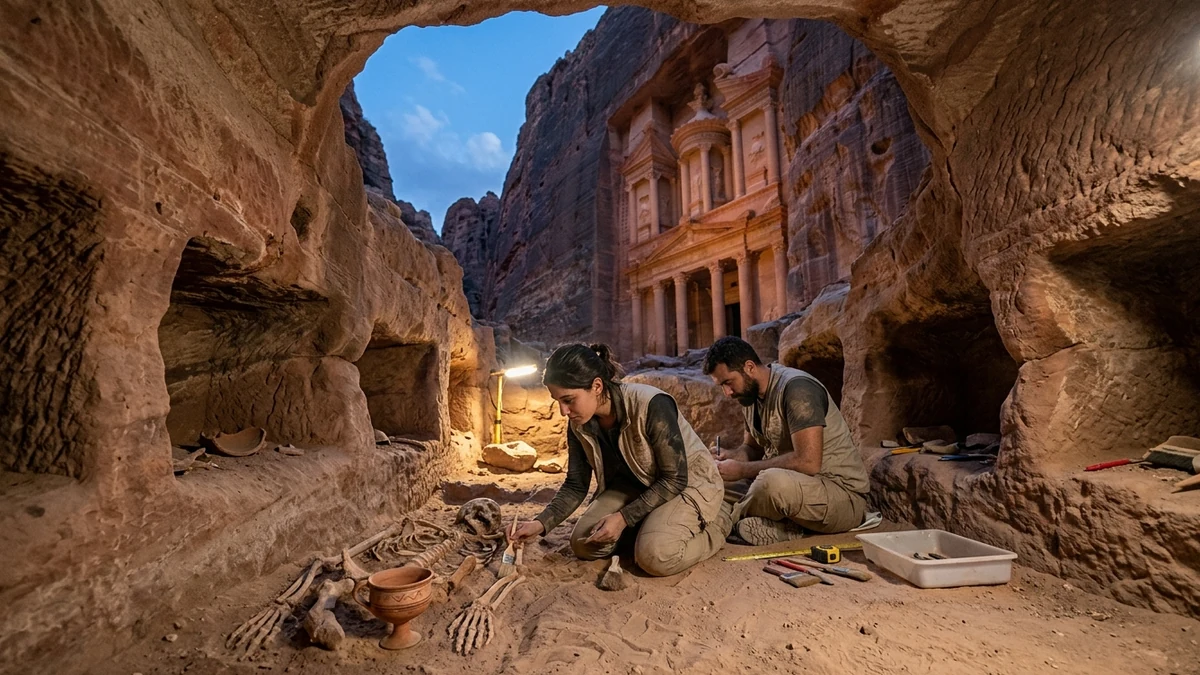
The excavation site, located near ancient royal settlements on the Jutland peninsula, has always been a point of interest for historical scholars. However, absolutely no one expected to find textiles preserved with such perfect structural integrity. The discovery was made almost by chance during a routine soil sounding procedure for local infrastructure expansion. Immediately, the area was isolated so that conservators could extract the entire block of earth without damaging the fragile millennial threads.
Extraction and the Surprise of Textile Silver
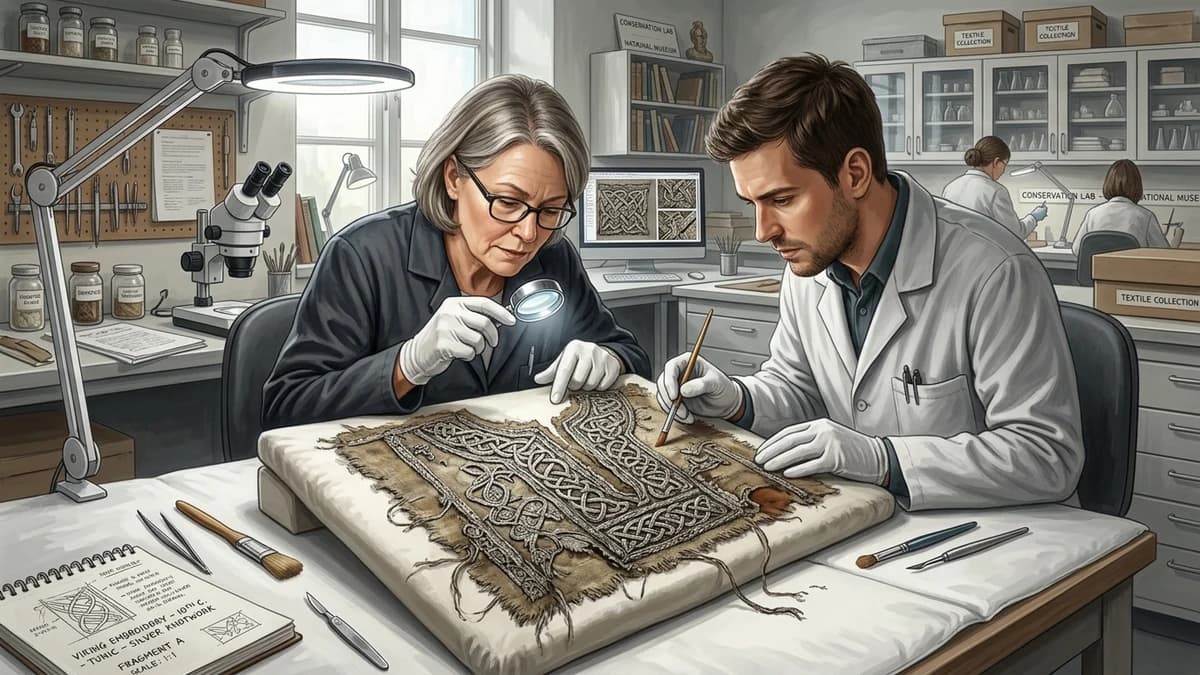
Removing the textile from the soil required a massive collaborative effort among field archaeologists, chemists, and textile conservation specialists. The entire block of earth containing the dress was carefully transported to a climate-controlled laboratory facility. There, micro-excavations using surgical precision tools removed the ancient dirt grain by microscopic grain. It was during this incredibly meticulous process that the unmistakable metallic shine began to emerge from the darkness.
The silver threads were not simply sewn superficially onto the fabric, but intricately woven directly into the wool's structural matrix. This technique, known in some academic circles as tablet weaving, demands extraordinary skill and months of relentless dedication. The presence of silver knots arranged in geometric patterns suggests a strong influence from distant cultures, possibly the Islamic world or the Byzantine Empire. This definitively proves that Danish Vikings maintained trade networks far more expansive than previous archaeological evidence had ever suggested.
Beyond the silver, detailed microscopic examinations revealed distinct traces of incredibly vibrant organic dyes still clinging to the fibers. The dress originally displayed deep, rich shades of blue and red, which were incredibly expensive colors to produce at the time. The blue was derived from woad (Isatis tinctoria), while the deep red was likely imported in the form of madder root. The striking combination of rich colors with flashing silver reflections would make the wearer stand out as a figure of unquestionable authority.
Trade Routes and Viking Globalization
The silver utilized in the threads raises fascinating questions regarding the material's origin and the scope of Viking contact networks. During the early 8th century, Scandinavia simply did not possess significant silver mines to sustain such elaborate local production. The raw material almost certainly came from melted Arabic dirhams or looted jewelry traded extensively along Eastern European river systems. This global network effectively transformed remote Nordic villages into cosmopolitan hubs of vast wealth and cultural exchange.
The sheer transformation of raw silver into threads pliable enough for complex weaving is a technological marvel in its own right. Local silversmiths must have collaborated incredibly closely with master weavers, creating specialized alloys that wouldn't snap during loom tensioning. This high level of artisanal specialization indicates a highly stratified society where craft guilds dedicated their lives to serving the aristocracy. The dress, therefore, stands as a prime testament to interdisciplinary cooperation in the early medieval era.
Dressing in silver also carried profound spiritual and magical weight in ancient Nordic cosmological beliefs. Precious metals were widely believed to reflect divine light and offer robust spiritual protection against malevolent, unseen energies. The silver knots, designed in continuous endless patterns, likely functioned as potent protective amulets woven directly into the daily garment. In this multifaceted way, high fashion served critical aesthetic, social, and deeply religious purposes simultaneously.
The Role of Women in the Nordic Elite
The unearthing of this specific dress strongly reinforces the growing perception that Viking women could achieve positions of extreme power. The original owner of this garment was undoubtedly not a common citizen, but likely a queen, a high priestess, or a clan leader. The sheer economic investment required to create just one sleeve of this dress could easily feed a peasant family for years. This clearly highlights a colossal wealth disparity present in the earliest Scandinavian farming communities.
Women of high society in the Viking Age frequently acted as chief administrators of massive estates and central figures in diplomacy. Their clothing functioned as visual tools specifically designed to intimidate political rivals and inspire unwavering loyalty among their clan followers. The brilliant shine of the silver under the sun or by the firelight in the great mead hall ensured all eyes turned toward her. The dress was an undeniable, direct physical extension of her formidable political authority.
Furthermore, textile production was a traditionally female and highly respected domain in ancient Nordic societal structures. The master weavers who painstakingly created this masterpiece held immense prestige, and their rare talents were fiercely contested by royal courts. Finding an artifact that unites the absolute highest level of female craftsmanship with ultimate material luxury is a historical watershed moment. It powerfully challenges the outdated historical narrative focused solely on male-dominated conquests and warfare.
Miraculous Preservation and Scientific Analysis
The miraculous survival of this fabric for 1,300 long years is described by leading experts as a true archaeological anomaly. Generally, organic materials like fine wool and linen decompose very rapidly in Denmark's humid and highly oxygenated soil environments. However, this particular dress was found in a peculiar anaerobic environment, safely buried in dense clay that completely blocked bacterial entry. Additionally, the silver ions slowly released by the metal's oxidation acted as a highly effective, natural antimicrobial preservative.
Modern radiocarbon dating techniques firmly confirmed the artifact's exact age, placing it precisely at the dawn of the 8th century. Advanced mass spectrometry and isotope analyses were also employed to pinpoint the exact geographical diet of the sheep that provided the wool. Surprisingly, the definitive results showed that some of the finest wools were actually imported from much milder regions of continental Europe. This strongly suggests that even the foundational base thread of the dress was considered an exotic luxury item.
The clever use of industrial computed tomography allowed researchers to study the overlapping layers of fabric without physically touching them. Highly detailed virtual 3D models of the warp and weft were created to properly understand the exact mechanics of the silver knots. This invaluable digital data will allow modern historians and fashion designers to recreate the dress with absolute structural precision in the future. The brilliant union of classical archaeology and cutting-edge technology continues to reveal secrets long thought lost to the ravages of time.
Viking Clothing Comparison
To fully grasp the magnitude of this rare discovery, it is essential to contrast the elite's wardrobe with commoner clothing. The detailed table below highlights the abysmal material and aesthetic differences deeply ingrained within early Viking society.
| Feature | Commoner Clothing (Plebeian) | Royal/Aristocratic Clothing (Elite) |
|---|---|---|
| Base Material | Coarse local wool, undyed linen, standard animal furs. | Extra-fine combed wool, imported silk, high-quality bleached linen. |
| Colors and Dyes | Natural wool tones (brown, gray), weak local vegetable dyes. | Vibrant imported colors (madder red, vibrant woad blue, rare purple). |
| Metallic Decoration | Non-existent or limited to small, simple bronze brooches. | Intricately woven gold and silver threads, massive gilded brooches. |
| Weave Complexity | Simple and functional plain weave, aiming for basic durability. | Complex twill patterns, tablet weaving, expensive imported brocades. |
| Origin of Materials | Entirely regional, produced on their own farm or local village. | Global materials from Constantinople, the Middle East, and Britain. |
The Historical Impact of the Discovery
This fragmented dress is much more than an old piece of ancient cloth; it is a manifesto of Scandinavian social complexity. It systematically dismantles the persistent myth of the savage, poorly dressed Viking, revealing a culture deeply connected to global luxury trends. The ability to import, process, and proudly display wealth in this sophisticated manner demonstrates robust diplomacy and aggressive commercial tactics. Danish archaeology thus firmly consolidates its vital role as the guardian of some of Europe's most important cultural treasures.
The National Museum of Denmark has proudly announced ambitious plans to dedicate an entire exhibition wing to these remarkable fragments. They will be safely housed in specialized display cases filled with inert gas to completely halt any future chemical deterioration. In addition, highly interactive exhibits will allow eager visitors to explore the intricate geometric patterns through advanced augmented reality screens. The general public will finally have the unprecedented chance to marvel at the sheer genius of artisans dead for over a millennium.
The intense excavation at the primary site will continue for the next few years, with high hopes of finding the remaining elite settlement. Researchers now know exactly what specific chemical signatures to look for in the soil to potentially locate new hidden textiles. The fashion of 1,300 years ago, once completely forgotten, shines brilliantly once again to teach us about power, art, and survival. The silver-threaded Viking dress has rightfully taken its permanent place as a timeless icon of ancient European history.
Frequently Asked Questions
How did the Viking clothing manage to preserve itself for 1,300 years?
The incredible preservation of this specific dress occurred strictly due to a rare combination of environmental and chemical conditions at the site. The fragile artifact was hermetically sealed in a dense layer of anaerobic clay, which effectively prevented oxygen and bacteria from decomposing the organic matter. Furthermore, the dress's own silver threads slowly oxidized over centuries, releasing metallic ions that acted as a powerful antimicrobial preservative for the surrounding wool. This localized chemical anomaly allowed the delicate organic fibers and even the vivid dye residues to survive intact for over a millennium.
What was the specific role of women in the Viking aristocracy based on this find?
This monumental discovery strongly corroborates the modern historical theory that elite Viking women held positions of immense prestige and political power. The undeniable ownership of such an expensive and intricately crafted dress indicates that the wearer commanded vast resources and possessed unquestionable social dominance. Many of these female aristocrats actively managed large agricultural estates, controlled lucrative local trade routes, and exerted deep influence over pivotal clan decisions. Wearing garments heavily laced with woven silver served as an undeniable public declaration of this absolute authority before followers and rivals alike.
How exactly was the solid silver woven into the fabric during the Viking Age?
The inclusion of silver in clothing involved a highly specialized and incredibly meticulous process, merging elite silversmithing with precision textile weaving. The solid silver, likely obtained through global trade or raiding, was melted and stretched into threads thin enough to be pliable but strong enough not to break. These metallic threads were then carefully manipulated on small manual looms using the intricate tablet weaving technique, creating complex geometric knots. The strenuous work required months of fiercely focused effort, resulting in brilliant metallic bands that were ultimately sewn onto the main dress.