The universe is a place so extraordinary that many of its truths sound like science fiction. NASA and other space agencies have confirmed phenomena that defy our everyday understanding of reality: diamond rain on giant planets, water clouds larger than all of Earth's oceans combined, and stars spinning hundreds of times per second. In this article, we analyze 20 scientific revelations about the universe, separating confirmed facts from popular myths.
1. "It Rains Diamonds on Neptune and Uranus" — ✅ CONFIRMED FACT
This claim sounds like a fairy tale, but it's pure science. In the atmospheres of Neptune and Uranus, atmospheric pressure is so intense that it compresses methane (CH4) into crystallized carbon — diamonds.
In 2017, researchers at the SLAC National Accelerator Laboratory at Stanford reproduced these conditions in the lab using high-powered lasers. They compressed polystyrene (which simulates methane composition) to pressures of 150 gigapascals and observed the formation of nanodiamonds in real time. The results, published in Nature Astronomy, confirmed that in the depths of these ice giants, it literally rains diamonds that could reach millions of carats.
These diamonds sink toward the planet's core, where temperatures exceed 7,000°C, potentially creating an ocean of liquid carbon with diamonds floating like icebergs.
2. "A Day on Venus Is Longer Than a Year on Venus" — ✅ CONFIRMED FACT
Venus is the strangest planet in the solar system when it comes to rotation. It takes 243 Earth days to complete one rotation on its axis, but only 225 Earth days to orbit the Sun. This means a Venusian day is literally longer than a Venusian year.
Additionally, Venus rotates backwards (retrograde rotation). If you could stand on Venus's surface, you'd see the Sun rise in the west and set in the east. Scientists believe a catastrophic impact in the distant past may have reversed its rotation, though this theory is still debated.
Venus's atmosphere is equally extreme: 96% carbon dioxide, sulfuric acid clouds, and surface pressure 90 times greater than Earth's. Surface temperatures reach 465°C, hot enough to melt lead.
3. "There's a Water Cloud 140 Trillion Times Larger Than All of Earth's Oceans" — ✅ CONFIRMED FACT
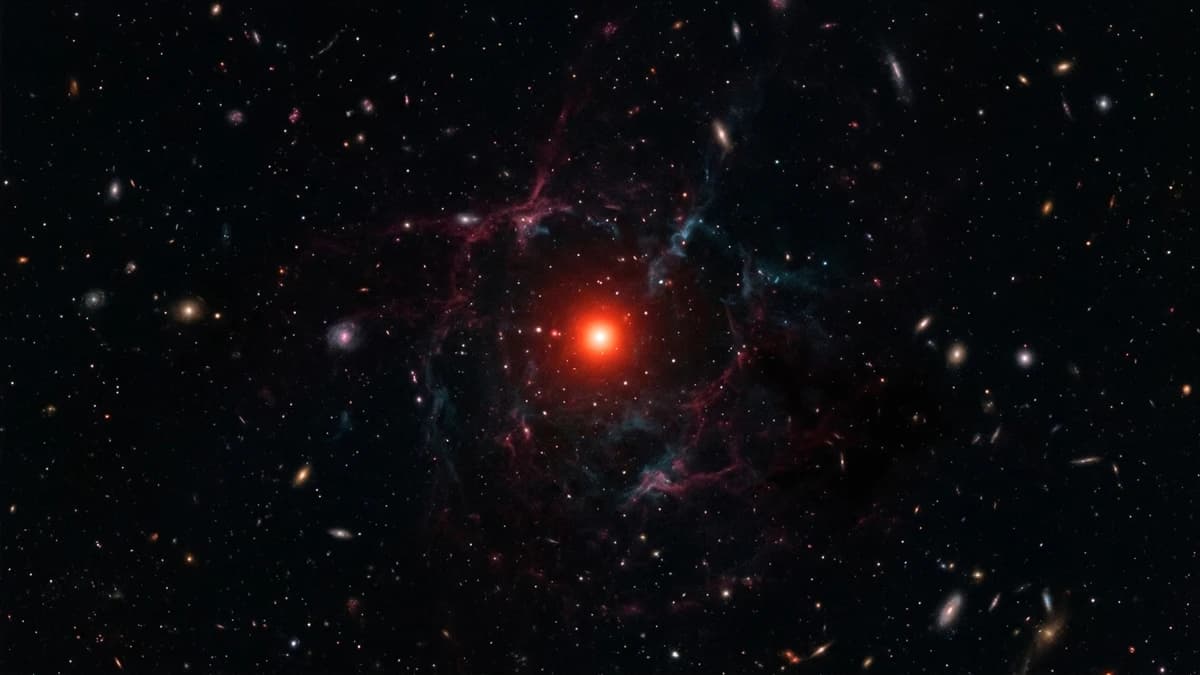
At 12 billion light-years from Earth, astronomers discovered the largest water reservoir in the known universe. This water vapor cloud contains 140 trillion times the volume of all Earth's oceans combined.
The discovery was made by two independent teams using the Z-Spec at Caltech Submillimeter Observatory and the Plateau de Bure Interferometer in France. The cloud surrounds a quasar called APO 08279+5255, one of the most luminous and energetic objects in the universe. Most fascinatingly, this water has existed since the universe was only 1.6 billion years old — proving that water is one of the oldest and most abundant molecules in the cosmos.
4. "A Teaspoon of Neutron Star Weighs as Much as All of Humanity" — ✅ CONFIRMED FACT
Neutron stars are the densest objects in the observable universe (excluding black holes). A single teaspoon of neutron star material would weigh approximately 6 billion tons — comparable to the weight of all humanity.
This incredible density occurs because when a massive star collapses, protons and electrons fuse to form neutrons packed so tightly that a typical neutron star has 1.4 solar masses compressed into a sphere just 20 kilometers in diameter. Some neutron stars, called pulsars, spin at astonishing speeds — the fastest known pulsar, PSR J1748-2446ad, rotates 716 times per second, meaning its equatorial surface moves at nearly a quarter of the speed of light.
5. "Space Has a Smell" — ✅ CONFIRMED FACT
Astronauts from multiple missions have consistently reported that space has a distinctive smell. After spacewalks, upon removing their helmets in the airlock, they describe an odor of grilled steak, hot metal, gunpowder, and curiously, raspberries.
This smell comes from polycyclic aromatic hydrocarbons (PAHs), organic molecules produced by dying stars that float throughout interstellar space. The molecular cloud Sagittarius B2, located near the center of the Milky Way, contains large quantities of ethyl formate — the chemical compound responsible for the aroma of rum and raspberries. In 2020, NASA even commissioned perfumer Steve Pearce to create a fragrance called "Eau de Space" that replicates the smell of outer space.
6. "Footprints on the Moon Will Last Millions of Years" — ✅ CONFIRMED FACT
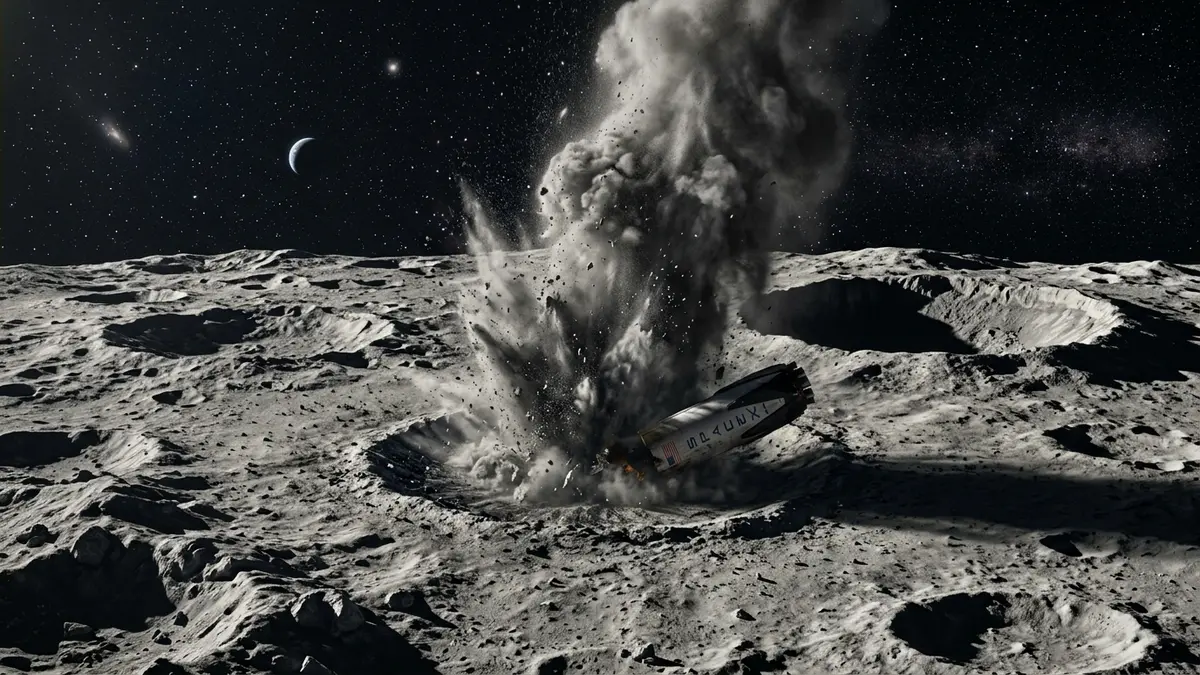
With no atmosphere, no wind, no rain, and no tectonic activity, the lunar surface is a natural museum that preserves everything it touches. The footprints left by Neil Armstrong and Buzz Aldrin in July 1969 could last between 10 and 100 million years.
The only erosion process on the Moon is micrometeorite bombardment — tiny particles that impact the surface at speeds up to 20 km/s. This process is extremely slow: it's estimated to erode just 1 millimeter of regolith every thousand years. The astronauts' footprints are approximately 2 centimeters deep, meaning they'd take millions of years to disappear completely.
7. "There Are More Stars Than Grains of Sand on Earth" — ✅ CONFIRMED FACT
This comparison seems impossible, but the numbers back it up. Astronomers estimate the observable universe contains approximately 200 sextillion (2 × 10²³) stars. The estimated number of grains of sand on all of Earth's beaches, deserts, and ocean floors is approximately 7.5 quintillion (7.5 × 10¹⁸).
This means there are roughly 30,000 to 50,000 stars for every grain of sand on Earth. To put this in perspective, if you counted one star per second, it would take you over 6 trillion years to count them all — about 450 times the current age of the universe. And this calculation only includes the observable universe — the portion of the cosmos whose light has had time to reach us. The actual universe could be infinitely larger.
8. "The Milky Way Smells Like Rum and Raspberries" — ✅ CONFIRMED FACT
The molecular cloud Sagittarius B2, located about 26,000 light-years from the center of our galaxy, contains billions of liters of ethyl alcohol and large quantities of ethyl formate, the compound responsible for the flavor and aroma of raspberries and rum. Astronomers at the Max Planck Institute discovered these molecules using the IRAM 30-meter radio telescope in Spain.
9. "All Solar System Planets Fit Between Earth and the Moon" — ✅ CONFIRMED FACT
The average distance between Earth and the Moon is 384,400 kilometers. If we add up the diameters of all solar system planets — Mercury (4,879 km), Venus (12,104 km), Mars (6,779 km), Jupiter (139,820 km), Saturn (116,460 km), Uranus (50,724 km), and Neptune (49,244 km) — we get approximately 380,010 kilometers. That leaves about 4,390 km to spare, enough room for Pluto (2,377 km) to fit comfortably as well.
10. "The Sun Loses 1 Billion Kilograms Per Second" — ✅ CONFIRMED FACT
The Sun converts 4 million tons of matter into energy every second through nuclear fusion. Additionally, the solar wind ejects approximately 1.5 billion kilograms of charged particles per second. Despite this seemingly enormous loss, the Sun is so massive (2 × 10³⁰ kg) that it has lost only 0.05% of its mass in its 4.6 billion years of existence.
11-15. More Mind-Blowing Confirmed Facts
- Gamma-ray bursts release more energy in 10 seconds than the Sun will in its entire 10-billion-year lifetime. They are the most energetic events in the universe after the Big Bang. ✅
- Rogue planets — billions of planets wander through space without a parent star, ejected from their solar systems by gravitational interactions. Some may have subsurface oceans heated by radioactive decay. ✅
- Black holes can sing — the black hole at the center of the Perseus galaxy cluster emits sound waves in B-flat, 57 octaves below middle C, a million times deeper than human hearing can detect. ✅
- Signs of life on Mars — in 2024, the Curiosity rover detected unusual methane levels and complex organic compounds that could indicate past or present biological activity. ✅
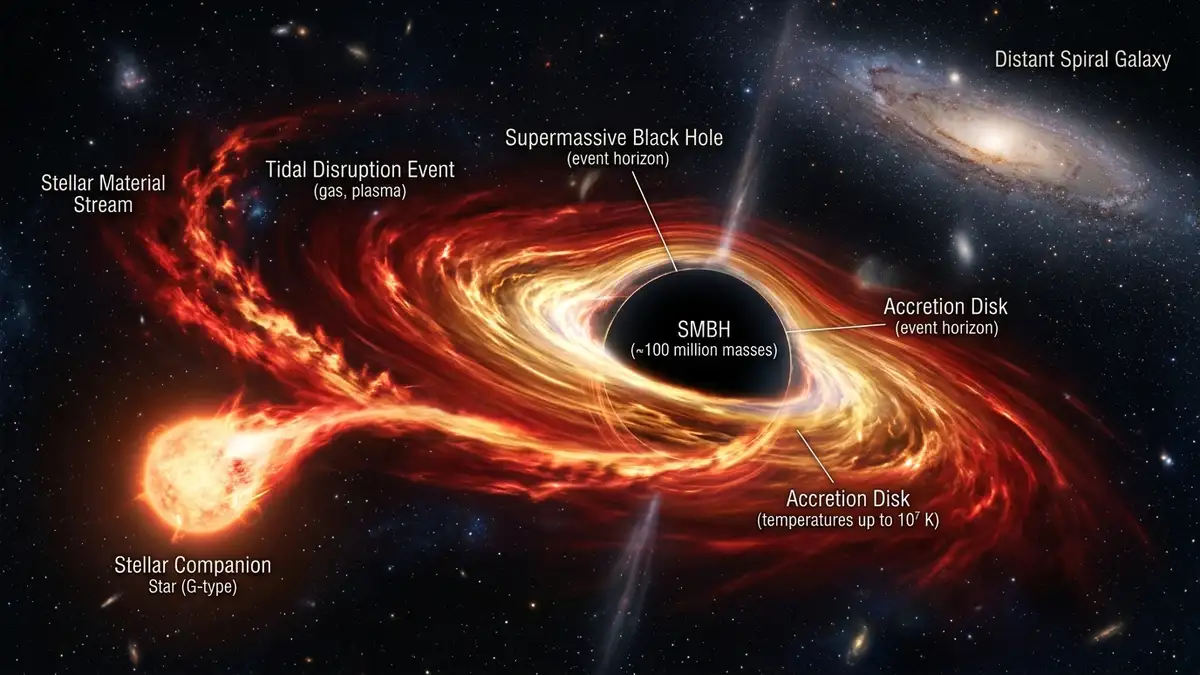
- TON 618 — this supermassive black hole has 66 billion solar masses, with an event horizon the size of our entire solar system. ✅
16-20. Even More Universe Surprises
- The Moon is lemon-shaped due to Earth's tidal forces, slightly elongated in the Earth-Moon direction. ✅
- Your hair collects space dust — approximately 100 tons of extraterrestrial material falls on Earth daily. Microscopic cosmic dust particles settle on your hair and clothes. ✅
- Asteroids can have rings and moons — asteroid Chariklo has two rings, and over 400 known asteroids have their own orbiting moons. ✅
- SPHEREx will map 450 million galaxies — this NASA mission, launched in 2025, will create the first complete spectroscopic sky map. ✅
- The ISS orbits every 90 minutes — astronauts aboard see 16 sunrises and 16 sunsets every day, traveling at 27,600 km/h. ✅
The Future of Space Exploration
The next decade promises even more astonishing discoveries. The James Webb Space Telescope is already revealing galaxies formed just 300 million years after the Big Bang, pushing our understanding of cosmic history to its limits. The Europa Clipper mission will explore the subsurface ocean of Jupiter's moon Europa, one of the most promising places to find extraterrestrial life in our solar system.
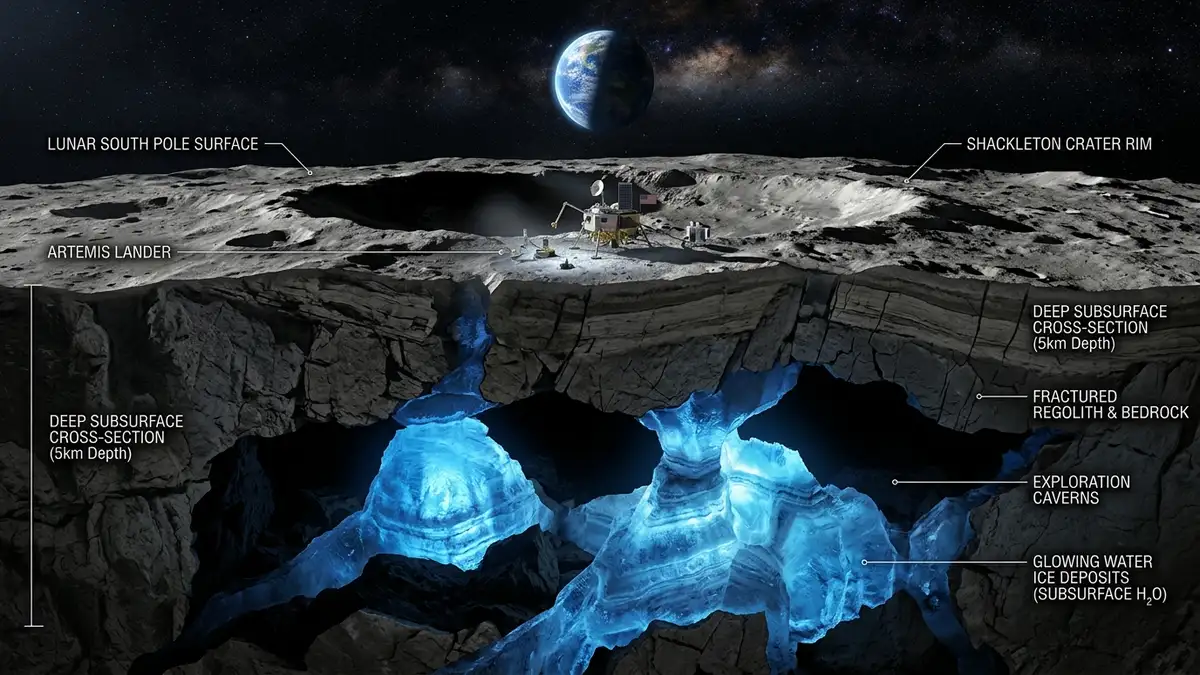
NASA's Artemis program plans to establish a permanent human presence on the Moon, building the Lunar Gateway space station as a stepping stone for deeper space exploration. Meanwhile, SpaceX and NASA are collaborating on plans to send humans to Mars before 2040, with the Starship vehicle designed to carry up to 100 passengers on interplanetary voyages.
The SPHEREx mission, launched in 2025, will create the first all-sky spectroscopic map, surveying 450 million galaxies and 100 million stars to understand the origins of the universe, the history of galaxy formation, and the prevalence of water and organic molecules in planetary systems where life could develop.
Private companies are also pushing boundaries. Blue Origin is developing the New Glenn rocket for heavy-lift missions, while Rocket Lab specializes in small satellite launches that are democratizing access to space. The space economy is projected to reach ** trillion by 2040**, driven by satellite communications, space tourism, and asteroid mining.
Additional Fascinating Universe Facts
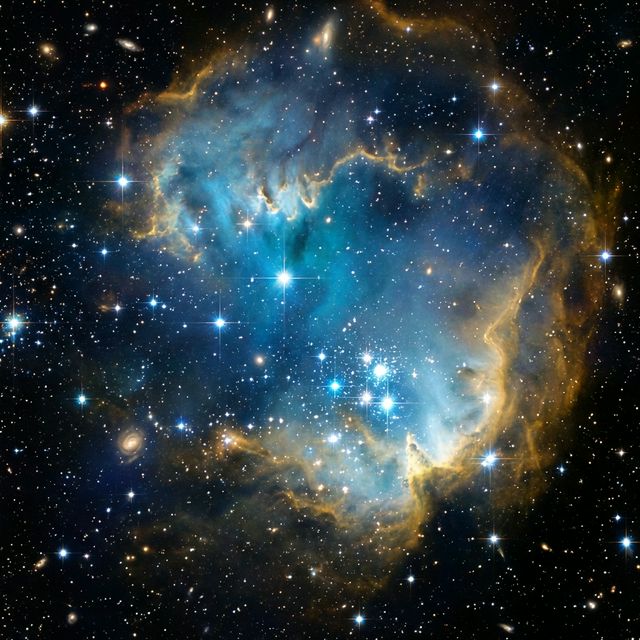
The observable universe has a diameter of 93 billion light-years, despite the Big Bang occurring only 13.8 billion years ago. This is possible because space itself is expanding, pushing distant galaxies away faster than the speed of light. This doesn't violate relativity because it's not matter moving, but the fabric of spacetime itself stretching.
If you could compress Earth into a black hole, it would be the size of a marble just 9 millimeters across. And if you compressed the Sun, it would become a sphere only 6 kilometers in diameter. The density required to create a black hole is inversely proportional to mass: supermassive black holes are actually less dense than water on average.
The sunlight we see is actually 8 minutes and 20 seconds old, since that's how long light takes to travel from the Sun to Earth. But the energy that produced that light was generated in the solar core 100,000 years ago — that's how long it takes a photon to fight its way from the Sun's center to its surface through the dense plasma.
Neutron star collisions are responsible for creating most of the heavy elements in the universe, including gold, platinum, and uranium. When two neutron stars merge, they produce a kilonova — an explosion that can create several Earth-masses worth of gold in seconds. Every gold ring and platinum necklace on Earth was forged in such a cosmic cataclysm billions of years ago.
The cosmic microwave background radiation — the afterglow of the Big Bang — is everywhere. About 1% of the static on an old analog TV was actually caused by this ancient radiation, meaning you could literally watch the echo of the universe's birth on your television.
Debunked Myths: What NASA Did NOT Confirm
"The Great Wall of China is visible from space" — ❌ MYTH. No astronaut has been able to see the Great Wall with the naked eye from orbit. At just 9 meters wide, it's too narrow to be visible from 400 km altitude.
"The dark side of the Moon is always dark" — ❌ MYTH. The so-called "dark side" receives the same amount of sunlight as the visible side. It's called "dark" because it's never visible from Earth due to the Moon's synchronous rotation.
"Humans explode in the vacuum of space" — ❌ MYTH. Human skin is elastic enough to contain the body's internal pressure. A person exposed to vacuum would lose consciousness in about 15 seconds from lack of oxygen, but would not explode.
Why These Facts Matter
Understanding the universe isn't just an academic exercise — it has practical implications for life on Earth. The study of neutron stars has led to advances in nuclear physics and materials science. Research into cosmic radiation has improved our understanding of cancer treatment through radiation therapy. The development of satellite technology for space exploration gave us GPS, weather forecasting, and global communications.
Space exploration also drives technological innovation at an unprecedented pace. NASA's research has produced over 2,000 spinoff technologies that we use daily, from memory foam mattresses and scratch-resistant lenses to water purification systems and freeze-dried food. The quest to understand the cosmos continues to push the boundaries of human knowledge and capability, making our lives better in ways we often don't realize.
Conclusion: The Universe Is Stranger Than Fiction
It rains diamonds on other planets. Your hair carries dust from dead stars. There's a water cloud larger than all of Earth's oceans multiplied by 140 trillion. Each of these facts has been verified by NASA, ESA, or other top-tier scientific institutions.
Reality, when revealed by science, is infinitely stranger than any fiction. And the most fascinating part is that we're only beginning to scratch the surface of what the universe has to reveal. With missions like the James Webb Space Telescope, SPHEREx, and future explorations of Mars and Jupiter's moons, the coming decades promise discoveries that will make these 20 facts seem ordinary.
Frequently Asked Questions

Does it really rain diamonds on other planets?
Yes, it's scientifically confirmed. On Neptune and Uranus, extreme atmospheric pressure compresses methane into crystallized carbon (diamonds). This was reproduced in the laboratory by the SLAC National Accelerator Laboratory in 2017.
How many stars are there in the universe?
The observable universe is estimated to contain approximately 200 sextillion (2 × 10²³) stars, equivalent to about 30,000-50,000 stars for every grain of sand on Earth.
Does space really have a smell?
Yes, astronauts consistently report a smell of grilled steak, hot metal, and gunpowder when returning from spacewalks. This odor comes from polycyclic aromatic hydrocarbons present in interstellar space.
How long will the footprints on the Moon last?
The footprints left by the Apollo astronauts could last between 10 and 100 million years, since the Moon has no atmosphere, wind, or rain to erode them.