Curiosities About Outer Space That Will Blow Your Mind 🌌🚀
Space is vast, mysterious, and absolutely bizarre. The more we learn about the universe, the more we realize that reality is stranger than any science fiction ever imagined.
Did you know there's a planet made of diamond? Or that space has a smell? Get ready for 20 facts about the cosmos that will change your perspective on everything you thought you knew about the universe.
1. Space Has a Smell 👃
Astronaut descriptions:
After returning from spacewalks, astronauts report that space smells like:
- Burnt meat
- Hot metal
- Welding fumes
- Gunpowder
Scientific explanation:
Particles from dead stars — polycyclic aromatic hydrocarbons — stick to spacesuits. These molecules, byproducts of stars that exploded billions of years ago, are the cause of the "cosmic aroma."
Fun fact: NASA commissioned the perfume "Eau de Space" so anyone could experience the smell of space. It was crowdfunded and actually exists for purchase!
2. There's a Diamond Planet 💎
55 Cancri e
Location: 40 light-years from Earth (Cancer constellation)
Characteristics:
- 1/3 of the planet is pure diamond (carbon crystallized under extreme pressure)
- Mass: 8x that of Earth
- Estimated diamond value: $26.9 nonillion (26.9 followed by 30 zeros)
- More than the entire economy of planet Earth throughout history... combined
However:
- Surface temperature: 4,400°F (melted diamond)
- A year lasts only 18 hours
- It orbits so close to its star that the surface is basically lava
- You can't "mine" it from there (at least not with current technology)
3. A Day on Venus Is Longer Than a Year 🪐
The bizarre numbers:
- Venusian year (orbit around the Sun): 225 Earth days
- Venusian day (one complete rotation): 243 Earth days
- A day on Venus is 18 days longer than a year!
And there's more:
- Venus rotates in the opposite direction from most planets
- The Sun rises in the West and sets in the East
- Nobody knows for certain why it rotates backwards — the most accepted theory: a giant impact in the distant past
4. There's a Giant Alcohol Cloud in Space 🍺
The universe's biggest bar:
- Location: Aquila constellation, 10,000 light-years from Earth
- Size: 1,000 times the diameter of the entire Solar System
- Alcohol: Enough to fill 400 trillion trillion pints of beer
- Type: Methanol (methyl alcohol — toxic, not drinkable!)
Context: Molecular clouds like this one are "stellar nurseries" — regions where gases condense and form new stars and solar systems. The alcohol is a byproduct of chemical reactions at extremely low temperatures.
5. You Are Made of Stardust ✨
Proven scientific fact:
All elements in your body (except hydrogen and some helium) were forged inside stars that exploded billions of years ago.
The process:
- Stars fuse light elements (hydrogen) into heavy ones (carbon, oxygen, iron)
- When they die, they explode in catastrophic supernovas
- They scatter these elements throughout space
- These elements form new planets, oceans, and... you
Where each part of you comes from:
- Oxygen (65% of the body): Forged in massive stars
- Carbon (18%): Created in medium-mass stars
- Hydrogen (10%): Has existed since the Big Bang
- Iron (in your blood): Product of supernovas
- Calcium (in your bones): From stars that exploded
Carl Sagan said: "We are a way for the cosmos to know itself."
6. There Are More Stars Than Grains of Sand 🏖️
Incomprehensible numbers:
- Stars in the Observable Universe: 200 sextillion (200,000,000,000,000,000,000,000)
- Grains of sand on Earth: 7.5 quintillion (7,500,000,000,000,000,000)
- Ratio: ~26,000 stars for every grain of sand on the planet
Context: Each star may have planets. It's estimated there are more planets than stars. The probability of life existing elsewhere is astronomically high — the question isn't "if" it exists, but "where" and "when will we find it."
7. Neutron Stars Are Absurdly Dense 🌟
Matter at its limit:
- 1 teaspoon of a neutron star weighs 1 billion tons
- For comparison: all of Mount Everest compressed into 1 sugar cube
- If you fell from just 3 feet on the surface, you'd reach 4.3 million mph upon impact
What they are:
- The collapsed core of a massive star after a supernova
- Diameter: only ~12 miles (the size of a city)
- Mass: 1.4 to 2x that of the Sun (compressed into 12 miles!)
- Rotation: some spin 716 times per second (pulsars)
- Gravity so strong the surface is practically smooth — mountains of at most 0.2 inches
8. Jupiter Protects Earth 🛡️
The guardian of the Solar System:
- Jupiter's massive gravity deflects asteroids and comets that could hit Earth
- Without Jupiter, Earth would be bombarded up to 1,000 times more
- It acts as a "cosmic vacuum cleaner" — capturing dangerous objects
Visual proof:
- In 1994, comet Shoemaker-Levy 9 collided with Jupiter
- It left scars larger than Earth in its atmosphere
- Impacts released energy equivalent to 600x the world's nuclear arsenal
- Without Jupiter, that comet could have hit Earth
Theory: Jupiter is one of the reasons complex life exists on Earth. Without its gravitational protection, extinction-level impacts would have been too frequent for life to evolve.
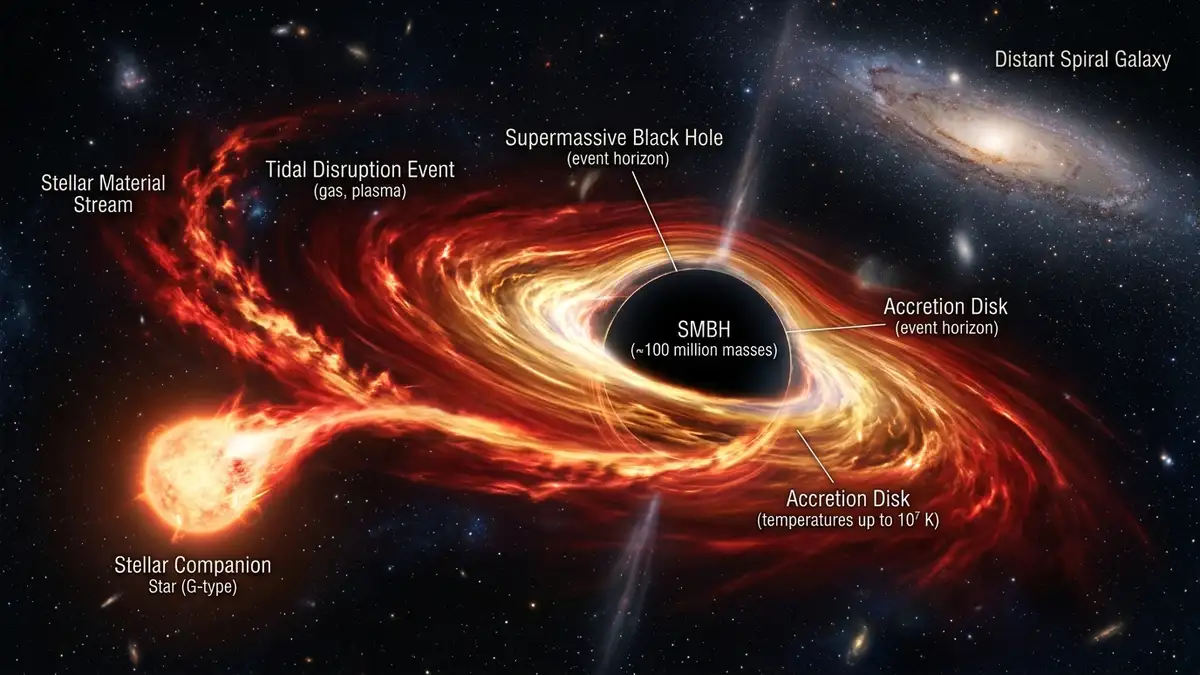
9. Black Holes Aren't Really "Black" 🕳️
Hawking Radiation:
- Stephen Hawking mathematically proved (1974) that black holes emit radiation
- They glow faintly (invisible to the naked eye, detectable with instruments)
- Given enough time (trillions upon trillions of years), they evaporate completely
- Small black holes evaporate faster than large ones
Other surreal facts:
- The black hole at the center of the Milky Way (Sagittarius A*) has 4 million solar masses
- The largest ever discovered (TON 618) has 66 BILLION solar masses
- If you fell into a black hole, time would pass normally for you, but for anyone watching from outside, you'd appear frozen at the event horizon forever
- The first real photo of a black hole was taken in 2019 (M87)
10. Space Is Completely Silent 🔇
Absolute silence:
- Sound is vibration that travels through a medium (air, water, metal)
- In space, there's no air — therefore, there's no sound
- Supernova explosions, galaxy collisions: completely silent
- Movies like Star Wars are wrong (there would be no explosion sounds)
Exceptions:
- Inside nebulae (extremely rarefied gas), very low-frequency sound waves can exist
- In 2022, NASA "sonified" data from a black hole and converted it to audio — the result: a creepy, deep hum
11. There Are Orphan Planets Wandering in the Dark 🌑
Starless planets:
- Billions of planets in the Milky Way don't orbit any star
- They wander through the galaxy in total darkness and absolute cold
- They were ejected from their solar systems by gravitational interactions
- It's estimated there are more orphan planets than stars in the galaxy
Possibility of life:
- Some may have liquid oceans beneath a frozen surface (like Europa, Jupiter's moon)
- Internal heat (radioactivity) could maintain conditions for life
- But they would never see a sun
12. The Universe Is Flat (Probably) 📐
Cosmic geometry:
- Measurements from the Planck satellite showed the universe is geometrically flat (with a margin of error of 0.4%)
- "Flat" doesn't mean 2D — it means parallel lines remain parallel over distance
- If it were positively curved (spherical), parallel lines would eventually meet
- If it were negatively curved, they would diverge
- Implication: the universe may be infinite
13. A Day on Saturn Lasts Only 10 Hours ⏰
Rotation speed:
- Saturn has 95x Earth's mass
- But its day lasts only 10 hours and 33 minutes
- It spins so fast it's visibly flattened at the poles
- Its equatorial diameter is 10% larger than its polar diameter
- Winds in its atmosphere reach 1,100 mph
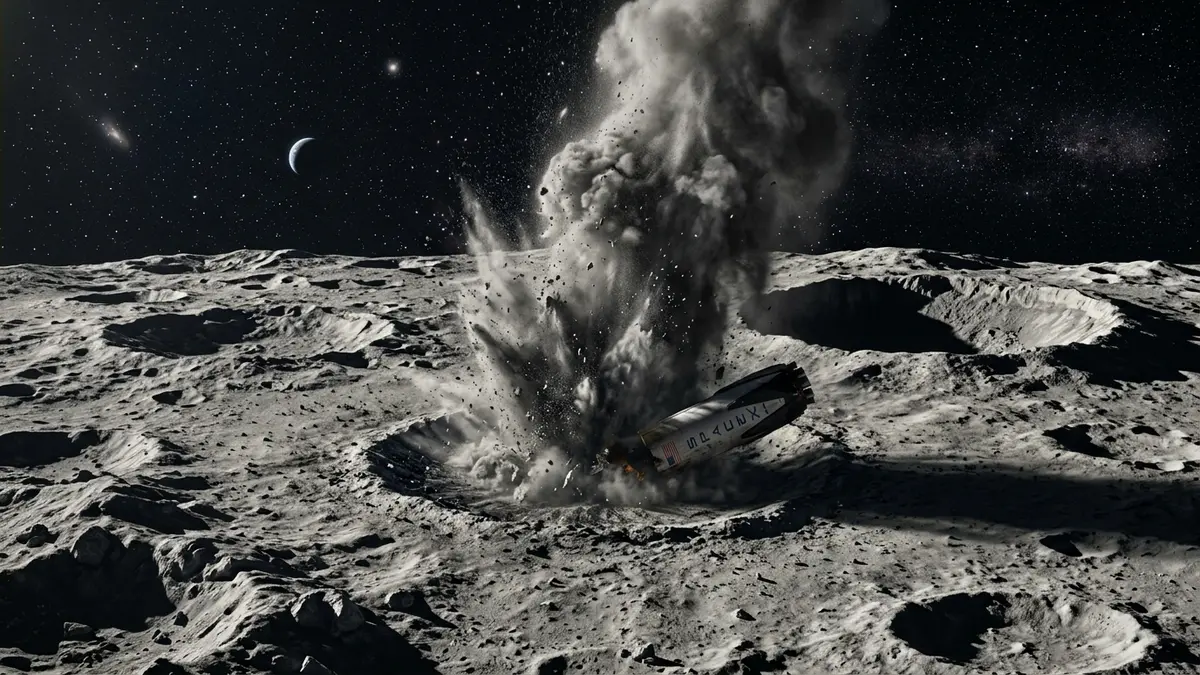
14. Neil Armstrong's Footprint Is Still on the Moon 👣
No erosion:
- There's no wind, water, or tectonic activity on the Moon
- The footprints of the Apollo astronauts (1969-1972) are exactly as they were left
- They could last millions of years
- The American flags, however, have probably been bleached by UV radiation
15. There's a Planet Where Glass Rains Sideways 🌧️
HD 189733b
Characteristics:
- 63 light-years from Earth
- Atmosphere contains silicate (glass)
- Winds of 5,400 mph (7x the speed of sound)
- The glass "rain" falls sideways because of the extreme winds
- Temperature: 1,800°F
Appearance: The planet is a deep blue (like Earth seen from space), but for completely different reasons — it's the glass that gives it color, not water.
16. The Sun Contains 99.86% of the Mass of the Entire Solar System ☀️
Absolute domination:
- Everything else (planets, moons, asteroids, comets) = only 0.14%
- Jupiter alone accounts for 2/3 of that 0.14%
- Earth is a speck of dust in comparison
- 1.3 million Earths would fit inside the Sun
Sun data:
- Core temperature: 27 million °F
- Converts 600 million tons of hydrogen into helium per second
- Has existed for 4.6 billion years
- Will last another ~5 billion before becoming a red giant
17. There Are Solid Diamond Stars 💠
BPM 37093 ("Lucy"):
- A crystallized white dwarf in the Centaurus constellation
- Its core is a solid diamond of 10 billion trillion carats
- Named "Lucy" after the Beatles song "Lucy in the Sky with Diamonds"
- 50 light-years from Earth
18. Space Begins Just 62 Miles Above You 🚀
The Kármán Line:
- The officially recognized boundary between atmosphere and space
- It's at just 62 miles (100 km) altitude (FAI definition)
- For comparison: that's roughly the distance from New York to Philadelphia
- A car at 60 mph would reach space in about an hour (if it could go straight up)
But the atmosphere continues:
- Atmospheric particles exist up to ~6,200 miles
- The International Space Station orbits at 254 miles (still within the exosphere)
- "Deep space" in practice begins much farther away
19. Time Passes More Slowly Near Massive Objects ⏳
Time dilation (Einstein proved it):
- Clocks on a jet airplane run slightly slower than on the ground
- GPS needs to compensate for the time difference between satellites and the ground
- Without the relativistic correction, GPS would be off by 7 miles per day
- Near a black hole, time nearly stops
In practice:
- GPS satellites have clocks that "run" 38 microseconds faster per day than on the ground
- Seems like very little, but without correction, GPS navigation would be useless
- Einstein predicted this in 1915 — experimentally confirmed since 1971
20. The Observable Universe Is 93 Billion Light-Years in Diameter 🌌
Larger than expected:
- The universe is ~13.8 billion years old
- But the diameter isn't 13.8 billion light-years — it's 93 billion
- Why? Space itself is expanding
- Light from distant objects has been "stretched" by the expansion
Implications:
- There are objects so distant that their light will NEVER reach us (they're moving away faster than the speed of light — which is allowed by relativity)
- We can see only 5% of the observable universe (normal matter)
- 27% is dark matter (never directly detected)
- 68% is dark energy (total mystery — nobody knows what it is)
- The total universe may be infinitely larger than the observable one
🔍 Conclusion
The universe is bigger, stranger, and more fascinating than any fiction ever imagined. Diamond planets, glass rain, stars that spin 716 times per second, and a space that smells like gunpowder — cosmic reality surpasses any science fiction movie.
And the most humbling part: everything we've described here is only what we can observe — which is just 5% of the universe. The other 95% is dark matter and dark energy, about which we basically know nothing.
As Carl Sagan said: "We are a way for the cosmos to know itself." And the more we learn, the more mysteries we discover.
Frequently Asked Questions
How big is the observable universe?
The observable universe has a diameter of approximately 93 billion light-years. This seems paradoxical since the universe is only 13.8 billion years old, but space itself has been expanding since the Big Bang. The observable universe contains an estimated 2 trillion galaxies, each with hundreds of billions of stars. Beyond the observable universe, there's likely much more space that we can't see because light from those regions hasn't had time to reach us.
What happens inside a black hole?
According to general relativity, at the center of a black hole lies a singularity — a point of infinite density where the laws of physics as we know them break down. Time slows dramatically near a black hole (time dilation), and at the event horizon, it theoretically stops. An object falling in would be stretched into a thin strand (spaghettification) by tidal forces. However, quantum mechanics suggests the singularity may not actually be infinite, and resolving this contradiction is one of physics' greatest challenges.
Is there life elsewhere in the universe?
Given the vastness of the universe (2 trillion galaxies, each with billions of stars and planets), many scientists consider it statistically likely that life exists elsewhere. The Drake Equation estimates there could be thousands of communicating civilizations in our galaxy alone. However, the Fermi Paradox asks: if life is common, why haven't we detected it? Possible explanations include: intelligent life is rare, civilizations self-destruct, the distances are too vast, or we're not looking in the right way.
What would happen if the Sun disappeared?
If the Sun instantly vanished, Earth would continue orbiting for about 8 minutes (the time light takes to reach us) before flying off in a straight line into space. Temperatures would drop below freezing within a week and reach -73°C within a year. Photosynthesis would stop immediately, collapsing the food chain. The oceans would freeze on the surface within weeks, though deep ocean vents could sustain some life. Humanity could potentially survive underground near geothermal energy sources, but civilization as we know it would end.
Which curiosity surprised you the most? Share and expand horizons! 🚀✨
Read also: