Archaeological Discoveries That Changed Everything
Beneath our feet lie entire cities, forgotten treasures, and secrets that could rewrite history books. Every year, archaeologists find something that challenges what we thought we knew about the past.
Some of these discoveries are so surprising that they forced scientists to throw out theories accepted for decades. Others revealed civilizations that no one knew existed.
These are the discoveries that changed our understanding of human history.
1. Göbekli Tepe: The World's Oldest Temple (Turkey)
Discovered: 1994 (serious excavations from 1995)
Age: 11,600 years (7,000 years older than Stonehenge)
Significance: Rewrote the history of civilization
Before Göbekli Tepe, the consensus was clear: first came agriculture, then cities, then temples. Hunter-gatherers didn't have the organization to build monuments.
Göbekli Tepe destroyed that theory.
What was found:
- Stone pillars up to 6 meters tall and weighing 10 tons, carved with animals
- At least 20 circular structures (only 5% excavated so far)
- Built by hunter-gatherers, not farmers
- Deliberately buried by its builders around 8000 BC
Why it's revolutionary:
The discovery suggests that religion and rituals came before agriculture. In other words, it wasn't the need to eat that created civilization — it was the need to believe in something.
2. Homo Naledi: A Relative That Buried Its Dead (South Africa)
Discovered: 2013-2015
Age: 236,000-335,000 years
Significance: Challenged the idea that only Homo sapiens had funeral rituals
In the Rising Star cave, near Johannesburg, researchers found more than 1,500 bones from at least 15 individuals of an unknown human species.
What was surprising:
- Brain the size of an orange (1/3 of ours)
- But they apparently buried their dead deliberately
- The cave was difficult to access, suggesting intentional effort
- If confirmed, funeral rituals are not exclusive to large brains
Controversy: Not all scientists agree that the bodies were placed intentionally. The debate continues.
3. Submerged City of Dwarka (India)
Discovered: 2001 (confirmed by sonar)
Age: Estimated at 9,500 years
Significance: Could be one of the oldest cities in the world
In the Gulf of Cambay, at 40 meters depth, sonar detected structures that resemble a planned city with a grid of streets.
What was found:
- Rectangular structures organized in an urban pattern
- Ceramic and stone artifacts
- Human teeth dated to 9,500 years
- Area spanning 9 km
The mythological connection: Ancient Hindu texts describe Dwarka as the city of the god Krishna, which was "swallowed by the sea." If the dating is correct, this could be one of humanity's first cities.
4. Antikythera: The 2,000-Year-Old Computer (Greece)
Discovered: 1901 (understood from 2006)
Age: Around 100 BC
Significance: Proved that ancient technology was far more advanced than we imagined
Found in a Greek shipwreck, the Antikythera Mechanism is a mechanical device with bronze gears that calculated astronomical positions.
Capabilities:
- Predicted solar and lunar eclipses
- Tracked Olympic Games cycles
- Calculated positions of 5 known planets
- Had more than 30 interconnected bronze gears
Why it's impressive: Nothing with this mechanical complexity appeared again in history until the astronomical clocks of the 14th century — 1,400 years later.
5. Chauvet Cave: 36,000-Year-Old Art (France)
Discovered: 1994
Age: 36,000 years (oldest cave art in Europe)
Significance: Showed that early humans were sophisticated artists
What was found:
- More than 1,000 animal paintings (lions, rhinoceroses, mammoths)
- Advanced techniques: perspective, shading, movement
- Some paintings use the natural shape of the rock to create a 3D effect
- Footprints of an 8-year-old child alongside a wolf
What was surprising: The artistic quality is comparable to Renaissance works. Humans from 36,000 years ago were not "primitive" — they had sophisticated aesthetic sensibility.
6. Terracotta Warriors: The Eternal Army (China)
Discovered: 1974 (by farmers digging a well)
Age: 210 BC
Significance: Greatest archaeological discovery of the 20th century
Impressive numbers:
- 8,000 life-size terracotta soldiers
- 130 chariots with 520 horses
- Each soldier has a unique face (no two are alike)
- Real bronze weapons (still sharp after 2,200 years)
- Only 1/3 of the complex has been excavated
The mystery: The main tomb of Emperor Qin Shi Huang has never been opened. Ancient texts describe rivers of mercury, and soil tests confirm abnormal mercury levels in the area.
7. LiDAR Reveals Giant Maya Cities (Guatemala)
Discovered: 2018 (LiDAR technology)
Age: 1,000-2,000 years
Significance: The Maya civilization was much larger than we thought
Using LiDAR (laser fired from aircraft that "sees" through the forest), researchers discovered:
- More than 60,000 structures hidden beneath the jungle
- Elevated roads connecting cities
- Sophisticated irrigation systems
- Defensive fortresses
- Estimated population revised from 5 million to 10-15 million
Impact: The Maya civilization was comparable in scale and complexity to ancient China or Greece.
8. Gjellestad Viking Ship (Norway)
Discovered: 2018 (ground-penetrating radar)
Age: Around 900 AD
Significance: First Viking ship found in over 100 years
What was found:
- A 20-meter ship buried just 50 cm below the surface
- Detected by radar without excavation
- Likely a high-status burial (king or chieftain)
- Careful excavation ongoing since 2020
9. Homo Luzonensis: New Human Species in the Philippines
Discovered: 2019 (publication)
Age: 50,000-67,000 years
Significance: Yet another human species that coexisted with us
In Callao Cave, in the Philippines, bones of an unknown human species were found:
- Very small (about 1.2 meters tall)
- Unique characteristics: a mix of primitive and modern traits
- Curved fingers (adapted for climbing trees)
- Coexisted with Homo sapiens, Neanderthals, and Denisovans
Implication: Southeast Asia was a "laboratory" of human evolution with multiple species living simultaneously.
10. Lost City of Mahendraparvata (Cambodia)
Discovered: 2013 (LiDAR)
Age: 9th century AD
Significance: Capital of the Khmer Empire predating Angkor Wat
Hidden beneath the tropical forest, an entire city was revealed by LiDAR:
- Planned urban grid with canals and reservoirs
- Temples and palaces
- Sophisticated hydraulic system
- Predates Angkor Wat by 350 years
- Shows that the Khmer Empire was much older and more extensive
Table: Discovery, Impact, and What Changed
| Discovery | Year | What Changed |
|---|---|---|
| Göbekli Tepe | 1994 | Religion came before agriculture |
| Homo Naledi | 2013 | Funeral rituals don't require a large brain |
| Dwarka | 2001 | Cities may be 9,500 years old |
| Antikythera | 1901/2006 | Ancient technology was highly advanced |
| Chauvet | 1994 | Early humans were sophisticated artists |
| Terracotta | 1974 | Industrial scale in ancient China |
| Maya Cities (LiDAR) | 2018 | The Maya were 3x more numerous |
| Homo Luzonensis | 2019 | More human species coexisted |
Checklist: How to Follow Archaeological Discoveries
- Follow scientific journals (Nature, Science, Antiquity)
- Keep up with National Geographic and Smithsonian
- Check if discoveries have been published in peer-reviewed journals
- Be skeptical of sensationalist headlines ("rewrites all of history")
- Remember that dating can be revised
- Understand that excavations take decades
- Visit museums with archaeological collections
- Support public funding for archaeological research
Quick Quiz in 60 Seconds
1. What is the oldest temple in the world?
Göbekli Tepe, in Turkey, at 11,600 years old.
2. What is the Antikythera Mechanism?
A 2,000-year-old Greek mechanical computer that calculated astronomical positions.
3. How many terracotta soldiers were found in China?
8,000, each with a unique face.
4. What technology revealed hidden Maya cities?
LiDAR (laser fired from aircraft that penetrates vegetation).
5. How many human species coexisted?
At least 4: Homo sapiens, Neanderthals, Denisovans, and Homo luzonensis.
Revolutionary Technologies Transforming Archaeology
Modern archaeology bears little resemblance to the dusty excavations of the past. Today, archaeologists wield an arsenal of cutting-edge technologies that allow them to peer beneath the earth's surface without ever lifting a shovel. LiDAR (Light Detection and Ranging) technology has been particularly transformative, using laser pulses fired from aircraft to create detailed three-dimensional maps of terrain hidden beneath dense vegetation.
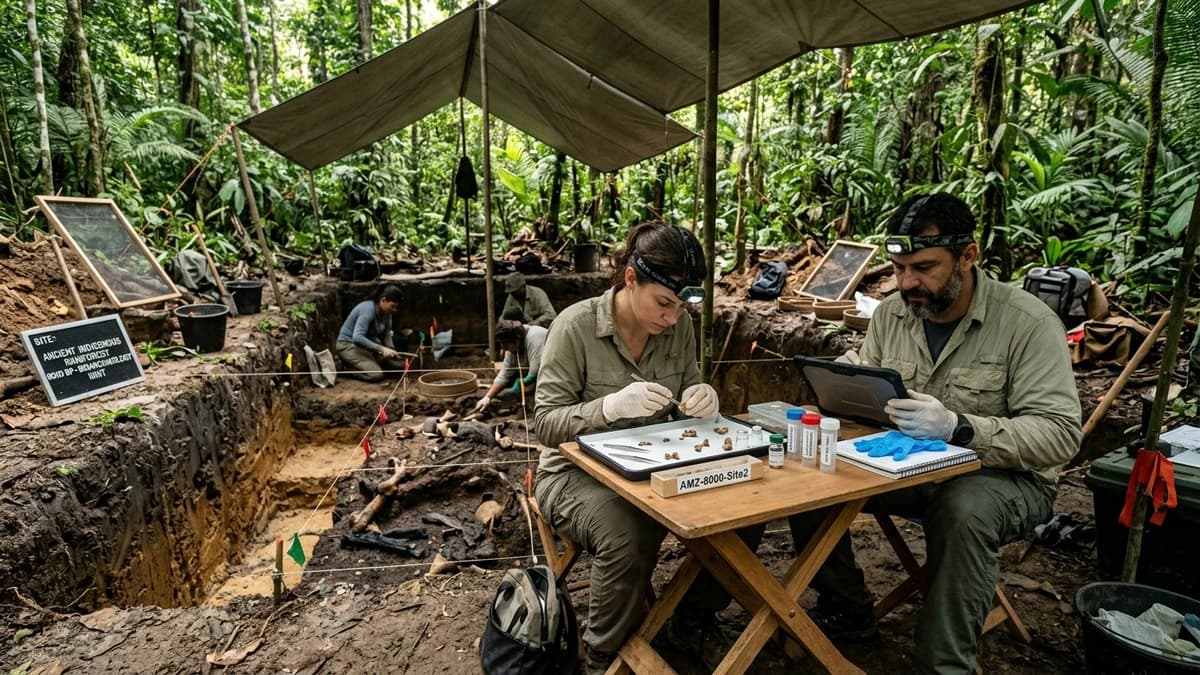
In 2024, LiDAR surveys in the Amazon rainforest revealed an extensive network of ancient cities connected by roads and canals, challenging the long-held belief that the Amazon was largely uninhabited before European contact. These discoveries suggest that millions of people once lived in sophisticated urban centers, practicing advanced agriculture and water management techniques that sustained large populations in what was thought to be impenetrable jungle.
Ground-penetrating radar (GPR) has revolutionized the investigation of known archaeological sites. At Stonehenge, GPR surveys revealed a massive ceremonial complex surrounding the famous stone circle, including hundreds of previously unknown burial mounds and ritual structures. This technology allows archaeologists to map entire landscapes without disturbing the ground, preserving sites for future generations while still extracting valuable information.
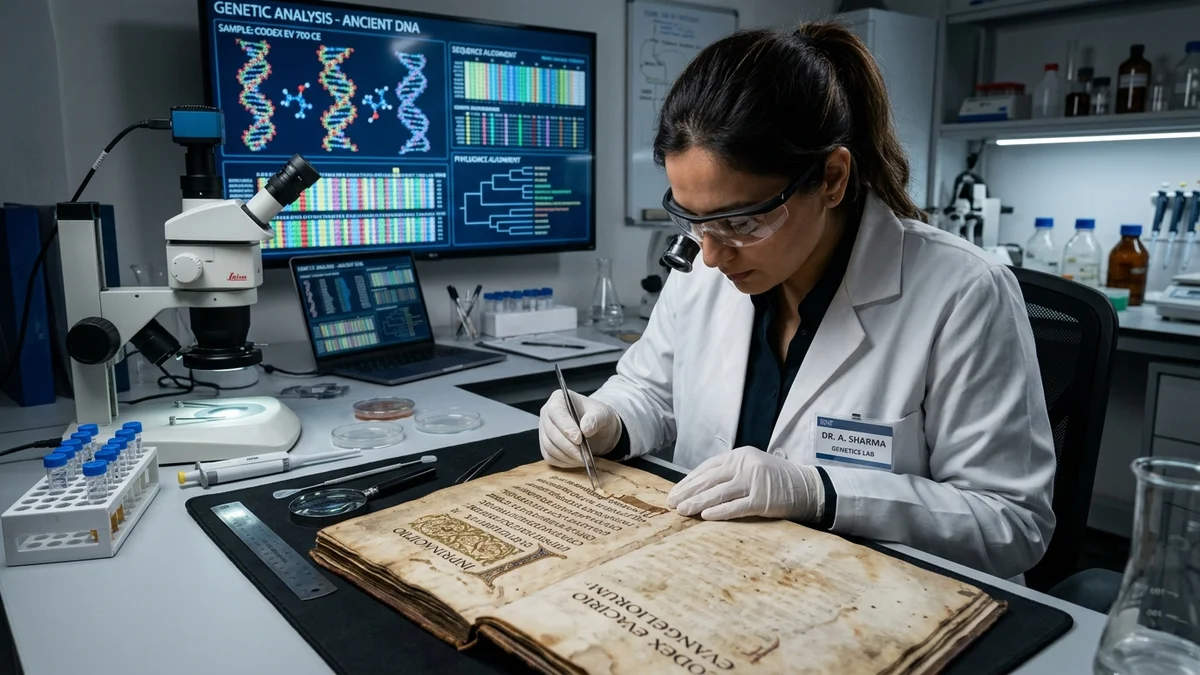
DNA analysis has opened entirely new chapters in human history. Ancient DNA extracted from bones thousands of years old has revealed migration patterns, family relationships, and even diseases that affected our ancestors. The sequencing of Neanderthal DNA showed that modern humans interbred with Neanderthals, and that most people of European and Asian descent carry between one and four percent Neanderthal DNA.
Underwater Archaeology: Exploring Sunken Worlds
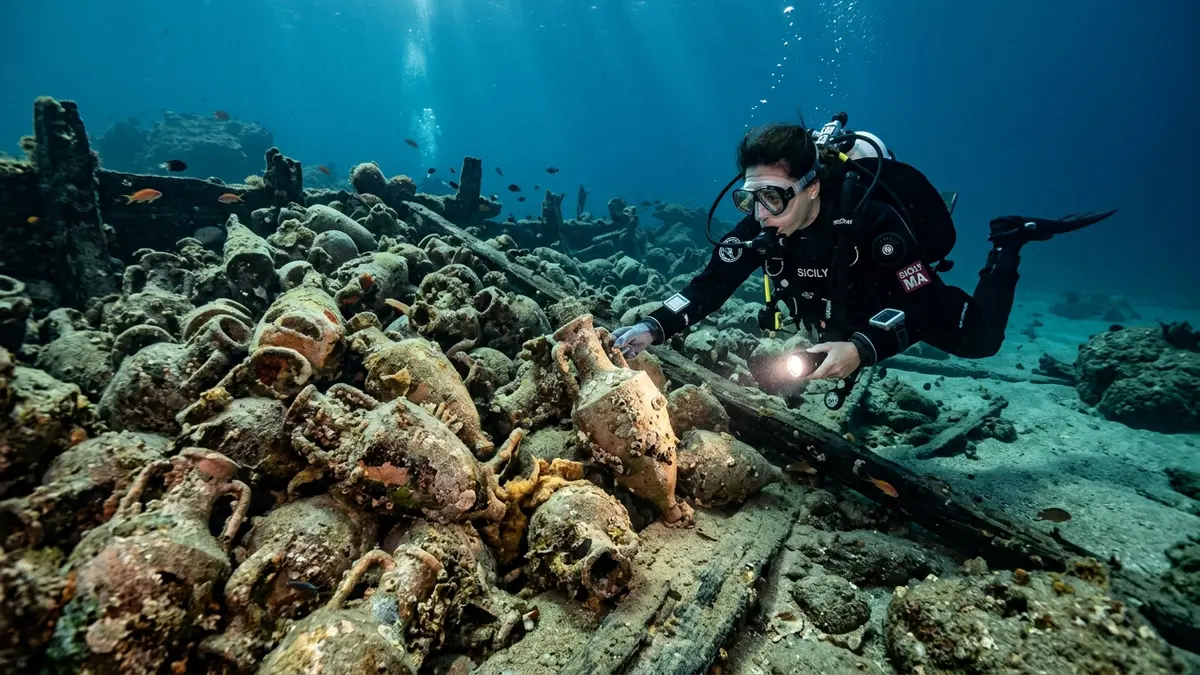
The oceans hold an estimated three million shipwrecks, each one a time capsule preserving a moment in history. Advances in underwater robotics and deep-sea imaging have made it possible to explore wrecks at depths that were previously inaccessible. Remote-operated vehicles (ROVs) equipped with high-definition cameras and robotic arms can document and recover artifacts from the deepest ocean floors.
The discovery of the Endurance, Ernest Shackleton's ship that sank in Antarctic waters in 1915, was one of the most remarkable underwater finds of recent years. Found at a depth of 3,008 meters in the Weddell Sea, the ship was remarkably well-preserved by the frigid Antarctic waters, with its name still clearly visible on the stern.
In the Mediterranean, underwater archaeologists have discovered ancient trade routes by mapping the distribution of shipwrecks and their cargo. These findings have revealed that ancient maritime commerce was far more extensive and sophisticated than previously believed, with trade networks spanning from Britain to India thousands of years before the Age of Exploration.
Ethical Debates in Modern Archaeology
The field of archaeology is grappling with important ethical questions about who owns the past and who has the right to study it. The repatriation of artifacts to their countries of origin has become a major issue, with institutions like the British Museum facing increasing pressure to return items such as the Elgin Marbles to Greece and the Benin Bronzes to Nigeria.
Indigenous communities around the world are demanding greater involvement in archaeological research conducted on their ancestral lands. In Australia, Aboriginal elders now work alongside archaeologists to ensure that sacred sites are treated with appropriate respect and that traditional knowledge is incorporated into scientific interpretations.
Frequently Asked Questions
Q: Are there still major archaeological discoveries to be made?
A: Yes. It's estimated that only 10% of the world's archaeological sites have been excavated. Technologies like LiDAR and ancient DNA are accelerating discoveries.
Q: How has technology changed archaeology?
A: LiDAR reveals cities beneath forests, ancient DNA reconstructs migrations, carbon-14 dating has become more precise, and artificial intelligence helps analyze artifacts.
Q: What is the most important discovery in the history of archaeology?
A: Hard to choose just one, but the Rosetta Stone (1799) made it possible to decipher Egyptian hieroglyphs, opening an entire civilization to study.
Q: Do archaeologists still find treasures?
A: Yes, but the real "treasure" is knowledge. A pottery fragment can be more scientifically valuable than a ton of gold.
Q: Can I participate in archaeological excavations?
A: Yes. Many universities and organizations offer volunteer programs at excavation sites. Search for "archaeological field school" or "archaeology volunteer."
Q: Why has the tomb of Qin Shi Huang never been opened?
A: As a precaution. Ancient texts mention traps and rivers of mercury (confirmed by soil tests). Current technology may not adequately preserve what's inside.
Read also: