15 Facts About Ancient Egypt That Will Blow Your Mind 🏛️
Ancient Egypt is one of the most fascinating civilizations in human history. But much of what you "know" about it probably came from Hollywood — and may be completely wrong! Get ready to discover facts that will change your view of this 3,000-year-old culture.
1. ⏱️ Cleopatra Lived Closer to Us Than to the Pyramids
That's right! This is the most impactful way to understand the absurd scale of time in Ancient Egypt.
Timeline:
Great Pyramid of Giza built: 2560 BC
Cleopatra born: 69 BC
Difference: 2,491 years
Cleopatra born: 69 BC
Today: 2026 AD
Difference: 2,095 years
Conclusion: Cleopatra is 400 years closer to us THAN to the pyramids! Ancient Egypt lasted SO long that Egyptian history itself was "ancient" to the Egyptians of Cleopatra's era.
For context: When Cleopatra looked at the pyramids, they were as ancient to her as Roman aqueducts are to us. The old hieroglyphs were already out of use — it was as if we were trying to read medieval Latin.
2. 🔨 Slaves Did NOT Build the Pyramids
Contrary to Hollywood (and what many school textbooks used to say), the pyramids were built by paid workers, not slaves!
Solid archaeological evidence:
- Worker cemeteries found near the pyramids in 1990 by Zahi Hawass
- Bones show they received quality medical treatment (properly healed fractures, surgeries)
- Records show payments in beer and bread (3 loaves and 2 jugs of beer per day)
- They had registered days off
- When they died, they were buried with honors near the pyramids — slaves would never receive this
Who actually built them:
- ~4,000 permanent workers (masons, engineers, specialized artisans)
- ~20,000 temporary workers (farmers during Nile floods, when they couldn't plant)
- The work was a form of tax — but it was honorable, not punishment
- They were considered national heroes
Where the slave myth came from: The Bible (Exodus) and Herodotus, who wrote about Egypt 2,000 years after the pyramids — based on rumors, not facts.
3. 🐱 Cats Were Sacred — Killing One Meant Death
Egyptian devotion to cats was extreme:
- Cats were associated with the goddess Bastet (protection, fertility, home)
- Killing a cat — even accidentally — was punishable by death
- When a pet cat died, the entire family shaved their eyebrows in mourning
- Cats were mummified with the same care as humans
- Archaeologists have found more than 300,000 mummified cats in a single temple!
Military impact:
At the Battle of Pelusium (525 BC), the Persian king Cambyses II exploited this devotion. He painted cats on his shields and threw live cats in front of his army. The Egyptians refused to fight to avoid risking harm to the sacred animals — and lost the battle!
4. 💄 Men AND Women Wore Heavy Makeup
EVERYONE wore heavy makeup, especially around the eyes:
Kohl (black eyeliner):
- Made from galena (lead sulfide)
- Applied around the eyes in the characteristic style (the "Eye of Horus" look)
- Functions: protection against the intense desert sun, reduction of eye infections (lead has bactericidal properties), religious significance
Other cosmetics:
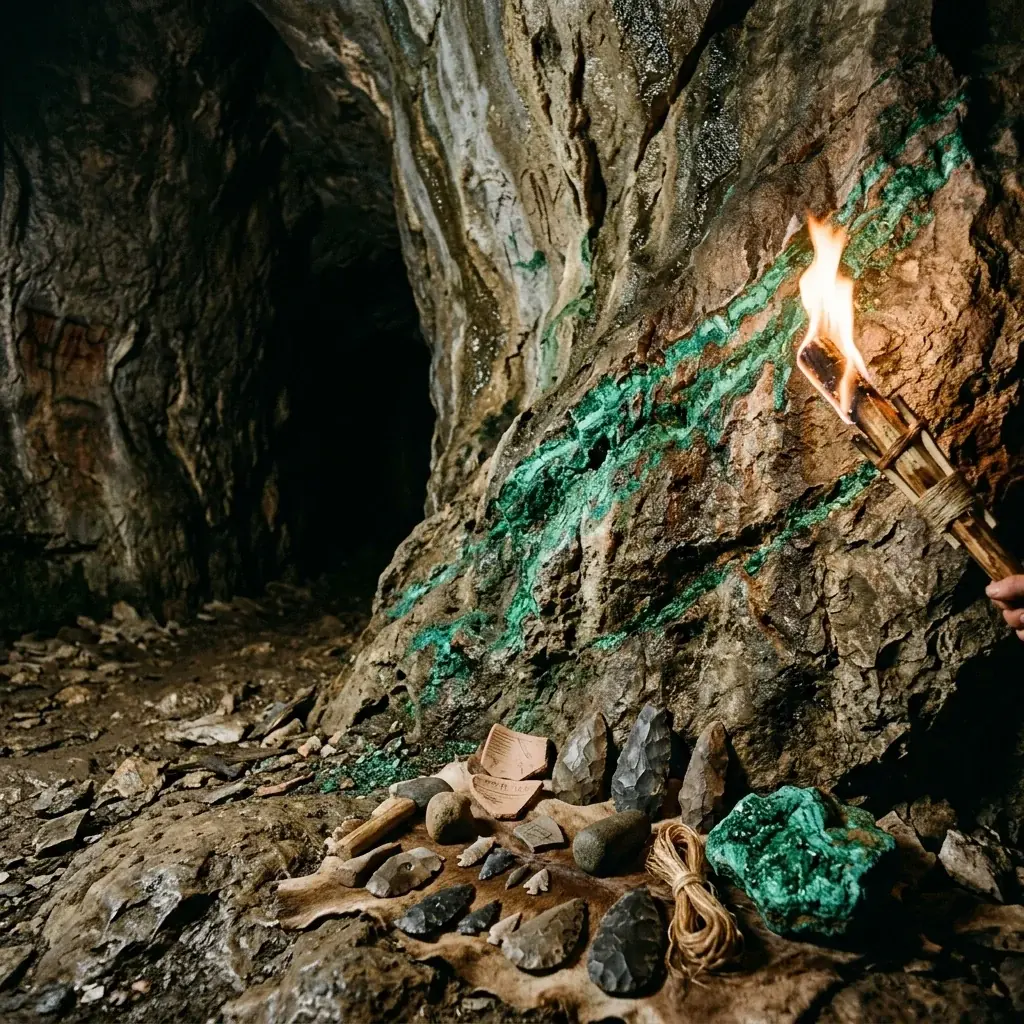
- Green eyeshadow from malachite (copper mineral)
- Red lipstick from ochre (iron oxide)
- Elaborate perfumes (traded rare ingredients from Somalia, Lebanon, and India)
- Scented body oils (protection + social status)
- Henna to dye hair and nails
Scientific curiosity: Modern analyses have shown that Egyptian makeup ACTUALLY prevented eye infections — the lead compounds stimulated the production of nitric oxide, which fights bacteria.
5. 🪥 They Invented Toothpaste (And It Was Horrible)
Egyptian toothpaste recipe (4,000-year-old papyrus):
- Salt
- Pepper
- Dried mint leaves
- Dried iris (flower)
- Burnt and ground ox hooves
Result: It cleaned teeth reasonably well, but was so abrasive it stripped the enamel too! Egyptian mummies have extremely worn teeth.
Other hygiene inventions:
- Deodorant (citrus paste with spices applied to armpits)
- Bronze tweezers for hair removal
- Shaving cream (oils + minerals)
- First "toothbrush" (tree branch with a chewed tip)
6. 🍺 Beer Was Safer Than Water — Everyone Drank It
In Ancient Egypt, beer was a basic necessity:
- Nile water contained parasites and bacteria
- The fermentation process killed pathogens
- EVERYONE drank it — men, women, children, pharaohs, workers
- Children drank a diluted version (low alcohol content)
- Pyramid workers received 4 liters of beer per day as payment
Egyptian beer:
- Was thick like porridge (not like modern beer)
- Sweeter taste (they added dates and honey)
- Alcohol content: 3-5% (similar to modern light beers)
- Nutritious — an important source of calories and B vitamins
- Considered a gift from the gods (goddess Hathor was the patron of beer)
7. 👩⚕️ Women Had More Rights Than in Many Later Civilizations
Ancient Egypt was surprisingly progressive:
- Women could own property and businesses
- They could initiate divorce and receive alimony
- Marriage contracts included protection clauses (division of assets, alimony)
- They could be doctors, priestesses, and rulers
- Hatshepsut ruled as Pharaoh for 22 years (one of the most successful reigns)
- Inheritance was divided equally between sons and daughters
Comparison: In Ancient Greece (a contemporary civilization), women couldn't own property, vote, or leave the house without an escort. Egypt was centuries ahead.
8. 🧠 The Brain Was Considered Useless During Mummification
The mummification process revealed what Egyptians valued:
- Brain: Removed through the nose with a metal hook and discarded (considered useless!)
- Heart: Left in the body — considered the seat of intelligence, emotion, and the soul
- Other organs: Carefully preserved in 4 canopic jars (lungs, liver, stomach, intestines)
Final judgment (psychostasia):
In the Hall of Maat, the deceased's heart was weighed against the Feather of Truth (an ostrich feather). If the heart was lighter than the feather (a just life), the person entered paradise. If it was heavier (full of sins), it was devoured by Ammit — a monster part crocodile, part lion, part hippopotamus.
9. 🏛️ Hieroglyphs Included 700+ Symbols
Egyptian writing was incredibly complex:
- Hieroglyphs: ~700 symbols in the classical period (some periods reached 5,000+)
- Only 3% of the population could read and write (scribes were the elite)
- A scribe took 12 years to master the writing system
- There were 3 systems: hieroglyphs (formal), hieratic (cursive), and demotic (popular)
The Rosetta Stone:
- Found in 1799 by Napoleon's soldiers
- Contained the same text in hieroglyphs, demotic, and Greek
- Jean-François Champollion deciphered the hieroglyphs in 1822
- Before it, NOBODY could read hieroglyphs for 1,400 years
10. ⚕️ Egyptian Medicine Was Surprisingly Advanced
Egyptian doctors were the best in the ancient world:
- They already performed brain surgery (trepanation — with survivors!)
- Used natural antibiotics (honey, garlic, moldy bread — yes, primitive penicillin!)
- Had specialists: ophthalmologists, dentists, proctologists (yes, they existed!)
- Knew how to make surgical stitches, splints, and prosthetics
Edwin Smith Papyrus (1600 BC):
- Surgical manual with 48 cases
- First medical text in history based on clinical observation (not magic)
- Describes neurological exams, treatments for head trauma and fractures
- Impressively scientific for the era
However: Many treatments mixed science with magic (incantations alongside remedies). One treatment for migraines included tying a ceramic crocodile to the head.
11. 🏗️ The Great Pyramid Was the Tallest Structure in the World for 3,800 Years
An unbeatable record in human history:
- Built: 2560 BC
- Original height: 146.5 meters (today 138.5 m — lost its limestone casing)
- Lost the title only in 1311 AD (Lincoln Cathedral, England)
- That means: it was the tallest building for nearly 4 millennia!
Numbers that impress:
- 2.3 million blocks of stone
- Each block weighs an average of 2.5 tons (some reach 80 tons!)
- Built in ~20 years
- Aligned with the cardinal points with a precision of 0.06 degrees (without a compass!)
- Internal temperature is constant: 20°C (year-round)
Mystery: To this day there is no consensus on HOW exactly the stones were transported and stacked. Theories include ramps, levers, and even a hydraulic system (proposed in 2023).
12. 📜 The First Labor Strike in History Was in Egypt
1152 BC — Valley of the Kings:
- Workers building the royal tombs hadn't received payment (grain and beer) for months
- They organized the first documented strike in human history
- They marched to the Mortuary Temples shouting: "We are hungry!"
- They sat in front of the temple and refused to work
Result: The vizier (prime minister) paid the back wages. The workers returned to work. It was recorded on papyrus and found by archaeologists.
Context: This happened during the reign of Ramesses III, when the Egyptian economy was in decline and administrators were corrupt.
13. 🎲 They Were Obsessed with Board Games
Egyptian entertainment was sophisticated:
- Senet: The oldest strategy game in the world (5,000 years). A board with 30 squares. Played by everyone — from pharaohs to peasants. Found in tombs (to play in the afterlife!)
- Mehen: A game in the shape of a coiled serpent
- Hounds and Jackals: A racing game (precursor to our modern board games)
Curiosity: Tutankhamun was buried with 4 complete Senet sets — to entertain himself for eternity.
14. 🗓️ They Invented the 365-Day Calendar (That We Still Use Today)
The basis of our calendar:
- Created a calendar of 365 days divided into 12 months of 30 days + 5 extra days
- Based on the cycle of the star Sirius and the Nile floods
- 3 seasons: Flooding (Akhet), Planting (Peret), and Harvest (Shemu)
- Romans adapted it to create the Julian Calendar
- Which evolved into the Gregorian Calendar (which we use today!)
Impressive detail: The Egyptians knew the year had ~365.25 days (which is why they added the 5 extra days), but they didn't have a leap year — the calendar "drifted" slightly over time.
15. 💍 They Invented the Wedding Ring (Worn on the Ring Finger)
A 4,800-year-old tradition:
- Ancient Egyptians are the inventors of the wedding ring
- Worn on the 4th finger of the left hand (ring finger)
- Reason: they believed a vein ("vena amoris") connected that finger directly to the heart
- The first rings were made of braided reeds
- Circular shape: represented eternity (no beginning or end)
Evolution: Greeks adopted it → Romans adopted it → The tradition spread worldwide → We still use it today, on the same finger, for the same reason!
Bonus: Quick Facts That Will Surprise You ⚡
| Fact | Detail |
|---|---|
| 🪆 Marriage contracts | Included divorce clauses and property division — 4,000 years ago! |
| 🎳 Bowling | They invented a primitive version — stone ball on a ceramic lane |
| 📝 Papyrus | They invented the precursor to paper (papyrus → paper) |
| 🐊 Pets | Besides cats: monkeys, gazelles, crocodiles, and hippos! |
| 🧑🍳 Bread | They produced 30+ different types of bread |
| 💇 Wigs | Nobles shaved their heads and wore elaborate wigs (hygiene + status) |
🔍 Why Does Ancient Egypt Fascinate So Much?
Longevity: It lasted more than 3,000 years — longer than any other civilization in history. For comparison: the United States is 250 years old. Ancient Egypt lasted 12 times longer.
Surprising innovation:
- Writing (hieroglyphs) • Advanced mathematics (geometry for the pyramids) • Sophisticated medicine • Monumental architecture • Irrigated agriculture • Calendar • Paper (papyrus) • Beer • Cosmetics • Legal contracts
Mystery: New tombs and archaeological discoveries happen regularly — in 2022, an entire 3,400-year-old city was found buried near Luxor!
Conclusion
Ancient Egypt was far more advanced, complex, and surprising than movies and textbooks show. It was a civilization that:
- Valued knowledge and innovation above brute force
- Had a social structure more just than many later civilizations
- Developed technologies we still use today (calendar, paper, wedding ring)
- Left mysteries we are still unraveling
With each new archaeological discovery, we learn that we underestimated the ancient Egyptians. And surely, there is much more buried beneath the sand waiting to be found.
Frequently Asked Questions
How were the Egyptian pyramids built?
The exact construction methods remain debated, but the leading theory involves ramps, sledges, and a massive organized workforce. Recent discoveries suggest workers wet the sand in front of sledges to reduce friction by 50%. The Great Pyramid required approximately 2.3 million stone blocks averaging 2.5 tons each, built over 20 years by an estimated 20,000-30,000 workers. Contrary to popular belief, the builders were skilled paid laborers, not slaves.
Did ancient Egyptians have advanced technology?
Ancient Egyptians had remarkably advanced technology for their time: precision stone cutting (some joints are thinner than a sheet of paper), sophisticated irrigation systems, advanced medicine (including brain surgery), astronomical knowledge, and complex engineering. However, claims of alien technology or lost advanced civilizations are not supported by evidence. Their achievements are impressive precisely because they were accomplished with human ingenuity and available materials.
What happened to Cleopatra?
Cleopatra VII, the last pharaoh of Egypt, died on August 12, 30 BC, allegedly by suicide through snakebite (asp). However, some historians question this account, suggesting poison or even murder by Octavian (future Emperor Augustus). She was 39 years old. Cleopatra was actually of Greek-Macedonian descent (Ptolemaic dynasty), spoke nine languages, and was known more for her intelligence and political skill than her beauty. Her tomb has never been found.
Is there still undiscovered treasure in Egypt?
Almost certainly yes. Archaeologists estimate that only about 30% of ancient Egyptian sites have been excavated. In 2022, a massive cache of 250 sarcophagi was discovered at Saqqara. The tomb of Cleopatra remains unfound. Underground chambers may exist in the Great Pyramid (detected by muon scanning in 2017). The Egyptian desert likely holds thousands of undiscovered tombs, temples, and artifacts. New technologies like satellite imaging and ground-penetrating radar are accelerating discoveries.
Which of these facts surprised you the most? Share in the comments! 🏛️✨
Read also: