Stonehenge: How Was It Built and What Was Its Purpose? 🗿🔮
Stonehenge is one of the most mysterious monuments in the world. Built 5,000 years ago without modern technology, it continues to defy explanation. How did they move 25-ton stones 250km? Why?
Did you know Stonehenge is perfectly aligned with the solstices? Or that recent discoveries reveal it was a healing center? The mystery is being unraveled, piece by piece, through modern archaeology and advanced technology.
What Is Stonehenge? 🏛️
Stonehenge is a prehistoric monument located in Wiltshire, England, about 13 km north of Salisbury. It consists of a ring of giant vertical stones, each about 4 meters high, 2 meters wide and weighing approximately 25 tons.
Basic Data:
- Location: Salisbury Plain, Wiltshire, England
- Age: Approximately 5,000 years (construction began in 3,000 BC)
- Structure: Circle of megalithic stones with horizontal lintels
- Heritage: UNESCO since 1986
- Visitors: More than 1 million per year
The name "Stonehenge" comes from Old English "stan" (stone) and "hencg" (hinge or axis), possibly referring to the horizontal lintels that "hang" over the vertical stones.
Construction in Phases: 1,500 Years of Work 🏗️
Stonehenge was not built all at once. Archaeologists have identified at least three main construction phases over 1,500 years.
Phase 1 (3,000 BC): The Original Henge
The first structure had no giant stones. It was a henge - a circular earth bank with an internal ditch, measuring about 110 meters in diameter.
Inside this circle, builders dug 56 pits (Aubrey Holes, named after John Aubrey who discovered them in the 17th century). These pits contained human cremations, making Stonehenge one of the oldest cremation cemeteries in Britain.
The entrance was aligned with sunrise on the summer solstice, showing that from the beginning there was astronomical significance.
Phase 2 (3,000-2,500 BC): The Bluestones
About 500 years later, builders brought 80 bluestones (dolerite blue stones) from the Preseli mountains in Wales - a distance of 250 km.
Each bluestone weighed about 4 tons. Transporting them that distance was an extraordinary feat. Why do it? Bluestones were considered magical or healing by Neolithic people.
The bluestones were initially arranged in two concentric circles, but this configuration was later modified.
Phase 3 (2,500-1,600 BC): The Sarsen Stones
The most impressive phase began around 2,500 BC, when builders brought the huge sarsen stones (silicified sandstone) from Marlborough Downs, about 30 km away.
Each sarsen stone weighed 25 tons on average, with the largest weighing 50 tons. Thirty of these stones were erected in a circle, with horizontal lintels connecting them at the top.
In the center, five trilithons (structures of two vertical stones with a horizontal lintel) were arranged in a horseshoe shape. The central trilithon was 7 meters high.
The stones were carefully worked. Lintels had "mortise and tenon" joints to connect to the vertical stones and to each other - carpentry in stone.
How Did They Move Such Heavy Stones? 🚚
This is the question that has fascinated for centuries. How did people without wheels, horses or metal tools move 25-ton stones for dozens of kilometers?
Transport of Bluestones (250 km)
Theory 1: Human Transport
The traditional theory suggests that the bluestones were transported by a combination of methods:
By land: Stones placed on wooden sleds, pulled by hundreds of people over logs that served as rollers. Modern experiments have shown that 200 people can move a 4-ton stone this way.
By water: Part of the journey may have been made by rivers and along the coast, with stones on rafts. This would drastically reduce the effort required.
Theory 2: Glacial Transport
A controversial theory suggests that Ice Age glaciers naturally transported the bluestones. But geological evidence does not support glaciers reaching that far south during that period.
Theory 3: Ritual Significance
Recent research suggests that the bluestones came from an earlier stone circle in Wales, dismantled and transported to Stonehenge. This would explain the extraordinary effort - they weren't just stones, but ancestral monuments being relocated.
Transport of Sarsen Stones (30 km)
The sarsen stones were even heavier - 25 tons on average. How were they moved?
Modern Experiments:
In 2016, experimental archaeologists moved a 1-ton sarsen stone replica using Neolithic methods. They discovered that:
- A well-lubricated wooden sled (with animal fat) over logs drastically reduces friction
- 20 people could move 1 ton
- Therefore, 500 people could move 25 tons
- Speed: about 1.5 km per day
This means moving a sarsen stone 30 km would take about 20 days with a team of 500 people working continuously.
Ramps and Levers:
To erect the stones vertically, builders probably:
- Dug a hole with one sloped side
- Slid the stone over the hole
- Used ropes and levers to gradually raise it
- Filled the hole with stones and earth to stabilize
To place the lintels on top, they probably built earth ramps or wooden platforms, gradually raising the horizontal stones.
Working the Stone
The sarsen stones were carefully shaped using stone hammers (dolerite mauls). Microscopic analyses show millions of small impact marks.
Shaping a single sarsen stone would have taken months of hard work. Multiplied by 80+ stones, it represents decades of specialized effort.
The carpentry-type joints (mortise and tenon) show surprising sophistication. Neolithic builders applied woodworking techniques to stone - a remarkable innovation.
How Many People Were Needed? 👥
Estimates vary, but archaeologists calculate:
- Transport of one sarsen stone: 500-1,000 people
- Total construction: Thousands of people over generations
- Social organization: Complex society capable of mobilizing and feeding large workforces
Analyses of animal remains at Durrington Walls (nearby settlement) show evidence of massive feasts. Thousands of pigs were slaughtered and consumed, suggesting workers came from all over Britain to participate in construction.
They were not slaves - they were voluntary participants in a religious/community project of supreme importance.
What Was Stonehenge's Purpose? 🔮
This is the most debated question. Over the centuries, theories have included druid temple, astronomical observatory, healing center and cemetery. The truth probably involves multiple purposes.
1. Astronomical Observatory and Calendar
Stonehenge's most famous alignment is with sunrise on the summer solstice (June 21). Standing in the center of the circle, you see the sun rise directly over the Heel Stone.
But there's more:
Winter solstice: Sunset on the winter solstice (December 21) aligns with the opposite axis. Evidence suggests this was the most important event, not the summer solstice.
Lunar cycles: The 56 Aubrey Holes may have been used to track 18.6-year lunar cycles, allowing eclipse prediction.
Agricultural calendar: Solstices marked critical moments for agricultural societies - planting and harvest.
Stonehenge functioned as a primitive astronomical computer, allowing Neolithic people to track time and predict celestial events.
2. Healing Center and Pilgrimage Site
Analyses of human remains found at Stonehenge reveal something surprising: many individuals had serious diseases or injuries. Some traveled hundreds of kilometers to get there.
Evidence:
- Skeletons show signs of chronic diseases, injuries and infections
- Isotopic analyses of teeth reveal people came from all over Britain and even continental Europe
- Bluestones were believed to have healing properties (a tradition that persisted until the Middle Ages)
Stonehenge may have been a Neolithic "hospital," where sick people made pilgrimages seeking healing through rituals and the magical properties of the stones.
3. Temple and Religious Center
Stonehenge clearly had profound religious significance. The scale of the construction effort only makes sense if the site was sacred.
Religious elements:
- Alignment with cosmos: Connected earth and sky, mortal and divine
- Cremations: 63 cremations found, dating from 3,000-2,300 BC
- Rituals: Evidence of feasts, animal sacrifices and ceremonies
- Acoustics: The stone circle creates unique echoes and resonances, possibly used in rituals
Stonehenge may have been seen as a portal between worlds - a place where living and dead, earth and sky met.
4. Elite Cemetery and Ancestral Monument
The cremations found at Stonehenge were not ordinary people. Analyses suggest they were high-status individuals, possibly a dynasty of religious or political leaders.
Unifying Monument Theory:
Recent research suggests Stonehenge was built to unify tribes of Neolithic Britain. The bluestones came from Wales, the sarsen stones from Wiltshire, and people from all over the island participated in construction.
It was a symbol of shared identity, a national project that transcended local tribes. Like building a medieval cathedral - a community effort that defined a civilization.
Recent Discoveries: Rewriting History 🔬
Modern technology is revealing secrets that Stonehenge has kept for millennia.
2020: Exact Origin of Sarsen Stones
Using geochemical analysis, scientists identified that 50 of the 52 sarsen stones came from West Woods, 25 km to the north. This solves a centuries-old mystery about the exact origin of the stones.
Interestingly, two stones came from different locations, suggesting they had special significance - perhaps relocated from earlier monuments.
2021: Circle of Giant Pits
Archaeologists discovered a circle of at least 20 giant pits (each 10 meters in diameter and 5 meters deep) 2 km from Stonehenge, forming a circle 2 km in diameter.
Dated to 4,500 years ago, these pits may have marked a sacred boundary around Stonehenge. It's the largest prehistoric structure ever discovered in Britain.
2022: Altar Stone Came from Scotland
The "Altar Stone" in the center of Stonehenge was identified as coming from Scotland - a distance of 700 km. This suggests much more extensive long-distance connections than previously thought.
2023: Evidence of Massive Feasts
Excavations at Durrington Walls revealed remains of thousands of pigs slaughtered during the winter solstice. Isotopic analyses show the pigs came from all over Britain.
This confirms that Stonehenge was a national pilgrimage center, with thousands of people gathering annually for feasts and rituals.
2024: DNA of the Builders
DNA analyses of human remains revealed that Stonehenge's builders were Neolithic farmers who migrated from Anatolia (modern Turkey) thousands of years earlier.
They almost completely replaced the earlier Mesolithic hunter-gatherers, bringing agriculture, pottery and monument building.
Mysteries Still Unsolved ❓
Despite decades of research, Stonehenge still holds secrets:
How Exactly Did They Move the Stones?
We know it's possible to move giant stones with primitive methods, but the exact details remain unknown. Modern experiments provide clues, but not certainties.
Why This Specific Location?
Stonehenge is not at the highest or most visible point. Why was this location chosen? Was there something special about the geography, geology or ancestral significance?
What Was the Exact Ritual?
We know rituals took place, but we don't know exactly what they were. What ceremonies occurred during solstices? What beliefs motivated the people?
Why Was It Abandoned?
Around 1,600 BC, Stonehenge was abandoned. Why? Climate change? Religious changes? Social collapse? The mystery remains.
What Is Buried Under Stonehenge?
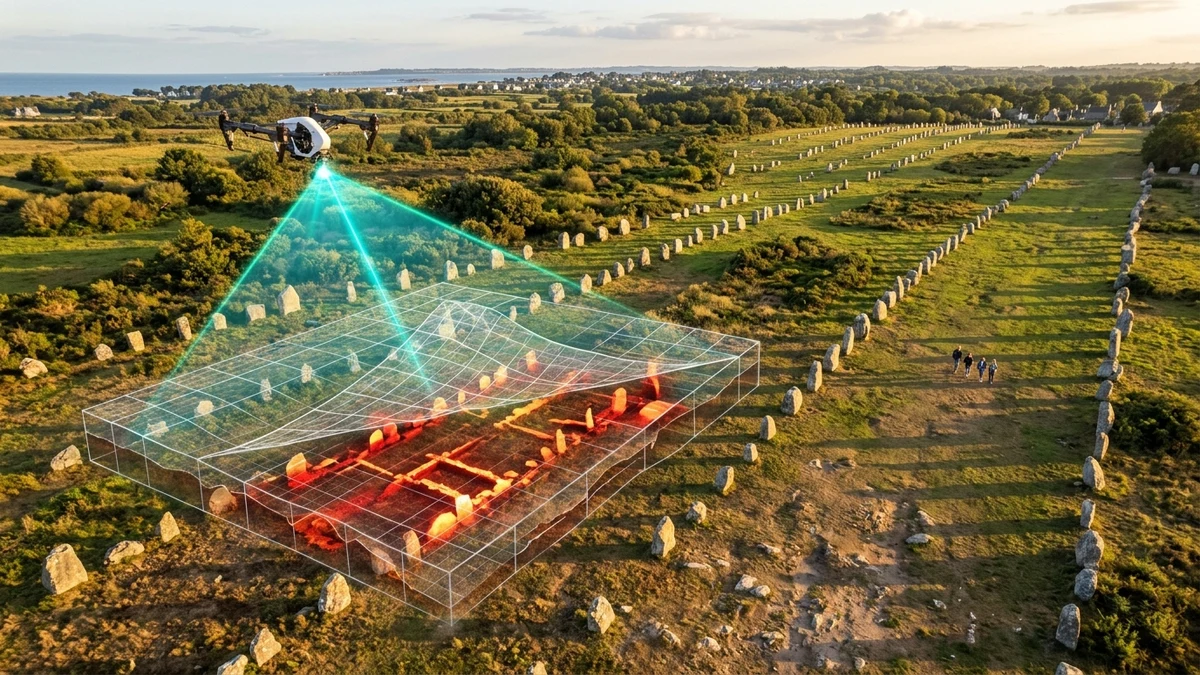
Radar technology has detected underground anomalies that may be chambers, tunnels or buried structures. But excavations are limited to preserve the site.
Stonehenge in Pop Culture 🎭
Stonehenge has captured human imagination for centuries:
- Middle Ages: It was believed to have been built by the wizard Merlin
- 17th Century: Antiquarians began scientific studies
- 19th Century: Modern druids adopted Stonehenge (although it has no connection to historical druids)
- 20th Century: Became a cultural icon, appearing in films, music and art
- Today: More than 1 million annual visitors, solstice celebrations attract thousands
Other Stone Circles in Britain 🗿
Stonehenge is the most famous, but there are hundreds of stone circles in the British Isles:
- Avebury: Largest stone circle in Europe, 30 km north of Stonehenge
- Ring of Brodgar: Neolithic circle in the Orkney Islands, Scotland
- Callanish: Cruciform circle in the Outer Hebrides
- Castlerigg: Dramatic circle in the Lake District
These monuments show that Stonehenge was part of a broader cultural tradition of stone circle building.
Conclusion: A 5,000-Year Legacy 🌟
Stonehenge continues to fascinate 5,000 years after its construction. Each discovery reveals more about our ancestors - their ingenuity, spirituality, social organization and determination.
They had no metal, wheels or draft animals. But they had something more powerful: shared vision, mass cooperation and dedication to something greater than themselves.
Stonehenge is a testament to what humans can achieve when they work together for a common purpose. It's a reminder that civilization, art and spirituality are not modern inventions - they have been a fundamental part of human experience for millennia.
The monument remains, silent but eloquent, guarding secrets that may never be fully revealed. And perhaps that's for the best. Some mystery should remain, inspiring future generations to look at the past with wonder and at the future with ambition.
Stonehenge teaches us that we are part of a much larger story - a story that began thousands of years ago and will continue long after us. And that is the true magic of the stones.
Frequently Asked Questions
How was Stonehenge built?
Stonehenge was built in several phases over approximately 1,500 years (3000-1500 BCE). The massive sarsen stones (up to 25 tonnes) were transported 25 miles from Marlborough Downs, likely using wooden sledges and rollers. The bluestones (up to 4 tonnes) came from Wales, 150 miles away, possibly transported by a combination of water and land routes.
What was the purpose of Stonehenge?
The exact purpose remains debated. Evidence suggests it served as an astronomical observatory aligned with solstices and equinoxes, a ceremonial and religious site, a healing center (many skeletons found nearby show signs of illness), and a place of ancestor worship. It likely served multiple purposes over its long history.
Who built Stonehenge?
Stonehenge was built by Neolithic and Bronze Age peoples of Britain, not by druids as popularly believed. DNA analysis of nearby burials shows the builders were descended from Anatolian farmers who migrated to Britain. The construction required sophisticated engineering knowledge and organized labor of hundreds of people.
Could we build Stonehenge today?
Yes, modern engineering could easily replicate Stonehenge. The real achievement was doing it with Stone Age technology. Experiments have shown that 20 people can move a one-tonne stone on wooden rollers. The precision of the astronomical alignments demonstrates remarkable mathematical and observational knowledge for the era.
Read also:
- Lost Civilizations: Atlantis and Other Mysteries