🌍 Your knowledge portal
ciencia-natureza

The Genetic Breakthrough: Gentoo Penguins Are Actually Four Distinct Species

📅 2026-09-03⏱️ 16 min read📝
⚡

Quick Summary

A groundbreaking genomic study revealed that the iconic Gentoo penguins are four distinct species, separated by deep adaptations and Antarctic geography. The icy vastness of the mighty Southern Ocean and its spectacular sub-Antarctic islands have always harbored countless hidden evolutionary secrets concerning mysterious marine life and resilient seabirds.

Key Takeaways:

  • The fascinating biological speciation of the remarkable Gentoo penguins represents a totally classic and absolutely perfect scientific example of biological evolution driven relentlessly by strict geographic isolation, an…
  • The monumental and official scientific taxonomic reclassification now permanently and decisively divides the entire formerly widely distributed unified ancient biological clade into exactly four perfectly independent…
  • The formal, official, and totally unprecedented scientific dismemberment of what was previously considered a single, highly abundant global species into four distinct, entirely separate species dramatically and permanently…
The Genetic Breakthrough: Gentoo Penguins Are Actually Four Distinct Species
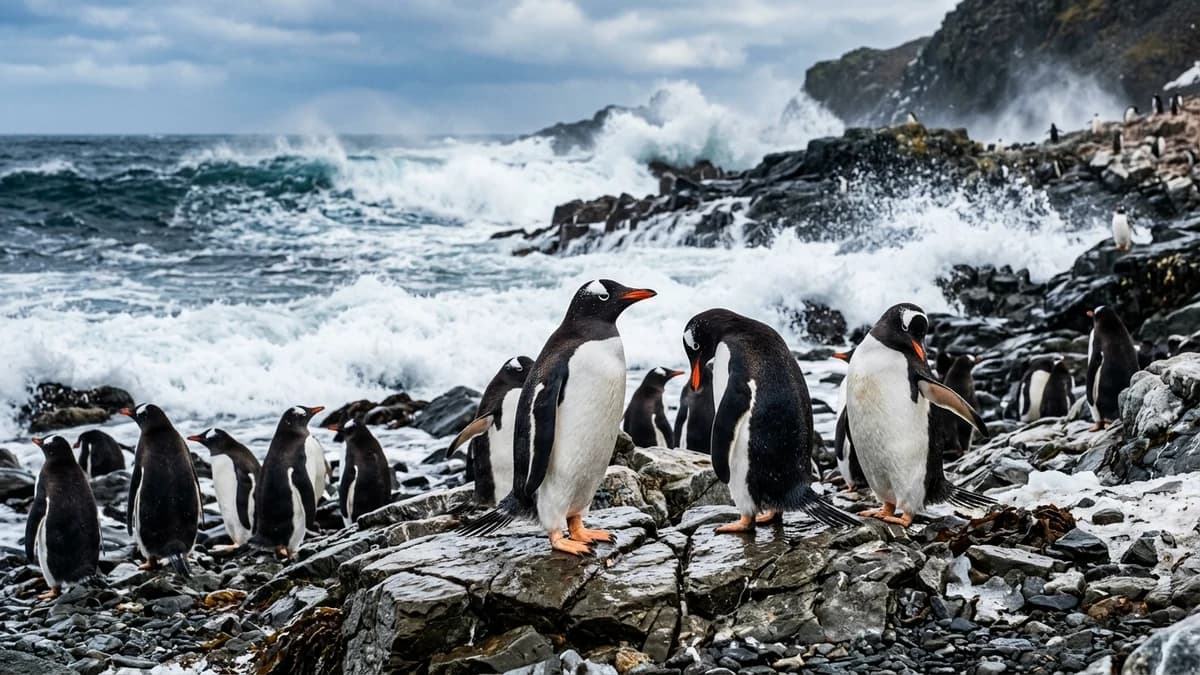
The Genetic Breakthrough: Gentoo Penguins Are Actually Four Distinct Species — High-Fidelity Artistic Illustration created by artificial intelligence based on scientific research.

The icy vastness of the mighty Southern Ocean and its spectacular sub-Antarctic islands have always harbored countless hidden evolutionary secrets concerning mysterious marine life and resilient seabirds. Among the most globally famous and beloved permanent residents of these extreme, unforgiving, and desolate geographic polar regions are the fantastic Gentoo penguins, which are widely known and deeply admired for their unmatched and incredible swimming speed in freezing water and their beautifully vibrant, bright reddish-orange distinctive bill. Historically, for centuries, classical biological science incorrectly and uniformly considered all of these fascinating and complex charismatic feathered marine creatures to be a single, monolithic, and very widely geographically distributed species spanning the frozen southern hemisphere.

However, an absolutely spectacular, unprecedented, and immensely powerful scientific breakthrough comprehensively published and highly celebrated globally in early September 2026 radically and permanently changed this outdated monolithic view forever. Renowned expert researchers, leading evolutionary scientists, and dedicated molecular biologists working cooperatively from world-class international academic institutions meticulously performed an unprecedented, massive, and large-scale advanced whole-genome DNA sequencing project analyzing all known global populations of living Gentoo penguins. The important initial underlying biological objective of this massive endeavor was essentially just to deeply understand how these isolated seabird populations dealt biologically with continuous and devastating climate changes and rising temperatures across the highly diverse and varying oceanic latitudes of the massive southern hemisphere's ecosystem.

Nevertheless, the astounding and complex genetic data meticulously extracted from the numerous deep cellular genome sequencing examinations abruptly revealed genetic evolutionary divergences that were so profoundly deep and astonishingly significant that they immediately forced a monumental taxonomic reclassification across the scientific board. The beloved and iconic Gentoo penguin (scientifically previously unified strictly as Pygoscelis papua) is decidedly and absolutely not merely just a single biological species that coincidentally displays simple, superficial regional morphological plumage variations across different island groups. It is, in fantastic actual scientific fact and biological truth, a vastly complex biological and ecological complex composed intrinsically of exactly four completely distinct, totally independent, and fully separate species, each proudly possessing its very own long, unique, and separate evolutionary historical trajectory over time.

This stunning and paradigm-shifting scientific revelation powerfully shakes the fundamental foundational core of all historical Antarctic ornithology and simultaneously brings forth profoundly new critical urgencies and deep concerns for global environmental conservation and wildlife protection protocols. The crucial and profound separation of the species into exactly four completely separate and distinct new species intrinsically means that these various wild populations of gentoos absolutely do not intermix and simply have not exchanged any viable genetic material with each other for many hundreds of thousands of long years. Implacable, violent, and relentless geographical barriers, such as the immensely powerful, stormy, and freezing circumpolar oceanic currents, alongside the unbelievably vast and treacherous expanses of deep open sea, have constantly acted as impenetrable and invisible icy brick walls dividing them.

As the long millennia passed, the absolutely specific, intense, and unique environmental ecological pressures characteristic of each isolated group of remote islands heavily and definitively molded the physical anatomy in incredibly singular and fascinating ways. The critical daily predatory feeding behavior, the intricate reproductive physiological mechanisms, and even the fundamental skeletal bone structure of each distinct lineage aggressively followed completely separate evolutionary paths. Modern conservation science now faces the enormous and highly complex environmental challenge of rapidly trying to deeply understand and properly manage the peculiar, distinct, and fragile ecological needs of each one of these newly discovered, vulnerable, and wonderful biological avian groups.

The Pivotal Role of Strict Geographic Isolation in Evolution #

The fascinating biological speciation of the remarkable Gentoo penguins represents a totally classic and absolutely perfect scientific example of biological evolution driven relentlessly by strict geographic isolation, an essential process scientifically known in biology as allopatric speciation. In sharp and striking ecological contrast to various other highly migratory seabirds that frequently, easily, and routinely cross entire global oceans repeatedly during their lives, gentoos are notably, stubbornly, and invariably deeply attached and loyal to their original native home breeding colonies. They heavily and consistently tend to forage for food very closely to the frozen, rocky coastlines where they originally hatched, and they very rarely dare to venture outward on long, risky exploratory expeditions across the dangerous and extremely deep open oceanic waters surrounding them.

This highly impressive and profound ecological fidelity to their precise geographical place of birth effectively and aggressively reduced the vitally important natural gene flow between the distantly separated island colonies to virtually absolute zero over extended time. Over the long course of many hundreds of thousands of consecutive, harsh generations, the absolutely tiny and invisible genetic cellular mutations steadily and silently began to accumulate in a totally independent fashion within each separately isolated, island-bound biological population. This profound evolutionary isolation was powerfully and relentlessly reinforced daily by the massive and freezing Antarctic Circumpolar Current, a formidable oceanic force which constantly creates severely harsh, violently turbulent, and distinctly hostile thermal water boundaries across the entire southern ocean environment.

Brave penguins that continuously live, breed, and furiously hunt around the Falkland Islands consistently face a relatively milder sub-Antarctic climate that is vastly and significantly different from the conditions endured by those inhabiting the remote Kerguelen Islands or the freezing, icy Antarctic Peninsula itself. Consequently, the incredibly relentless, unforgiving, and brutal forces of natural selection powerfully favored fundamentally different physical characteristics in each separate geographical region to brilliantly maximize their respective ultimate survival and reproductive success rates in nature. The magnificent resulting anatomical differences might appear extremely subtle and insignificant to a casual, inexperienced human observer, but they are biologically and evolutionarily enormous and deeply profound at the complex cellular genetic and core structural biological levels of existence.

The essential dense bone structure of the avian skull, the overall massive body size, and even the incredibly exact and precise aerodynamic shape of the hunting bill changed radically to adapt perfectly to the specific local availability of marine prey. For excellent example, the hardy birds that permanently inhabit significantly colder and much more hostile southern waters successfully developed noticeably more robust, massive, and heavier bodies, thereby gaining crucial extra metabolic protection and fat. They naturally and beautifully adhere to the biological Bergmann's Rule, a foundational ecological principle which strictly dictates that warm-blooded animals living in much more extreme and freezing climates inherently tend to be significantly larger in mass to efficiently conserve essential metabolic body heat.

Conversely, the resilient seabird populations geographically situated slightly further north, located comfortably closer to the milder outer limits of the polar Antarctic convergence zone, successfully maintained a noticeably slightly more slender and streamlined physical frame over time. This brilliant evolutionary anatomical adaptation safely guarantees perfectly adequate bodily thermoregulation under relatively less punishing ambient air temperatures during the surprisingly warmer and slightly more forgiving local summer breeding months. This entire, utterly fantastic, and incredibly complex long evolutionary journey happened completely and silently hidden away from the prying vision of field biologists, completely undiscovered until modern advanced genomics finally and brilliantly deciphered the ancient biological enigma.

A Detailed Comparison of the Four New Gentoo Species #

The monumental and official scientific taxonomic reclassification now permanently and decisively divides the entire formerly widely distributed unified ancient biological clade into exactly four perfectly independent, genetically distinct, and ecologically isolated avian species. Each one of these remarkable new species is now formally understood to be completely restricted and perfectly endemic to a highly specific, unique geographical ecological zone within the restless, rough, and remote Antarctic Ocean environment. The highly technical, detailed, and comprehensive data table carefully presented below rigorously and precisely summarizes the main physical, ecological, and core genetic characteristics that brilliantly differentiate these four incredible new species of beautiful Gentoo penguins.

Species (New Scientific Nomenclature) Main Geographic Location Average Size (Weight Range) Bill Morphology and Function Distinct Genetic Markers
Pygoscelis papua Falkland Islands (Malvinas) 6.0 to 7.5 kg Noticeably longer and much narrower, perfect for catching fast agile fish. Highly basal haplotypes possessing extremely high ancient mitochondrial diversity.
Pygoscelis ellsworthi Antarctic Peninsula 5.0 to 6.2 kg Distinctly shorter and exceptionally robust, fully adapted for crushing thick krill. Highly exclusive specific genes strongly associated with extreme cold and sea-ice adaptation.
Pygoscelis taeniata Kerguelen / Macquarie Islands 5.5 to 6.8 kg Medium length, highly thick, and exhibiting a generalized all-purpose shape. A massive 2.4% nucleotide divergence found deep within the core nuclear genome.
Pygoscelis poncetii South Georgia Islands 6.5 to 8.0 kg Exceedingly broad at the strong base, providing massive extra biting force. Completely unique metabolic mutations found exclusively in essential lipid regulatory genes.

These highly detailed, deeply comprehensive taxonomic data beautifully and brilliantly demonstrate beyond any shadow of a doubt that the profound biological evolutionary divergences go far beyond mere superficial DNA strand composition differences. The complex local feeding ecology strictly dictated the incredibly impressive and highly functional physical changes in the specific morphology of the hunting beak over the course of extensive, countless millennia of natural biological selection. The beautifully endemic native species of the Falklands, naturally endowed with its significantly more elongated and highly aerodynamic beak, successfully and easily captures incredibly fast-swimming silver fish in relatively milder oceanic waters with extreme lethal efficacy.

In absolutely crystal-clear, sharp, and striking evolutionary contrast, the incredibly persistent, tough, and highly resilient inhabitants of the heavily frozen Antarctic Peninsula depend almost entirely and enormously on the vast, dense swarms of tiny, nutritious polar krill. This highly specific, incredibly demanding, and challenging ecological feeding niche intensely and powerfully favored the evolutionary development of much shorter, distinctly stronger, and incredibly stocky bills, which are perfectly optimized for this completely different and unique type of oceanic foraging strategy. Each and every single tiny intricate aspect of the physical bodily anatomy of these truly magnificent and beloved marine animals was slowly, carefully, and masterfully sculpted by raw nature over immense stretches of deep time for a highly specific, imperative local purpose.

The Critical and Urgent Implications for Environmental Conservation #

The formal, official, and totally unprecedented scientific dismemberment of what was previously considered a single, highly abundant global species into four distinct, entirely separate species dramatically and permanently alters the entire global conservation landscape. Prior to this completely paradigm-shifting, magnificent watershed genomic study, the beautiful Gentoo penguin was very comfortably and safely classified merely as "Least Concern" on the extensive and highly respected global IUCN Red List of Threatened Species. This incredibly benign, positive, and reassuring classification was entirely and strictly due to its apparently vast, enormous perceived global total population of many hundreds of thousands of breeding individuals widely distributed across the entire southern ocean environment.

However, when this seemingly colossal, robust, and supposedly single unified global biological population is suddenly and biologically divided mathematically and ecologically by exactly four, the entire demographic picture changes in a terrifyingly alarming and incredibly drastic manner. Some of these absolutely fantastic, completely newly named, and truly magnificent distinct species actually possess severely reduced, incredibly fragile global total populations and are ecologically restricted to very limited, tiny, and isolated rocky island territories. The truly magnificent and incredibly beautiful Pygoscelis poncetii, which is now known to be restricted almost exclusively to the majestic, mountainous South Georgia and its few adjacent tiny rocky islets, faces an incredibly bleak, dark, and highly uncertain environmental future.

Their extreme, incredibly high dependency on highly specific, strictly localized geographic ocean banks of abundant, nutritious swarming krill and pelagic fish schools makes them unbelievably vulnerable and fundamentally fragile to any external ecological shocks. Any significant, unexpected negative shift in the dominant freezing oceanic currents or the relentless, continuous advance of dangerous anthropogenic global warming could easily, rapidly, and permanently destroy the fragile biological foundation of their entire marine food web. With the profoundly worrying, documented decrease of essential sea ice in several fundamental key breeding regions and the incredibly rapid, aggressive expansion of the industrial commercial krill fishing fleets, the nutritional base of these wonderful birds is seriously threatened today.

The monumental new taxonomic biological reclassification immediately and powerfully demands that the major international legislative bodies responsible for oceanic conservation, such as the highly renowned CCAMLR commission, must act decisively with absolute and extreme urgency to prevent disaster. The absolutely imminent, mandatory, and immediate establishment of newly expanded, highly targeted, incredibly rigorous, and specifically geolocalized marine protected exclusion zones has undeniably become a strict, binding environmental moral obligation for all civilized nations of the world. The extremely distant, wildly remote Kerguelen Islands also exclusively harbor a truly noble, beautiful species that is now totally biologically isolated, whose fragile, irreplaceable genetic diversity is restricted solely and completely to that one single tiny island archipelago in the stormy Indian Ocean.

Without the immensely healthy, desperately needed natural influx and continuous injection of robust new genetic material from completely external, healthy migrating populations, these splendid and gorgeous seabirds could suffer enormously and fatally from severe biological inbreeding degeneration. This horrifying scenario would undeniably be entirely catastrophic and tragic if there is suddenly a rapid, unexpected, and completely sudden demographic population collapse directly caused by massive stressful factors emerging rapidly from the rapidly changing modern ecosystem. The incredibly dedicated, hardworking global conservation biologists and leading polar scientific researchers strongly and repeatedly warn that it is absolutely vital, imperative, and completely crucial to closely monitor these incredibly fragile and deeply isolated breeding colonies with extreme vigilance.

Implementing continuous, rigorous, and highly advanced technological scientific monitoring programs will definitely help to successfully detect deadly outbreaks of emerging viral avian diseases or widespread, completely destructive reproductive breeding failures directly caused by the devastating El Niño climate phenomenon early on. The complex science of global conservation absolutely needs to be highly flexible, dynamically adaptive, and powerfully capable of preventively monitoring all of the terrible, massive climate anomalies that currently constantly plague and drastically affect the fragile ecosystems of planet Earth. Every single, totally unique, newly discovered and incredibly singular avian species quietly thriving down in the frozen deep south possesses an utterly inestimable, completely unique, and totally irreplaceable intrinsic ecological and evolutionary value for the incredibly broad and amazing biological biodiversity of our beautiful planet.

The Utterly Profound Importance of Deep Genomics in Modern Taxonomy #

For many vast, long, and incredibly adventurous centuries of classical scientific exploration, dedicated naturalist explorers depended almost exclusively on easily visible, highly obvious physical external characteristics, like brightly colored plumage and overall bodily size, to systematically classify the wonderfully complex living natural world. The fascinating, historically rich, and visually beautiful traditional morphological taxonomy successfully and single-handedly built the incredibly solid, robust foundational core bases of all contemporary biological science as we historically know it, but highly potent, newly emerging modern technology harshly revealed its inherent limitations. The truly formidable, unprecedented, and incredibly powerful technical advent of advanced next-generation genetic DNA sequencing (NGS) completely and wonderfully changed the entire scientific analytical game permanently and beautifully for the entire biological science community worldwide.

This incredibly powerful tool finally allowed the amazingly brilliant and highly dedicated modern scientists to meticulously and exhaustively read the vast, incredibly intimate biological source code of all living things with a monumental, astounding, and historically unprecedented level of extreme precision. This absolutely fantastic, entirely disruptive, and undeniably magnificent technological scientific revolution is undoubtedly the single, sole entity directly responsible for finally discovering the beautifully surprising and deeply hidden ecological truth safely locked away inside the ancient isolated populations of Gentoo penguins. The advanced and incredibly powerful modern science of genomics brilliantly and irrefutably demonstrated that the undeniably powerful, relentless biological force of parallel convergent evolution can very easily and incredibly effectively deceive even the absolute sharpest and most highly trained human eyes of great experts.

Geographically separate, totally different, and deeply isolated biological populations residing on islands situated very far apart from each other can easily and wonderfully maintain outward physical appearances that are externally almost completely and utterly identical because the harsh marine environment forces it. The unforgiving, violent, and freezing polar oceanic environment inflexibly and relentlessly demands that these aquatic birds must strictly maintain the exact same, absolutely flawless, perfectly streamlined, and highly advanced hydrodynamic anatomical bodily shape in order to swim quickly and survive. However, completely hidden away much deeper below the thick, highly dense, and fully impenetrable protective waterproof feathers, the astonishingly complex cellular biological machinery of these magnificent penguins completely and radically diverged throughout their long and totally hidden evolutionary history.

The remarkably potent, undeniably robust, and incredibly accurate modern genomics field has definitively and wonderfully proven that these four distinct, completely unique genetic lineages successfully and permanently separated roughly an astonishing and impressive half a million long years ago during the freezing Pleistocene epoch. During that intensely cold, highly challenging, and incredibly brutal ancient glacial era, the absolutely massive, gigantic, and completely terrifying polar ice caps aggressively and relentlessly expanded outward, heavily and thickly covering almost the entire southern oceanic expanse in deep, freezing white ice. They brutally and mercilessly completely isolated small, wandering groups of tough coastal penguins into incredibly rare, tiny environmental "refugia" that miraculously and temporarily remained mostly free of heavy, crushing ice on various completely different, wildly scattered archipelagos across the vast frozen immensity.

When the breathtakingly vast and incredibly heavy glacial ice finally and slowly completely retreated many millennia ago, these incredibly tough, lucky surviving populations were already astoundingly, completely, and utterly genetically incompatible, meaning they could never again freely and naturally interbreed. This truly formidable, totally groundbreaking, and beautifully innovative published ecological genetic study unequivocally and loudly highlights that our current fragile, incredibly rudimentary scientific biological understanding of the vast, complex biodiversity of the immense Antarctic continent is still fundamentally and vastly incomplete today. If a truly magnificent, globally iconic, extremely large, highly visible, and incredibly extensively studied marine animal just like the beautiful Gentoo penguin successfully and gracefully completely hid nothing less than exactly four completely separate species, the wild natural world definitely holds secrets. Countless other totally fascinating, highly mysterious, and mostly microscopic sub-Antarctic creatures and organisms perfectly and undoubtedly may also easily harbor a brilliantly rich, immensely dense, and totally hidden genetic evolutionary diversity that patiently awaits its glorious, fascinating, and totally inevitable future scientific discovery.

Frequently Asked Questions #

Why did highly advanced modern scientists take such an incredibly long historical time to finally discover that there were actually four completely different biological species of these beautiful penguins? #

The beloved, globally iconic, and incredibly agile Gentoo penguins are externally, visually, and structurally highly morphologically similar, beautifully sharing exactly the precise same incredibly sleek feather plumage and the famous, incredibly distinctive, and completely unique bright white spot located perfectly on the top of the head. The very old, historically limiting, and increasingly outdated traditional biological taxonomy relied almost extensively and almost entirely solely on simple physical and highly visible outer morphological anatomical characteristics, which inherently and fundamentally made it enormously difficult to precisely identify any deep evolutionary differences. Only with the very recent, incredibly powerful, and utterly revolutionary scientific technological advancement of highly complex modern massive large-scale whole-genome sequencing computational technologies was it finally physically possible to thoroughly and meticulously analyze the tiny trace structures of mitochondrial and nuclear DNA. When dedicated, brilliant field biologists finally managed to fully structurally compare the incredibly long, complex, and vast nuclear genome of the widely scattered different remote populations on extremely powerful modern supercomputers, the crucial silent evolutionary divergences that had arduously and slowly accumulated over hundreds of thousands of long years became wonderfully crystal clear, incredibly evident, and absolutely scientifically undeniable by the entire contemporary global scientific academic community today.

What exactly happens right now to the highly complex, crucial, and very vital governmental environmental protection and global conservation network of all these highly important and wonderful marine penguins moving forward? #

The currently fragile, admittedly limited, and clearly totally insufficient existing global environmental protection and complex legal biological guardianship network will undeniably and absolutely need to be extensively, totally reviewed, and completely legally restructured in a broad, incredibly deep, and highly immediate international governmental scope as an absolute total priority by all treaty nations. Prior to these absolutely shocking, recent, and highly illuminating scientific genetic facts, the incredibly large, massive, and seemingly deeply unified combined global total wild population of Gentoo penguins was completely, tragically, and highly elusively viewed as being sufficiently large and deeply robust enough to not actively generate any kind of immediate, pressing urgent governmental ecological concerns of a massive imminent global mass extinction event. With the truly shocking, undeniably definitive, and incredibly rigorous modern scientific taxonomic division into exactly four very completely, totally separate independent biological species, the specific, highly localized populations, exactly like those geographically isolated and highly restricted within the extremely stormy and totally distant Kerguelen Islands, very suddenly, dramatically, and completely alarmingly become infinitely smaller and exponentially far more incredibly susceptible to totally localized environmental threats that are strictly restricted to their tiny remote polar oceanic territories today. The highest international global environmental legislative authorities, very powerful global governing legal panels, and worldwide conservation lawmakers absolutely must begin with the utmost urgency an entirely totally new phase to categorically, rigorously, and independently quickly reevaluate the specific true nature conservation status and exact extinction risk of every single new species individually before the global scientific community, possibly very rigorously and without any delay elevating the immediate global threat risk degree on the famous emergency conservation red list, and additionally fatally demanding absolutely urgently incredibly severe, strict, and heavy new legal restrictions on completely unchecked rampant open commercial marine deep-water fishing and widespread oceanic exploitation exactly around these incredibly fragile, totally essential, and biologically crucial scattered wild archipelagos of our incredibly beautiful and dynamically transforming modern world today.

Can these beautifully newly discovered, totally wonderful, and absolutely four independent biological species of highly exotic Antarctic seabird penguins ever potentially successfully naturally interbreed and fully reproduce with each other if artificially physically placed right back together again in the modern era? #

Despite all proudly and undeniably being completely proven biological, genetic, and evolutionary descendants of exactly one completely shared, very specific, and highly identical common ancient marine animal ancestor that lived quite relatively very recently in the immensely long and deeply complex grand scale of natural biological evolution and geological time, they all unfortunately or very fortunately currently find themselves today deeply, totally ecologically separated, fundamentally physically geographically isolated, and entirely genetically divided in the wild nature for far more than a totally fantastic and totally incredible half a million long years within the relentlessly freezing environment of the deep southern polar planet ice. The incredibly vast, highly complex, and amazingly deep modern scientific field of evolutionary molecular biology, along with numerous leading global top environmental experts, very seriously and strongly completely suggest that the massive, highly dense, and incredibly robust silent chromosomal genetic barriers that have silently and temporally completely accumulated would definitely forcefully make the incredibly complex biological event of cellular crossing and completely natural sexual biological reproduction not just highly and incredibly considerably unlikely to ever potentially prosper successfully within the incredibly complex modern reproductive genetic theory, but also powerfully possibly guarantee that they would literally never ultimately successfully originate any actual truly fully viable, healthy, or truly sexually fertile generated biological offspring at the very final biological reproductive end point of the immensely complex, fascinating, and incredibly intricate internal physiological life process of Antarctic polar avian biology currently present on the wildly changing beautiful planet Earth of diverse and wonderful glacial nature.

References #

🏷️ Tags:

#descoberta#quatro#especies#pinguim#gentoo#genetica

📢 Gostou deste artigo?

Compartilhe com seus amigos e nos conte o que você achou nos comentários!

Receba novidades!

Cadastre seu email e receba as melhores curiosidades toda semana.

🔒 Sem spam. Cancele quando quiser.

💬 Comentários (0)

Seja o primeiro a comentar! 👋

Receba novidades no WhatsApp!