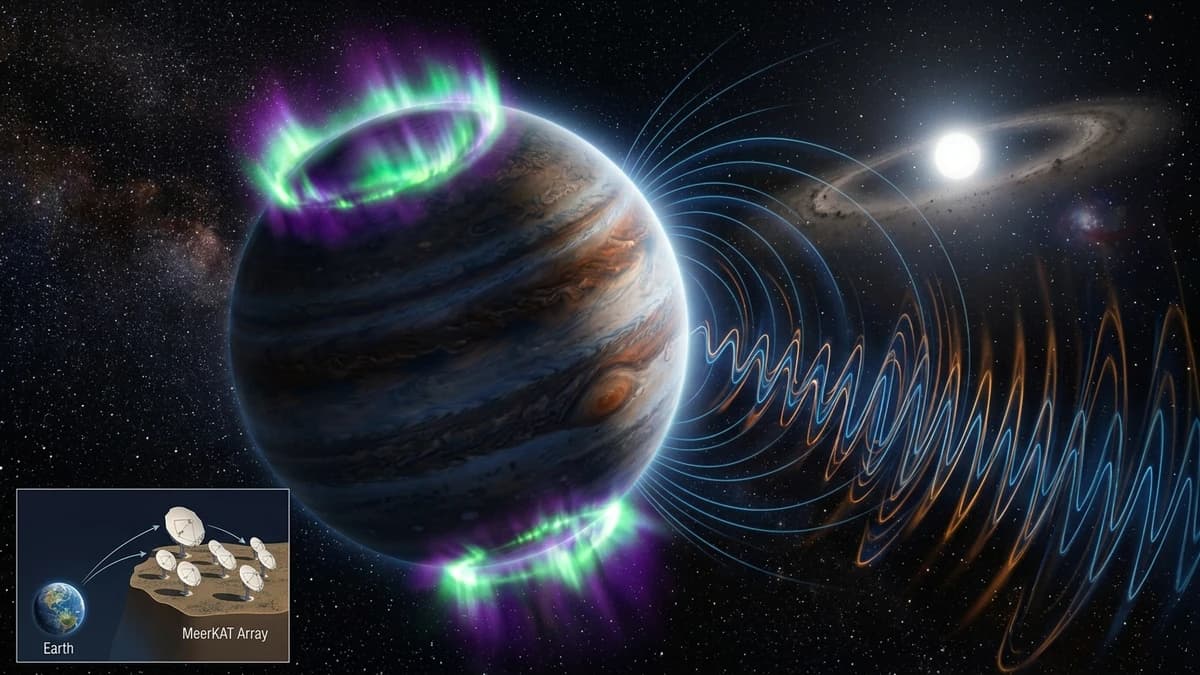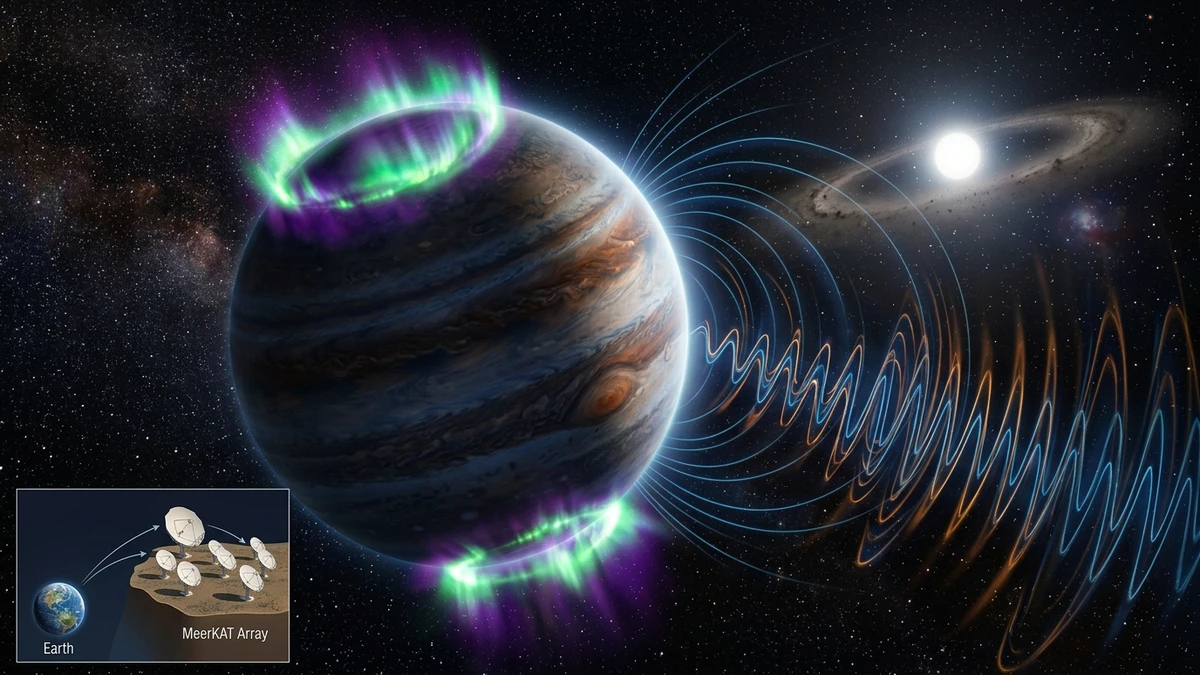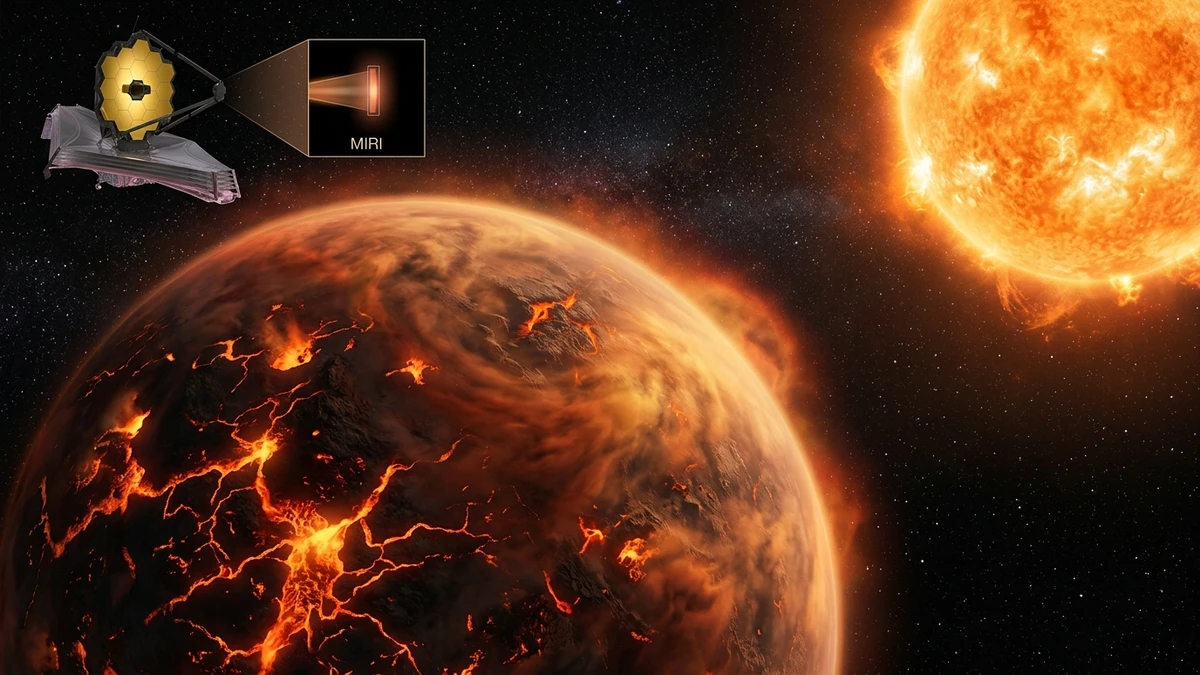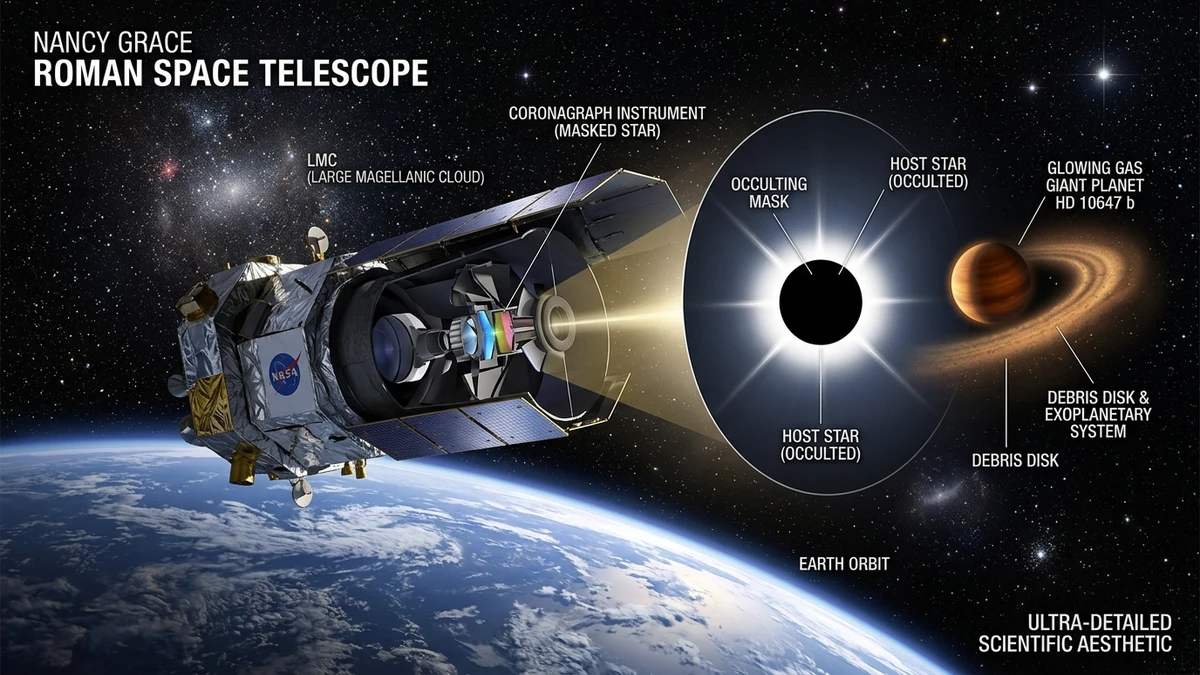
A team of astrophysicists has identified the first direct evidence of a second-generation exoplanet condensing from debris cast into space by a dying star. The landmark discovery, published in the journal Nature Astronomy, utilized archival data from the Hubble Space Telescope and ground-based spectroscopy of white dwarf star HS 0209+0832. This breakthrough demonstrates that the end of a star's life can serve as a cosmic nursery for unprecedented new worlds.
Until recently, planetary astrophysics models predicted that all planets formed exclusively in protoplanetary disks at the same time as their host star was born. However, when a Sun-like star exhausts its nuclear fuel, it expands into a engulfing red giant before shedding its outer layers into space. The remaining dense stellar core becomes a dying white dwarf whose intense ultraviolet radiation and gravity typically destroy surviving nearby celestial bodies.
Meticulous observations conducted on HS 0209+0832 revealed an extraordinarily heavy-metal-rich spectral signature in the surrounding circumstellar disk. Researchers identified anomalous abundances of silicon, magnesium, and iron floating within an annular ring around the white dwarf. This chemical composition provided irrefutable proof that remnants of earlier rocky bodies were ground down and gravitationally reworked into a new accretion disk.
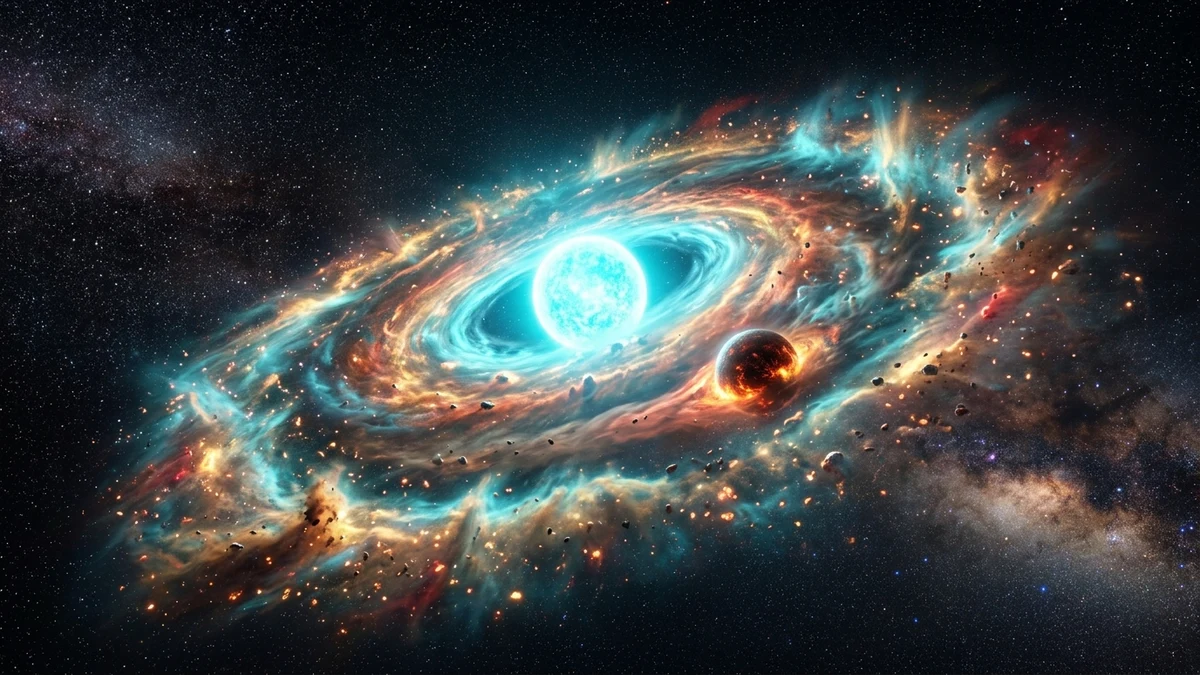
Unlike a conventional debris disk generated by simple asteroid collisions, the HS 0209+0832 system exhibits a localized gravitational perturbation of substantial mass. The NASA Hubble Space Telescope recorded periodic oscillations in gas illumination that indicate the presence of a growing protoplanet. This secondary celestial body possesses an estimated mass between that of Mars and Earth, actively accumulating material in its orbit.
Impact of the Planet Discovery Around White Dwarf HS 0209+0832
To understand the dimensions and relevance of this historic discovery for modern astronomy, review the comparative table detailed below. The compiled data highlights the physical properties of the host star, the secondary disk composition, and the core instruments employed. These empirical measurements demonstrate how destroyed stellar matter can give birth to an entirely new planetary system in our galaxy.
| Astronomical Parameter | Observed Value / Characteristic | Science Significance |
|---|---|---|
| Host Star | White Dwarf HS 0209+0832 | Demonstrates planetary material survival following stellar death. |
| Estimated Planet Mass | ~0.4 to 0.9 Earth Masses | Confirms significant mass accumulation capability in secondary disks. |
| Disk Chemical Composition | Silicon, Iron, Magnesium, and Oxygen | Proves the existence of rocky building blocks for terrestrial worlds. |
| Primary Instruments | Hubble Space Telescope & Ground Spectrograph | Combination of ultraviolet data and high-resolution optical spectroscopy. |
| Secondary System Age | Approximately 120 million years post-death | Reveals that planet formation can rapidly restart in the cosmos. |
Astrophysicists involved in the research emphasize that the second-generation accretion process radically challenges conventional textbook models. The material forming this new exoplanet underwent a full cycle of extreme thermal and chemical recycling. It was first forged inside the progenitor star, then expelled during the red giant phase, and finally reassembled under post-stellar gravity.
Advanced spectroscopic analysis indicated that white dwarf HS 0209+0832 is actively accreting gaseous material from the secondary disk itself. This consumption of matter produces metal absorption lines in the star's spectrum that should normally sink rapidly into its dense interior due to colossal surface gravity. The persistence of these metallic lines confirms that the second-generation disk is continuously feeding both the star and the forming planet.
Comparisons with other known planetary systems show that second-generation formation may be more widespread in the Milky Way than previously assumed. Spectra from hundreds of metal-polluted white dwarfs suggest that many host similar disks resulting from the destruction of ancient celestial bodies. The identification of a dense planetary-mass clump in HS 0209+0832 represents the definitive missing piece validating this theory.
The dynamical mechanism that enabled the accretion of this new world involved gravitational resonance with surviving asteroid fragments located in outer system regions. As the star lost half its original mass during the red giant phase, the orbits of remaining bodies expanded significantly. These new orbital configurations triggered cross-collisions that pulverized ancient asteroids and comets, creating the dense dust cloud that birthed the new planet.
The findings obtained through continued monitoring of the HS 0209+0832 system also offer an intriguing glimpse into the distant future of our own Solar System. In approximately five billion years, the Sun will undergo an identical metamorphosis, engulfing the inner planets and collapsing into a white dwarf. The pulverized remains of Mercury, Venus, and Earth could one day coalesce into a new second-generation world orbiting the solar remnant.
The international team of astronomers will continue to monitor HS 0209+0832 in coming years using the James Webb Space Telescope to analyze volatile compound chemistry. Scientists hope to determine whether water and organic molecules can withstand the extreme ultraviolet radiation emitted by the white dwarf. The confirmation of volatiles on the new planet would open unprecedented prospects for studying habitability in post-stellar environments.
In conclusion, detecting a developing planet around white dwarf HS 0209+0832 marks the beginning of a new era in radio astronomy and exoplanetary science. The discovery proves that stellar destruction does not represent the definitive end of planetary architecture, but rather a gateway to cosmic renewal. This study significantly expands the frontiers of searching for extraordinary worlds in the outer reaches of our galaxy.
Frequently Asked Questions About the Second-Generation Planet in HS 0209+0832
What exactly is a second-generation planet and how does it differ from a regular planet?
A first-generation planet forms within the primordial protoplanetary disk of gas and dust that gives birth to its host star during initial system formation in the universe. In contrast, a second-generation planet forms billions of years later from the debris and stellar ashes expelled when the star reaches the end of its life and becomes a dying white dwarf. This truly extraordinary physical process creates new worlds with deeply recycled chemical compositions and orbits shaped by post-stellar dynamics unprecedented in astrophysics.
How did scientists manage to detect the formation of this new planet around white dwarf HS 0209+0832?
The astronomical detection was achieved by combining rigorous high-precision data from NASA's Hubble Space Telescope with optical spectroscopy performed by large ground-based observatories. Astrophysicists identified periodic illumination oscillations in the dust disk alongside highly anomalous metallic absorption lines in the ultraviolet atmosphere of the white dwarf itself. These combined lines of empirical evidence confirmed beyond doubt the presence of a dense body with its own gravity accumulating matter and shaping the surrounding circumstellar debris ring.
Could our Solar System form a second-generation planet when the Sun dies in the future?
Yes, theoretical models of stellar evolution validated by this empirical discovery in HS 0209+0832 indicate that the exact same phenomenon could occur in our Solar System five billion years from now. When our Sun expands into a red giant and subsequently collapses into a dense white dwarf, the inner rocky planets will be destroyed and pulverized into dust. Surviving asteroids and debris in outer regions could gradually spiral inward and coalesce under gravitational force into a brand-new secondary world orbiting the remaining solar corpse.