🌍 Your knowledge portal
Science & Nature

James Webb Discovers Smallest Brown Dwarfs in IC 348

📅 2026-09-16🔄 Updated: 2026-10-12⏱️ 6 min read📝
James Webb Discovers Smallest Brown Dwarfs in IC 348
James Webb Discovers Smallest Brown Dwarfs in IC 348 — High-Fidelity Artistic Illustration created by artificial intelligence based on scientific research.
⚡

Quick Summary

NASA's James Webb Space Telescope identifies free-floating cosmic bodies barely two times the mass of Jupiter within the young IC 348 star cluster in Perseus. An international consortium of observational astrophysicists utilizing the high-resolution Near-Infrared Camera (NIRCam) aboard the James Webb Space Telescope (JWST) confirmed in September 2026 the identification of the lowest-mass free-floating brown dwarfs ever recorded in the observable universe.

Key Takeaways:

  • For an embryonic star or brown dwarf to coalesce from the interstellar medium, a cold, dense pocket of molecular gas must exceed the classical Jeans instability criterion, where self-gravitational attraction overcomes the…
  • Placing the newly detected IC 348 objects in context requires a direct comparative analysis across the spectrum of substellar and low-mass stellar bodies recognized in contemporary astrophysics:
  • Preliminary spectroscopic follow-up conducted with the JWST's Near-Infrared Spectrograph (NIRSpec) revealed distinctive absorption fingerprints characteristic of water vapor (H2O), carbon monoxide (CO), and gaseous methane (CH4).

James Webb Discovers Smallest Brown Dwarfs in IC 348

An international consortium of observational astrophysicists utilizing the high-resolution Near-Infrared Camera (NIRCam) aboard the James Webb Space Telescope (JWST) confirmed in September 2026 the identification of the lowest-mass free-floating brown dwarfs ever recorded in the observable universe. Located in the core of the young open star cluster IC 348, roughly one thousand light-years from Earth in the Perseus constellation, these newly cataloged celestial bodies possess masses between two and three times that of Jupiter. This landmark discovery challenges foundational theoretical paradigms of star formation, which historically maintained that isolated interstellar gas clouds could not gravitationally collapse into independent bodies below a threshold of five to seven Jovian masses.

The IC 348 cluster is an exceptionally young stellar nursery with an estimated age of merely five million years—a brief cosmic moment that ensures newly born substellar objects still retain substantial thermal energy generated during their initial gravitational contraction. Because these miniature worlds lack the critical mass required to ignite sustained nuclear hydrogen fusion in their cores (which demands at least seventy-five to eighty Jupiter masses) or deuterium fusion (which requires approximately thirteen Jupiter masses), they radiate exclusively in the infrared spectrum with atmospheric equilibrium temperatures ranging between 800 and 1,100 kelvins.
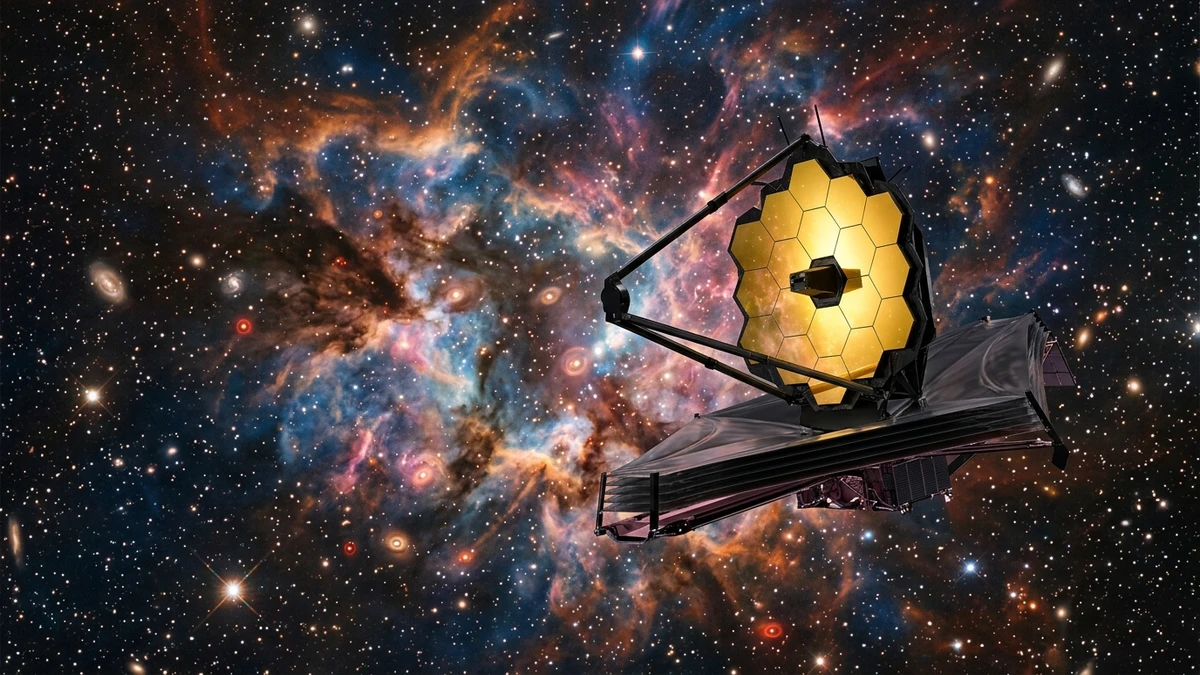
James Webb Space Telescope Observing IC 348 Brown Dwarfs

Jeans Mass Thermodynamics and the Molecular Cloud Fragmentation Limit #

For an embryonic star or brown dwarf to coalesce from the interstellar medium, a cold, dense pocket of molecular gas must exceed the classical Jeans instability criterion, where self-gravitational attraction overcomes the expansive thermal pressure of the gas. Classical astrophysical theory established that as a contracting cloud fragments into progressively smaller sub-units, it encounters an opacity limit: the compressive heat produced by gravitational collapse becomes trapped within the dense cloud core, raising internal pressure and arresting further fragmentation below approximately five Jupiter masses.
The empirical verification of solitary objects with only two Jupiter masses in IC 348 compels astrophysicists to re-evaluate interstellar radiative cooling coefficients. Theoretical work published in 2026 demonstrates that the presence of polycyclic aromatic hydrocarbons (PAHs) alongside sub-micron iron and silicate grains dramatically accelerates infrared thermal emission even within diminutive gas cores. This enhanced cooling efficiency enables compact molecular clumps to shed gravitational heat rapidly, collapsing directly into planetary-mass free-floaters (planemos) without requiring a parental circumstellar disk to facilitate accretion.

+-----------------------------------------------------------------------------+
|              JEANS MASS THERMODYNAMIC FRAGMENTATION IN IC 348               |
+-----------------------------------------------------------------------------+
                                       |
                   [Cold Interstellar Molecular Cloud Core]
                   - Dense Molecular Hydrogen & Cryogenic Dust
                   - Ambient Temperatures Below 20 Kelvins
                                       |
                                       v
         +-----------------------------------------------------------+
         |     Classical Theoretical Opacity Boundary (5–7 M_Jup)    |
         |  - Compressive Heat Trapping Halts Standard Collapse      |
         |  - Classical Models Assert Nothing Smaller Can Form Alone  |
         +-----------------------------------------------------------+
                                       |
                                       v
                      [JWST Discovery: The IC 348 Breakthrough]
                      - Polycyclic Aromatic Hydrocarbons (PAHs)
                      - Radiate Infrared Heat Far More Efficiently
                      - External Protostellar Shock Wave Compression
                                       |
                                       v
         +-----------------------------------------------------------+
         |           Stable Independent Direct Gravitational Collapse|
         |  - Solitary Free-Floating Object: ~2 to 3 Jupiter Masses  |
         |  - Atmospheric Equilibrium Temperatures: 850–1,100 K      |
         |  - No Host Star / Autonomous Miniature Cosmic System      |
         +-----------------------------------------------------------+

Furthermore, magnetohydrodynamic shock fronts driven by supersonic bipolar outflows from nearby protostars—visible across JWST imagery as luminous Herbig-Haro bow shocks—exert mechanical ram-pressure on diffuse gas pockets. This localized compression triggers gravitational collapse within gas volumes that would otherwise remain stable against their own self-gravity in a static, quiescent cloud environment.

Astrophysical Comparison: Mass Regimes and Cosmic Genesis Mechanisms #

Placing the newly detected IC 348 objects in context requires a direct comparative analysis across the spectrum of substellar and low-mass stellar bodies recognized in contemporary astrophysics:

Physical & Evolutionary Parameter IC 348-1 Record Brown Dwarf Typical L/T-Dwarf Class Jupiter (Solar Gas Giant) M8V Red Dwarf Star Physical Threshold and Implication
Mass Regime ~2 to 3 Jupiter Masses ~15 to 60 Jupiter Masses 1.0 Jupiter Mass ($1.9 imes 10^{27}$ kg) ~80 Jupiter Masses Violates classical Jeans fragmentation limit
Primary Genesis Direct in situ gravitational collapse Molecular cloud fragment collapse Protoplanetary disk core accretion Traditional stellar cloud collapse Overturns dichotomy between stars and planets
Nuclear Reactions None (Cooling contraction only) Transient Deuterium ($^2H$) burning None Sustained Hydrogen ($^1H$) fusion Incapable of sustaining core thermonuclear burn
Effective Temperature 850 to 1,100 K (~580°C to 830°C) 1,300 to 2,200 K 165 K (-108°C average cloud deck) 2,500 to 3,000 K Continuous convective cooling across eons
Spatial Distribution Isolated free-floater in cluster Solitary or loose binary pair Gravitationally bound to the Sun Central gravitational anchor of system Millions of rogue planemos populate Galaxy

These comparative metrics illustrate that the boundary separating planetary astronomy from substellar astrophysics is no longer a rigid binary division. Celestial bodies sharing nearly identical physical dimensions and chemical compositions can arise through diametrically opposite physical mechanisms, requiring astronomers to classify objects by their dynamic evolutionary origin rather than solely by current mass.

Exotic Atmospheric Chemistry and Silicate Rain Clouds #

Preliminary spectroscopic follow-up conducted with the JWST's Near-Infrared Spectrograph (NIRSpec) revealed distinctive absorption fingerprints characteristic of water vapor ($H_2O$), carbon monoxide ($CO$), and gaseous methane ($CH_4$). Most intriguingly, researchers identified clear spectral signatures of complex polycyclic hydrocarbons—organic molecular species never previously detected in the atmosphere of an object of such low mass outside our Solar System.

Planetary meteorologists emphasize that these atmospheres exhibit extreme meteorological regimes. Devoid of external stellar irradiation to generate seasonal photochemical cycles, the climate of an isolated brown dwarf is governed exclusively by intense convective energy welling up from its gravitationally compressed interior. Vigorous updrafts loft vaporized iron, magnesium silicates, and enstatite mineral grains into the cooler upper troposphere. Upon reaching higher altitudes, these refractory vapors condense into dense mineral cloud decks, producing showers of molten liquid iron and glowing silicate rain.

Because these planetary-mass objects float in isolation without being overwhelmed by the blinding glare of an adjacent parent star, they present astrophysicists with an unprecedented observational opportunity. In conventional exoplanet spectroscopy, host star photon saturation severely limits signal-to-noise ratios. In IC 348, the JWST can inspect these cool atmospheres with pristine spectroscopic contrast, turning these free-floating worlds into exquisite natural laboratories for studying gas-giant physics.

Circumstellar Debris Disks and Future Observational Campaigns #

The Space Telescope Science Institute (STScI) has scheduled comprehensive follow-up observations using the Mid-Infrared Instrument (MIRI) in high-resolution spectroscopic modes. These upcoming campaigns aim to determine whether these two-Jupiter-mass objects possess miniaturized circumstellar debris disks composed of primordial dust and gas retained from their initial gravitational collapse.

If protoplanetary-style accretion disks are confirmed around these ultra-low-mass brown dwarfs, it will establish that even isolated celestial bodies barely larger than Jupiter possess the physical capacity to condense attendant miniature moons or tiny terrestrial satellites from their own circum-substellar disks. Such a confirmation would prove the existence of self-contained, micro-solar systems navigating interstellar space in total darkness.

The discovery in IC 348 highlights the unmatched precision of the James Webb Space Telescope. By unveiling celestial bodies that remained completely invisible to previous generations of ground and space observatories, the telescope reshapes foundational astrophysical theories, demonstrating that the cosmos produces rich varieties of matter that bridge the traditional divide between stars and planets.

Official Institutional References and Scientific Sources #

Jeans Mass Fragmentation Limits and NIRSpec Micro-Shutter Spectroscopy in IC 348 #

Determining the minimum mass required for a molecular cloud core to collapse under its own gravity into a free-floating substellar object — rather than forming via core accretion inside a circumstellar disk and subsequently being ejected — has challenged astrophysical theory for decades. Using the Near-Infrared Camera (NIRCam) and the Near-Infrared Spectrograph (NIRSpec) micro-shutter array on the James Webb Space Telescope, astronomers surveyed the young star-forming cluster IC 348 in the Perseus molecular cloud at wavelengths sensitive to water, methane, and enigmatic hydrocarbon absorption bands between 3 and 5 microns.

The identification of free-floating objects weighing between three and eight Jupiter masses confirms that turbulent gravoturbulent fragmentation can operate near the opacity limit for fragmentation, blurring the classical taxonomic boundary between the lowest-mass brown dwarfs and rogue gas-giant exoplanets.

🏷️ Tags:

#jameswebbic348#smallestbrowndwarfs#perseusconstellationastronomy#planetarymassobjects2026

📢 Gostou deste artigo?

Compartilhe com seus amigos e nos conte o que você achou nos comentários!

❓Frequently Asked Questions

The detection of these diminutive, free-floating brown dwarfs located within the young open star cluster IC 348—situated approximately one thousand light-years from Earth in the Perseus constellation—was achieved using the Near-Infrared Camera (NIRCam) aboard the James Webb Space Telescope. Operating under deep cryogenic conditions below forty kelvins, the observatory's gold-coated beryllium primary mirror captured the faint residual thermal radiation emitted by primordial gravitational contraction from celestial bodies possessing only two to three times the mass of Jupiter. These sensitive infrared detectors pierced through dense veils of obscuring interstellar gas and cosmic dust that had completely blinded previous generations of space-based optical observatories.
Foundational theoretical models of star formation posited that the direct gravitational fragmentation and collapse of cold interstellar molecular clouds possessed an inviolable thermodynamic opacity limit around five to seven Jupiter masses. Below this physical threshold, internal thermal gas pressure should overcome self-gravitational attraction, radiating contractile heat too slowly to permit the stable collapse of an independent celestial body. Discovering solitary objects possessing merely two Jupiter masses floating without a parent star compels theoretical astrophysicists to fundamentally revise classical Jeans mass equations, incorporating magnetohydrodynamic shock turbulence and molecular hydrocarbon cooling into contemporary models of stellar and substellar genesis.
Although low-mass brown dwarfs and gas giant exoplanets share comparable physical radii, similar bulk masses, moderate atmospheric temperatures, and gaseous envelopes dominated by molecular hydrogen, helium, methane, and water vapor, their essential scientific distinction lies in their core genetic formation mechanisms. Giant exoplanets form through bottom-up core accretion within the circumstellar protoplanetary disk of a parent star, gradually accumulating gaseous envelopes around a rocky embryo. In contrast, planetary-mass brown dwarfs originate through top-down direct gravitational collapse of an isolated pocket of an interstellar molecular cloud, behaving throughout their evolutionary lifecycle as miniature, independent stars devoid of a stellar host.

Receba novidades!

Cadastre seu email e receba as melhores curiosidades toda semana.

🔒 Sem spam. Cancele quando quiser.

💬 Comentários (0)

Seja o primeiro a comentar! 👋

📚Related Articles

Webb and Hubble Discover 27 Frozen Objects in Outer SpaceScience & Nature

Webb and Hubble Discover 27 Frozen Objects in Outer Space

NASA's James Webb and Hubble space telescopes combine infrared and optical data to discover 27 pristine trans-Neptunian objects in the Kuiper Belt using shift-and-stack.

⏱️6 minLer mais →
Hubble Reveals Unprecedented Views of Supernova Cassiopeia AScience & Nature

Hubble Reveals Unprecedented Views of Supernova Cassiopeia A

NASA and ESA release unprecedented Hubble Space Telescope mosaics of supernova remnant Cassiopeia A, mapping 3D blast dynamics and cosmic dust formation.

⏱️6 minLer mais →
Nancy Grace Roman Space Telescope Completes Solar Array TestScience & Nature

Nancy Grace Roman Space Telescope Completes Solar Array Test

NASA's Nancy Grace Roman Space Telescope passes critical solar array deployment and thermal-vacuum tests at Goddard Space Flight Center ahead of its 2027 launch.

⏱️6 minLer mais →
ESA Hera Mission Reveals Colossal Asteroid Shaped DeimosScience & Nature

ESA Hera Mission Reveals Colossal Asteroid Shaped Deimos

Orbital telemetry from the ESA Hera probe reveals that a colossal prehistoric asteroid collision blanketed the Martian moon Deimos in a smooth global regolith mantle.

⏱️7 minLer mais →
Liquid Diamond Oceans Confirmed on Neptune and UranusScience & Nature

Liquid Diamond Oceans Confirmed on Neptune and Uranus

High-energy laser experiments recreate megabar pressures to prove liquid carbon oceans and solid diamond icebergs deep inside ice giants Neptune and Uranus.

⏱️6 minLer mais →
Inouye Solar Telescope Unveils Nanomagnetic Plasma WhirlpoolsScience & Nature

Inouye Solar Telescope Unveils Nanomagnetic Plasma Whirlpools

The Daniel K. Inouye Solar Telescope captures high-resolution photospheric plasma vortices, resolving the 90-year coronal heating paradox through Alfvén waves.

⏱️7 minLer mais →
Receba novidades no WhatsApp!