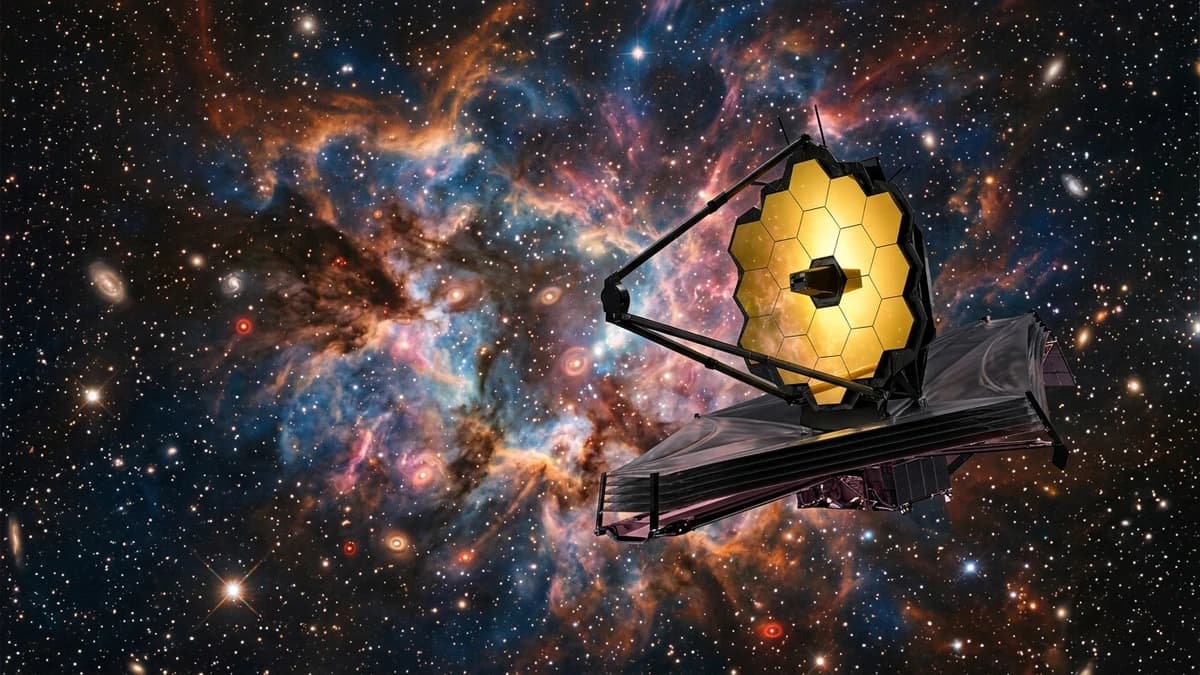
ESA Hera Mission Reveals Colossal Asteroid Shaped Deimos
Planetary scientists and astrophysicists affiliated with the European Space Agency (ESA) and the international Hera mission consortium confirmed in August 2026 that the uniquely smooth, velvet-like topography of Deimos, the outermost and smallest moon of Mars, was globally sculpted by a single cataclysmic asteroid collision in deep geological time. High-resolution optical and thermographic observations gathered during Hera's gravitational flyby through the Martian system demonstrate that this ancient impact excavated the moon's southern polar basin and ejected a vast blanket of pulverized regolith that slowly settled back across the entire surface, filling older impact craters with up to one hundred meters of fine cosmic dust.
This definitive finding resolves one of planetary science's most persistent enigmas: the dramatic morphological divergence between Mars's two companion moons, Phobos and Deimos. While Phobos presents a heavily fractured, grooved terrain sculpted by intense gravitational tidal stresses as it spirals inward toward the planet, Deimos displays an exceptionally rounded, homogeneous appearance. Advanced three-dimensional hydrodynamic impact simulations combined with multi-band orbital telemetry establish that the moon's delicate gravity acted as an efficient cosmic dust trap, capturing its own pulverized ejecta.

Hypervelocity Collision Dynamics and Regolith Resettlement
Deimos is an irregularly shaped celestial body with modest triaxial dimensions of 15.0 by 12.2 by 10.4 kilometers and a total estimated mass of approximately 1.48 trillion metric tons. These compact physical dimensions produce a diminutive surface gravitational acceleration of just 0.003 m/s²—less than one-thousandth of Earth's gravity—yielding an escape velocity of a mere 5.6 meters per second, equivalent to roughly twenty kilometers per hour.
According to sophisticated computational models executed by astrophysics research institutes in France and Germany utilizing Hera's orbital telemetry, the transformative impact event was initiated by a dense rocky asteroid measuring between two hundred and three hundred meters across. The projectile struck Deimos at an oblique angle with an estimated velocity of 4.5 kilometers per second near the southern rim, excavating a prominent three-kilometer depression and pulverizing hundreds of thousands of tons of parent rock into microscopic fragments.
+-----------------------------------------------------------------------------+
|              DEIMOS REGOLITH COLLISION AND REDEPOSITION PROCESS             |
+-----------------------------------------------------------------------------+
                                       |
                   [Asteroid Impactor: 200–300m Diameter]
                   - Oblique Hypervelocity Strike (4.5 km/s)
                   - Releases Enormous Mechanical Kinetic Energy
                                       |
                                       v
         +-----------------------------------------------------------+
         |               Deimos Target Moon (Low Gravity)            |
         |  - Surface Gravity: 0.003 m/s²                            |
         |  - Surface Escape Velocity: 5.6 m/s                       |
         +-----------------------------------------------------------+
                                       |
                                       v
                      [Massive Fine Ejecta Dust Cloud]
                      - Trapped in Co-Orbital Cloud Around Mars
                      - Low Relative Velocity Prevents Egress
                                       |
                                       v
         +-----------------------------------------------------------+
         |             Slow Cosmic "Snowfall" Over Weeks             |
         |  - Ejecta Decants Uniformly Over the Entire Moon          |
         |  - Fills Pre-Existing Impact Craters with Up to 100m Dust |
         |  - Produces Velvet-Smooth, Low-Inertia Surface Mantle     |
         +-----------------------------------------------------------+
In celestial bodies with substantial gravity, energetic hypervelocity impacts launch the majority of excavated ejecta on escape trajectories into interplanetary space. On Deimos, however, the subtle interplay between the moon's micro-gravity and the dominant gravitational sphere of influence of Mars confined a significant fraction of the dust plume to temporary co-orbital lanes. Over subsequent weeks, orbital drag and mutual particle collisions caused this particulate veil to collapse back onto Deimos like a gentle cosmic snowfall, burying jagged bedrock topography and muting sharp crater rims beneath a continuous dust blanket.
Structural Comparison: Martian Moons versus Primitive Asteroids
The geological reconstruction of Deimos provides vital physical benchmarks to resolve whether the Martian moons formed from a circumplanetary debris disk generated by a proto-planet collision or represent primitive asteroids captured from the outer asteroid belt.
| Physical & Orbital Parameter | Deimos (Outer Remodeled Moon) | Phobos (Inner Fragmented Moon) | D-Type Carbonaceous Chondrite Asteroid | Strategic Significance for Space Missions |
|---|---|---|---|---|
| Triaxial Dimensions | 15.0 × 12.2 × 10.4 km | 26.8 × 22.4 × 18.4 km | 10 to 50 km (Irregular geometry) | Shallow gravity simplifies orbital docking |
| Orbital Distance from Mars | 23,460 km (High synchronous orbit) | 9,376 km (Ultra-low decaying orbit) | Independent solar orbit | Ideal tele-robotics relay platform |
| Bulk Density Estimate | 1.47 g/cm³ (High macro-porosity) | 1.87 g/cm³ (Moderate compaction) | 1.3 to 1.6 g/cm³ (Rubble-pile composition) | Fragile aggregate structure requires care |
| Surface Morphology | Smooth regolith blanket up to 100 m | Deep parallel grooves & Stickney crater | Sharp cratering without fine redistribution | Regolith attenuates cosmic ionizing radiation |
| Ultimate Orbital Fate | Slow outward tidal migration | Tidal disruption into a ring in ~40 Myr | Stable asteroid belt trajectory | Long-term operational staging platform |
Thermal Inertia and Spectrometric Data from the Hera Spacecraft
The scientific instruments aboard ESA's Hera spacecraft—originally configured to investigate the kinetic deflection consequences of NASA's DART impactor on the binary asteroid Didymos-Dimorphos—were calibrated during the probe's cruise trajectory past Mars. The Thermal Infrared Imager (TIRI), contributed by the Japan Aerospace Exploration Agency (JAXA), captured high-fidelity diurnal heating and cooling curves across Deimos throughout its thirty-hour rotational period.
The thermographic measurements documented extraordinarily low thermal inertia values, falling below 40 J/(m²·K·s⁰·⁵). This thermal signature provides definitive empirical proof that the upper layers of Deimos consist of an ultra-porous, finely divided silicate regolith with a volumetric void space exceeding fifty percent. The minimal thermal conductivity of this particulate mantle functions as a remarkable natural thermal insulator, maintaining stable cryogenic conditions mere decimeters beneath the solar-illuminated dust surface.
Spectroscopic telemetry captured by Hera's near-infrared framing spectrometer exhibited a steep reddish spectral slope devoid of diagnostic deep absorption bands of hydrous crystalline silicates. This profile matches the characteristic spectral signatures of primitive D-type carbonaceous chondrites. These ancient celestial bodies represent virtually pristine relics from the formative era of the outer Solar System, containing substantial inventories of complex refractory organic molecules, amorphous carbon matrices, and potential volatile ice reserves shielded inside clay phyllosilicates.
Strategic Impact on the MMX Mission and Future Mars Exploration
These geological discoveries fundamentally reshape operational planning for the upcoming Martian Moons eXploration (MMX) mission, spearheaded by JAXA in close partnership with NASA, ESA, and CNES. The primary scientific objective of MMX involves landing robotic sampling hardware on the Martian moons to collect pristine regolith and return it to terrestrial laboratories for isotopic analysis.
The confirmation that Deimos's regolith reaches depths of up to one hundred meters in topographical depressions requires mission engineers to fine-tune pneumatic landing pads and core-drill mechanisms to prevent uncontrollable sinking into hyper-compressible soils. Identifying localized areas with thinner dust cover—such as the elevated rim surrounding Voltaire crater—provides mission managers with prime landing targets where drills can reach consolidated bedrock.
For future human expeditions to the Martian system, Deimos emerges as the most advantageous natural staging outpost. Requiring a substantially lower propulsion delta-V to enter and depart than descending into the deep gravity well of Mars itself, a habitat embedded within Deimos's protective regolith mantle would shield crews from solar particle events and galactic cosmic rays. From this orbital sanctuary, astronauts can oversee surface exploration rovers in real time with zero signal latency while extracting water ice to produce life support oxygen and liquid hydrogen rocket propellant.
Chronological Roadmap for Martian Moon Exploration
The continued exploration of Mars's natural satellites encompasses several upcoming mission milestones:
- Multi-Band Spectroscopic Processing (2026–2027): Refinement of compositional and mineralogical maps from Hera data to pinpoint volatile-rich geological anomalies across Deimos;
- Launch and Orbital Insertion of JAXA's MMX (2027–2028): Arrival of the Japanese spacecraft in Mars orbit, commencing detailed gravimetric and radar mapping;
- Robotic Touchdown and Regolith Sampling (2029): Deployment of automated coring mechanisms to gather over ten grams of pristine regolith from both moons;
- Terrestrial Sample Return (2031): Delivery of collected samples to specialized clean laboratories on Earth to establish the exact radiometric age and cosmo-chemical origin of Deimos.
The realization that a single prehistoric collision reshaped Deimos underscores the profound role impact cratering plays in governing small solar system bodies. By transforming a devastating collision into a protective and uniform dust blanket, nature created on Deimos both an invaluable archive of early planetary history and an ideal stepping stone for humanity's eventual journey to Mars.
Official Institutional References and Documentation
- European Space Agency (ESA) — Hera Planetary Defense Mission Updates
- Nature Astronomy — Ballistic Sedimentation and Surface Smoothing of Martian Moons
- Japan Aerospace Exploration Agency (JAXA) — MMX Mission Science Goals
- NASA Mars Exploration Program — Comparative Geophysics of Phobos and Deimos
- Icarus Planetary Science Journal — Impact Mechanics on Low-Density Porous Asteroids