A consortium of high-energy-density physicists at Lawrence Livermore National Laboratory (LLNL) has experimentally confirmed one of the Solar System's most exotic planetary phenomena: oceans of metallic liquid carbon bearing floating icebergs of crystalline diamond deep inside Neptune and Uranus. Utilizing ultra-powerful laser compression to generate pressures exceeding five million times Earth's atmospheric threshold, researchers successfully melted diamond under controlled dynamic conditions. This landmark experimental result resolves a two-decade-long debate between theoretical astrophysical simulations and deep-space planetary flyby data.
For decades, planetary scientists postulated that the extreme mantle regions of ice giants—rich in methane ($CH_4$), water, and ammonia—endured such severe gravitational compaction that hydrocarbons pyrolyzed into descending "diamond rain." However, the pioneering research published in August 2026 demonstrates that near the rocky planetary cores, where temperatures exceed five thousand Kelvin, carbon undergoes a phase transition into an electrically conductive supercritical liquid. Crucially, carbon's melting curve slope under multi-megabar compression mimics that of water ice, causing crystalline diamond blocks to become less dense than the ambient metallic fluid and float upward like luminous glacial icebergs.
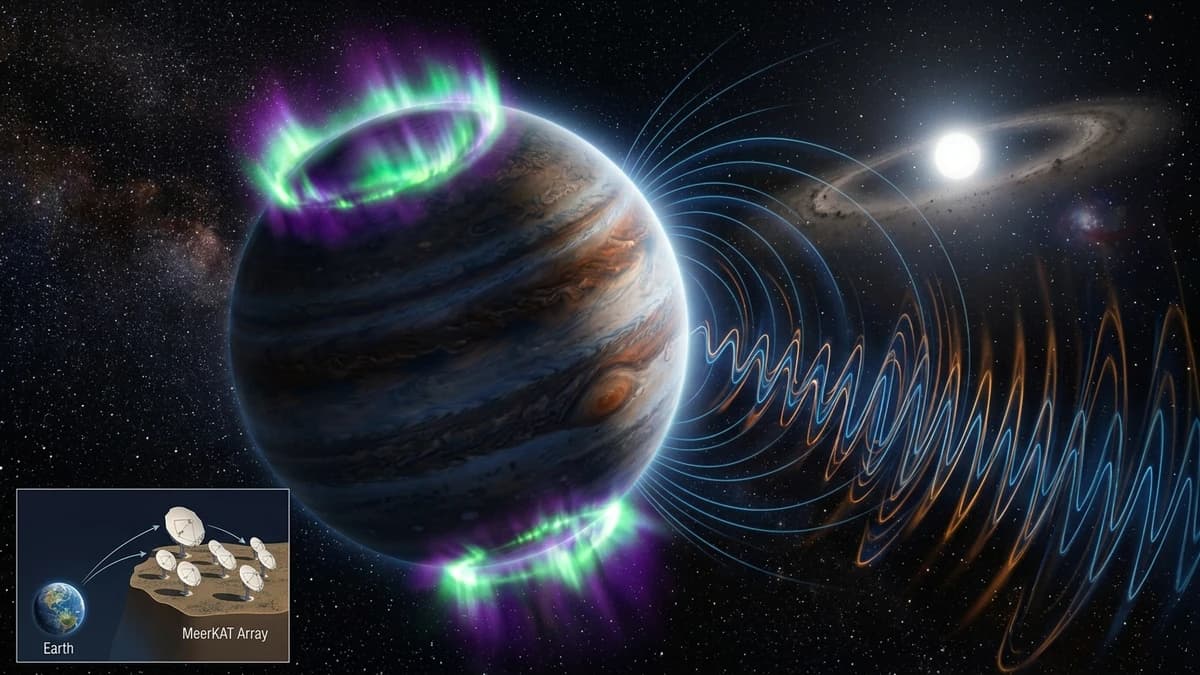
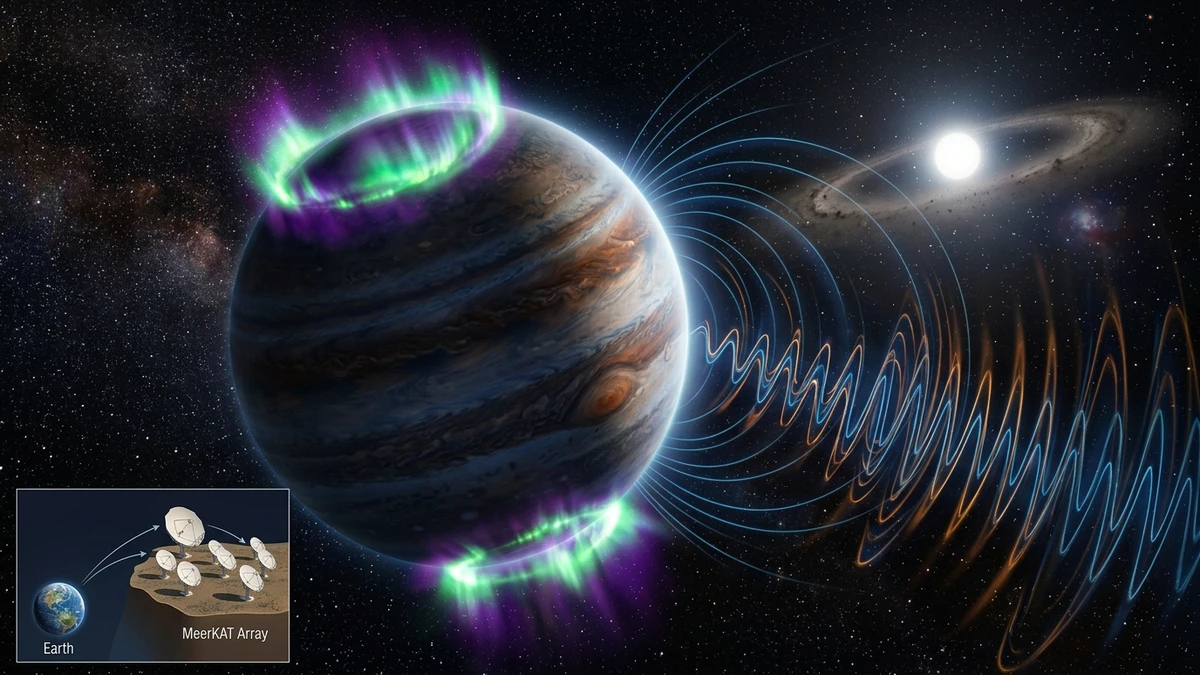
This extraordinary thermodynamic behavior solves the longstanding mystery behind Neptune and Uranus's highly asymmetric and tilted magnetospheres. Unlike Earth and Jupiter, whose magnetic fields are generated by aligned convective dynamos deep within their cores, the ice giants exhibit magnetic axes tilted up to sixty degrees and displaced from their geometric centers. The swirling electrical currents circulating throughout these vast metallic liquid carbon seas act as decentralized off-axis dynamos, fundamentally reshaping our understanding of planetary interior mechanics.
Thermodynamic Comparison: Carbon Phase Regimes on Earth versus Ice Giants
Mapping carbon's phase boundaries under megabar pressures expands the frontiers of condensed matter physics and planetary geophysics. To appreciate the magnitude of LLNL's August 2026 experimental milestone, we must compare terrestrial geological conditions with the hyperbaric regimes governing our outer Solar System. The dramatic transition between covalent tetrahedral lattices and dense metallic liquid reveals the transformative power of cosmic hydrostatic pressure.
| Physical Parameter | Upper Earth Mantle | Deep Uranus Mantle | Outer Neptune Core Boundary |
|---|---|---|---|
| Hydrostatic Pressure | 5 to 15 GPa (~150,000 atm) | 200 to 400 GPa (~3 million atm) | 500 to 800 GPa (5 to 8 million atm) |
| Internal Temperature | 1,200 to 1,800 °C | 3,000 to 4,500 °C | 4,500 to 6,500 °C |
| Carbon Phase State | Stable graphite or rare solid diamond | Precipitating diamond micro-crystallites | Metallic liquid carbon ocean with floating diamond icebergs |
| Electrical Conductivity | Dielectric insulator / semiconductor | Weak ionic supercritical fluid | High metallic conductivity (generates asymmetric dynamo) |
During dynamic laser compression experiments conducted at the National Ignition Facility (NIF), scientists fired synchronized shock pulses lasting mere billionths of a second at millimeter-sized diamond targets. Ultra-fast optical interferometers and X-ray diffraction diagnostics tracked the precise nanosecond when solid diamond lattice density surged before collapsing into a reflective metallic liquid state. The measurements confirmed that diamond possesses a negative melting curve slope at ultra-high pressures, proving mathematically that solid diamond expands upon freezing and floats in molten carbon.
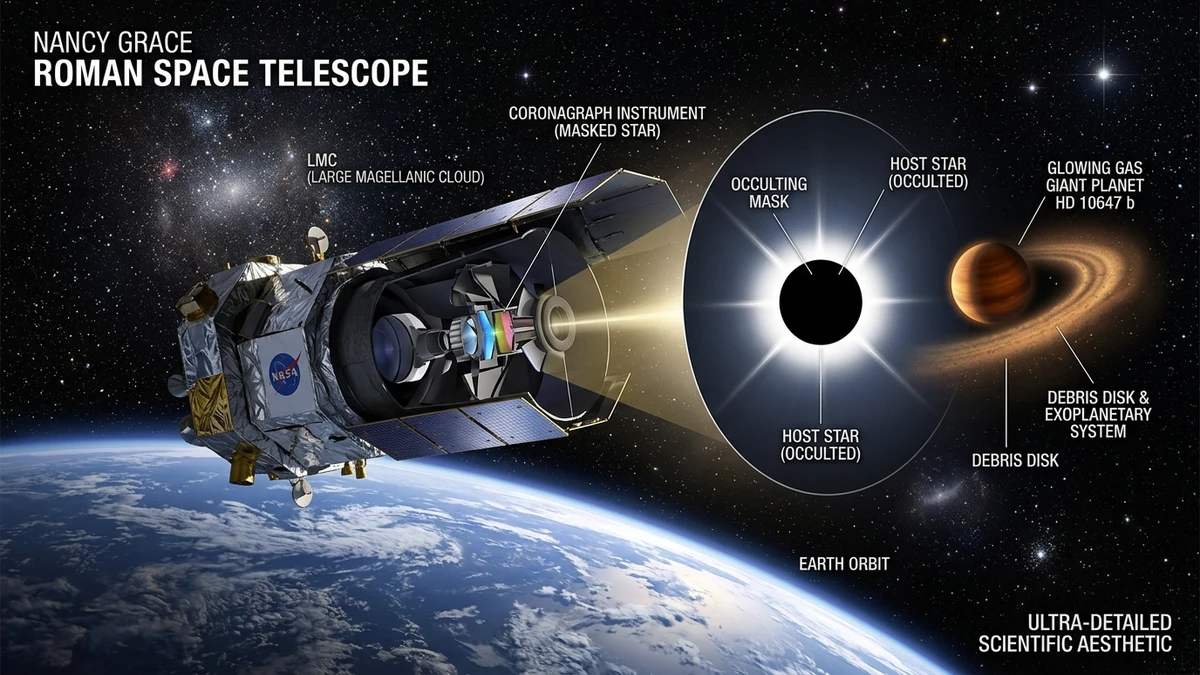
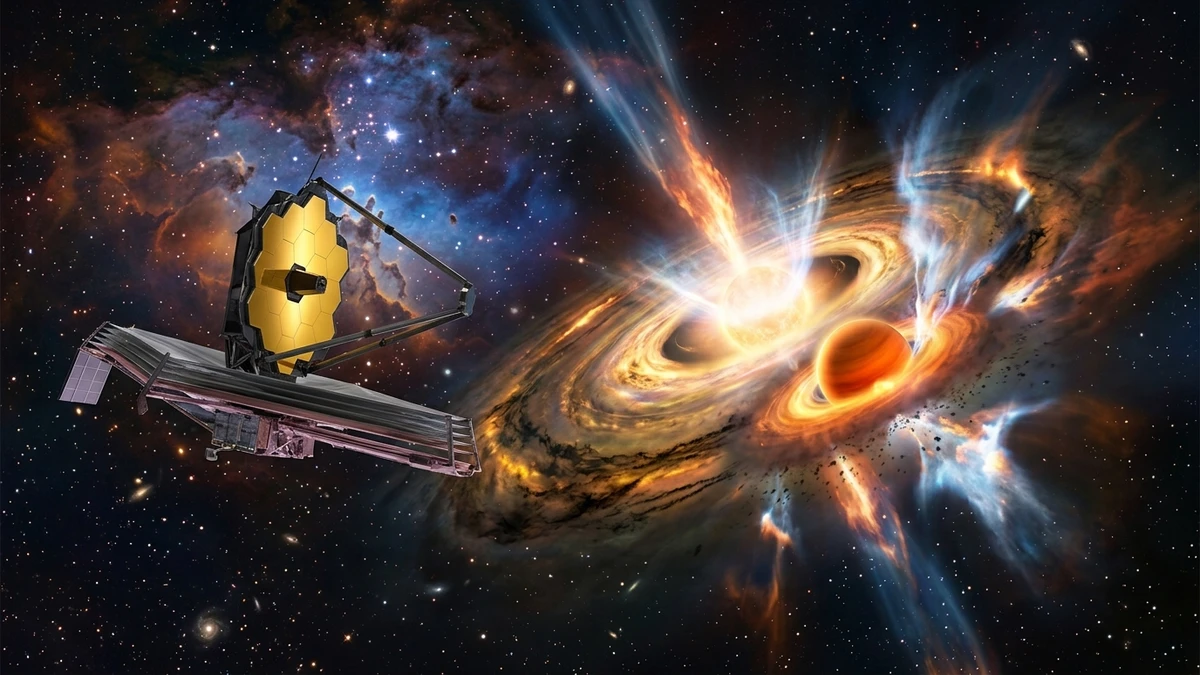
Beyond unraveling our own Solar System's ice giants, these empirical findings directly inform the structural modeling of thousands of "sub-Neptune" exoplanets discovered by NASA's Kepler and James Webb space telescopes. Astrophysicists now recognize that intermediate-mass alien worlds possess mantles dominated by liquid carbon chemistry and unique thermal insulation layers. This metallic carbon blanket impedes convective heat loss to space, explaining why Neptune radiates more than twice the thermal energy it receives from the distant Sun.
Materials Science Innovations and Next-Generation Planetary Missions
Mastering extreme carbon physics unlocks unprecedented pathways for terrestrial supermaterial synthesis. Understanding liquid carbon dynamics enables material scientists to engineer next-generation superhard ceramics, room-temperature quantum conductors, and resilient plasma-facing walls for commercial nuclear fusion reactors. The extreme physics operating naturally inside distant freezing giants now directly fuels human nanotechnology and advanced materials engineering.
Planetary science teams at NASA and the European Space Agency (ESA) are actively integrating these laboratory results to calibrate future flagship orbiter missions to Uranus and Neptune planned for the 2030s. Atmospheric entry probes descending into the upper clouds will capture precise gravitational and seismic signatures rippling across these deep diamond seas. This research demonstrates that laboratory experiments provide the indispensable counterpart to space telescopes, revealing that our cosmos harbors landscapes far more extraordinary than science fiction.
Confirming liquid diamond oceans and floating crystalline icebergs within Neptune and Uranus highlights the maturity of modern high-energy physics and humanity's unyielding drive to explore remote worlds. By proving that shimmering oceans of liquid precious gemstones exist as physical realities in deep space, scientific research continues to elevate our understanding of cosmic matter.
Frequently Asked Questions
How can liquid diamond exist inside Neptune and Uranus?
Under colossal gravitational pressures exceeding five million atmospheres and temperatures above 5,000 Kelvin, the atomic bonds of crystalline diamond melt, transforming carbon into a dense, electrically conductive metallic liquid.
Why do solid diamond icebergs float in liquid carbon?
Just as water ice floats on liquid water because it is less dense, solid diamond expands slightly when freezing under extreme planetary pressures, allowing solid diamond icebergs to float buoyantly on the liquid carbon ocean.
How did scientists recreate these planetary conditions on Earth?
Physicists at Lawrence Livermore National Laboratory used ultra-intense laser pulses at the National Ignition Facility to shock-compress diamond samples to multi-million-atmosphere pressures within nanosecond intervals.
Official Scientific References
- Lawrence Livermore National Laboratory (LLNL) — High-energy-density physics research briefings on extreme carbon states and laser shock experiments.
- Nature Physics — Peer-reviewed studies on the melting line of carbon and extreme planetary interiors.
- NASA Planetary Science Division — Deep-space planetary telemetry and anomalous magnetic field modeling for Uranus and Neptune.