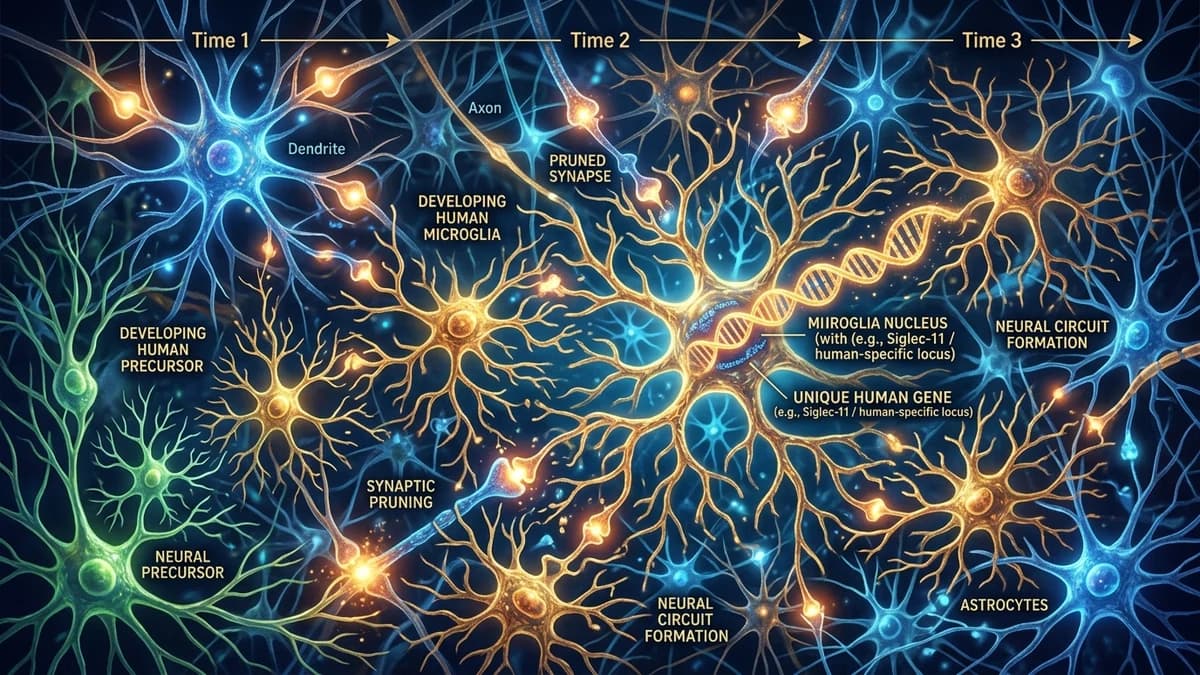
The incredible biological evolution of the modern human brain has always been one of the great and enduring mysteries of modern human biology. Over many decades of rigorous scientific research, devoted scientists have relentlessly been dedicated to understanding what truly and fundamentally differentiates us from all other primates. Recently, a profoundly monumental scientific discovery has massively shifted our entire foundational understanding of basic neurodevelopment and progressive evolutionary biology. Dedicated top-tier scientists have finally identified a completely human-exclusive unique gene that unequivocally plays a highly critical and definitive role in the developing brain. This newly discovered remarkable gene directly and powerfully affects microglia, which naturally are the resident highly specialized immune cells of the central nervous system.
Microglia are unequivocally not solely and simply responsible for the basic routine immune defense of the human brain against harmful external threats. These remarkable and dynamic cells are, in functional reality, fundamental and highly active architects that powerfully and directly shape human neural circuits from the very earliest stages. In typical laboratory mice and virtually all other known typical mammals, the complete and full maturation of active microglia occurs very rapidly, usually within a matter of only weeks. However, within the highly complex developing human brain, this novel and fascinating gene drastically and intentionally slows down the cellular maturation process immensely. The complete, functional, and final maturation of these vital immune cells in humans actually requires anywhere from four to eight full developmental years.
This massively significant temporal prolongation is absolutely not a biological defect, but rather an extraordinary and highly selected positive evolutionary biological advantage. Throughout these crucially formative and long childhood years, the brain microglia deliberately remain in a highly plastic, adaptable, and exceptionally active developmental juvenile state. This uniquely allows the human brain to undergo an extended, incredibly meticulous, and comprehensive period of targeted synaptic pruning and complex connection refinement. As a direct physiological result, developing human neural circuits become incredibly and undeniably complex, exceptionally robust, and highly adaptable to environmental sensory experiences. This uniquely extended developmental and physiological window is the primary physical key to our uniquely superior cognitive capacity and incredible problem-solving human intelligence.
The Fundamental Role of Microglia in Brain Development
Traditionally, for many long decades, microglia were unfortunately viewed simply and dismissively as the basic biological cleaning and defense scavenger cells of the nervous system. Their primary assumed basic function was merely to routinely patrol vulnerable neural tissue, carefully searching for dangerous infections, toxic amyloid plaques, or dying waste cells. Today, advanced modern neuroscience universally and excitedly recognizes that these specialized unique cells are the true and meticulous physical sculptors of the intricate human mind. They actively interact extremely intimately and routinely with delicate fragile neurons, continuously and actively monitoring all ongoing synaptic activity throughout the entire developmental timeline.
During early vibrant childhood, the highly energetic human brain rapidly produces an excessive and completely overwhelming amount of fragile neural connections temporarily. The essential microglia act much like an incredibly meticulous skilled gardener, systematically identifying and carefully eliminating weak, redundant, or entirely underutilized fragile synapses from the growing network. This highly critical and vital biological process of essential synaptic pruning is absolutely crucial for strictly ensuring the maximum functional efficiency of electrical transmissions. If every single initial connection were permanently maintained, the human brain would inevitably suffer from excessive electrical noise and severe global energy inefficiency. Careful, active, and continuous meticulous pruning effectively allows only the strongest, most useful, and efficient neural pathways to survive and optimally thrive.
The remarkable capacity of active microglia to efficiently perform this biological heavy lifting depends heavily and crucially on their specific physiological state of biological maturation. Immature or actively developing youthful cells are vastly more efficient and capable at identifying and appropriately and physically pruning away all unwanted weak synapses. Therefore, biologically extending this essential phase of functional cellular immaturity fundamentally and logically means prolonging the important period during which the human brain can be optimized. This is exactly what the highly remarkable human-exclusive active gene manages to do in such a biologically brilliant and effective manner. It functionally ensures that the human brain's primary and most important sculpting tools remain highly active and malleable for much longer timespans.
The Groundbreaking Discovery of the Human-Exclusive Gene
The highly successful scientific identification of this unique and fascinating gene was the direct culmination of years of advanced detailed genetic sequencing and comparative studies. Determined global researchers rigorously and carefully analyzed multiple human brain tissue samples and thoroughly compared them with those from chimpanzees, wild macaques, and rodents. They very quickly noticed a glaring, unmistakable, and profound discrepancy in the precise gene expression developmental patterns of microglia across the different analyzed species. While basic rodent microglia predictably stabilized into full maturity very quickly and permanently, human microglia stubbornly continued expressing early active developmental genes for several years.
By meticulously and carefully isolating the specific molecular factors physically responsible for this massive discrepancy, the scientific research team discovered a singular genetic mutation. This highly precise and historically pivotal mutation resulted directly in the biological formation of a distinct gene that does not exist in any other known animal species. The primary biological function of this exclusive new gene is to physically act as a powerful and targeted inhibitory chemical clock within human microglial cells. It actively and relentlessly blocks the specific molecular and chemical signals that would normally force the cell into its mature, quiescent, and stable resting state. Thus, the microglial cell naturally and functionally remains "young," highly reactive, and actively developmental for a significantly and wonderfully extended biological period.
Dedicated top scientists definitively and successfully confirmed the gene's function by safely and directly introducing it into controlled laboratory cell cultures successfully. Immediately and astonishingly, they reliably observed that the biological lifecycle and typical maturation developmental timeline of these specific manipulated cells changed absolutely dramatically. The modified laboratory cells perfectly and flawlessly replicated the incredibly lengthy human developmental pattern, predictably delaying their own biological maturation precisely. This incredible and momentous discovery has been widely and enthusiastically described as the long-sought biological "missing link" in truly understanding human brain physical development. It directly and undeniably connects a singular and profound evolutionary genetic biological shift to our species' absolutely unprecedented cognitive and physical structural architecture.
Evolution and the Impact on Human Intelligence
Advanced human cognitive intelligence is clearly and definitively not just the simple direct result of possessing a physically larger and heavier brain biological mass. The intricate and astounding quality, physiological efficiency, and sheer unfathomable complexity of our human neural networks are what truly drive our advanced distinct cognition. By effectively and successfully delaying the physical maturation of vital microglia, human evolution allowed the brain to develop deeply under the influence of the social environment. Our first four to up to eight years of human life are densely packed with continuous social learning, vital language acquisition, and rich sensory discoveries.
If our microglia were hypothetically to mature in just a few short weeks, the human brain's foundational biological structure would unfortunately stabilize entirely too early. This very rapid physical stabilization would severely and tragically limit the sheer amount of complex information the infant brain could structurally integrate into its core circuits. The wonderfully prolonged and vital period of intense developmental brain plasticity ensures that early childhood learning experiences leave permanent, deeply meaningful physical marks. Essential neural connections are dynamically and constantly strengthened and finely sculpted in real-time exactly as the growing child interacts with the vibrant world. This forms the incredibly solid structural biological foundation absolutely required for advanced abstract thought and highly complex problem-solving in later mature adult life.
Human evolution strongly and definitively favored this unique biological adaptation simply because it brings enormous, unparalleled cognitive benefits for general survival and technological innovation. The unique and powerful human ability to functionally develop a complex spoken language and highly elaborate tools relies entirely on this highly optimized neural network. The obvious and significant evolutionary sacrifice of having a remarkably long and physically dependent childhood was vastly and clearly outweighed by these massive and undeniable cognitive gains. The specific and wonderful gene physically responsible for this biological phenomenon is therefore arguably one of the major undisputed drivers of our species' evolutionary success. It effectively and historically allowed humans to transcend the restrictive biological limitations historically faced by all of our closest known evolutionary primate relatives.
Critical Implications for Neurological and Psychiatric Diseases
The massively significant biological prolongation of the microglia's juvenile maturation state brings many wonderful evolutionary advantages, but it unfortunately also presents substantial developmental risks. An extended, highly plastic, and receptive childhood is a lengthy developmental period where the brain is exceptionally and highly vulnerable to both environmental and genetic factors. Any minor physiological disruption in the delicate, ongoing, and vital process of synaptic active pruning can easily and tragically lead to profound and lasting neurodevelopmental issues. If the microglia unfortunately become inexplicably and chronically hyperactive, they may prematurely and destructively prune essential healthy neural connections permanently away.
This specific and troubling hyperactive behavior during the critical early developmental window is currently being strongly and firmly associated with common autism spectrum disorders. The rapidly developing vulnerable brain may inadvertently and tragically be left with physically atypical connections that directly and profoundly affect human social interaction and sensory processing. Conversely and equally dangerously, if the vital microglia are abnormally and chronically inactive and fail to prune enough, the resulting massive excess of synapses may trigger schizophrenia. Deeply understanding the specific physiological gene regulating these dynamic microglia provides neuroscientists with incredibly vital new therapeutic clues on how to prevent or treat these challenging conditions. Top scientists sincerely and deeply hope to eventually safely modulate the physical activity of these immune cells in cases of highly atypical and challenging neurodevelopment.
Furthermore, active microglia play an undeniably central and highly critical role in devastating and widespread neurodegenerative diseases like tragic Alzheimer's in advanced older age. The exact same complex human gene that masterfully and functionally controls early juvenile maturation may also strongly dictate how these cells age and subsequently fail to clear amyloid plaques. If brilliant researchers can safely, effectively, and temporarily reactivate the vibrant juvenile biological state of microglia in elderly patients, we might effectively combat physical brain degeneration. The vast and incredible therapeutic medical potential of these recent genetic biological discoveries is absolutely and undeniably revolutionary for the promising future of modern clinical medicine. It openly provides incredibly promising and real new avenues for targeted medical treatments that accurately address the biological root physical cause of brain diseases.
Comparison: Microglia Development in Rodents vs. Humans
| Microglia Characteristic | Typical Rodent Model (Mice) | Human Brain Biological Model | Cognitive Impact on Neurodevelopment |
|---|---|---|---|
| Complete Maturation Timeline | Very brief Weeks (approximately 3 to 4) | Extends significantly to 4 to 8 Years of age | Represents a critical and vital prolongation entirely essential for advanced neurodevelopment and necessary plasticity. |
| Vital Synaptic Pruning Period | Short, highly concentrated early fast phase | Highly extensive, occurring continuously throughout early childhood | Safely allows for the intricate, highly detailed and precise refinement of complex permanent neural connections. |
| Resulting Neural Network Complexity | Low to Moderate, stabilizes very quickly and permanently | Extremely High, continuously adapts over many dynamic years | Forms the physical structural basis for superior human cognitive functions, advanced general learning, and spoken language. |
| Complex Genetic Expression Pattern | Classic and predictable basal mammalian functional pattern | Deeply and permanently modified by the human-exclusive unique gene | Represents an intentional, highly regulated biological delay in immune and global cellular physical stabilization. |
Frequently Asked Questions
What exactly are microglia and what is their primary function in the brain?
Microglia are definitively a highly specialized and vital type of biological glial cell that actively serves as the primary and essential immune defense system within the central nervous system. Originally and historically, these small cells were widely known and studied merely and exclusively for efficiently clearing away toxic biological debris, attacking harmful foreign pathogens, and fighting dangerous local brain infections. However, advanced and complex modern neuroscience has definitively and overwhelmingly revealed that they are, in physiological fact, fundamental neural biological architects that constantly patrol the human brain looking for any cellular damage.
Moving vastly beyond the simple classic innate immune response, active microglia definitively play an absolutely crucial and functional role in active structural synaptic pruning during the brain's highly delicate early developmental stages. This extremely vital and highly dynamic biological process involves the precise, surgical, and permanent elimination of weak, aberrant, or entirely unnecessary physical neural connections to properly optimize the whole system's function. Without this highly meticulous, rigorous, and daily biological cellular cleaning, the human brain would very quickly become completely overwhelmed by chaotic chaotic electrical noise, fundamentally failing to achieve its high functional level of efficiency and cognitive complexity.
How does this uniquely human genetic mutation specifically delay the maturation of these vital cells?
Leading and brilliant scientific academic researchers have recently discovered that this wonderful exclusive gene actively and functionally acts as a profound temporal master regulator in the prolonged development of human microglial cells. It effectively and biologically works by temporarily and completely suppressing and quietly silencing the specific normal genetic signals that, in all other typical animal species, would normally rapidly induce the cells to reach their mature state quickly. As a completely direct and physical biological result of this targeted intense genetic inhibition, the dynamic microglial cells naturally remain in a highly plastic, adaptable, and wonderfully reactive state for a prolonged period spanning several years.
This remarkably ingenious and brilliant evolutionary biological delay keeps the microglia in an incredibly active and highly flexible developmental mode throughout the entirety of early childhood, which is a critical era of intense cognitive learning. This drastically and significantly extends the vital temporal developmental window in which the entire underlying brain physical architecture can be significantly and durably shaped by outside environmental experiences, varied sensory stimuli, and robust social interactions. Only around four to up to eight full years of age do the maturing cells finally overcome this powerful genetic inhibition, successfully making the final biological transition into their adult, mature, and quiescent resting cellular form.
What are the profound medical implications of microglia for serious diseases like debilitating Alzheimer's and Autism?
The unusually prolonged, highly complex, and fascinating development of human microglia undeniably has profound and far-reaching scientific clinical implications for our deep medical understanding and future targeted treatment of various severe neurological and psychiatric disorders. For clear example, major dysfunctional biological alterations in the vital synaptic pruning physical process during this extended 4 to 8-year developmental window are currently being strongly and definitely linked to pervasive autism spectrum clinical disorders. If the developing microglia are improperly overly active or detrimentally completely inactive, essential and vital structural neural circuits may physically form incorrectly, severely and tragically impairing typical human sensory and basic social processing abilities.
In the specific and highly pressing clinical case of severe progressive neurodegenerative diseases like tragic Alzheimer's, the highly complex internal genetics of aging microglia are firmly back in the very center of intensely focused advanced medical attention and clinical research. It is widely and strongly believed that the exact same remarkable human gene that significantly and masterfully delays early juvenile maturation may also strongly and negatively influence exactly how these precise cells react to toxic amyloid plaque buildup in old age. Fully understanding this highly complex internal genetic regulatory mechanism opens incredibly promising and realistic new modern medical avenues for highly targeted clinical therapies, preventative pharmaceutical drugs, and precise medical interventions in human clinical aging.
Scientific References
- Cell Press - A deeply comprehensive scientific peer-reviewed study focusing exactly on the deep genetic genetic sequencing and the highly exclusive lineage of microglia within the human developing brain.
- ScienceDaily - A highly detailed and robust journalistic medical report discussing the profound, long-lasting, and powerful physical impact of uniquely delayed cellular biological maturation on modern childhood early cognition.
- Max Planck Institute - Highly advanced comparative scientific clinical research directly and extensively addressing the complex evolutionary biology of the human developing brain in stark biological contrast to other great terrestrial primates.