Catastrophic Tornado in Hubei: Devastation, Deaths, and Panic in China's High-Rises
Date: July 8, 2026
Reading time: 8 minutes
Emoji: 🌪️
An apocalyptic scene took over Hubei Province in central China on the afternoon of July 6, 2026. A catastrophic large-scale tornado swept through residential neighborhoods and industrial districts, leaving a trail of absolute devastation in its wake. With wind gusts reaching a terrifying 260 km/h, the rapidly forming weather phenomenon shocked residents in both rural and urban areas.
The extreme meteorological event caught the local population by surprise due to the speed with which thick, dark storm clouds covered the sky. Initial reports indicate that complete darkness fell in just a few minutes before the main funnel touched down on the ground. The subsequent destruction immediately mobilized government rescue teams and local volunteers who rushed to the affected zones.

What Happened
The clock read exactly 3:42 PM local time when the primary vortex touched down in the outer suburbs of Hubei. The powerful supercell storm moved rapidly toward high-density residential zones and areas hosting major manufacturing complexes. In less than twenty minutes, the fury of the winds caused the collapse of critical infrastructure and spread absolute terror among the population.
As of the latest updates, local authorities have confirmed the tragic deaths of 11 people, while more than 100 individuals are hospitalized with severe injuries. The electricity supply was abruptly cut off for approximately 150,000 homes after dozens of high-voltage transmission towers were completely blown over. The path of destruction carved out by the tornado closely resembles a military bombardment zone.
Below, you can watch the first video footage captured during the passage of this destructive weather event in Hubei:
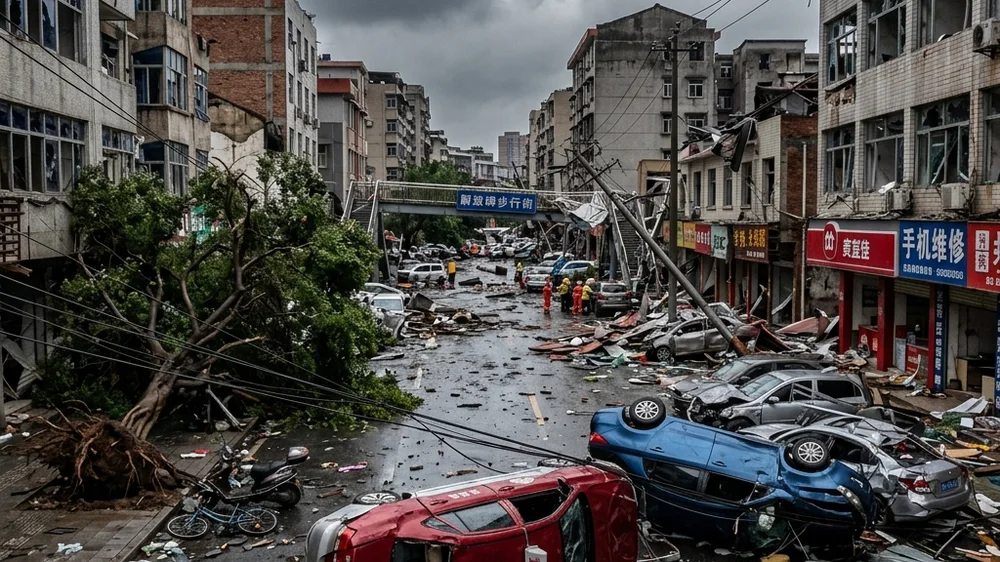
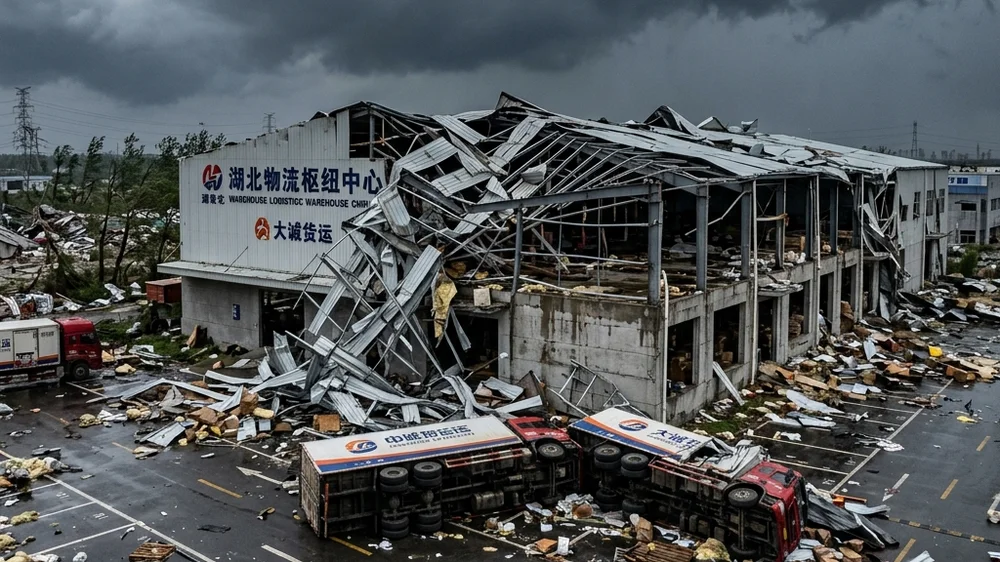
Structural damage was heavily concentrated in simple masonry rural houses and large commercial cargo warehouses. Several passenger vehicles were lifted off the ground by the intense suction force and thrown against the facades of local commercial establishments. Civil defense teams began clearing the debris late into the night to open up blocked roads for emergency vehicles.
Context and History
The formation of this catastrophic tornado in July 2026 was not a random occurrence, but rather the result of a dangerous alignment of meteorological factors. According to the National Meteorological Center of China, the proximity of Typhoon Maysak in the East China Sea played a decisive role in the event. The typhoon pumped massive volumes of warm, highly humid, and unstable air over the mainland, fueling the regional atmosphere.
Simultaneously, a fast-moving mass of cold, dry air advanced southward from the mountainous regions of northern China. The frontal collision between these two air masses with opposing thermal properties triggered severe thermodynamic instability over the plains of Hubei. The rapid variation of wind direction and speed with altitude created the necessary vertical wind shear to spin the thunderstorm into a tornado.
These extreme weather events have sparked significant scientific interest, as discussed in our detailed article on rare natural phenomena.
Historically, Hubei Province does not lie within the primary tornado alley of the Chinese territory, which is typically located further east. However, climatologists point out that the frequency of severe convective storms and intense tornadoes has grown significantly over the past decade. Changes in global temperature patterns appear to be shifting the regions prone to these extreme phenomena across the Asian continent.
Impact on the Population
The most intense panic and distress unfolded in the modern urban areas of Hubei, which are characterized by towering residential apartment complexes. In these massive vertical structures, the sheer force of the wind caused a noticeable swaying effect that terrified thousands of residents living on upper floors. The extremely high population density of these modern Chinese cities multiplied the risk of injury when severe weather strikes urban centers.
Shattered glass windows and collapsed roofing structures exposed families directly to flying debris moving at lethal velocities. Basic infrastructure was severely affected, leaving regional hospitals dependent on emergency diesel generators and temporarily cutting off clean water supplies. This catastrophic event now joins the list of the greatest floods and disasters in history in recent climatic history.
To help comprehend the magnitude of this disaster, the comparison table below shows the Hubei tornado of July 2026 alongside other recent severe windstorms in China:
| Event (Region and Year) | Maximum Wind Speed | Fatalities / Injuries | Impact Details |
|---|---|---|---|
| Hubei (July 2026) | 260 km/h | 11 dead / 100+ injured | Shattered windows and high-rise panic, industrial warehouse destruction, and massive power outages. |
| Yancheng (2016) | 267 to 322 km/h (EF4) | 98 dead / 846 injured | Total destruction of entire rural villages, flattened factory warehouses, and uprooted high-voltage poles. |
| Guangzhou (2024) | 144 km/h (EF2) | 5 dead / 33 injured | Severe damage to 141 industrial buildings and factory warehouses in the industrial city. |
| Dongming (2024) | ~180 km/h (EF3) | 5 dead / 88 injured | Destruction of crops, flattened houses, and vehicles overturned by extreme wind gusts. |
The comparative data reveals how the wind speeds in Hubei closely approached the extreme historical levels recorded in the country. Although the total number of casualties was fortunately lower than in Yancheng, the impact on modern urban infrastructure was significantly more complex. Contemporary housing density demands new approaches to early warning systems and the reinforcement of window glazing on large building facades.
What Those Involved Say
The personal accounts of the survivors paint a dramatic picture of desperation and rapid decision-making in the face of nature's raw power. Residents living in apartment units on the twentieth floor and above described the absolute terror of watching their outer walls vibrate. Many recalled the deafening roar of the wind, which closely resembled the sound of a jet engine passing right next to their windows.
"I was in the kitchen when I heard a terrifying explosion coming from the living room," recalled Wang Wei, a resident of the 24th floor in a Hubei apartment building. "The wind simply imploded the tempered glass window and began sucking various household objects out of the apartment. We quickly locked ourselves in the bathroom and prayed until that horrible noise finally stopped."

The feeling of complete helplessness was shared by workers in local industries who watched massive metal structures buckle under the pressure. Factory managers explained that there was simply not enough time to evacuate the warehouses after the initial sirens were activated. The extreme speed with which the severe storm morphed into a full-scale tornado made traditional evacuation plans obsolete.
Next Steps
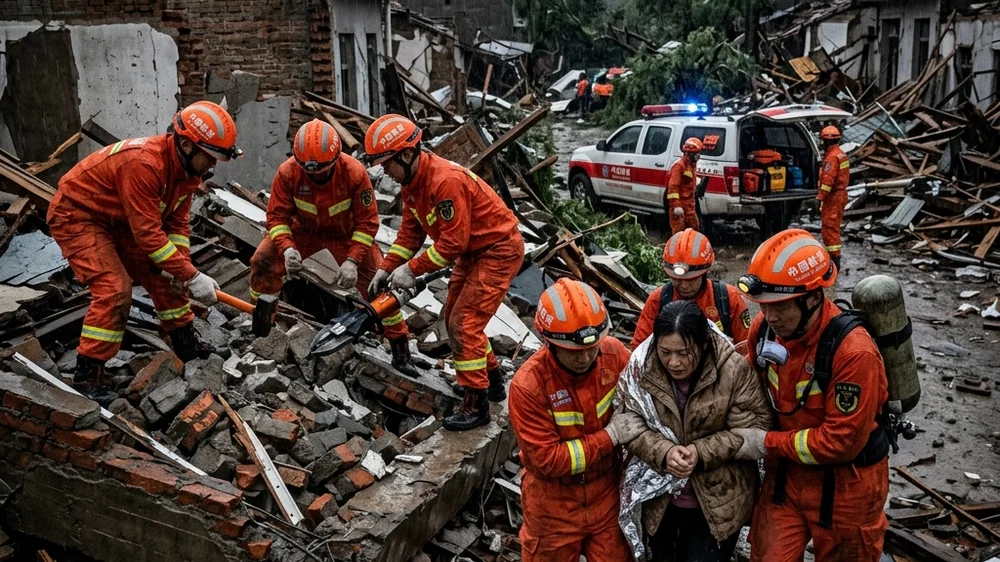
Immediately following the passage of the storm, the central government of China mobilized military divisions and specialized rescue teams to the region. The primary focus of operations during the first 48 hours has been the search for survivors under the ruins of collapsed rural homes and industrial warehouses. Search dogs and drones equipped with thermal imaging sensors are being extensively used to map the most inaccessible debris fields.
In parallel with the search efforts, civil engineers have begun inspecting the structural integrity of the high-rise buildings affected by the extreme winds. Buildings that suffered severe structural damage have been temporarily closed to prevent secondary collapses that could worsen the tragedy. The immediate priority also includes the complete restoration of critical power transmission lines and local communication networks.
The meteorological agency of China has committed to reviewing its monitoring protocols and tornado warning dissemination systems for the country's interior. The goal is to reduce response times and ensure that warnings reach citizens' mobile phones with much greater advance notice. This measure is seen as vital to mitigating future loss of life during sudden, severe weather events.
Conclusion
The tragic tornado of Hubei on July 6, 2026, serves as a stern warning about the new meteorological hazards threatening high-density metropolitan areas. The growth of vertical cities combined with the acceleration of global climate changes demands urgent solutions for high-rise residential safety. Protecting human lives in the future will depend heavily on building more resilient structures and developing faster forecasting technologies.
The pain of the families of the 11 victims and the extensive material devastation in Hubei mark one of the darkest chapters of this year for the region. The resilience of the local population and the rapid government response will guide the long and difficult process of rebuilding the affected communities. It is hoped that this catastrophe will inspire structural reforms capable of protecting tomorrow's cities from the uncontrollable forces of nature.
Sources and References
- China Meteorological Administration (CMA) — Bulletins and technical data on the Hubei tornado
- Reuters Asia News — Journalistic coverage of the disaster and official casualty numbers
- Xinhua News Agency — Real-time updates on the Chinese government's rescue operations