Putin on Trial: The International War Crimes Case in The Hague
On March 17, 2023, the International Criminal Court crossed an unprecedented institutional rubicon: it unsealed an active arrest warrant targeting the sitting commander-in-chief of a nuclear-armed permanent member of the United Nations Security Council. The defendant: Vladimir Vladimirovich Putin, President of the Russian Federation. The core legal indictment: the systematic, unlawful deportation and forcible transfer of Ukrainian children from occupied regions into Russian territory. In the years following that historic indictment, five additional senior Russian commanders have faced formal war crimes warrants, a dedicated Special Tribunal for the Crime of Aggression was negotiated across Europe, and scholars at Harvard Law School and the United Nations intensified debates regarding state-sponsored genocide.
This investigative analysis reconstructs the structural legal edifice confronting Vladimir Putin — from the documentation of stolen children to the jurisdictional mechanics awaiting him in The Hague.
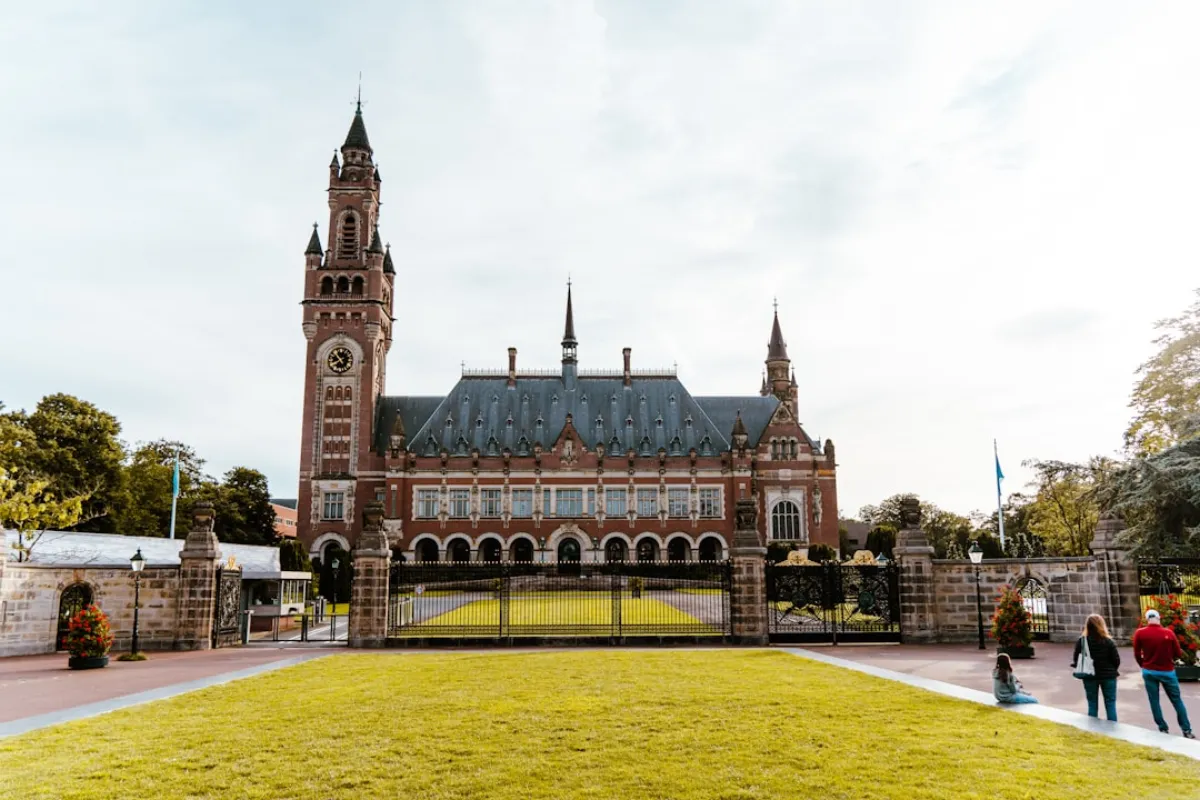
The Historic Indictment: March 17, 2023
Unsealing Warrants Against the Kremlin Hierarchy
In late winter 2023, ICC Chief Prosecutor Karim Ahmad Khan KC announced that Pre-Trial Chamber II had approved sealed arrest warrants against two sovereign officials:
- Vladimir Vladimirovich Putin: President of the Russian Federation, indicted for individual criminal responsibility under Articles 8(2)(a)(vii) and 8(2)(b)(viii) of the Rome Statute for directing and failing to exercise proper command control over the unlawful deportation and transfer of civilian populations.
- Maria Alekseyevna Lvova-Belova: Presidential Commissioner for Children's Rights in the Russian Federation, indicted under the identical Rome Statute provisions for coordinating the logistics, bureaucratic processing, and placement of displaced Ukrainian minors.
The Pre-Trial Chamber established reasonable grounds indicating that these transfers were neither spontaneous nor humanitarian, but organized state policy orchestrated through federal ministries, transport networks, and regional foster programs.
Why This Warrant Redefined International Jurisprudence
- First Nuclear-Armed Head of State: Never in the post-World War II era had an incumbent leader commanding a strategic nuclear triad been formally indicted by a permanent international criminal tribunal.
- Individual Personal Culpability: International law pierced sovereign immunity doctrines, establishing that heads of state cannot hide behind state actions when directing atrocity crimes.
- Mandatory Enforcement Across 125 Nations: Every state party to the Rome Statute is legally obligated under international treaty obligations to execute arrest warrants upon arrival.
- Indefinite Legal Validity: Unlike domestic criminal offenses, core international crimes within the jurisdiction of the ICC carry zero statutes of limitations.
The Stolen Children: Systematic Transfer and Cultural Erasure
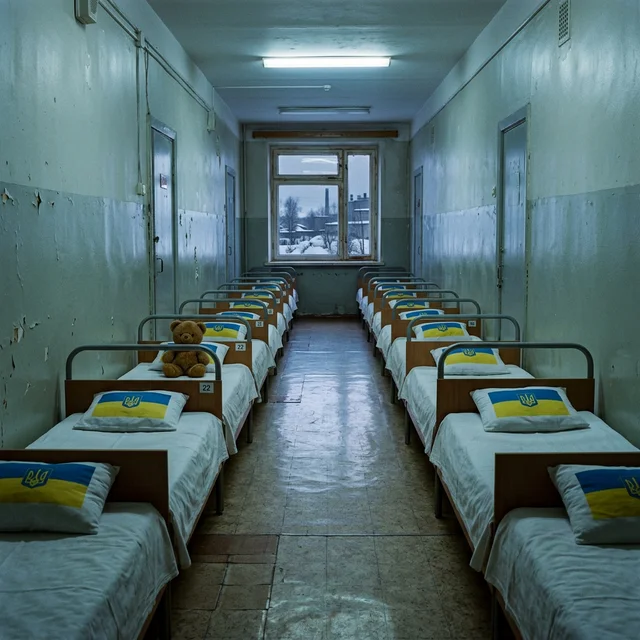
While Moscow characterises the relocation of Ukrainian youths as benevolent humanitarian evacuations from combat sectors, human rights investigators and forensic monitors document a coordinated campaign of forced assimilation.
Forensic Scope of Deportation Programs
Investigations conducted by the Yale School of Public Health Humanitarian Research Lab, the Conflict Observatory, and Ukrainian judicial authorities outline staggering dimensions:
- Identified Wards: The ICC established individual documentation covering hundreds of verified child deportations directly linked to federal decrees.
- Reported Displacements: The Ukrainian National Resistance Center and human rights ombudsmen have cataloged more than 19,500 specific child deportation cases.
- Documented Repatriations: Through arduous diplomatic mediation involving Qatar and international humanitarian agencies, fewer than 500 children have successfully reunited with biological guardians.
- Assimilation Facilities: Satellite imagery and open-source intelligence mapped at least 43 specialized custodial camps spanning from occupied Crimea to eastern Siberia.
Mechanisms of Identity Eradication
Inside institutional transit centers and Russian boarding academies, deported youths are subjected to forced cultural conversion:
- Linguistic Suppression: Ukrainian speech and literature are prohibited; instruction is conducted exclusively under standardized Russian state curricula.
- Forced Naturalization: Expedited presidential decrees granted automatic Russian citizenship and biometric passports to orphans and separated minors without parental authorization.
- Ideological Re-Education: Children are integrated into patriotic military youth organizations, including the Yunarmiya cadet movement.
- Expedited Foster Adoptions: Hundreds of Ukrainian children were permanently placed with Russian foster families, accompanied by altered civil registry names that intentionally prevent tracing.
Under Article II(e) of the 1948 Convention on the Prevention and Punishment of the Crime of Genocide, "forcibly transferring children of the group to another group" constitutes one of the five explicit legal manifestations of genocide.
Expanding the Indictment Ledger: The Military Command Chain
By mid-2024, the ICC Office of the Prosecutor broadened its investigative focus beyond child deportations, issuing four consecutive arrest warrants targeting the highest echelons of the Russian military establishment:
- Sergei Shoigu: Former Minister of Defense of the Russian Federation, charged with intentionally directing missile strikes against civilian objects and inflicting excessive collateral damage under Articles 8(2)(b)(i) and 8(2)(b)(ii).
- Valery Gerasimov: Chief of the General Staff of the Russian Armed Forces and overall operational commander in Ukraine, indicted for directing systematic attacks against electrical grid infrastructure.
- Viktor Sokolov: Admiral and Commander of the Russian Black Sea Fleet, charged with launching ship-borne Kalibr cruise missiles against civilian energy targets.
- Sergey Kobylash: Lieutenant General and Commander of Long-Range Aviation, indicted for orchestrating strategic bomber cruise missile strikes on municipal power stations during sub-zero winter temperatures.
These sequential warrants demonstrate that international prosecutors are pursuing the entire vertical chain of command from frontline theater commanders directly into the Kremlin presidential office.
From Nuremberg to The Hague: Re-Establishing Universal Principles
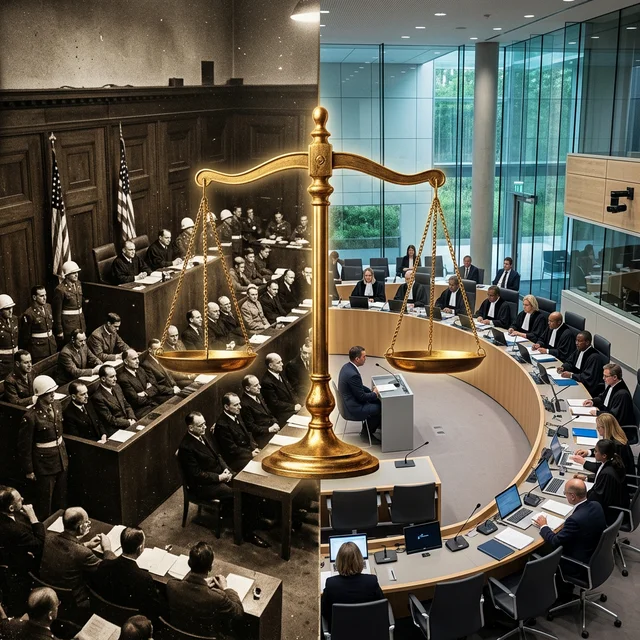
The International Military Tribunal at Nuremberg (1945–1946) established the bedrock standard of modern international humanitarian law: that individuals, rather than abstract state entities, commit crimes that shock the conscience of mankind.
Chief Justice Robert H. Jackson declared at Nuremberg that launching an unprovoked war of aggression is not merely an international crime; it represents the supreme international crime differing only from other war crimes in that it contains within itself the accumulated evil of the whole.
Historical Precedents in International Justice
Sovereign leaders throughout history frequently dismissed international court orders as hollow theater until shifting political sands stripped them of executive sanctuary.
| Historical Accused Leader | Sovereign Nation | Adjudicating International Tribunal | Legal Indictment & Core Offense | Final Custody & Sentencing Outcome |
|---|---|---|---|---|
| Slobodan Milošević | Federal Republic of Yugoslavia | ICTY (The Hague) | War crimes, crimes against humanity, genocide | Extradited 2001; died during trial in 2006 |
| Charles Taylor | Republic of Liberia | Special Court for Sierra Leone | Aiding and abetting terrorism, enslavement | Convicted 2012; serving 50-year prison sentence |
| Radovan Karadžić | Republika Srpska (Bosnia) | ICTY (The Hague) | Srebrenica genocide, civilian siege of Sarajevo | Captured 2008; sentenced to life imprisonment |
| Ratko Mladić | Bosnian Serb Armed Forces | ICTY (The Hague) | Extermination, hostage-taking, ethnic cleansing | Captured 2011; sentenced to life imprisonment |
| Omar al-Bashir | Republic of the Sudan | International Criminal Court (ICC) | Darfur genocide, forced displacement, torture | Deposed 2019; detained pending ICC surrender |
Closing Jurisdictional Gaps: The Special Tribunal for Aggression
A primary limitation of the Rome Statute framework resides in its restrictive jurisdictional threshold regarding the crime of aggression. Under the Kampala Amendments, the ICC cannot exercise jurisdiction over acts of aggression committed by a non-party state (such as Russia) unless authorized by the UN Security Council, where Moscow holds a permanent veto.
To bridge this accountability deficit, a Core Group of forty sovereign nations, partnering with the Council of Europe and the European Union, concluded negotiations in mid-2025 establishing the Special Tribunal for the Crime of Aggression against Ukraine.
- Treaty Foundation: Formally signed on June 25, 2025, between Ukraine and the Council of Europe.
- Substantive Competence: Empowers prosecutors to indict the "troika" (head of state, head of government, and foreign minister) specifically for the planning, preparation, initiation, and execution of a state act of aggression.
- In Absentia Proceedings: Unlike the ICC, which requires the physical presence of the accused during trial phases, the Special Tribunal statutes permit comprehensive trials in absentia, ensuring legal judgments even if defendants refuse extradition.
Diplomatic Isolation: The Restricting Map of Sovereign Movement
The issuance of the ICC arrest warrant transformed Vladimir Putin's international travel options into a sharply constricted diplomatic corridor.
Sovereign Travel Constraints
With 125 nations bound by Rome Statute ratification, vast geographic zones are legally closed to the Russian president:
- Cancelled Summits: Putin withdrew from the August 2023 BRICS Summit in Johannesburg after South African judicial authorities affirmed their constitutional obligation to execute the ICC warrant upon landing.
- Mongolia Non-Compliance: While Putin traveled to Ulaanbaatar in September 2024 without arrest, the ICC Assembly of States Parties formally issued a Finding of Non-Cooperation against Mongolia, triggering diplomatic sanctions and legal reviews.
- Inviolable Travel Havens: Russian presidential travel remains confined almost exclusively to non-ICC states, including China, North Korea, Belarus, Iran, and select Gulf monarchies.
- No-Fly Zones: Overflight permissions across European Union airspace remain prohibited under regional sanctions, compounding physical transit hazards.
Ukraine Formally Ratifies the Rome Statute
On January 1, 2025, Ukraine completed domestic ratification protocols to become the 125th State Party to the International Criminal Court. This milestone carried substantial legal consequences:
- Full Treaty Integration: Grants the ICC full institutional jurisdiction over war crimes, crimes against humanity, and genocide committed on sovereign Ukrainian soil.
- Procedural Reciprocity: Affirms Ukrainian willingness to subject its own armed forces to international scrutiny, establishing high moral authority.
- Direct Submission of Digital Dockets: In early 2026, Ukrainian prosecutors transferred exhaustive digital dossiers documenting over 120,000 registered war crimes incidents to The Hague, including systematic attacks on nuclear energy substations and urban heating plants.
The Empty Dock in The Hague
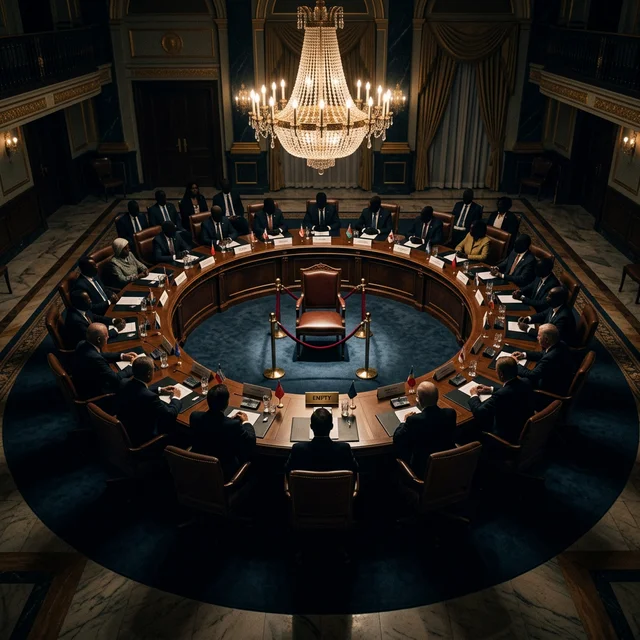
The empty defendant's bench inside Courtroom I at The Hague stands as an enduring institutional symbol. It does not signify legal impotence; it represents patient, inexorable jurisprudence.
Vladimir Putin can dismiss the proceedings, retaliate against international prosecutors, or issue domestic counter-warrants. Yet the fundamental reality of international justice remains: warrants do not expire, digital forensic evidence does not degrade, and political fortresses are never permanent. For the stolen children of Ukraine and the international rule of law, the courtroom in The Hague will continue to wait.
Authoritative Documentation and Investigative Sources
- International Criminal Court (ICC) — Situation in Ukraine Warrant Bulletins
- United Nations Office of the High Commissioner for Human Rights (OHCHR) — Ukraine Reports
- Yale School of Public Health Humanitarian Research Lab — Russia's Systematic Child Transfers
- Council of Europe — Agreement on the Special Tribunal for Aggression
- International Commission of Jurists (ICJ) — Legal Analyses on Universal Jurisdiction
- Amnesty International and Human Rights Watch — Joint Documentation on Russian War Crimes