The night sky of August 2026 is preparing to deliver an extraordinary astronomical spectacle that will captivate observers across the Western Hemisphere. On the night of August 27 to 28, a rare and profound celestial alignment will take place, featuring a deep partial lunar eclipse. This event will see an astonishing 96.2 percent of the Moon engulfed by the darkest part of Earth's shadow. The result will be a striking rusty coppery red hue, often romantically referred to as a blood moon. Stargazers and astronomers alike are eagerly anticipating this profound visual transformation in the night sky.
What makes this particular night even more unprecedented is the simultaneous occurrence of a significant space weather event. A G2 class geomagnetic storm is slated to strike Earth's atmosphere at the exact same time as the lunar eclipse. This storm is the direct result of massive coronal mass ejections that violently departed the sun on August 25. The collision of these charged solar particles with our planet's magnetic field will ignite brilliant auroras. Specifically, this combination creates the perfect conditions for viewing rare red northern lights alongside the crimson moon.
Such a convergence of two distinct and visually stunning red-tinted celestial phenomena is a generational occurrence. Observers in North and South America will have the prime vantage points for this dual spectacle. The deep shadow coverage ensures that this eclipse will be visually indistinguishable from a total eclipse for many casual observers. It officially stands as the deepest partial lunar eclipse we will experience until December 2028. This long gap makes the August 2026 event a must-see for anyone with an interest in natural sciences.
Understanding the Mechanics of a Deep Partial Eclipse
To fully appreciate this event, one must understand the orbital mechanics that govern lunar eclipses. A lunar eclipse can only occur during a full moon when the Earth positions itself directly between the Sun and the Moon. As sunlight hits the Earth, our planet casts a massive, complex shadow into the depths of space. This shadow consists of two primary zones known as the penumbra and the umbra. The penumbra is the outer, lighter shadow, while the umbra is the inner, darkest region.
During a deep partial lunar eclipse, the alignment is incredibly close to being perfect, but falls just slightly short of totality. On August 27, the Moon will plunge deeply into the Earth's umbra, achieving a maximum coverage of 96.2 percent. Because a tiny sliver of the lunar surface remains outside the darkest shadow, it avoids being classified as a total eclipse. However, this high percentage of coverage is more than enough to trigger the dramatic color change associated with totality. The stark contrast between the bright sliver and the deep red expanse will be a breathtaking sight.
The Science Behind the Rusty Red Color
The signature rusty red or coppery color of a deep eclipsed moon is caused by a fascinating optical phenomenon called Rayleigh scattering. This is the exact same atmospheric mechanism that gives our sunsets and sunrises their beautiful orange and red hues. As sunlight streams past the edges of the Earth, it must pass through our planet's atmosphere. The atmosphere acts like a giant lens, scattering the shorter blue and green wavelengths of light away in various directions.
Meanwhile, the longer red and orange wavelengths are bent, or refracted, directly into the Earth's umbra. These warm-colored light rays are then projected onto the lunar surface, bathing the Moon in a ghostly crimson glow. If you were standing on the Moon looking back at Earth during this time, you would see a brilliant ring of fire. This ring is essentially every sunrise and sunset happening on Earth simultaneously. The specific shade of red can vary based on the amount of dust, volcanic ash, and clouds present in Earth's atmosphere at the time.
Comparing Lunar Eclipse Types
Astronomers categorize lunar eclipses into three main types based on how deeply the Moon enters Earth's shadow. The distinctions are crucial for understanding what observers will actually see in the night sky. Below is a detailed breakdown of how these eclipses differ from one another.
| Eclipse Type | Shadow Interaction | Visual Appearance | Frequency |
|---|---|---|---|
| Total Lunar Eclipse | Entire Moon enters the Earth's umbra (100% coverage). | Deep dramatic red or copper color across the entire disk. | Relatively common, typically occurring every 1-2 years. |
| Deep Partial Eclipse | Moon almost entirely enters the umbra (e.g., 96.2%). | Mostly red with a bright, shining sliver on one edge. | Less common at this extreme depth; next one is Dec 2028. |
| Penumbral Eclipse | Moon only enters the lighter penumbral shadow. | Very subtle darkening; often goes unnoticed by casual viewers. | Very common, happening multiple times a year. |
The G2 Geomagnetic Storm and Solar Activity
While the eclipse itself is a marvel, the addition of a G2 geomagnetic storm elevates this night to legendary status. On August 25, solar observatories detected powerful coronal mass ejections (CMEs) erupting from a highly active sunspot region. A CME is a massive burst of solar wind and magnetic fields rising above the solar corona or being released into space. These explosive events hurl billions of tons of plasma toward Earth at incredible speeds.
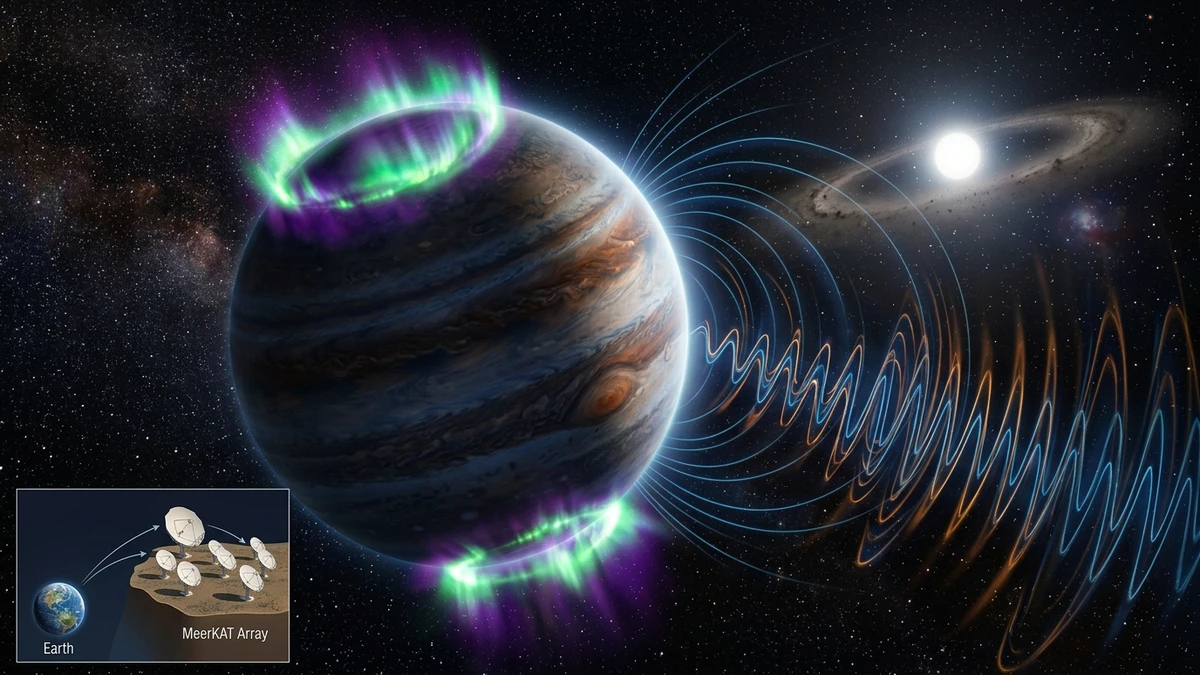
When this solar plasma finally reaches our planet on August 27, it will slam into Earth's protective magnetosphere. This collision triggers a geomagnetic storm, categorized as G2 on the NOAA space weather scale, which indicates a moderate but highly visible event. The influx of solar energy travels down the magnetic field lines toward the Earth's poles. As these charged particles interact with oxygen and nitrogen in our upper atmosphere, they release energy in the form of light.
The Rare Convergence of Red Auroras
Typically, auroras are seen as vibrant green ribbons dancing across the northern horizons. However, the specific conditions of this G2 storm are expected to produce rare red auroras. Red auroras occur when lower-energy solar particles interact with oxygen molecules at much higher altitudes, typically above 200 kilometers. The human eye is less sensitive to red light, meaning these specific auroras require an exceptionally dark sky to be seen clearly.
This is precisely where the deep partial lunar eclipse plays a critical and synergistic role. A normal full moon would act as a massive source of light pollution, completely washing out the delicate red auroras. Because 96.2 percent of the Moon's light will be blocked by Earth's shadow, the sky will darken dramatically. This sudden darkness will allow the elusive red northern lights to shine through vividly. Observers in higher latitudes will witness a sky painted in dual shades of cosmic crimson.
Visibility Across North and South America
The timing of this astronomical double feature heavily favors the Western Hemisphere. Observers across North and South America are perfectly positioned to witness the event during their nighttime hours. In North America, the eclipse will reach its maximum phase during the late evening of August 27 and early morning of August 28. The timing means the Moon will be high in the sky, free from horizon obstructions.
South American viewers will also enjoy spectacular views, particularly in regions with clear, cloudless winter skies. The geomagnetic storm's effects, however, will be strongly dependent on latitude. While the eclipse is universally visible, the auroras will be primarily restricted to the northern regions of the United States and Canada. Observers in places like Alaska, northern tier US states, and Canadian provinces will have the ultimate dual-viewing experience.
The Cultural and Historical Significance of Blood Moons
Throughout human history, the sudden transformation of the glowing white moon into a dark, rusty red orb has sparked intense cultural mythology. Ancient civilizations often viewed these deep eclipses as powerful omens, believing they signaled the wrath of gods or impending historical disasters. The Inca empire, for example, believed that a mythical celestial jaguar had attacked and eaten the moon, causing it to bleed red. They would often shout and shake their spears at the night sky to drive the cosmic beast away.
Today, we understand the precise astrophysics and atmospheric scattering that cause this dramatic color change. However, the deep cultural fascination with blood moons remains deeply ingrained in our modern global society. These events continue to draw millions of people outdoors, bridging the gap between ancient wonder and modern scientific understanding. The August 2026 event provides a perfect opportunity to reflect on humanity's enduring connection to the mysteries of the cosmos.
Tips for Observing and Photographing the Event
Preparing for this rare celestial night requires just a bit of planning to ensure the best possible experience. First and foremost, find a viewing location far away from the glaring lights of cities and urban centers. Light pollution is the ultimate enemy of aurora viewing and can severely diminish the rich colors of the eclipsed moon. Allow your eyes at least twenty minutes to fully adjust to the darkness without looking at bright smartphone screens.
For photography enthusiasts, capturing both the eclipse and the auroras will require a sturdy tripod and a camera with manual settings. Use a telephoto lens to capture the detailed craters and red hue of the deep partial eclipse. For the auroras, switch to a wide-angle lens and use a longer exposure time, typically between 5 to 15 seconds. Ensure your ISO is set high enough to capture the faint red lights, but low enough to avoid excessive digital noise.
A Night to Remember in Astronomical History
The events of August 27-28, 2026, serve as a profound reminder of the dynamic and interconnected nature of our solar system. It is rare enough to experience a lunar eclipse with such a deep umbral penetration of 96.2 percent. It is altogether another level of statistical improbability for this to align perfectly with a CME-driven G2 solar storm. Those who take the time to step outside and look up will be rewarded with a truly unforgettable sight.
As we mark our calendars for this date, astronomy clubs and planetary societies are already preparing extensive public outreach programs. This event offers an incredible educational opportunity to teach the public about orbital dynamics, atmospheric physics, and space weather. Even if you only have a few minutes to spare, stepping outside to witness this crimson sky is highly recommended. We will not see a deep partial eclipse of this magnitude again until the closing days of December 2028.
Frequently Asked Questions
Why is it called a deep partial eclipse instead of a total eclipse?
A lunar eclipse is only categorized as total when 100 percent of the Moon completely enters the Earth's inner shadow, known as the umbra. During the August 2026 event, the Moon will plunge deeply into the shadow, but will max out at 96.2 percent coverage. Because a tiny 3.8 percent sliver of the lunar surface remains outside the darkest shadow, it technically remains a partial eclipse. However, visually, the intense red color associated with totality will still be highly visible and incredibly striking to observers. This near-total state makes it one of the most beautiful celestial events to witness.
How do coronal mass ejections (CMEs) from the Sun cause auroras on Earth?
Coronal mass ejections are massive explosions of plasma and magnetic field originating from the Sun's incredibly hot outer atmosphere, the corona. When these highly charged particles are hurled toward Earth, they eventually collide with our planet's protective magnetic field. This collision forcefully funnels the solar particles down toward the Earth's north and south magnetic poles. As these particles smash into oxygen and nitrogen gases in our upper atmosphere, they release energy as brilliant, colorful light known as auroras. The strength of the CME directly dictates the intensity of the geomagnetic storm.
Do I need special safety glasses or equipment to view the lunar eclipse?
Unlike solar eclipses, which require highly specialized safety glasses to protect your eyes from permanent damage, lunar eclipses are completely safe to view. You are simply looking at sunlight that has been filtered through Earth's atmosphere and reflected off the Moon's surface. You do not need any protective eyewear or specialized equipment whatsoever to enjoy this deep partial eclipse. However, using a standard pair of binoculars or a backyard telescope can significantly enhance the view by revealing the Moon's textured craters in striking detail.