"The Condition of Beirut: Why Hezbollah Rejected the Latest Peace Proposal from the U.S."
On June 4, 2026, the geopolitical landscape in the Middle East took on new contours with Hezbollah's official rejection of the latest ceasefire and peace proposal put forth by the United States for the border with Israel. This event not only highlights the complexity of relations between Hezbollah and the Israeli government but also reveals the deep divisions that persist in the region, where the search for a peaceful solution is often overshadowed by distrust and hostility. The American proposal, which aimed to establish an immediate ceasefire and promote constructive dialogue, was met with skepticism by the Lebanese group, which argued that the conditions presented did not guarantee Lebanon's security and sovereignty. This rejection is not an isolated act but rather a reflection of the historical tensions and power dynamics that shape the Israeli-Lebanese conflict. Hezbollah, positioning itself as a defender of resistance against Israeli occupation, sees the proposal as insufficient and biased, raising questions about the credibility of American mediation in the region. Hezbollah's refusal to accept the ceasefire proposal could have significant consequences, not only for border security but also for Lebanon's political and economic stability, which is already facing an unprecedented crisis. As hostilities may intensify, the world watches anxiously, aware that each move in this complex diplomatic dance could have lasting repercussions in one of the planet's most volatile points. The future of peace in the region appears more uncertain than ever, as the echoes of rejection resonate in international negotiations and hopes for a more peaceful future.
What Happened
On June 4, 2026, Beirut was the scene of a crucial event that could redefine the balance of power in the Middle East. Representatives from the United States formally delivered a peace terms proposal to Hezbollah, a movement that, over the past few decades, has been a central actor in the complex political and military dynamics of the region. The proposal, aimed at de-escalating tensions along the borders between Lebanon and Israel, included specific conditions, the most significant of which was the evacuation of border areas deemed strategic by both sides. The delivery of the terms occurred in a context of increasing international pressure for stability in the region, exacerbated by a series of armed conflicts and humanitarian crises.
The main points of the U.S. proposal were outlined in a comprehensive document that sought to establish a lasting ceasefire and the withdrawal of armed forces from sensitive border areas. U.S. officials argued that the evacuation of these areas would not only reduce the risk of armed confrontations but also allow for more effective international monitoring, facilitating an environment conducive to future negotiations. The proposal also included economic incentives for Lebanon, aimed at the reconstruction of damaged infrastructure and the promotion of investments that could benefit the local population. The intention was clear: to create a scenario where peace could be a tangible reality and not just a distant aspiration.
However, Hezbollah's response was swift and forceful. In a press conference held on the same day, leaders of the movement expressed their rejection of the proposal, arguing that the conditions presented were unacceptable and did not address the group's fundamental concerns. Hezbollah claimed that the evacuation of the border areas, as proposed, represented a strategic capitulation that would compromise Lebanon's national security and the movement's sovereignty. Furthermore, Hezbollah leaders emphasized that the proposal did not include adequate guarantees for the protection of Palestinian rights, which remain a central issue in the tensions between Israel and its neighbors.
The reasons for Hezbollah's rejection were multifaceted. First, the group argued that the proposal did not take into account the historical context of relations between Israel and Lebanon, where mutual distrust and past conflicts still weigh heavily on political decisions. Hezbollah also highlighted that the proposal did not offer a clear plan for the demilitarization of Israeli forces along the borders, which they argued should be a sine qua non condition for any peace agreement. Additionally, the lack of an explicit commitment from the U.S. to ensure Lebanon's security and the protection of Palestinian refugee rights was seen as a critical failure of the proposal.
Hezbollah's rejection not only complicated the political landscape in Lebanon but also raised questions about the effectiveness of American diplomacy in the region. International observers began to question whether the U.S. approach was aligned with local realities and whether pressure on Hezbollah could result in an increase in hostilities rather than promote constructive dialogue. The situation became even tenser when Hezbollah announced that it would continue its operations in the border areas, directly challenging the evacuation proposal and reaffirming its position as a defender of Lebanese sovereignty.
In summary, the delivery of the proposal terms in Beirut on June 4, 2026, was a decisive moment that exposed the complexities of relations in the Middle East. While the U.S. sought to promote peace through conditions they deemed reasonable, Hezbollah rejected the proposal, arguing that it did not meet the needs and concerns of the Lebanese people. The outcome of this episode remains uncertain, but the repercussions will undoubtedly shape the future of relations between Lebanon, Israel, and the United States in the coming decades.
Context and History
American diplomacy in the Middle East has been marked by a complex web of geopolitical interests, strategic alliances, and historical conflicts. Since World War II, the United States has sought to consolidate its influence in the region, primarily due to oil, the security of Israel, and the containment of adversarial powers, such as the Soviet Union during the Cold War. With the collapse of the USSR, U.S. attention shifted to the fight against terrorism and the promotion of democracy, although the results have often been controversial and challenging.
The relationship between the United States, Hezbollah, and Iran reflects the tensions that permeate the region. Hezbollah, a Lebanese militant and political group, emerged in the 1980s as a response to the Israeli invasion of Lebanon and the occupation of parts of the country. Supported by Iran, Hezbollah has established itself as a significant force in Lebanese politics and a resistance against Israel, advocating a security vision that opposes Western presence and Israeli influence in the region. For Hezbollah, border security is not limited to territorial protection but also involves the struggle against what they consider imperialist interventions and the defense of Palestinian rights.
Iran, for its part, has a historical position of opposition to the U.S. military presence in the Middle East, especially after the Islamic Revolution of 1979, which resulted in the overthrow of the American-backed Shah. Since then, the Iranian regime has sought to expand its influence in the region by supporting groups like Hezbollah and other Shiite movements in countries such as Iraq and Syria. For Iran, the security of its borders is intrinsically linked to its ability to project power and influence beyond its borders, which often puts the country on a collision course with the interests of the U.S. and its allies.
The role of the United Nations in the Middle East, particularly concerning the Israeli-Palestinian conflict and the situation in Lebanon, has been a crucial component of international diplomacy in the region. The UN has played a mediating role, although its effectiveness has often been questioned. Resolutions 242 and 338, which address the Israeli withdrawal from occupied territories and the recognition of the right to self-determination for Palestinians, are examples of attempts to establish a framework for peace. However, the implementation of these resolutions has been hindered by deep divergences between the parties involved and the lack of a robust international consensus.
The presence of the UN in Lebanon, through the United Nations Interim Force in Lebanon (UNIFIL), was established in 1978 to ensure security and stability in the region, especially following the Israeli invasion. However, the effectiveness of UNIFIL has often been questioned, particularly regarding its ability to disarm Hezbollah and ensure Lebanon's sovereignty. Hezbollah, in turn, views the presence of UNIFIL as an extension of Western influence in the region, which further complicates the security dynamics.
In summary, American diplomacy in the Middle East, the positions of Hezbollah and Iran on border security, and the role of the United Nations are interconnected in a complex power play. The quest for security and stability in the region is marked by a history of conflicts, alliances, and rivalries, where narratives of resistance and intervention intertwine, reflecting the deep political and social divisions that characterize contemporary Middle Eastern society. Resolving these conflicts requires not only an understanding of local dynamics but also a diplomatic approach that takes into account the aspirations and concerns of all involved actors.
Impact on the Population
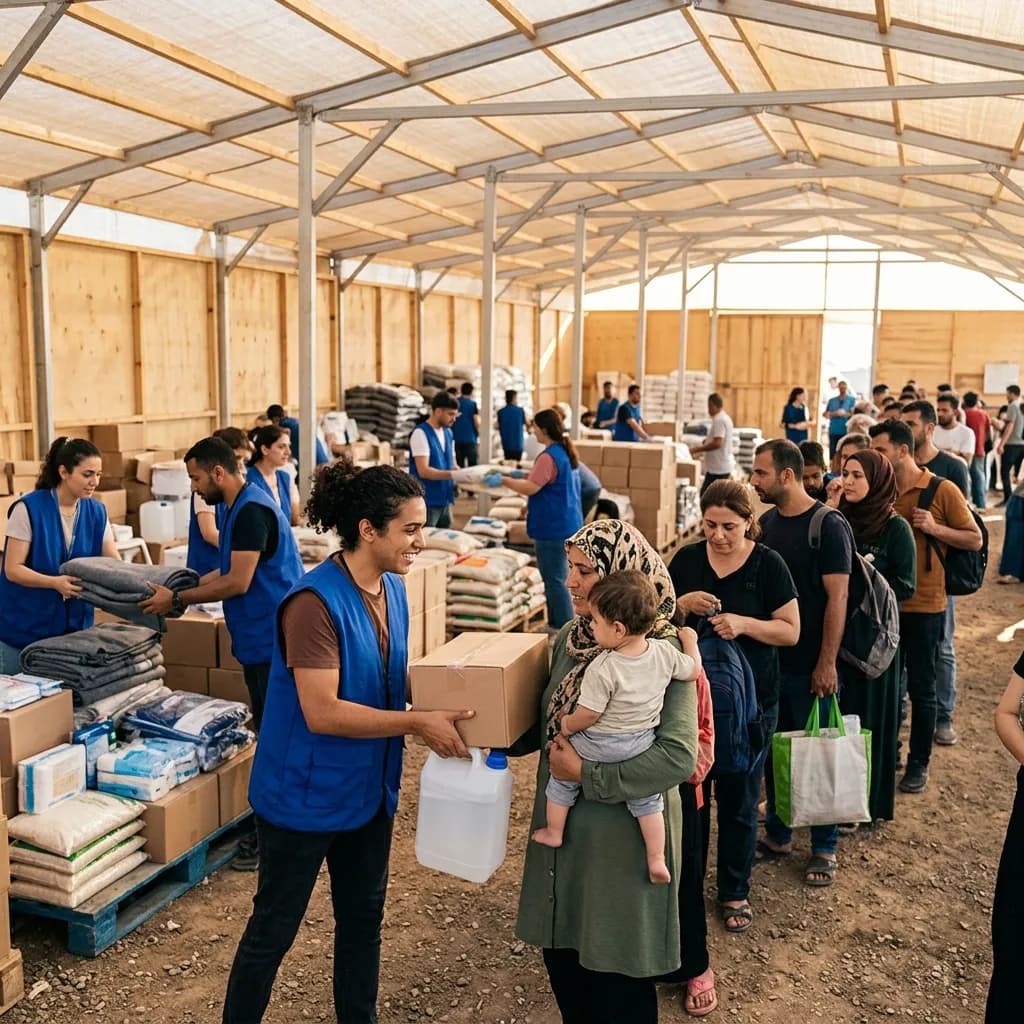
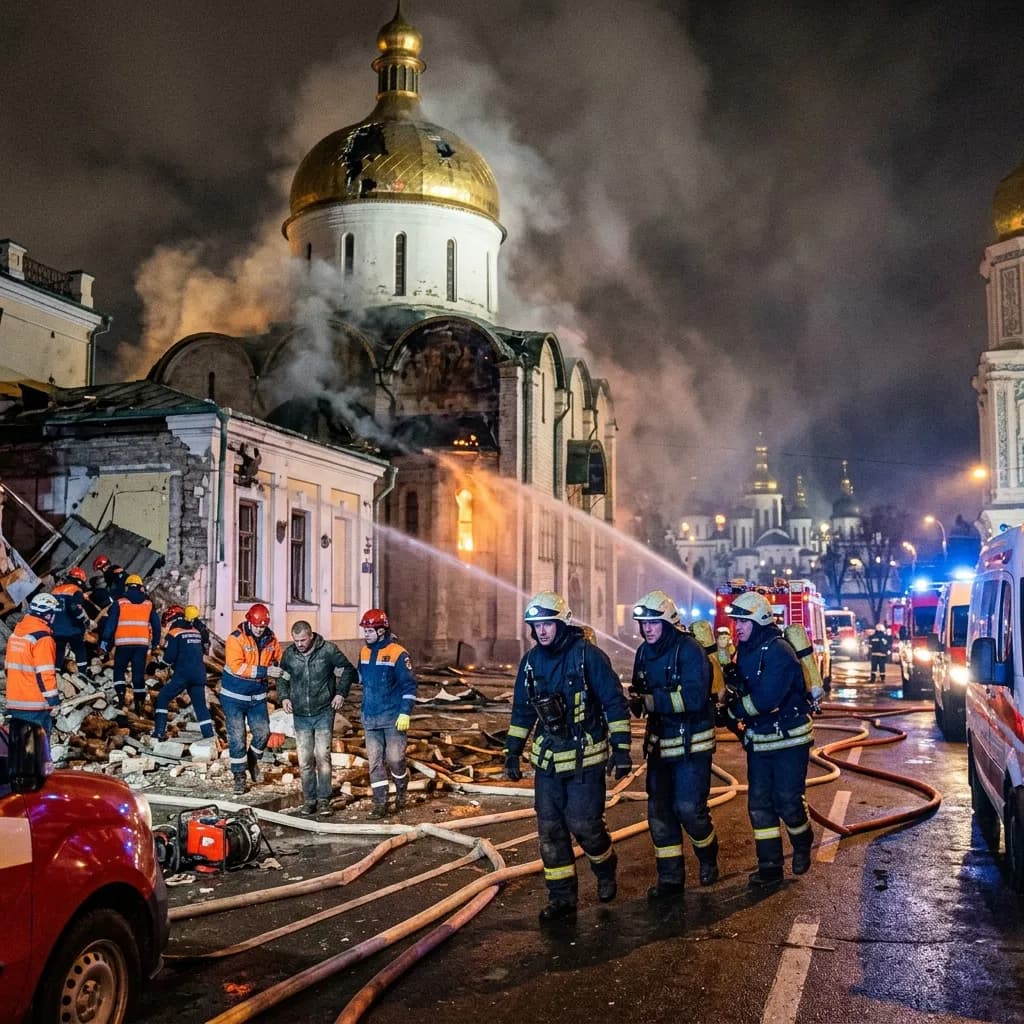
The ongoing hostilities between Israel and armed groups in southern Lebanon have generated a devastating impact on the civilian communities in both regions. The escalation of the conflict not only results in human losses and destruction of infrastructure but also incurs a significant humanitarian cost, especially for displaced populations. The uncertainty and insecurity created by a prolonged conflict have profound effects on the daily lives of people, compromising access to basic services such as health, education, and food security.
Communities in northern Israel and southern Lebanon live under constant threat. The alarm sirens, bombings, and military operations become part of the routine, generating a state of chronic stress among civilians. Furthermore, the destruction of homes and the loss of livelihoods force many families to leave their houses, creating a growing number of internally displaced persons and refugees. The rejection of the expectations of return for these displaced populations is a factor that further exacerbates the situation, as many find themselves without prospects for rebuilding and reintegration into their communities.
The humanitarian costs of a prolonged conflict are immense. Humanitarian assistance becomes insufficient to meet the growing needs of a population living in precarious conditions. The scarcity of food, drinking water, and health services is a reality for many. Additionally, the psychological impact of the conflict affects the mental health of individuals, especially children, who grow up in an environment of violence and uncertainty.
Another concerning aspect is the risk of an expanded regional war. The involvement of external actors and the possibility of the conflict spreading to other countries in the region increase the complexity of the situation. This expansion of the conflict could result in an even greater number of displaced persons and an unprecedented humanitarian crisis, affecting not only Israel and Lebanon but also neighboring countries and the international community.
The following table illustrates the expectations of return for displaced populations before and after the rejection of a peace agreement or a lasting solution to the conflict:
| Expectations of Return | Before Rejection | After Rejection |
|---|---|---|
| Security | High | Low |
| Access to Services | Adequate | Limited |
| Economic Stability | Promising | Uncertain |
| Humanitarian Support | Sufficient | Insufficient |
| Future Prospects | Optimistic | Pessimistic |
The table clearly demonstrates how the rejection of a peace agreement negatively impacts the return expectations of displaced populations. Before the rejection, there was an expectation of security and stability, which translated into adequate access to services and an optimistic outlook for the future. After the rejection, these expectations deteriorate, resulting in a scenario of uncertainty and despair.
In summary, the consequences of hostilities for civilian communities in northern Israel and southern Lebanon are profound and far-reaching. The humanitarian cost of a prolonged conflict, coupled with the risk of an expanded regional war, demands an urgent response from the international community to mitigate the suffering of affected populations and seek lasting solutions for peace.
What Those Involved Are Saying
The tensions in Lebanon have attracted the attention of political leaders, international authorities, and security experts, each offering their perspectives on the current situation. The statements reflect the complexity of the political and social context of the country, as well as regional and global concerns.
Lebanon's Prime Minister, Najib Mikati, expressed his concern over the escalation of violence, stating that "the stability of Lebanon is vital for peace in the region." He emphasized the need for dialogue among the country's political factions and called on the international community to support efforts to restore order and security. Mikati also highlighted that "Lebanon should not be a battleground for external conflicts," appealing for the country's sovereignty and the importance of avoiding interventions that could exacerbate the crisis.
On the other hand, U.S. State Department spokesperson Ned Price reiterated the United States' commitment to the security and stability of Lebanon. He stated, "The U.S. continues to support the Lebanese government in its efforts to address economic and security challenges. However, it is essential that all parties respect Lebanon's sovereignty and refrain from actions that could further destabilize the region." Price also emphasized the importance of a united and peaceful Lebanon that can resist external influences and build a better future for its citizens.
Israeli security officials, for their part, have adopted a cautious stance regarding the situation in Lebanon. A senior official, who preferred to remain anonymous, stated, "We are closely monitoring developments in Lebanon. The presence of militant groups, such as Hezbollah, poses a threat not only to Israel but to the stability of Lebanon as a whole." He added that Israel is prepared to respond to any provocation, but that "the priority must be the protection of civilians and the pursuit of peaceful solutions."
International observers, such as representatives from the UN, have also called attention to the need for inclusive dialogue. The UN Special Coordinator for Lebanon, Joanna Wronecka, declared, "It is crucial that all stakeholders come together to find peaceful solutions to the challenges facing Lebanon. The international community must support a political process that involves all sectors of Lebanese society." She emphasized that humanitarian aid and economic development are essential for the country's recovery.
These statements reflect the diversity of opinions and the complexity of the situation in Lebanon, where the voices of local and international leaders intertwine in a collective effort to seek peace and stability in a context marked by deep and persistent challenges.
Next Steps
Given the complexity of the conflict and the fragility of the relationships between the parties involved, new mediation attempts by European partners become essential. The European Union, recognizing its strategic role in promoting peace and stability in the region, is mobilizing to facilitate dialogues among the protagonists of the conflict. The proposal for a new peace conference, with the participation of regional leaders and international mediators, is currently under discussion. The idea is to create a neutral space where the parties can express their concerns and seek viable solutions to the most pressing issues, such as security, sovereignty, and human rights.
Furthermore, the EU is considering the implementation of confidence-building initiatives, which could include a temporary suspension of hostilities and the promotion of cultural and economic exchanges. The establishment of a working group composed of representatives from European countries, non-governmental organizations, and conflict resolution experts may be an effective strategy to identify areas of consensus and develop a roadmap for peace. Collaboration with international organizations, such as the UN, will also be crucial to ensure that mediation efforts are comprehensive and sustainable.
Conclusion
The difficulty in achieving peace in the region is a reflection of the deep historical, cultural, and political divisions that permeate the conflict. The entrenched narratives and mutual distrust between the parties make dialogue a constant challenge. Furthermore, the influence of external actors and geopolitical dynamics further complicate the situation. Although there is a growing desire among the population for a peaceful resolution, violent actions and bellicose rhetoric often overshadow mediation efforts.
The pursuit of a lasting agreement requires not only the political will of the leadership but also a genuine commitment to reconciliation and the building of trust among the affected communities. The implementation of transitional justice measures and the promotion of intercommunity dialogue initiatives are fundamental steps to overcoming the legacy of distrust and violence. Therefore, the journey towards peace is long and filled with obstacles, but persistence and international collaboration can pave the way for a more stable and harmonious future.
Sources and References
- Al Jazeera
- Reuters
- The New York Times
- L'Orient-Le Jour