What Was Life Like in Brazil Before the Portuguese Arrived? 🌿🏹
When Pedro Álvares Cabral arrived in Brazil in 1500, he didn't "discover" an empty land. He found a territory inhabited by millions of people organized in complex societies, with ingenious technologies and incredibly rich cultures that had existed for more than 12,000 years.
Brazil's history didn't begin in 1500 — it goes back at least 15,000 years, since the first humans arrived on the continent. Get ready to learn about the Brazil that existed before the Portuguese.
📊 Population: Much Larger Than You Think
Current estimates suggest that between 2 to 8 million indigenous people lived in Brazilian territory in 1500. For context: all of Portugal had only 1 million inhabitants at the time. The "New World" was more populous than most of Europe.
Impressive diversity:
- More than 1,000 different peoples with distinct cultures
- About 1,300 languages spoken (more than all of Europe combined)
- 5 major linguistic families (Tupi, Macro-Jê, Arawak, Carib, Pano)
- Each people with their own cosmology, social organization, and technologies
Common school mistake: Treating "Indians" as a homogeneous group is the equivalent of treating the French, Chinese, Nigerians, and Japanese as "one people" because they all live on the same planet. The diversity was extraordinary.
🏛️ Great Brazilian Civilizations
The Tupinambá: Warriors and Navigators of the Coast
They dominated the Brazilian coast from Maranhão to Rio de Janeiro, with villages of up to 2,000 people. They were excellent navigators, making journeys of hundreds of kilometers in dugout canoes that could carry up to 30 people.
Advanced social organization:
- Leaders (morubixabas) chosen by merit in war and oratory — not by inheritance
- Councils of elders for important decisions, functioning as a "senate"
- Specialized division of labor: warriors, artisans, farmers, shamans
- Complex alliances between villages for war and trade
Ritual anthropophagy: The Tupinambá practiced ritual cannibalism — not from hunger, but as a spiritual ceremony. They believed they absorbed the courage of the defeated enemy warrior. It was an act of honor for both the victor and the prisoner, who often lived months in the village before the ritual.
The Guarani: Masters of Agriculture
They occupied a vast area of southern Brazil, Paraguay, and Argentina. They developed agricultural techniques that impress modern botanists:
- Coivara (shifting agriculture): A sustainable rotation system — they burned a small area, planted for 2-3 years, then let the forest regenerate while opening a new area. The land rested 15-20 years before being reused
- Domesticated and developed more than 80 plant species: cassava, corn, sweet potato, peanuts, squash, beans
- Created selected varieties of corn and cassava adapted to different climates — millennial biotechnology
Ñande reko (our way of being): The Guarani lived guided by a profound philosophy that balanced material, spiritual, and communal life. The "Land Without Evil" was a spiritual quest for a place of perfection — it motivated migrations of thousands of kilometers.
The Marajoara: City Builders
On Marajó Island (Pará), between 400 and 1300 AD, a civilization flourished that built monumental mounds up to 20 meters high — artificial tesos where thousands of people lived, protected from the floods of the Amazon delta.
Their ceramics are considered the most sophisticated in the pre-Columbian Americas:
- Elaborate funerary urns with detailed human representations
- Complex geometric patterns with cosmological meaning
- Polychrome painting technique (multiple colors) with natural pigments
- Social hierarchy visible in the types of ceramics and burial
The Xinguanos: Urbanism in the Forest
In the Upper Xingu, archaeological research by anthropologist Michael Heckenberger revealed that before 1500 there were true connected cities linked by road networks:
- Villages with planned circular layouts
- Roads 10-50 meters wide connecting multiple villages
- Central plazas and areas for specific uses
- Estimated population of 50,000 people in the region alone
This dismantles the myth that the pre-colonial Amazon was "virgin forest without inhabitants."
🔧 Technologies That Surprise
Advanced Medicine
Indigenous peoples mastered pharmacological knowledge that Western science took centuries to achieve:
- Knew more than 1,200 cataloged medicinal plants
- Practiced surgical techniques, including cranial trepanation (openings in the skull to treat trauma — with patients who survived!)
- Used natural anesthetics (curare, for example, used today in modern surgeries as a muscle relaxant)
- Applied plant-based antibiotics from bark and roots that inhibited bacteria — millennia before Fleming discovered penicillin
- Knew natural contraceptives and plants for labor induction
Modern legacy: Quinine (against malaria) comes from Andean indigenous knowledge. Curare is the basis for surgical anesthetics. Scientists estimate that 25% of modern pharmaceuticals have direct or indirect origins in traditional peoples' knowledge.
Terra Preta de Índio: Technology Scientists Can't Replicate
Terra Preta de Índio (Indian Black Earth) is possibly the greatest indigenous technological innovation:
- Soil artificially enriched with charcoal, bones, crushed ceramics, and organic matter
- Maintains fertility for centuries (while normal Amazonian soils lose nutrients in just a few years)
- Self-regenerating — the soil "produces" more nutrients over time
- Modern scientists still cannot fully replicate the process
- It's estimated that 10% of the Amazon contains artificial Terra Preta
Modern biochar: Inspired by Terra Preta, researchers created "biochar" — charcoal added to agricultural soils. It's considered one of the most promising technologies for carbon sequestration and combating climate change.
Amazonian Geoglyphs: Constructed Landscapes
- More than 450 geoglyphs discovered in Acre and Rondônia
- Giant geometric structures (circles, squares, hexagons) up to 300 meters in diameter
- Visible only from above (like the Nazca Lines)
- Dated between 1000 BC and 1400 AD
- Evidence of urban planning, rituals, and sophisticated engineering
Forest Management: The "Planted" Amazon
Contrary to the myth of the "untouched forest," indigenous peoples actively managed the Amazon:
- Planted fruit trees in strategic locations ("forest orchards")
- Created "forest islands" in the savanna to shelter useful species
- Modified forest composition through controlled burns
- Concentrated food species around villages
2017 study (Science): Up to 12% of the Amazon was significantly modified by human activity before 1500. The "virgin forest" is largely a forest managed by humans for millennia.
🍽️ Daily Life
Rich and Varied Diet
Typical Tupinambá menu:
- Cassava (staple): flour, beiju (tapioca), cauim (fermented drink)
- Protein: River/sea fish, game (tapir, capybara, deer, birds)
- Fruits: Açaí, cupuaçu, cashew, passion fruit, guava, jabuticaba
- Supplements: Wild honey, palm heart, nuts, coconut
The Tupinambá were excellent fishermen — they used plants with substances that stunned fish (timbó), fiber nets, and elaborate traps.
Climate-Adapted Housing
Ocas (Longhouses):
- Large structures (up to 40 meters long)
- Housed several related families (50-200 people)
- Waterproof palm thatch roofs that lasted years
- Perfect natural ventilation for the tropical heat
- Collective construction — the entire village participated
Art and Cultural Expression
Body painting — much more than decoration:
- Indicated identity (clan, age, social status)
- Marked events (war, marriage, ritual)
- Had practical properties (urucum works as insect repellent)
- Was a "visual language" readable by any member of society
Music and dance: Maracas (rattles), bone and bamboo flutes, hollowed-trunk drums. Collective songs that narrated creation myths, past wars, and connection with spirits.
⚖️ Social and Political Organization
Participatory Democracy (Before European Democracy)
Many indigenous peoples practiced forms of government that Europeans of the time didn't have:
- Collective assemblies where everyone could speak
- Consensus sought instead of majority voting
- Leaders as advisors, not absolute rulers
- If the leader lost the group's support, they simply stopped being followed — no coups or civil wars
Historical irony: European Enlightenment philosophers (Montaigne, Rousseau) were inspired by accounts of Brazilian indigenous peoples to develop ideas about freedom, equality, and the "state of nature" that underpinned the French Revolution.
Role of Women
Unlike the patriarchal Europe of the time, indigenous women in many societies had:
- Voice in village decisions
- Control over agricultural production and food distribution
- Right to choose and refuse partners
- Participation in important rituals
- In some peoples (Bororo, for example), descent was matrilineal — lineage through the mother
🔗 Trade and Continental Exchange Networks
Trade routes existed that connected the entire continent:
- Salt from the coast reached the interior (hundreds of km)
- Obsidian from the Andes reached the Amazon
- Rare bird feathers, ceramics, and pigments were currencies of exchange
- Seeds and plants were traded between distant peoples
- Information, techniques, and myths traveled through contact networks
Peabiru Road: A network of paths spanning more than 3,000 km connected the São Paulo coast to Paraguay and Peru. It was the pre-colonial "highway," used for trade and migration.
💀 What Changed With the Arrival of the Portuguese
Devastating Impact
- 90% of the indigenous population died in the first 100 years after 1500
- European diseases (smallpox, measles, flu) were the main factor — indigenous peoples had no immunity
- Wars, enslavement, and forced displacement completed the catastrophe
- Millennial cultures, languages, and knowledge were irreversibly destroyed
- What took 15,000 years to build was undone in a few generations
Legacy That Remains
Despite the devastation, Brazil carries a deep indigenous heritage:
- 30% of Brazilian Portuguese words are of indigenous origin (jacaré, mandioca, açaí, Curitiba, Pará, Guanabara)
- Agricultural techniques like coivara are still used
- Medicinal plants and foods (cassava, guaraná, açaí) are essential in Brazilian culture
- Names of rivers, cities, and states carry indigenous languages
📌 Myths That Need to Be Dispelled
| Myth | Truth |
|---|---|
| "Indians were primitive" | They had adapted technologies, engineering, and advanced medicine |
| "They lived in the Stone Age" | They mastered ceramics, agriculture, navigation, and pharmacology |
| "They were all the same" | 1,000+ peoples with distinct cultures, languages, and organizations |
| "They didn't modify nature" | They managed forests, created soils, and built cities |
| "The Amazon was virgin" | Up to 12% was altered by pre-colonial human activity |
What DNA Reveals About the First Brazilians
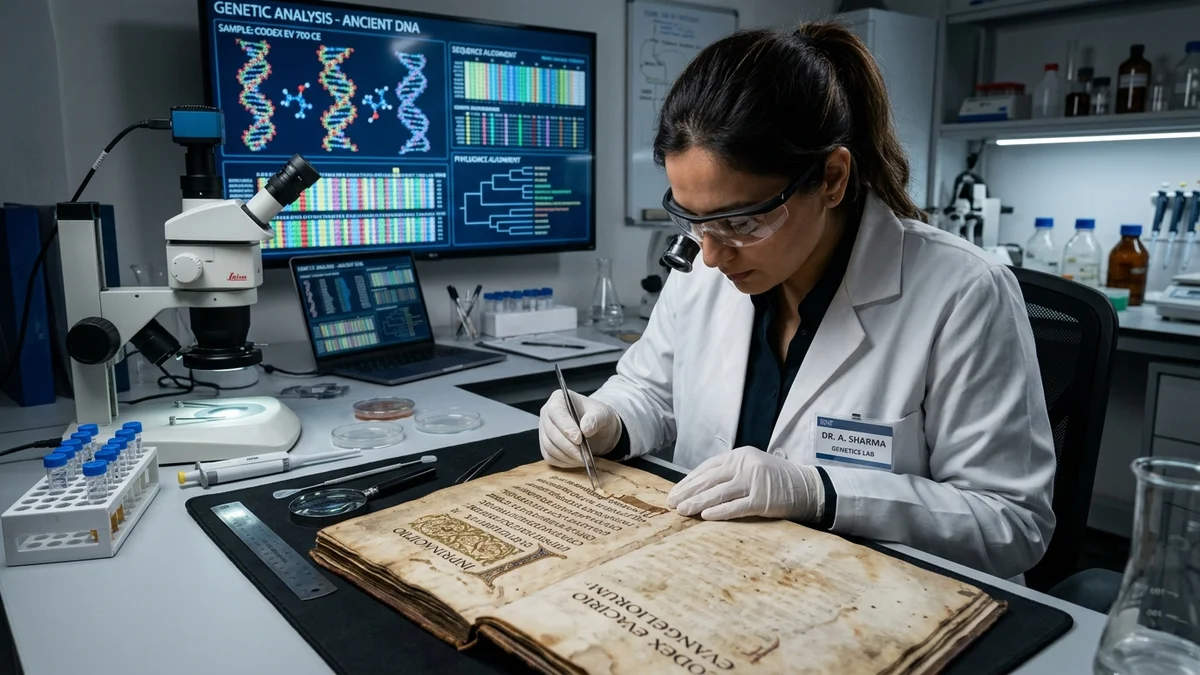
Recent genetic studies have revolutionized our understanding of Brazil's occupation: the genome of Luzia's skull (11,500 years old) revealed genetic connections with Australo-Melanesian populations — suggesting a migration wave older than that of traditional Amerindians. Researchers from USP and Harvard identified that at least three distinct migration waves populated South America. The DNA of current indigenous populations shows that these groups maintained impressive genetic diversity, adapting to environments as diverse as the Amazon, the Cerrado, and the coast.
Conclusion
Pre-colonial Brazil was a vibrant, populous, and technologically sophisticated territory. Indigenous peoples developed ingenious solutions to live in harmony with nature, created societies with levels of democracy that Europe didn't know, and accumulated knowledge that still impresses scientists today.
Knowing this history is fundamental to valuing indigenous contributions to Brazilian culture, combating prejudice, and respecting the peoples who keep alive a heritage of thousands of years.
Brazil's history didn't begin in 1500 — it goes back at least 15,000 years.
Frequently Asked Questions
How many indigenous people lived in Brazil before colonization?
Estimates vary significantly, from 2 million to 10 million indigenous people living in what is now Brazil before Portuguese arrival in 1500. The most accepted estimate is 3-5 million people belonging to approximately 1,000 different ethnic groups speaking over 1,300 languages. Within 100 years of contact, the indigenous population declined by 90% due to diseases (smallpox, measles, influenza), violence, and enslavement. Today, approximately 1.7 million Brazilians identify as indigenous.
Were indigenous Brazilians really cannibals?
Some groups, notably the Tupinambá, practiced ritual cannibalism (anthropophagy), but it was a complex spiritual practice, not a dietary habit. Warriors consumed parts of defeated enemies to absorb their strength and courage. The practice was highly ritualized with specific ceremonies. European colonizers greatly exaggerated cannibalism to justify conquest and enslavement. Most indigenous groups did not practice cannibalism at all. The famous account by Hans Staden (1557) remains one of the primary historical sources.
What technologies did indigenous Brazilians develop?
Indigenous Brazilians developed sophisticated technologies adapted to their environment: advanced agriculture (terra preta — engineered fertile soil that still exists today), complex fishing systems, medicinal plant knowledge (many modern medicines derive from indigenous discoveries), hammocks, rubber processing, canoe building, and sustainable forest management. The Kuikuro people built complex urban settlements in the Amazon with roads, bridges, and plazas. Recent archaeological discoveries show far more complex civilizations than previously believed.
Are there still uncontacted tribes in Brazil?
Yes, Brazil has the most uncontacted indigenous groups in the world — approximately 114 confirmed or suspected groups, mostly in the Amazon. FUNAI (Brazil's indigenous affairs agency) monitors these groups but follows a no-contact policy to protect them from diseases to which they have no immunity. Illegal logging, mining, and land invasion threaten these groups. Contact with outsiders has historically been devastating — some groups lost 90% of their population within years of first contact.
Sources: FAUSTO, Carlos. "Os Índios antes do Brasil" | RIBEIRO, Darcy. "O Povo Brasileiro" | NEVES, Eduardo Góes. "Arqueologia da Amazônia" | FUNAI | Heckenberger et al. (Science, 2003). Updated February 2026.
Read also: