🌍 Your knowledge portal
Tecnologia

The First One-Person Unicorn: How AI Swarms Build Billion-Dollar Companies Without Employees

📅 2026-09-12⏱️ 6 min read📝
The First One-Person Unicorn: How AI Swarms Build Billion-Dollar Companies Without Employees
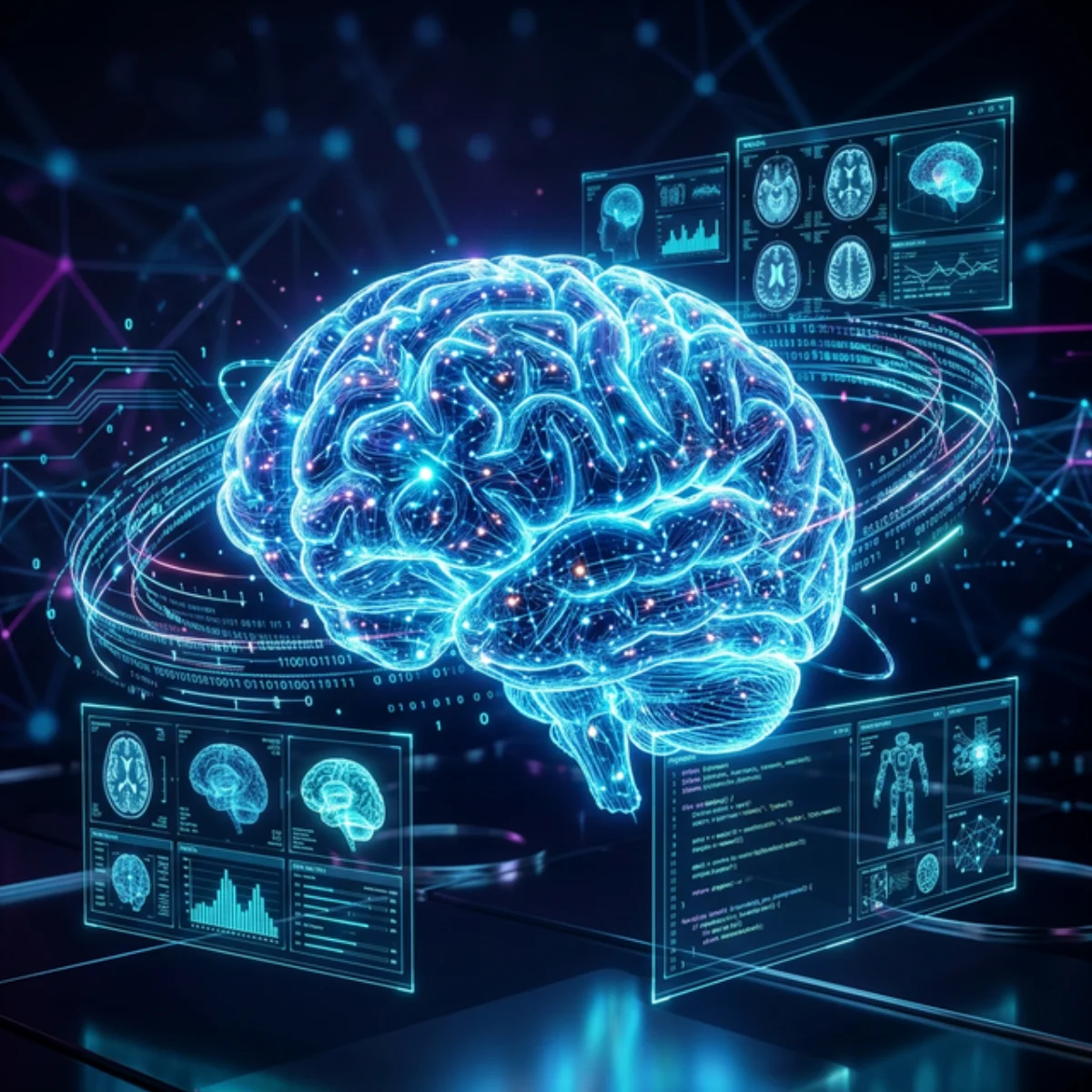
The First One-Person Unicorn: How AI Swarms Build Billion-Dollar Companies Without Employees — High-Fidelity Artistic Illustration created by artificial intelligence based on scientific research.
⚡

Quick Summary

Sam Altman's prediction comes to life as autonomous multi-agent swarms replace entire corporate hierarchies and reshape global digital capitalism. A quiet structural revolution is fundamentally transforming global entrepreneurship and classical macroeconomic theory.

Key Takeaways:

  • Historically, building a commercial enterprise of substantial scale required hiring hundreds of specialized professionals distributed across rigid management tiers.
  • Enabling a billion-dollar commercial enterprise operated by a solitary human operator required moving far beyond simple conversational prompt interfaces.
  • Tangible evidence that legacy corporate structures are undergoing profound erosion has become unmistakable across recent global technology enterprises.

Silicon Valley's Prediction and the Collapse of Corporate Hierarchies #

A quiet structural revolution is fundamentally transforming global entrepreneurship and classical macroeconomic theory. The forecast articulated by OpenAI chief executive Sam Altman, and echoed by industry leaders including Jensen Huang, envisioned the imminent rise of a billion-dollar enterprise run by a single human being. What once sounded like provocative futurist rhetoric has turned into the primary operational benchmark for venture capital monitored by the MIT Technology Review.

Historically, building a commercial enterprise of substantial scale required hiring hundreds of specialized professionals distributed across rigid management tiers. The rapid emergence of deep reasoning models and coordinated multi-agent architectures has dismantled this organizational requirement in knowledge-intensive industries. A single visionary founder can now orchestrate synthetic fleets of algorithms that execute complex engineering, enterprise sales, and financial management without internal bureaucratic friction.

This emerging organizational architecture decisively shifts economic value from headcount expansion toward the analytical clarity of the individual operator. The modern company ceases to function as an archipelago of siloed departments, evolving instead into a continuous data pipeline steered by artificial intelligence. Research published by the World Economic Forum confirms that this structural transition challenges traditional assumptions regarding employment generation, aggregate productivity, and capital accumulation.

+------------------------------------+----------------------------------+------------------------------------+
| Structural Business Dimension      | Traditional Tech Startup (SaaS)  | One-Person AI-Powered Unicorn      |
+------------------------------------+----------------------------------+------------------------------------+
| Human Headcount Requirement        | 250 to 1,200 Full-Time Employees | 1 Solo Founder / Chief Strategist  |
| Dominant Operational Expense       | Salaries, Benefits & Payroll Tax | Cloud Compute & AI Inference Tokens|
| Product Development Velocity       | Bi-Weekly Sprints Across Teams   | Closed Continuous Cycles in Minutes|
| Estimated Net Profit Margin        | 15% to 35% of Gross Revenue      | 75% to 92% of Operating Income     |
| Single Point of Failure & Liability| Distributed Across Executive Team| Fully Concentrated on Solo Founder |
+------------------------------------+----------------------------------+------------------------------------+

The Hidden Architecture of Autonomous Agentic Swarms #

Enabling a billion-dollar commercial enterprise operated by a solitary human operator required moving far beyond simple conversational prompt interfaces. Modern autonomous organizations rely on agentic swarms, which function as digital teams where each software agent receives specialized roles, specific tooling, and strict operational boundaries. Interaction no longer occurs primarily between humans and machines, but rather among dozens of algorithms debating optimal strategies, reviewing code, and executing workflows in real time.

Within this sophisticated operational framework, an architect agent designs software specifications while subordinate coding models implement and test application features continuously. Concurrently, specialized cybersecurity agents execute simulated red-team attacks and patch vulnerabilities automatically, reflecting principles detailed in the analysis of cybersecurity in 2027 and the quantum threat. If an infrastructure module experiences runtime instability, the intelligence ecosystem diagnoses the defect and rewrites the routine with complete operational autonomy.

The human operator transitions entirely away from routine daily tasks to serve as the supreme conductor of the synthetic infrastructure. Their strategic responsibility consists of validating fundamental product directives, approving critical financial expenditures, and establishing overall commercial objectives. The remainder of the operational lifecycle, spanning client prospecting, payment reconciliation, and infrastructure scaling, runs perpetually within the automated gears of code.

Early Milestones and the Emerging Economy of Extreme Leverage #

Tangible evidence that legacy corporate structures are undergoing profound erosion has become unmistakable across recent global technology enterprises. Generative media platform Midjourney achieved over two hundred million dollars in annual recurring revenue with a lean team of approximately forty people. Emerging automated workflow startups have attained multi-million-dollar private valuations while generating average revenue per employee ten times higher than historic enterprise benchmarks.

This extraordinary revenue-per-employee metric provides the clearest empirical validation of humanity entering an era of hyper-leverage. Previously, software companies required scores of entry-level engineers simply to maintain database schemas, resolve minor bugs, and handle user onboarding tickets. Today, autonomous multi-agent code generation platforms construct fully functional commercial software products in days, bypassing traditional layers of operational intermediaries.


The immediate consequence of this dramatic acceleration is the near-total elimination of fixed personnel overhead that historically burdened fledgling startups. Without expensive corporate headquarters, perpetual recruitment cycles, and sprawling administrative departments, gross operating margins reach historically unprecedented heights. The capital required to achieve global market relevance has dropped precipitously, concentrating decisive market power into the hands of focused individual strategists.

Cloud Infrastructure as the New Corporate Payroll #

Despite eliminating traditional wage structures, running a one-person unicorn involves substantial and continuous operational expenses. Replacing human labor with massive real-time artificial intelligence inferences shifts personnel budgets directly to hyperscale cloud infrastructure providers. Every cognitive reasoning cycle, generated code block, and customer interaction consumes billions of tokens and compute cycles across specialized graphics processing clusters.

In many modern agent-driven startups, monthly infrastructure bills payable to cloud computing vendors easily reach hundreds of thousands of dollars. This economic reality has firmly established the Silicon Valley observation that cloud computing has become the new corporate payroll. A solo enterprise's long-term solvency depends heavily on the founder's capacity to negotiate computational capacity and optimize the algorithmic efficiency of their agents.

Poorly configured agentic frameworks that enter recursive reasoning loops can deplete commercial cash reserves within weeks of unmonitored operation. Expertise in data architecture, memory retrieval caching, and deep context engineering becomes just as essential as traditional financial auditing. Founders who master the art of extracting maximum synthetic intelligence with minimum energetic expenditure build durable competitive moats in modern digital markets.

While the core technology enabling solo billion-dollar enterprises is already deployed, legal and institutional hurdles impose significant frictions on widespread adoption. Detailed governance research conducted by Stanford HAI demonstrates that corporate law frameworks worldwide were designed around the foundational premise that enterprises are governed by human collectives. Algorithmic agents possess no independent legal personality to sign binding commercial agreements or assume civil liability before judicial courts.

Consequently, all corporate liabilities, cybersecurity breaches, and regulatory privacy infractions fall directly upon the individual founder. In large enterprise business-to-business contracts, institutional procurement committees mandate extensive governance audits and proof of human operational oversight before signing agreements. The absence of a traditional management hierarchy naturally triggers apprehension within risk-averse procurement departments accustomed to dealing with established corporate structures.

To navigate these institutional barriers, solo founders are pioneering specialized asset protection insurance and crafting hybrid legal frameworks that formalize automated decisions. Evolving regulatory standards across leading financial jurisdictions will ultimately establish the statutory mechanisms needed to validate autonomous commercial transactions. The maturity of corporate jurisprudence will serve as the decisive factor determining whether synthetic enterprises expand universally or remain restricted to technical niches.

Social Implications and the Radical Concentration of Capital #

The emergence of multi-billion-dollar commercial empires governed by isolated individual operators introduces profound socioeconomic questions for modern societies. When monumental revenues concentrate into the hands of a single founder rather than circulating through wages to thousands of families, wealth distribution reaches historic extremes. Furthermore, junior entry-level positions, which young graduates historically relied upon to build professional careers, face imminent systemic obsolescence.

This structural transformation compels economists and sovereign governments to urgently reevaluate traditional fiscal models designed for industrial economies. Tax systems reliant primarily upon labor payroll deductions become inherently fragile when encountering highly profitable enterprises that employ virtually no human personnel. Funding public infrastructure and broad societal retraining initiatives will increasingly require revenue mechanisms derived directly from automated computational value creation.

The era of one-person unicorns marks a transformative chapter in the evolving relationship between technological capability, human labor, and wealth generation. The unprecedented leverage granted to individual founders by artificial intelligence eclipses the aggregate output of entire legacy corporate divisions. How modern civilization balances this extraordinary productivity with sustainable economic participation will determine the stability and prosperity of global society in the coming decades.

Multi-Agent Orchestration Architecture and Autonomous Unit Economics #

Operationalizing a billion-dollar enterprise managed by a single human founder relies on hierarchical multi-agent orchestration frameworks where specialized large language models execute software engineering, automated quality assurance, customer acquisition, and real-time financial hedging via standardized Model Context Protocol (MCP) tool interfaces. By replacing multi-tiered human departments with stateful agent swarms running continuously on elastic cloud GPU clusters, marginal operating costs scale sub-linearly with global revenue growth.

To prevent cascading hallucination loops or unauthorized treasury transactions, solo-unicorn architectures enforce deterministic cryptographic guardrails, automated formal verification of generated code, and hard-coded API spending caps across every autonomous sub-agent workflow.

🏷️ Tags:

#onepersonunicorn#samaltman#aiswarms#agenticswarms#aistartups#artificialintelligence2026#solobillionaire#corporateautomation

📢 Gostou deste artigo?

Compartilhe com seus amigos e nos conte o que você achou nos comentários!

❓Frequently Asked Questions

The term one-person unicorn designates an emerging corporate technology enterprise that achieves a verified one-billion-dollar valuation while retaining only a single human founder on its permanent payroll. Rather than hiring hundreds of employees to establish traditional organizational departments, the solo operator orchestrates coordinated swarms of autonomous artificial intelligence agents across cloud networks. These self-managing digital systems comprehensively oversee complex software engineering, round-the-clock customer support operations, continuous financial reconciliations, and global user acquisition campaigns with unprecedented operational velocity and negligible ongoing personnel overhead.
Autonomous artificial intelligence swarms operate through specialized deep neural networks interconnected via advanced distributed multi-agent frameworks such as AutoGen, LangGraph, and CrewAI. While one advanced agent handles core software architecture and automated code debugging, other autonomous models oversee corporate tax compliance, server capacity procurement, and client inquiries continuously without human intervention. The human founder acts strictly as a supreme executive strategist, establishing high-level business goals, approving capital investments, and authorizing budget thresholds while autonomous agents execute millions of operational micro-tasks every minute.
Despite their remarkable operational efficiency, solo enterprises face severe structural obstacles regarding corporate legal liability, institutional governance standards, and escalating computational inference expenses. Algorithmic software agents completely lack independent legal personality to execute binding commercial contracts, open corporate bank accounts, or assume judicial responsibility for third-party damages in global enterprise service delivery. Furthermore, the immense computational appetite required to run multi-agent swarms continuously transforms traditional payroll liabilities into massive monthly cloud computing invoices payable directly to major hyperscaler infrastructure providers worldwide.

Receba novidades!

Cadastre seu email e receba as melhores curiosidades toda semana.

🔒 Sem spam. Cancele quando quiser.

💬 Comentários (0)

Seja o primeiro a comentar! 👋

📚Related Articles

Soil-Powered Fuel Cells: Clean Energy from the GroundTecnologia

Soil-Powered Fuel Cells: Clean Energy from the Ground

Researchers have created fuel cells that use soil microbes to generate electricity, eliminating batteries in underground sensors.

⏱️8 minLer mais →
AI + Quantum Computer: What Changes for Our Reality?Tecnologia

AI + Quantum Computer: What Changes for Our Reality?

What would artificial intelligence look like running on a quantum computer? A detailed comparison with current AIs, advancements by 2026, and what to expect in the future.

⏱️10 minLer mais →
Claude Mythos: The AI Too Dangerous to ReleaseTechnology

Claude Mythos: The AI Too Dangerous to Release

Anthropic unveiled Claude Mythos, the AI that finds zero-day flaws in every major OS. Learn why it will never be released to the public. Find out more.

⏱️9 minLer mais →
OpenAI Raises $122 Billion and Becomes the World's Most Valuable CompanyTechnology

OpenAI Raises $122 Billion and Becomes the World's Most Valuable Company

AI startup reaches $852 billion valuation and surpasses Apple as most valuable company. IPO expected in 2026 could redefine tech market. Find out more.

⏱️8 minLer mais →
Sora Shut Down: The Rise and Fall of the Video Generator That Promised to Revolutionize HollywoodTechnology

Sora Shut Down: The Rise and Fall of the Video Generator That Promised to Revolutionize Hollywood

OpenAI shuts down Sora after Disney cancels $1 billion deal. Revolutionary AI video tool lasted only 14 months on the market. Explore the facts and details.

⏱️7 minLer mais →
AI in 2026: The 10 Breakthroughs Reshaping ScienceTechnology

AI in 2026: The 10 Breakthroughs Reshaping Science

Complete guide to Artificial Intelligence advances in 2026: autonomous agents, AI in healthcare, humanoid robots, AI coding, Edge AI, and the risks of this global transformation.

⏱️7 minLer mais →
Receba novidades no WhatsApp!