
Artificial Intelligence has stopped being a futuristic promise. In 2026, it IS the present — and it's redesigning every aspect of human civilization at a speed nobody predicted. From autonomous agents that make decisions on their own to humanoid robots working side by side with humans in factories, from revolutionary medical diagnostics to systems that write code better than most programmers, AI in 2026 is no longer a tool. It's an autonomous partner that's transforming what it means to be human in a world dominated by intelligent machines.
This article presents the 10 most impactful AI breakthroughs of 2026, with accessible technical analysis, platform comparisons, and an honest assessment of risks nobody is discussing enough.
1. Autonomous Agents: AI That Thinks, Acts, and Decides on Its Own
The defining theme of AI in 2026 is the rise of Agentic AI — intelligent systems capable of making decisions, executing complex multi-step tasks, and acting as digital collaborators with minimal human oversight.
Unlike the chatbots of 2023-2024, which answered questions, 2026 agents:
- Plan: Break complex objectives into sub-tasks
- Execute: Perform concrete actions (send emails, book flights, analyze data)
- Self-correct: Detect errors and adjust course automatically
- Learn: Improve with persistent memory between sessions

| Feature | 2024 | 2026 |
|---|---|---|
| Capability | Answer questions | Execute complete tasks |
| Memory | Zero (each chat is new) | Persistent between sessions |
| Autonomy | Low (needs step-by-step instructions) | High (defines sub-tasks on its own) |
| Self-correction | Limited | Internal feedback loops |
| Interaction | 1 agent ↔ 1 human | Multiple agents ↔ multiple systems |
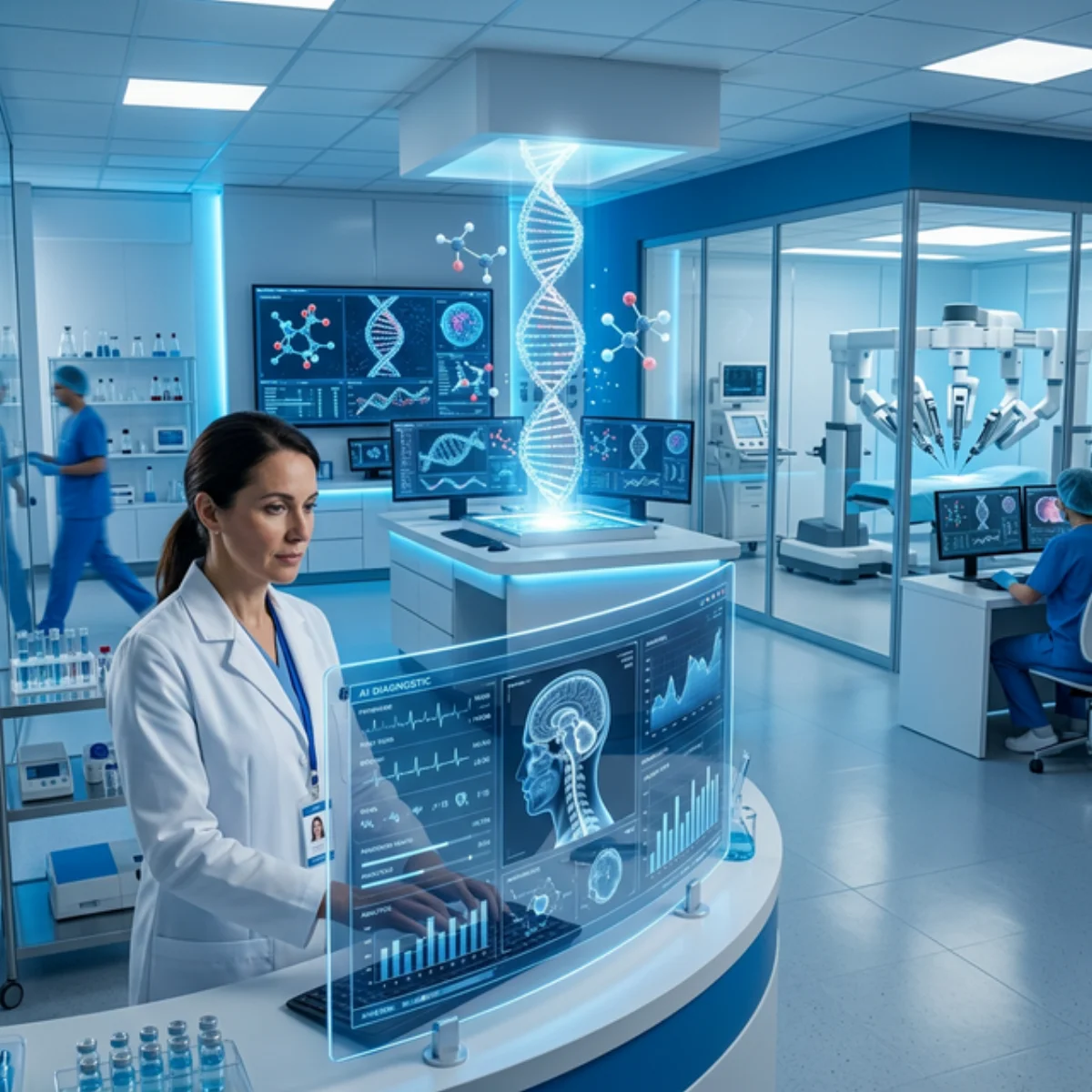
2. AI in Medicine: From Diagnosis to Cure
The HIV Breakthrough — CROI 2026
At the 2026 Conference on Retroviruses and Opportunistic Infections (CROI), groundbreaking results showed that a broadly neutralizing antibody (lotivibart), combined with cabotegravir injections, can maintain HIV viral suppression for at least one year. AI accelerated identification of this antibody by analyzing millions of protein structures.
Medical Applications in 2026
| Application | Status | Impact |
|---|---|---|
| AI symptom triage | Commercial | Millions filtered before reaching doctors |
| Imaging diagnostics | Regulator-approved | Cancer detection at 97%+ accuracy |
| Drug discovery | Accelerated 10x | AI generates hypotheses, simulates molecular interactions |
| Treatment planning | Pilot | Personalized treatments based on genomics |
3. Humanoid Robots: AI Gets a Body
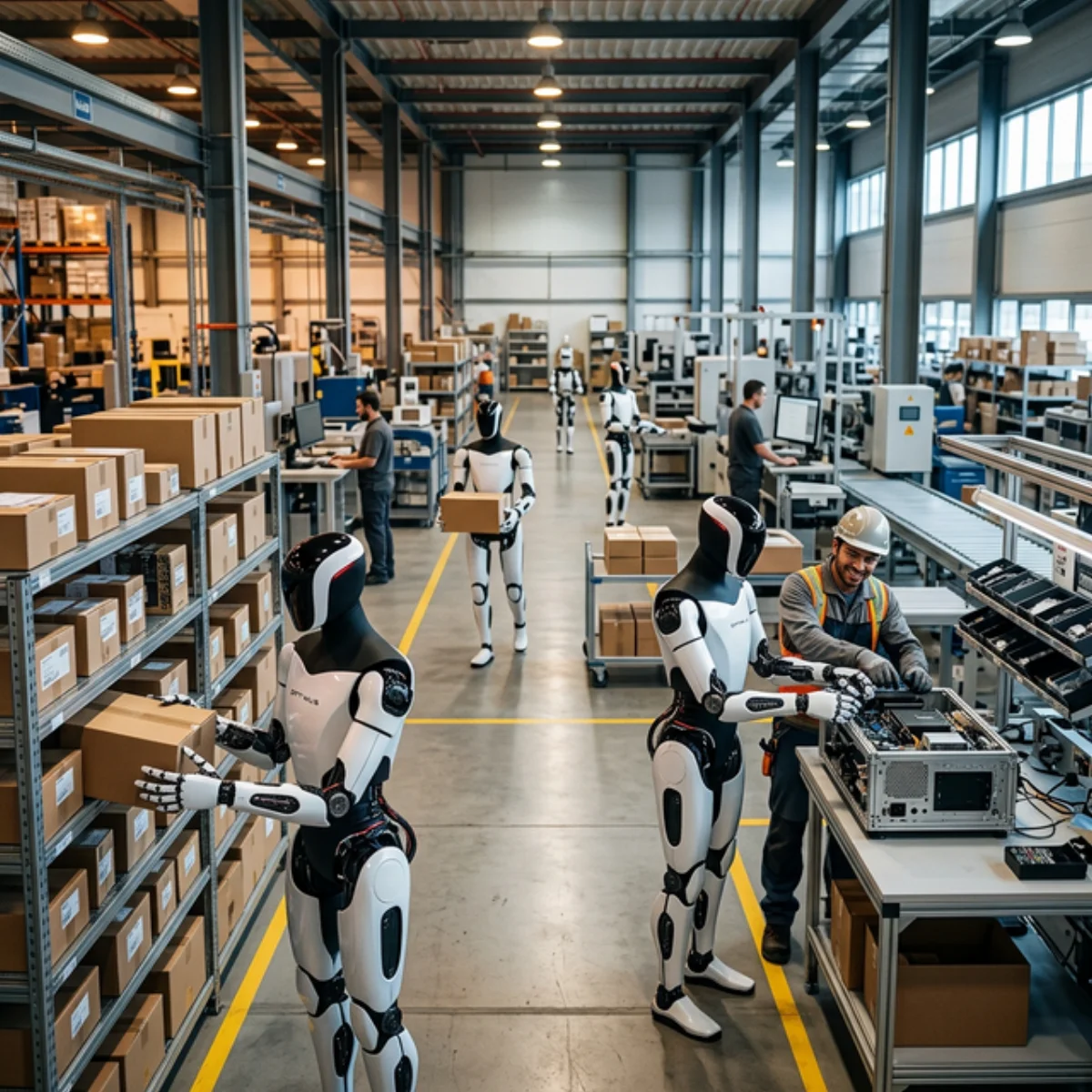
The Physical AI revolution is taking artificial intelligence from the digital world into the physical one.
| Robot | Company | Capability | Status 2026 |
|---|---|---|---|
| Optimus Gen 2 | Tesla | Fine manipulation, bipedal walking, AI vision | Limited production |
| Atlas | Boston Dynamics | Parkour, heavy manipulation, autonomy | Demonstration |
| Figure 02 | Figure AI | Warehouse work, human interaction | Factory pilot |
| 1X EVE | 1X Technologies | Security, indoor logistics | Commercial |
| Digit | Agility | Box loading, navigation | Amazon tests |
4. AI and Coding: The 2026 Programmer Has a Co-Pilot
| Tool | Company | Base Model | Highlight |
|---|---|---|---|
| GitHub Copilot X | Microsoft/GitHub | GPT-5 | IDE integration, code agent |
| Cursor | Cursor Inc. | Multi-model | AI-first editor |
| Devin | Cognition AI | Proprietary | "First AI software engineer" |
| Gemini Code Assist | Gemini Ultra | Google Cloud integration |
Market impact: Estimates indicate AI coding is reducing development time by 30-50%. This doesn't eliminate programmers — it transforms them from code writers into AI supervisors.
5. Edge AI and TinyML: Intelligence in Your Pocket
AI processing is increasingly migrating to the device itself (Edge AI), allowing powerful ML models to run on small, low-power microcontrollers.
| Advantage | Explanation |
|---|---|
| Privacy | Data never leaves the device |
| Zero latency | Instant processing, no internet needed |
| Works offline | AI operational in disconnected areas |
| Reduced cost | No cloud servers needed |
6. The Model Wars: GPT-5 vs Gemini Ultra 2 vs Claude 4 vs LLaMA 4
| Model | Company | Parameters | Context Window | Highlight |
|---|---|---|---|---|
| GPT-5 | OpenAI | ~1.8T | 256K tokens | Complex reasoning, multimodal |
| Gemini Ultra 2 | ~1.5T | 2M tokens | Largest context, Google integration | |
| Claude 4 | Anthropic | ~1.2T | 500K tokens | Safety, long reasoning |
| LLaMA 4 | Meta | ~400B | 128K tokens | Open source, customizable |
| Grok-3 | xAI | ~500B | 128K tokens | Real-time data (X/Twitter) |
7. AI Video Generation and Synthetic Data
- Sora 2 (OpenAI): Videos up to 3 minutes with character consistency
- Veo 2 (Google): Video generation integrated with YouTube
- Synthetic data: Companies use AI to create training datasets without real data, protecting privacy
8. The Dark Side: Deepfakes and Governance
The "viral 19-minute 34-second video" that dominated searches in 2026 was a coordinated hoax using AI deepfakes — designed for financial fraud and data theft.
| Aspect | Status |
|---|---|
| Regulation | EU AI Act in implementation, US developing framework |
| Auditing | Mandatory oversight committees for AI companies |
| Transparency | Disclosure required when content is AI-generated |
9. AI Accelerating Science
| Area | AI Contribution |
|---|---|
| Proteins | AlphaFold 3 predicts structures with atomic accuracy |
| Climate | AI models simulate climate scenarios 1000x faster |
| Materials | Discovery of new superconductors and batteries |
| Astronomy | Identification of habitable exoplanets |
10. Employment Impact: Winners and Losers
Most Threatened Professions
| Profession | Risk (1-10) | Reason |
|---|---|---|
| Telemarketing/Call center | 10 | AI agents already replace 80%+ |
| Simple translators | 9 | AI translates at human quality |
| Data entry | 9 | Full automation |
| Basic accounting | 8 | AI handles standard bookkeeping |
Professions on the Rise
| Profession | Demand | Why |
|---|---|---|
| Prompt Engineer | Explosive | Optimize human-AI interaction |
| AI Security Specialist | High | Protect against AI threats |
| AI Model Trainer | High | Fine-tuning and RLHF |
| UX Designer for AI | Growing | Human-agent interfaces |
AI and Jobs: The Great Disruption
The most controversial question of 2026 is whether AI will create more jobs than it destroys. Early data suggests a nuanced picture: AI is displacing routine cognitive tasks faster than expected while creating new roles that did not exist two years ago. Prompt engineers earn USD 15-25K per month. AI ethics specialists are in 400 percent higher demand. Data curators and AI supervisors are emerging as critical roles.
The real challenge is speed: AI adoption happens in weeks to months while workforce requalification takes years. Brazil produces approximately 30,000 IT professionals annually but the demand for AI-qualified workers is estimated at 200,000. This 170,000 annual gap means most displaced workers will not have easy access to careers in the new digital economy without massive public and private investment in accessible retraining programs.
AI Regulation in 2026
The EU AI Act took effect in 2025, creating the worlds first comprehensive AI regulatory framework. China has its own rules focused on content control. The US remains largely unregulated at the federal level. Brazil passed its AI regulatory framework in late 2025. The global regulatory patchwork creates compliance challenges for companies operating across borders — but also drives innovation in AI safety and transparency.
Conclusion: The Year AI Became Inevitable
2026 is not the year AI "arrived" — it was already here. It's the year it became impossible to ignore. The question is no longer "will AI change the world?" — it's "are we prepared for the world it's creating?"
The answer, honestly, is: not yet. But we're learning. And the speed of that learning, ironically, is being accelerated by AI itself.
References and Sources


