🌍 Your knowledge portal
Tecnologia

The Career Shock (2027–2032): Endangered Professions and the Collapse of Entry-Level Jobs with AI

📅 2026-09-13⏱️ 6 min read📝
The Career Shock (2027–2032): Endangered Professions and the Collapse of Entry-Level Jobs with AI
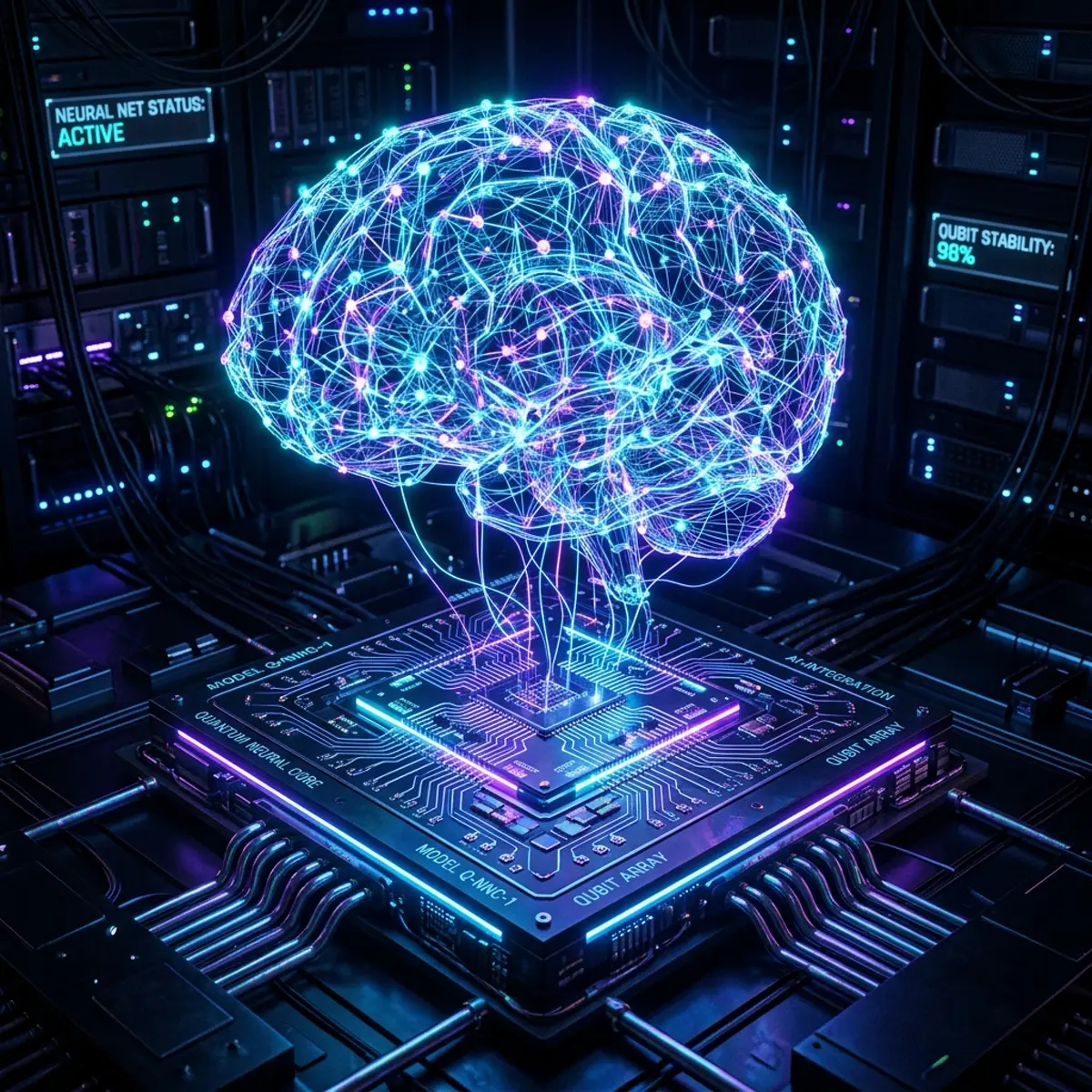
The Career Shock (2027–2032): Endangered Professions and the Collapse of Entry-Level Jobs with AI — High-Fidelity Artistic Illustration created by artificial intelligence based on scientific research.
⚡

Quick Summary

Artificial intelligence eliminates junior positions, transforms classical corporate careers, and creates a historic dilemma for the next generation of workers. A profound structural transformation is reshaping the foundations of the global labor market and altering the transition from academia to professional life.

Key Takeaways:

  • Historically, hiring junior talent represented the foundational engine of institutional mentorship, internal skill building, and organizational renewal within competitive enterprises.
  • Cognitive automation disproportionately impacts white-collar professions that rely primarily upon standardized analytical workflows and formulaic data processing.
  • Eliminating entry-level positions has generated one of the most concerning strategic bottlenecks in modern organizational governance: the disruption of professional leadership succession.

The Silent Collapse of Entry-Level Employment and the New Corporate Reality #

A profound structural transformation is reshaping the foundations of the global labor market and altering the transition from academia to professional life. The rapid expansion of generative artificial intelligence and autonomous agent swarms has triggered an unprecedented contraction in entry-level hiring across major corporations. Research published by the World Economic Forum confirms that early-career positions historically reserved for recent graduates are being phased out at an extraordinary rate.

Historically, hiring junior talent represented the foundational engine of institutional mentorship, internal skill building, and organizational renewal within competitive enterprises. Young professionals handled essential introductory duties, including spreadsheet compilation, client communication triage, and basic quality testing, while steadily absorbing core industry expertise. With deep-reasoning neural networks reaching commercial maturity, these repetitive tasks are now completed in milliseconds at virtually zero marginal operating cost.

This corporate pivot shifts personnel budgets decisively away from junior team development toward massive high-performance cloud compute infrastructure. Leading enterprises increasingly bypass extensive graduate training cohorts to prioritize lean squads of seasoned operators who can orchestrate complex algorithmic networks. Ongoing industry analyses monitored by the MIT Technology Review emphasize that this dynamic fundamentally rewrites the traditional playbook for modern career longevity.

+------------------------------------+----------------------------------+------------------------------------+
| Labor Market Structural Dimension  | Classical Paradigm (Up to 2024)  | Post-AI Landscape (2027 to 2032)   |
+------------------------------------+----------------------------------+------------------------------------+
| Graduate Onboarding Gateway        | Mass Internships & Junior Roles  | Near-Total Elimination of Juniors  |
| Handling of Routine Analysis       | Executed by Entry-Level Analysts | Automated by Autonomous AI Agents  |
| Highly Resilient Professions       | General Admin & Junior Coding    | Skilled Trades, Nursing, AI Ethics |
| Corporate Workforce Architecture   | Sprawling Hierarchical Pyramids  | Lean Squads of System Orchestrators|
| Most Prized Individual Skill       | Rapid Execution of Given Tasks   | Systems Thinking & Critical Auditing|
+------------------------------------+----------------------------------+------------------------------------+

Most Vulnerable Career Tracks: From Junior Coding to Financial Analysis #

Cognitive automation disproportionately impacts white-collar professions that rely primarily upon standardized analytical workflows and formulaic data processing. In software engineering, autonomous coding agents write, debug, and document production-grade routines with greater speed and fewer errors than novice developers. Roles dedicated solely to boilerplate script maintenance, basic bug triage, and standard database query management face immediate structural deflation across the tech sector.

In corporate law and accounting, preliminary case research, routine contract review, and ledger reconciliation have been completely absorbed by automated tools. Junior financial analysts, who previously spent late nights building manual forecasting spreadsheets, now watch autonomous intelligence models generate complex multi-scenario projections instantly. Any intellectual function where operating rules can be cleanly articulated and converted into programmatic logic is experiencing rapid algorithmic compression.

This contracting pressure extends deeply into creative and communications fields, including basic advertising copywriting, routine commercial translation, and auxiliary digital layout design. Entire corporate departments handling tier-one customer service and digital helpdesks have been replaced by empathetic conversational models operating uninterrupted around the clock. Professionals whose primary value proposition consisted of mechanical information processing are seeing their positions permanently eliminated from modern corporate hierarchies.

The Talent Dilemma: If Nobody Hires Juniors, Who Becomes Senior? #

Eliminating entry-level positions has generated one of the most concerning strategic bottlenecks in modern organizational governance: the disruption of professional leadership succession. Without junior apprenticeships where workers can experiment, make manageable mistakes, and build practical operational intuition, organic senior talent pipelines are severely broken. Prominent researchers at Stanford HAI describe this alarming systemic development as the collapse of the corporate career ladder.

If enterprises fail to onboard and nurture emerging talent today, they will encounter severe deficits of experienced leaders capable of strategic judgment over the next decade. Executive competence does not emerge from simply inputting prompts into neural models, but from weathering genuine crises, negotiations, and organizational friction. Blindly relying on comprehensive algorithmic execution while abandoning junior mentorship creates critical structural vulnerabilities across global corporate ecosystems.


Corporate boards and forward-thinking executives are actively exploring ways to reinvent internship programs to focus heavily on strategic orchestration and algorithmic oversight. The fundamental challenge involves convincing cost-focused investors to fund long-term human development rather than extracting short-term efficiency gains from automated tools. This ongoing governance debate parallels trends examined in the report on one-person unicorns and zero-employee enterprises.

The Reskilling Pivot and the Revaluation of Physical Trades and Human Care #

While routine white-collar entry jobs experience sharp wage stagnation, an unexpected counter-trend is propelling professions requiring physical interaction in the physical world. Electricians, industrial mechanics, skilled plumbers, grid maintenance technicians, and precision carpenters are commanding historically unprecedented wage premiums. Autonomous humanoid robots capable of fine motor agility and dynamic spatial navigation remain prohibitively expensive and economically unfeasible for widespread commercial deployment.

The inherent unpredictability of construction jobsites, complex plumbing infrastructure, and aging electrical grids insulates manual technicians from rapid algorithmic replacement. Furthermore, healthcare occupations rooted in dedicated human care, including bedside nursing, physical therapy, and mental health counseling, experience soaring, irreplaceable demand. Genuine human empathy, tactile dexterity, and authentic social resonance form an insurmountable barrier against pure generative computational systems.

Consequently, the global job market is witnessing a historic realignment of social prestige and financial security across diverse career categories. Young students are increasingly questioning traditional four-year liberal arts degrees in favor of specialized technical certifications that offer direct entry into tangible industries. The emerging equilibrium between digital intelligence tools and physical craftsmanship is drafting a completely revised map of durable economic stability.

Strategic Career Paths Leading the Global Market from 2027 to 2032 #

This systemic economic transition does not signify the absolute end of employment, but rather a massive migration toward supervision, security, and algorithmic integration. Among the highest-demand careers projected over the next five years are autonomous system safety auditors and corporate AI compliance specialists. Professionals who master the risks of rogue agent swarms directly align with the frameworks detailed in cybersecurity in 2027 and the quantum threat.

Another rapidly accelerating discipline is context engineering and distributed multi-agent systems orchestration, which translates high-level corporate visions into autonomous execution pipelines. Synthetic product architects, vector database managers, and human-in-the-loop interaction designers are becoming indispensable leaders across diverse global industries. The most valued corporate operator is no longer the fast typist, but the systems thinker who deeply grasps the boundaries of synthetic reasoning.

Within life sciences and medicine, computational biologists proficient with platforms like AlphaFold are driving revolutionary breakthroughs in personalized cancer therapies and molecular design. The powerful intersection of algorithmic biology, materials informatics, and generative neural networks is creating high-growth interdisciplinary careers with compensation records. Workers who fuse deep domain-specific knowledge with advanced mastery of autonomous intelligence tools will capture the most rewarding opportunities.

Broader Social Implications and the Urgent Overhaul of Education Systems #

The extraordinary velocity of this professional disruption presents monumental challenges to educational institutions, labor unions, and sovereign governments worldwide. Traditional universities continue graduating students with outdated curricula designed for an industrial-era knowledge economy that no longer exists in corporate practice. Without fundamental restructuring of secondary and tertiary education toward rigorous systems thinking, real-world problem solving, and digital literacy, societal inequality will widen dramatically.

National governments across developed and developing economies are launching urgent policy debates regarding subsidized workforce reskilling initiatives and transitional labor protections. High-level proposals for sovereign automation taxes and universal basic income pilots are gaining serious momentum across international economic forums. Financing modern pension obligations and robust social safety nets will inevitably demand innovative fiscal mechanisms that capture value generated by machine intelligence.

The trajectory of work between 2027 and 2032 will ultimately be shaped not merely by technical breakthroughs, but by humanity's collective capacity for institutional adaptation. Artificial intelligence forces societies to fundamentally reconsider the relationship between productive labor, economic distribution, and individual human dignity. Proactively mastering the dynamics of this profound career shock is the indispensable first step toward building resilient and fulfilling professional journeys.

🏷️ Tags:

#futureofwork#aithreatenedjobs#entryleveljobsai#jobmarket2027#technologyunemployment#futurecareers#artificialintelligenceworkforce

📢 Gostou deste artigo?

Compartilhe com seus amigos e nos conte o que você achou nos comentários!

❓Frequently Asked Questions

Entry-level roles are experiencing rapid contraction because advanced reasoning models and autonomous digital agents execute routine analytical tasks with unprecedented speed and negligible marginal costs. Traditional assignments that once served as vital onboarding pathways for recent graduates, such as introductory software debugging, preliminary legal discovery, standard copywriting, and basic spreadsheet reconciliations, are now seamlessly absorbed by enterprise artificial intelligence platforms. Confronted with this dramatic productivity leap, multinational organizations have substantially curtailed junior recruitment pipelines, concentrating capital almost exclusively on hiring senior strategists capable of auditing autonomous algorithmic workflows.
The most vulnerable occupations to algorithmic displacement are concentrated in standardized intellectual workflows, routine administrative coordination, introductory customer support, and boilerplate software programming tasks. Corporate functions such as front-line call center assistance, initial credit approval documentation, basic paralegal brief writing, and straightforward database management are already witnessing steep declines in human headcount globally. In sharp contrast, careers demanding physical adaptability in unpredictable environments, hands-on clinical healthcare, rigorous artificial intelligence ethics auditing, and high-stakes executive leadership demonstrate sustained resilience against deep algorithmic automation.
To succeed in the post-automation economy, young professionals must transition decisively from routine technical task executors to strategic orchestrators of sophisticated digital systems. It is essential to master multi-agent workflow architectures, cultivate rigorous critical thinking to detect subtle data hallucinations, and refine irreplaceable human interpersonal competencies such as empathetic negotiation and corporate diplomacy. Furthermore, developing a continuous capacity to frame complex interdisciplinary problems and supervise autonomous algorithmic agents will ensure enduring professional relevance as the market value of repetitive intellectual labor continues to plummet exponentially.

Receba novidades!

Cadastre seu email e receba as melhores curiosidades toda semana.

🔒 Sem spam. Cancele quando quiser.

💬 Comentários (0)

Seja o primeiro a comentar! 👋

Receba novidades no WhatsApp!