🌍 Your knowledge portal
Tecnologia

The AI Cure Revolution (2027–2032): How Digital Biology Promises to Overcome Cancer and Rare Diseases in the Next 5 Years

📅 2026-09-14⏱️ 6 min read📝
The AI Cure Revolution (2027–2032): How Digital Biology Promises to Overcome Cancer and Rare Diseases in the Next 5 Years
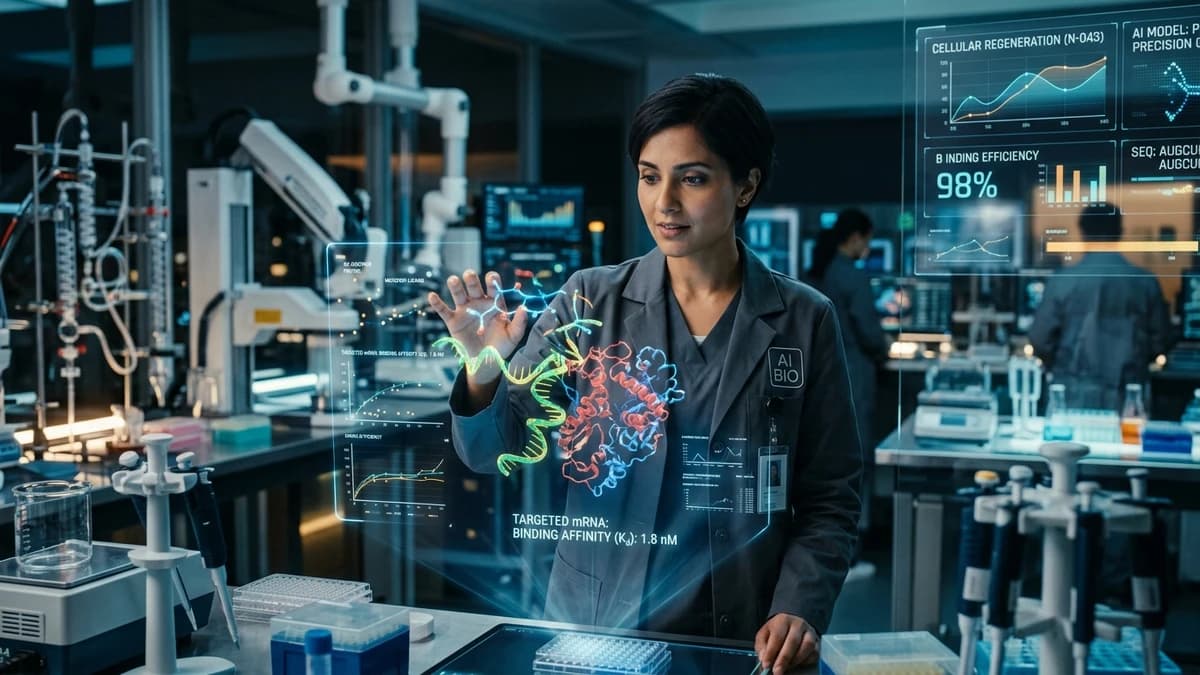
The AI Cure Revolution (2027–2032): How Digital Biology Promises to Overcome Cancer and Rare Diseases in the Next 5 Years — High-Fidelity Artistic Illustration created by artificial intelligence based on scientific research.
⚡

Quick Summary

Advanced neural networks, tailor-made mRNA vaccines, and genomic foundation models accelerate the eradication of historically intractable complex illnesses. A monumental scientific revolution is redefining the frontiers of contemporary medicine, transforming biology into an exact, programmable information science.

Key Takeaways:

  • Historically, classical pharmacology depended on synthesizing and testing millions of random chemical compounds against living cellular cultures in hopes of discovering favorable therapeutic interactions.
  • The introduction and clinical integration of AlphaFold 3 represents the most profound milestone in modern structural biology.
  • Within clinical oncology, the convergence of rapid genetic sequencing and deep learning models inaugurates an era of hyper-personalized immunotherapy.

The Frontier of Digital Biology and the End of Empirical Trial and Error #

A monumental scientific revolution is redefining the frontiers of contemporary medicine, transforming biology into an exact, programmable information science. The historical reliance upon slow empirical trial-and-error chemistry, which consumed billions of dollars and decades to produce a single medication, is giving way to predictive biocomputation. Groundbreaking findings published by the National Institutes of Health prove that artificial intelligence architectures identify therapeutic molecular targets and simulate biological affinities with unprecedented accuracy.

Historically, classical pharmacology depended on synthesizing and testing millions of random chemical compounds against living cellular cultures in hopes of discovering favorable therapeutic interactions. This grueling approach resulted in failure rates exceeding ninety percent during early human clinical trial phases. With the emergence of advanced deep-reasoning neural networks, biomedical researchers no longer search blindly in the dark, designing tailored pharmaceuticals directly from the foundational principles of atomic physics.

This decisive paradigm shift converts drug discovery from a stochastic screening gamble into an engineering discipline that is predictable, scalable, and remarkably cost-effective. Deep learning frameworks model how pathogenic proteins bind with synthetic therapeutic ligands in minutes. Systematic industry monitoring by the MIT Technology Review underscores that this transition will dramatically accelerate practical cures for complex diseases previously deemed untreatable over past decades.

+------------------------------------+----------------------------------+------------------------------------+
| Medical Discovery Dimension        | Classical Pharma Paradigm        | AI-Driven Digital Biology          |
+------------------------------------+----------------------------------+------------------------------------+
| Therapeutic Target Identification  | 4 to 7 Years of Lab Trials       | Hours via Neural Docking Models    |
| Clinical Trial Success Rates       | Under 10% Final FDA Approval     | Projected Above 60% with Twins     |
| Standard Oncology Protocol         | Generic Chemotherapy Regimens    | Personalized Patient mRNA Vaccines |
| Molecular Therapeutics Design      | Limited to Known Natural Scaffolds| Novel De Novo Engineered Proteins  |
| Average Development Cost per Drug  | $1.0 to $2.5 Billion Dollars     | Estimated Reduction up to 75%      |
+------------------------------------+----------------------------------+------------------------------------+

AlphaFold 3 and the Design of De Novo Synthetic Proteins #

The introduction and clinical integration of AlphaFold 3 represents the most profound milestone in modern structural biology. Engineered to predict three-dimensional atomic structures across proteins, DNA, RNA, ligands, and critical chemical modifications, this model resolved a scientific puzzle that challenged biochemists for over half a century. This breakthrough grants scientists the capability to visualize exactly how the molecular machinery of life docks and executes intracellular signaling.

However, the most thrilling frontier of digital biology has already progressed beyond structure prediction into de novo protein design. Generative neural models trained on extensive genomic datasets can draft entirely original macromolecular sequences that never existed in terrestrial evolutionary history. These custom-designed synthetic proteins possess atomic geometries engineered to neutralize mutating viral pathogens, halt chronic autoimmune inflammation, and stimulate tissue regeneration with unmatched biological precision.

This unprecedented ability to fabricate artificial biological tools closely mirrors trends detailed in the career shock and the transformation of technological work, where computational biologists lead modern scientific discovery. The biomedical facility of the future operates via algorithmic pipelines that issue digital blueprints directly to automated robotic synthesis stations. Artificial intelligence thus establishes the operational groundwork to design biological antidotes with the same systematic fluidity with which software engineers write code.

Custom mRNA Vaccines and Targeted Cancer Immunotherapies #

Within clinical oncology, the convergence of rapid genetic sequencing and deep learning models inaugurates an era of hyper-personalized immunotherapy. Every malignant tumor exhibits a unique mutational profile composed of hundreds of specific genetic abnormalities distinguishing it from healthy somatic cells. By sequencing an individual patient's tumor genome, specialized neural algorithms rapidly identify neoantigens with the highest likelihood of provoking an aggressive, self-sustaining immune attack.

Leveraging these computational evaluations, modern biotechnology platforms formulate and synthesize personalized therapeutic mRNA vaccines in mere weeks. Once administered, these tailored molecules train the patient's endogenous cytotoxic T-lymphocytes to systematically identify and eradicate primary tumor sites and circulating metastases. Landmark clinical findings published in Nature demonstrate steep reductions in recurrence rates for difficult-to-treat malignancies, such as advanced melanomas and pancreatic ductal adenocarcinomas.

This personalized paradigm eliminates the debilitating systemic side effects associated with legacy chemotherapy, which indiscriminately poisons healthy replicating cells throughout the body. Cancer care transitions away from standardized, one-size-fits-all protocols into an intelligent, guided missile calibrated exclusively to the distinct molecular genetics of each patient. Over the 2027 to 2032 horizon, oncologists anticipate transforming formerly lethal malignant diagnoses into manageable, definitively curable chronic conditions.

The Global Battle Against Superbugs and Synthetic Antibiotics #

Another critical front where artificial intelligence is urgently deployed involves countering the escalating global crisis of antimicrobial resistance. The World Health Organization repeatedly warns that drug-resistant superbugs could cause millions of fatalities annually if novel classes of effective antibiotics remain undiscovered. Researchers at the Massachusetts Institute of Technology recently proved that deep learning classifiers can evaluate billions of non-traditional chemical compounds within days.

These predictive models successfully discovered groundbreaking therapeutic molecules with unconventional mechanisms of action, notably halicin and abaucin, capable of eradicating deadly multi-drug-resistant pathogens. These chemical agents compromise the structural integrity of bacterial cell membranes through pathways so novel that microorganisms cannot readily evolve biological defenses. Comprehensive laboratory validations confirmed the total clearance of clinical superbug strains resistant to every existing conventional antibiotic known to modern medical practice.

The velocity of this algorithmic screening eclipses the manual laboratory capacity of human pharmaceutical research teams by several orders of magnitude. This tremendous efficiency parallels the agentic automation deployed against digital threats in cybersecurity and autonomous defense systems. By anticipating microbial mutations before they manifest in clinical environments, artificial intelligence constructs a proactive pharmacological firewall shielding humanity from devastating future epidemics.

Cellular Digital Twins and the Revolution in Clinical Trials #

The regulatory validation of novel therapeutics is undergoing a profound metamorphosis driven by the development of biological cellular digital twins. Through sophisticated multi-scale neural simulations, biomedical engineers construct accurate in silico representations of human metabolic pathways, vascular networks, and vital organ systems. These computational models allow researchers to test therapeutic efficacy and uncover potential toxic side effects long before initiating animal or human trials.

By simulating absorption, distribution, metabolism, and excretion across virtual replicas of livers, hearts, and kidneys, algorithms swiftly identify toxic drug candidates during early research. This computational refinement dramatically shortens regulatory clearance timelines and slashes the astronomical capital expenditures historically incurred during preclinical trial stages. Furthermore, it significantly curbs historical reliance on animal testing, elevating biomedical innovation to the highest ethical and safety benchmarks.

Over the next five years, advanced in silico clinical cohorts will forecast therapeutic efficacy across genetically diverse global populations. This predictive capability substantially improves the safety profile of experimental therapies prior to widespread international distribution. Medicine is rapidly entering an era where failures occur safely inside digital simulations, saving human lives and accelerating the delivery of vital cures to patients globally.

Ethical Imperatives, Global Access, and the Horizon of Human Longevity #

While the promise of algorithmically engineered medicine is undeniably transformative, the accompanying ethical, economic, and social challenges demand urgent societal engagement. The initial manufacturing and deployment expenses of personalized gene therapies and bespoke mRNA treatments could prove cost-prohibitive for public healthcare infrastructures worldwide. If these medical marvels remain restricted to affluent elites, artificial intelligence could create a permanent, catastrophic biological chasm in health and life expectancy across society.

International drug regulatory agencies are establishing dynamic regulatory protocols to authorize pharmaceuticals designed on demand for individual patient profiles. Regulators must solve the complex challenge of verifying the safety of custom treatments without imposing multi-year bureaucratic delays that render bespoke therapies obsolete. Addressing this imperative necessitates institutional agility, transparent algorithmic auditing standards, and multidisciplinary bioethics committees to safeguard patient well-being without throttling biomedical velocity.

The evolution of medicine between 2027 and 2032 will ultimately determine whether humanity harnesses artificial intelligence to achieve equitable health and shared human dignity. Digital biology promises not merely to prolong chronological life expectancy, but to eradicate congenital defects, chronic agony, and debilitating degenerative ailments that have burdened our species. Embracing this scientific renaissance with equitable vision and social conscience represents the definitive technological triumph of our generation.

🏷️ Tags:

#aimedicalcures#digitalbiology2027#alphafold3#personalizedcancervaccines#syntheticantibioticsai#cellularlongevity#artificialintelligencehealthcare

📢 Gostou deste artigo?

Compartilhe com seus amigos e nos conte o que você achou nos comentários!

❓Frequently Asked Questions

Artificial intelligence fundamentally transforms modern pharmacology by replacing the notoriously slow process of manual trial-and-error laboratory chemistry with highly accurate, large-scale biocomputational simulations. Advanced deep neural architectures, such as AlphaFold 3 and specialized genomic language models, predict the complex three-dimensional docking mechanics between candidate molecules and pathogenic target proteins in mere milliseconds. This unprecedented computational throughput enables researchers to screen billions of virtual chemical scaffolds in days, identifying exceptionally stable therapeutic drug candidates with minimal predicted toxicity before embarking on expensive physical laboratory wet-lab synthesis.
Personalized oncology vaccines operate by conducting high-depth genetic sequencing of an individual patient's clinical biopsy to identify unique cellular tumor mutations known as neoantigens. Deep learning algorithms thoroughly evaluate these distinct molecular variants to pinpoint specific protein epitopes most capable of triggering a potent, targeted immune response against aggressive malignant cells. Once selected by predictive neural models, custom mRNA sequences are synthesized within weeks, training the patient's own cytotoxic T-lymphocytes to systematically eliminate primary tumors and circulating microscopic metastases while sparing surrounding healthy tissues.
Despite rapid laboratory breakthroughs, democratizing these advanced biological therapies faces immense structural obstacles concerning individualized manufacturing expenses and extensive human clinical validations. Global drug regulatory authorities like the FDA and EMA still require rigorous multi-year clinical trials to verify that algorithmically engineered compounds cause no unforeseen long-term immunological complications or off-target effects. Moreover, there is an acute ethical risk that bespoke cancer immunotherapies and regenerative longevity interventions will remain exclusive luxuries for affluent populations, dangerously exacerbating global healthcare disparities between socioeconomic classes.

Receba novidades!

Cadastre seu email e receba as melhores curiosidades toda semana.

🔒 Sem spam. Cancele quando quiser.

💬 Comentários (0)

Seja o primeiro a comentar! 👋

Receba novidades no WhatsApp!