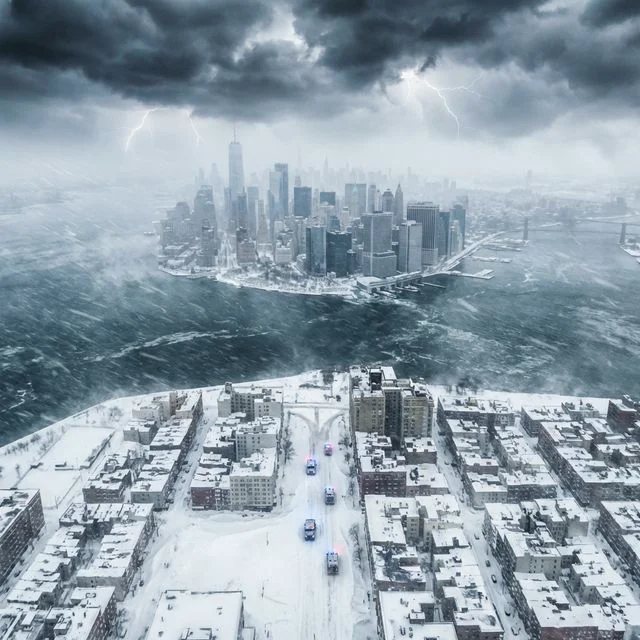
On February 22, 2026, a white wall of frozen destruction swept across the East Coast of the United States. In less than 24 hours, New York disappeared under 16 inches of snow, over 8,000 flights were canceled, and entire states declared emergencies. The so-called "Blizzard of 2026" — unofficially dubbed Winter Storm Hernando — was classified as a "bomb cyclone": a rare meteorological phenomenon where atmospheric pressure drops so rapidly that the storm gains hurricane-like intensity within hours. If you think snow is just beautiful and harmless, the next paragraphs will change your perspective forever.
What Is Happening Right Now: The 2026 Blizzard
Between February 22 and 23, 2026, a massive snowstorm hit the entire Interstate 95 corridor, the main highway connecting the major metropolitan areas of the American Northeast — from Maryland to Maine. The phenomenon was officially classified as a blizzard, the highest alert level for snowstorms, requiring three simultaneous conditions: sustained winds above 35 mph, heavy snow, and visibility below a quarter mile for at least three hours.
Cities and states under maximum alert
The scale of the crisis is staggering. Here's the situation by state:
| State/City | Alert Level | Snow Accumulation | Emergency Measures |
|---|---|---|---|
| New York City | State of emergency + Travel ban | 15-20 in | Schools closed, buses and subway suspended |
| Long Island, NY | Blizzard warning | 24-36 in | Emergency shelters activated |
| New Jersey (statewide) | State of emergency | 16-18.5 in | Total commercial vehicle ban |
| Philadelphia, PA | Snow emergency + Code Blue | 6-10 in | Emergency warming centers active (Feb 22-25) |
| Delaware (statewide) | State of emergency | 18 in | National Guard mobilized |
| Connecticut | State of emergency | 12-18 in | Highways closed |
| Massachusetts | Blizzard warning | 18-24 in | Schools and courts closed |
| Rhode Island | Blizzard warning | 12-20 in | Restricted travel |
Sources: NWS, CBS News, Wikipedia — data as of February 23, 2026
Numbers that show the magnitude
The impact was devastating. Some concrete data:
- Central Park, Manhattan: 15.1 inches of accumulated snow — nearly double the historical average for the entire month of February
- Coney Island, Brooklyn: 16 inches measured by Monday morning
- Islip Airport, Long Island: 20 inches of snow — and it was still falling
- Mount Holly, New Jersey: an impressive 18.5 inches
- Lewes, Delaware: 18 inches in less than 18 hours
- Over 8,000 flights canceled at JFK, LaGuardia, and Newark airports combined
- Tens of thousands without power due to the weight of wet snow on power lines
New York City Mayor Zohran Mamdani implemented a citywide travel ban starting at 9 PM on Sunday, February 22, until at least noon Monday. Public schools were closed — a rare "snow day" in the age of virtual classes. Governor Kathy Hochul declared emergencies in 22 counties and mobilized over 100 National Guard members.
Wind Chill: When -22°F Becomes Reality
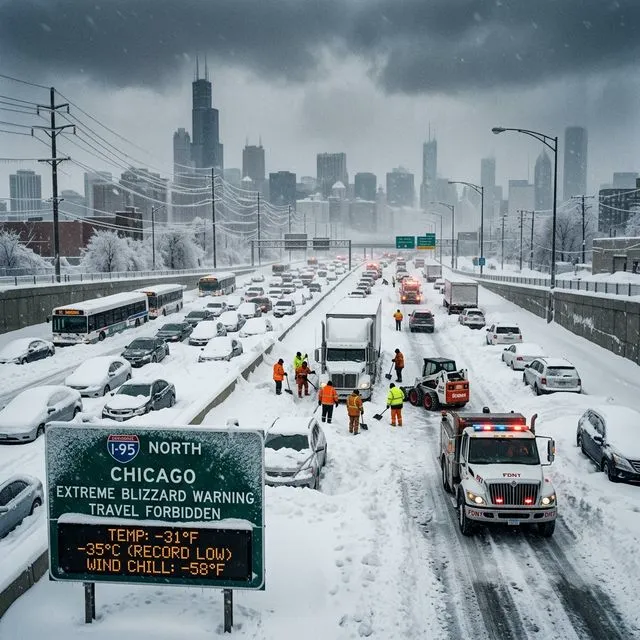
To understand the true danger of a blizzard, look beyond the snow. Wind chill — the combined effect of temperature and wind on the human body — is what truly kills.
What does -22°F (-30°C) feel like on your skin?
Imagine stepping outside on an 82°F day in Miami. Now imagine that, in a matter of minutes, your body feels as if it's at -22°F (-30°C). That's a difference of 104 degrees Fahrenheit. To put it in context:
- At 14°F (-10°C): exposed skin starts to ache within 10 minutes
- At -4°F (-20°C): hypothermia risk becomes real within 30 minutes without adequate protection
- At -17°F (-27°C): exposed skin can suffer frostbite in just 30 minutes
- At -40°F (-40°C): risk of death is imminent without shelter and immediate warming
During the 2026 Blizzard, post-storm temperatures are expected to drop 10 to 20 degrees below average across the entire East Coast. Philadelphia declared "Code Blue" — a protocol activated when temperatures drop below freezing and there is a risk of death for homeless individuals — valid from February 22-25.
How does this extreme cold compare?
| Situation | Temperature | Wind Chill | Risk |
|---|---|---|---|
| Hot summer day in Miami | 95°F (35°C) | 105°F (40°C) | Heat stroke |
| Typical winter in Chicago | 25°F (-4°C) | 10°F (-12°C) | Discomfort |
| Cold snap in Atlanta (2024) | 15°F (-9°C) | -5°F (-20°C) | Frostbite risk |
| 2026 Blizzard (post-storm) | 5°F (-15°C) | -22°F (-30°C) | Hypothermia, frostbite, death |
| Great Blizzard 1888 record (NYC) | 6°F (-14°C) | -31°F (-35°C) | Death within minutes outdoors |
The Worst Blizzard in US History: The "Great White Hurricane" of 1888
The 2026 Blizzard is terrifying, but American history has faced something even more devastating. In March 1888, the "Great White Hurricane" hit the East Coast with a fury that would forever change the infrastructure of American cities.
The numbers of the white apocalypse
- Duration: March 11-14, 1888
- Snow accumulation: from 10 inches to a staggering 58 inches (nearly 5 feet!) in areas like Saratoga Springs, NY
- Snow drifts: reached 50 feet — the equivalent of a 5-story building
- Deaths: over 400 people, including at least 100 seamen and about 200 deaths in New York City alone
- Temperature drop: in New York, from 33°F to 6°F in hours — the coldest temperature ever recorded in March for the city
- Ships destroyed or grounded: over 200
- Damages: $25 million in 1888 dollars (equivalent to $900 million in 2025)
The Blizzard of 1888 was so catastrophic that it forced New York to build the underground subway and bury the electricity and telephone cables that used to hang above streets — two of the most important urban transformations in American history.
The "Children's Blizzard" — January 1888
Lesser known but equally tragic, the Children's Blizzard struck the Great Plains on January 12, 1888 — just two months before the Great White Hurricane. The morning was mild and sunny, and many children went to school without heavy coats. By afternoon, temperatures plummeted dramatically and a violent snowstorm descended upon North Dakota, South Dakota, Nebraska, and Minnesota.
Between 200 and 250 children and adults died — many freezing to death between school and home, lost in zero visibility.
The 1993 "Storm of the Century": Snow Even in Florida
Another event that marked American history was the March 1993 Superstorm — officially called the "Storm of the Century." It was a massive cyclone that stretched from Cuba to Canada.
Stunning facts
- 318 deaths across North America
- Snow in Florida: 6 inches in the Panhandle region — absolutely unprecedented
- Mount Le Conte, Tennessee: 56 inches of snow — an absolute record for the region
- Winds: gusts up to 140 mph at Mount Washington, New Hampshire
- 130 million people affected across 26 states
- 10 million homes without power
- Every East Coast airport closed simultaneously — a first in history
- 11 tornadoes hit Florida during the same storm
- Storm surges up to 12 feet along the coast
- Damages: $5.5 billion (1993 dollars)
The 1993 Storm was, ironically, a positive milestone: it was one of the first major storms predicted days in advance by computer forecast models, saving thousands of lives.
Deadliest US Blizzards: Historical Ranking
| Rank | Event | Year | Deaths | Max. Snow | Area Affected |
|---|---|---|---|---|---|
| 1st | Great Blizzard (Great White Hurricane) | 1888 | 400+ | 58 in | East Coast (MD → ME) |
| 2nd | Great Appalachian Storm | 1950 | 353 | 63 in | Appalachians → East Coast |
| 3rd | Storm of the Century | 1993 | 318 | 56 in | Cuba → Canada (26 states) |
| 4th | Children's Blizzard | 1888 | 250 | 24 in | Great Plains |
| 5th | Blizzard of 2026 (ongoing) | 2026 | TBD | 36 in | MD → ME (I-95) |
The death toll ranking may change as Blizzard 2026 data is consolidated.
The Peak of the Storm: When and Where Was the Worst
The 2026 Blizzard hit its peak between Sunday night (Feb 22) and early Monday morning (Feb 23). The cyclone's center passed directly over the Greater New York area, where atmospheric pressure dropped so rapidly that meteorologists classified it as a "bomb cyclone" — a drop of at least 24 millibars in 24 hours.
Timeline of destruction
- Saturday, Feb 21: Governors of NJ, NY, and PA declare preemptive states of emergency
- Sunday, Feb 22, morning: Snow begins falling from Maryland to Connecticut
- Sunday, Feb 22, 6 PM: Heavy snow at rates of 2-3 inches/hour in the New York area
- Sunday, Feb 22, 9 PM: Travel ban takes effect in NYC, NJ closes highways
- Sunday/Monday, overnight: STORM PEAK — 50+ mph winds, zero visibility, horizontal snow
- Monday, Feb 23, morning: Snow gradually diminishes, but temperatures plummet
- Tuesday-Wednesday: Temperatures 10-20°F below average — severe post-storm cold
What makes this blizzard particularly dangerous is the extreme cold that follows. Accumulated snow traps freezing air at ground level, creating a "cold dome" that keeps temperatures at lethal levels for days. While the East Coast freezes, parts of Texas and Arizona are recording highs of 86°F — a difference of nearly 90 degrees within the same country.
What Could Still Happen: Forecasts and Risks
Imminent risks (February 23-26)
- Extreme post-storm cold: temperatures up to 20°F below average until Tuesday, with recovery starting Wednesday
- Coastal flooding: storm surge combined with snowmelt could cause flooding along the New Jersey, Long Island, and Connecticut coasts
- Roof collapses: the weight of wet snow (significantly heavier than dry snow) can compromise older structures
- Extended power outages: with power lines downed by snow weight, restoration could take days in rural areas
- Melt-freeze hazards: icy roads and invisible "black ice" are deadly traps for drivers
Long-term forecast
Scientists warn that events like the 2026 Blizzard could become more frequent and more intense due to climate change. Although it seems counterintuitive — more global warming resulting in more snow — science explains:
- Warmer oceans evaporate more water → more moisture available for storms
- Weakened polar vortex allows Arctic air to escape to lower latitudes
- More wavy jet streams create blocking patterns that intensify storm systems
The 2025 NOAA (National Oceanic and Atmospheric Administration) report indicates that the frequency of "bomb cyclones" in the North Atlantic has increased 40% since 1980.
How to Protect Yourself: Blizzard Survival Guide
Snow kills. And it kills fast. Here's what you need to know if you're in an affected area — or if you're planning to travel to the US in winter.
Before the storm
- Stock supplies: water (1 gallon per person/day), non-perishable food, flashlights, batteries, 7 days of medications
- Charge all devices: phones, power banks, battery-powered radios
- Insulate your home: seal windows and doors, have extra blankets ready
- Full tank: keep your car's gas tank at least half full
- Vehicle emergency kit: blankets, shovel, chains, sand or kitty litter (for traction), jumper cables, flashlight
During the storm
- STAY HOME. The primary cause of death in blizzards is people who leave without necessity
- Dress in 3 layers: inner (moisture-wicking — wool or polyester), middle (insulation — fleece or wool), outer (windproof and waterproof)
- Protect extremities: wool mittens (not thin gloves), thick socks, waterproof boots, hat covering ears, scarf covering mouth and nose
- Eat and drink regularly: your body burns far more calories trying to stay warm
- NEVER use a grill, gas stove, or generator indoors — fatal carbon monoxide poisoning risk
- Let faucets drip slightly to prevent pipe freezing
If stranded in your car
- Don't leave the vehicle — it's your best shelter
- Run the engine for 10 minutes every hour for warmth
- Clear snow from the exhaust pipe regularly (carbon monoxide risk)
- Open the window slightly for ventilation
- Tie a bright cloth to the antenna to be spotted by rescue teams
Recognize the signs of hypothermia
Hypothermia occurs when body temperature drops below 95°F (35°C) (normal is 98.6°F/37°C). Signs include:
- Intense shivering that then stops (serious sign — the body has "given up" trying to warm itself)
- Mental confusion and difficulty speaking
- Extreme drowsiness — the person appears "drunk"
- Pale or bluish skin
- Immediate action: warm the core first (chest, neck, head), give warm drinks (never alcohol), seek urgent medical attention
Recognize the signs of frostbite
Frostbite is the actual freezing of body tissues — skin, muscles, and even bones. It affects fingers, ears, nose, and cheeks:
- First sign: numbness and tingling in the area
- Progression: skin turns white, waxy, and hard to the touch
- Immediate treatment: place the area in warm water (100-105°F/38-40°C), never rub the affected skin, don't allow it to thaw and refreeze
- Seek medical attention — severe frostbite can require amputation
The January-February 2026 Cold Wave: The Bigger Picture
The February Blizzard didn't appear out of nowhere. It's part of a prolonged cold wave that hit all of North America since January 2026, with record low temperatures recorded in states as varied as:
- Florida: below-freezing temperatures — extremely rare for the "Sunshine State"
- Arkansas: record lows
- North Carolina: snow in coastal areas
- Michigan and Minnesota: wind chills of -49°F to -58°F (-45°C to -50°C)
- New York: multiple consecutive days below 14°F (-10°C)
This cold wave is directly related to the weakening of the Polar Vortex — a low-pressure zone that normally keeps frigid air confined over the North Pole. When the vortex fragments, masses of Arctic air escape southward, causing extreme cold at latitudes where it's not expected.
The Climate Paradox: More Heat = More Snow?
One of the most fascinating — and frightening — aspects of this storm is how it exposes the climate change paradox. While deniers point to blizzards as "proof" that global warming doesn't exist, science shows exactly the opposite:
- Warmer oceans = more evaporation = more fuel for storms
- Arctic warming 4x faster than the rest of the planet → Unstable Polar Vortex → Arctic air escapes southward
- More humid atmosphere (7% more water vapor for each 1°C of warming) = more intense blizzards
- Wavy jet streams = blocking patterns that trap storm systems over the same region longer
In short: global warming doesn't eliminate winter — it makes it more extreme, more unpredictable, and more deadly.
The Economic Cost of a Blizzard
Beyond lost lives, blizzards like the 2026 storm represent a multi-billion-dollar economic blow:
- Flight cancellations: each day of airport paralysis in NYC costs roughly $500 million to the economy
- Lost productivity: offices closed, commerce halted, deliveries suspended
- Infrastructure damage: roads damaged, poles downed, pipes burst
- Cleanup costs: a blizzard in NYC costs between $30 to $60 million in snow removal alone
- Insurance impact: claims for roof, vehicle, and property damage
The 1993 Storm of the Century caused $5.5 billion in damages. Experts estimate the 2026 Blizzard could exceed $3 billion, considering the population density of the affected region.
Conclusion: Snow Isn't Just a Pretty Landscape
The 2026 Blizzard is a brutal reminder that nature makes no distinctions. One of the wealthiest and most technologically advanced nations in the world was literally paralyzed by snow. Hospitals running on generators, millions without transport, children out of school, empty airports.
For those in tropical countries, blizzards seem distant — something from movies. But they are real events that kill hundreds every year. And with climate change altering global weather patterns, no region of the world is truly immune to extreme weather events.
The question isn't if there will be another historic blizzard in the United States. The question is: when will the next one hit — and will we be prepared?
Frequently Asked Questions
What caused the historic 2026 US blizzard?
The 2026 blizzard was caused by a powerful Arctic air mass pushing south (polar vortex disruption), a strong low-pressure system drawing moisture from the Gulf of Mexico, and jet stream patterns allowing cold air to penetrate unusually far south.
How does the 2026 blizzard compare to historic storms?
The 2026 blizzard ranks among the most severe winter storms in US history. The Great Blizzard of 1888 dumped 127 cm of snow on the Northeast. The 1993 Storm of the Century affected 26 states. The 2026 event was notable for its geographic extent.
Can blizzards be predicted accurately?
Modern weather forecasting can predict major blizzards 3-7 days in advance. Short-range forecasts (24-48 hours) are highly accurate for storm track and intensity. Exact snowfall totals remain challenging to predict.
Are winter storms getting worse due to climate change?
Paradoxically, yes. Warmer oceans provide more moisture, Arctic warming disrupts the polar vortex sending cold air south, and warmer air holds more moisture leading to heavier snowfall. Extreme winter storms have increased in recent decades.
Sources: National Weather Service (NWS), NOAA, CBS News, Forbes, The Guardian, Al Jazeera, Washington Post, Wikipedia, Red Cross, CDC, MedlinePlus. Data updated through February 23, 2026.
Additional references: National Weather Service, NOAA Climate, Red Cross Winter Safety, CDC Hypothermia Prevention