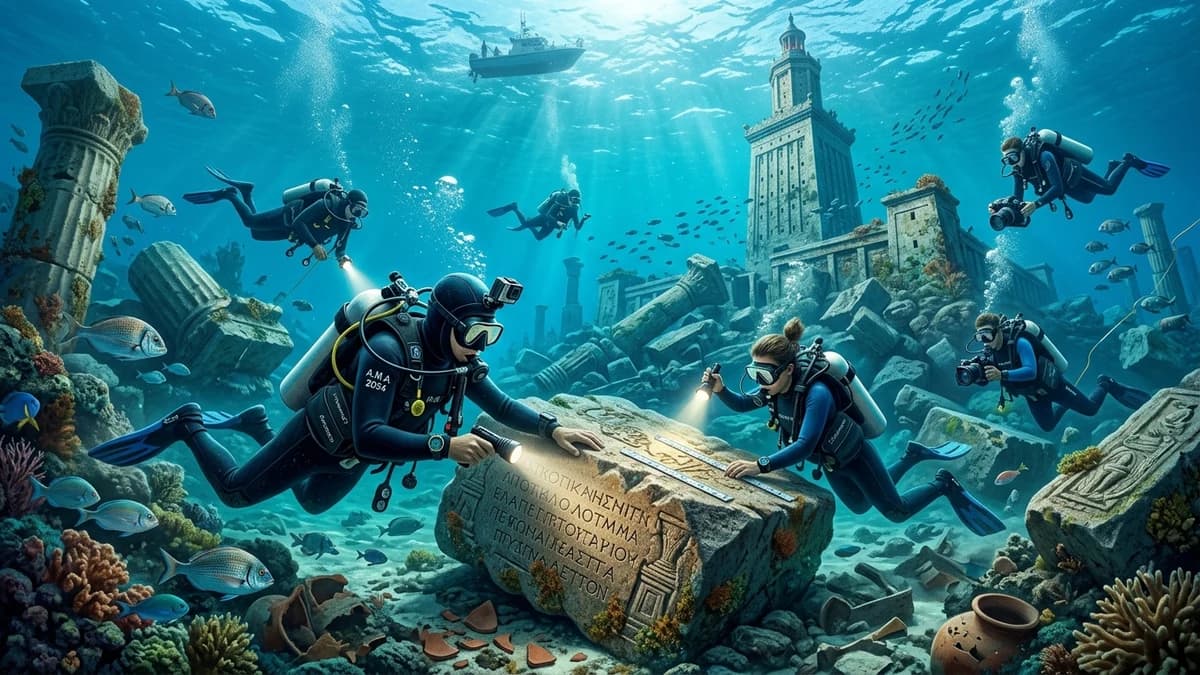
The recent discovery of an ancient Greek merchant shipwreck near the island of Andros in the Aegean Sea has captivated the archaeological community. This remarkable find offers a rare glimpse into the complex maritime trade networks of the late 5th and early 4th centuries BCE. Lying at the bottom of the sea, the wreck preserves a snapshot of ancient commerce in extraordinary detail. The sheer volume and pristine condition of the cargo make this one of the most significant underwater discoveries of the decade.
For centuries, the Aegean Sea served as the primary highway for the exchange of goods, ideas, and culture across the Mediterranean. Ships like the one found off Andros were the lifeblood of this interconnected world. They carried essential commodities that fueled the economies of city-states and vast empires alike. Understanding the dynamics of these trade routes is crucial for reconstructing the economic history of the Classical period.
The Andros shipwreck was initially detected during a routine sonar survey of the seabed. Marine archaeologists were astounded when they deployed remotely operated vehicles (ROVs) to investigate the anomaly. What they found was a massive pile of carefully stacked amphorae, remarkably well-preserved despite the passage of millennia. The precise location of the wreck has been kept secret to protect it from looters while systematic excavations are planned.
The Cargo: Hundreds of Clay Amphorae
The defining feature of this shipwreck is its impressive cargo, consisting of between 600 and 650 pointed-bottom clay amphorae. These large, two-handled jugs were the standard shipping containers of the ancient world. Their distinctive pointed bottoms allowed them to be tightly packed in the hold of a ship, maximizing space and stability during rough sea voyages. The sheer number of amphorae on this vessel suggests it was a major commercial transport.
Preliminary analysis of the amphorae indicates that they originated from several different production centers across the Aegean. The varied shapes and stamps on the handles provide vital clues about their contents and origins. Many of the amphorae likely contained wine or olive oil, the two most valuable and widely traded agricultural products of ancient Greece. Some may have also carried specialized goods like garum, a fermented fish sauce highly prized in antiquity.
The presence of such a diverse cargo suggests that the ship was engaged in a complex trading route, perhaps stopping at multiple ports to buy and sell goods. This type of "tramping" trade was common in the ancient Mediterranean, where merchants sought to maximize profits by responding to local supply and demand. The Andros shipwreck provides concrete evidence for these intricate economic networks.
Classical Greek Maritime Technology
The construction of the ship itself, though largely deteriorated, offers insights into ancient shipbuilding techniques. During the Classical period, Greek shipwrights employed a "shell-first" construction method. They built the outer hull of the ship by joining planks edge-to-edge with mortise-and-tenon joints before inserting the internal framing. This resulted in strong, seaworthy vessels capable of carrying heavy loads across open water.
Although only fragments of the wooden hull survive, the arrangement of the amphorae allows archaeologists to estimate the size and shape of the ship. It was likely a broad-beamed merchant vessel, designed for cargo capacity rather than speed. Such ships relied primarily on a single large square sail for propulsion, making them dependent on favorable winds. The loss of this ship near Andros suggests it may have encountered a sudden storm or treacherous currents.
The study of this shipwreck will significantly advance our knowledge of ancient maritime technology. By carefully documenting the position of every artifact, researchers can reconstruct the original loading pattern and understand how the ship was balanced. This detailed analysis helps paint a clearer picture of the challenges faced by ancient mariners and the ingenious solutions they developed.
Comparison of Key Ancient Mediterranean Shipwrecks
The Andros shipwreck joins a distinguished list of underwater archaeological sites that have reshaped our understanding of the ancient world. Comparing it to other famous wrecks highlights its unique contributions to the field.
| Feature | Andros Wreck | Antikythera Wreck | Uluburun Wreck |
|---|---|---|---|
| Date | Late 5th / Early 4th C. BCE | 1st Century BCE | Late 14th C. BCE |
| Location | Aegean Sea (near Andros) | Aegean Sea (near Antikythera) | Mediterranean (near Turkey) |
| Main Cargo | 600-650 clay amphorae | Luxury goods, statues, Antikythera mechanism | Copper/tin ingots, exotic raw materials |
| Significance | Details Classical Aegean bulk trade | Reveals Hellenistic luxury trade and technology | Illuminates Late Bronze Age international trade |
| Vessel Type | Broad merchant ship | Large Roman cargo vessel | Late Bronze Age merchant ship |
The contrast between the Andros wreck and the Antikythera wreck is particularly striking. While Antikythera reveals the luxury trade of the Hellenistic era, Andros provides a window into the everyday, bulk commerce of the Classical period. Together, they offer a more complete view of ancient Mediterranean economics.
The Role of Andros in Ancient Trade
The location of the shipwreck near Andros is no coincidence. The island was strategically situated along major shipping routes connecting mainland Greece with the islands of the eastern Aegean and the coast of Asia Minor. Ships traveling north toward the Black Sea or east toward the Levant would often pass through the treacherous waters around the Cyclades. Andros served as both a navigational landmark and a potential port of call.
During the late 5th and early 4th centuries BCE, the Aegean was a volatile region, marked by the Peloponnesian War and its aftermath. Despite the political turmoil, economic activity continued to thrive, driven by the insatiable demand for goods in major urban centers like Athens. The Andros shipwreck demonstrates the resilience of these trade networks even in times of conflict.
The discovery also highlights the dangers inherent in ancient seafaring. The Aegean is known for its sudden, violent storms, particularly the "Meltemi" winds that blow strongly from the north during the summer months. It is highly probable that the Andros ship fell victim to such a storm, its heavy cargo of amphorae dragging it quickly to the bottom.
Advanced Underwater Archaeology
The excavation of the Andros shipwreck is employing the latest advancements in underwater archaeology. High-resolution photogrammetry is being used to create a precise 3D model of the site before any artifacts are moved. This digital twin allows researchers to study the wreck in incredible detail without risking damage to the fragile remains.
Deep-water robotics are also playing a crucial role. Because the wreck lies at a depth that is challenging for human divers, ROVs equipped with delicate manipulator arms are being used to carefully recover selected artifacts. This combination of traditional archaeological methodology and cutting-edge technology ensures that the maximum amount of information is extracted from the site.
The conservation of the recovered artifacts is another major challenge. After centuries underwater, the clay amphorae and wood fragments require careful desalination and stabilization in specialized laboratories. This painstaking process can take years, but it is essential for preserving these invaluable pieces of history for future generations.
Economic Implications of the Find
The 600 to 650 amphorae represent a significant capital investment. The loss of this ship would have been a major financial blow to the merchants who funded the voyage. Such risks were an accepted part of ancient commerce, mitigated by complex systems of maritime loans and shared investments.
The specific origins of the amphorae will provide detailed data on regional economic specialization. If, for example, a large portion of the cargo is traced to Chios or Thasos, it will reinforce the dominance of those islands in the wine trade. This kind of quantitative data is rare in ancient history and will be invaluable for economic historians.
Furthermore, the shipwreck may offer clues about the regulatory environment of ancient trade. Many ancient states closely monitored and taxed maritime commerce. The stamps on the amphorae might reveal information about quality control, taxation, or official magistrates, providing a glimpse into the bureaucratic administration of the Classical economy.
Future Research and Preservation
The Andros shipwreck is a long-term research project that will occupy archaeologists for years to come. The initial survey is just the beginning; systematic excavation and analysis will yield even more surprises. Every amphora recovered is a time capsule, potentially containing the remains of its original contents.
The Greek Ministry of Culture is working diligently to protect the site from unauthorized access. Underwater heritage is highly vulnerable to looting, and strict security measures have been implemented. The ultimate goal is to establish a dedicated museum exhibit that will showcase this extraordinary find to the public.
As research continues, the Andros shipwreck will undoubtedly rewrite chapters of ancient history. It stands as a testament to the skill and daring of ancient mariners and the enduring legacy of the Mediterranean trade networks that shaped the classical world. The secrets held within its cargo hold will continue to fascinate and educate us for generations.
Frequently Asked Questions
What makes the Andros shipwreck so important for archaeologists?
The Andros shipwreck is exceptionally important because of the sheer volume and pristine condition of its cargo, which consists of 600 to 650 ancient amphorae. Unlike many wrecks that have been scattered or looted over time, this site remains largely intact, offering an unadulterated snapshot of maritime trade in the late 5th to early 4th centuries BCE. This allows archaeologists to precisely study the loading techniques, the variety of goods transported, and the interconnected economic networks of the Classical Greek period, providing concrete data that is often missing from written historical records.
How do archaeologists determine the age and origin of the amphorae?
Archaeologists determine the age and origin of the amphorae through a combination of typological analysis and the study of specific stamps or markings. The shape, handle design, and lip profile of amphorae changed over time and varied by production region, allowing experts to categorize them accurately. Additionally, many ancient city-states stamped their amphora handles with specific symbols, names of magistrates, or regional emblems to guarantee capacity or quality. By comparing these physical characteristics and stamps with known, well-dated examples from terrestrial excavations, researchers can pinpoint both where and when the amphorae were made.
What challenges do researchers face when excavating deep-water shipwrecks?
Excavating deep-water shipwrecks presents numerous significant challenges, primarily related to depth, pressure, and preservation. Human divers can only operate safely at limited depths and for short durations, necessitating the use of expensive Remotely Operated Vehicles (ROVs) and advanced robotics for deeper sites. Furthermore, artifacts that have been submerged for millennia, particularly organic materials like wood or porous clay, become extremely fragile. Once removed from the water, they must undergo immediate and complex conservation processes, such as prolonged desalination, to prevent them from disintegrating or warping when exposed to air.
References
- Hellenic Republic Ministry of Culture - Underwater Antiquities Discoveries. https://www.culture.gov.gr
- HeritageDaily - Latest Archaeological News and Maritime Discoveries. https://www.heritagedaily.com
- The Jerusalem Post - Archaeology Section, Mediterranean Shipwreck Finds. https://www.jpost.com/archaeology