The universe has just become vastly more accessible to humanity following a monumental event in space exploration. On this Sunday, August 30, 2026, at 7:26 a.m. Eastern Daylight Time (EDT), NASA celebrated an extraordinary milestone. The Nancy Grace Roman Space Telescope was successfully launched aboard a powerful SpaceX Falcon Heavy rocket.
This flawless launch took place from the historic Launch Complex 39A at the Kennedy Space Center in Florida. Clear skies and ideal weather conditions provided the perfect backdrop for the ascent of the mighty launch vehicle. With a deafening roar, the Falcon Heavy boosters roared to life, pushing the invaluable payload out of the Earth's atmosphere.
The Roman telescope mission is not just a continuation of previous astronomical efforts, but a revolution in our ability to observe the cosmos. Designed to unravel the greatest mysteries of modern astrophysics, it promises to map vast regions of the sky with unprecedented speed. Over the next few months, the observatory will travel through deep space until it reaches its final destination, initiating a new era of celestial discoveries.
The Journey to Lagrange Point L2
Following the successful separation of the Falcon Heavy rocket stages, the Roman Telescope began its solitary journey of about 1 million miles. Its destination is Lagrange Point L2, a region of gravitational stability located behind the Earth relative to the Sun. This specific orbit was strategically chosen due to its exceptional characteristics for astronomical observation.
At the L2 point, the telescope will be able to maintain a relatively constant position, aligning the Earth and the Sun behind its thermal shield. This configuration is crucial for keeping the observatory's sensitive instruments at extremely low temperatures, away from the interference of solar heat emissions. Furthermore, the L2 orbit provides an unobstructed field of view into deep space, which is essential for long-duration mapping surveys.
The trip to L2 will take approximately one month, during which the telescope will perform precise trajectory correction maneuvers. Simultaneously, ground teams will conduct the initial activation tests for the power and communication systems. When it finally settles into its halo orbit around L2, Roman will begin the commissioning phase for its sophisticated optical instruments.
Nancy Grace Roman: The Mother of Hubble
The telescope's name is a touching tribute to Dr. Nancy Grace Roman, a central and pioneering figure in the history of American space astronomy. She was the first woman to hold an executive position at NASA, serving as the agency's first Chief of Astronomy in the 1960s. Her legacy is vast, but she is best remembered for her fundamental role in the planning and development of the Hubble Space Telescope.
Dr. Roman dedicated her career to fighting for observation missions that would operate above the turbulent Earth's atmosphere. Without her strategic vision and tenacious leadership, the field of space astronomy might have suffered decades of delay. The name of this new observatory serves as a lasting reminder of the profound impact that a single determined scientist can have on humanity.
Recognizing her monumental work through the Roman Space Telescope is a significant step for NASA towards honoring its female pioneers. The telescope's mission perfectly reflects the ambition and exploring spirit that defined Dr. Roman's life. Where Hubble showed us incredibly fine details of the universe, Roman will show us the complete panorama that she always wished humanity to see.
The Wide Field Instrument: A New Panoramic Vision
The technological heart of the Roman Space Telescope is its Wide Field Instrument, a marvel of modern optical engineering. Although it has a 2.4-meter primary mirror, exactly the same size as Hubble's, its state-of-the-art camera offers a drastically different perspective. Roman's field of view is 100 times larger than Hubble's infrared instrument, allowing the capture of vast cosmic landscapes in a single exposure.
This incredible panoramic vision capability will reduce the time needed to conduct comprehensive celestial surveys from years to just a few days. The camera boasts an impressive 300 megapixels, composed of 18 highly advanced and sensitive infrared detectors. This stupendous resolution will allow astronomers to observe billions of galaxies scattered across the vastness of the universe.
The speed at which Roman can sweep the sky will make it an indispensable tool for large-scale statistical studies. To understand the structure and evolution of the cosmos, scientists must observe not just individual objects, but entire populations of galaxies. The Wide Field Instrument will provide the dense statistical data necessary to test the most complex theories of contemporary cosmology.
The Revolutionary Hunt for Exoplanets
One of the primary missions of the Roman Telescope is to significantly advance the census of exoplanets in the Milky Way, using a technique called gravitational microlensing. This fascinating phenomenon occurs when the gravity of a foreground star bends the light of a more distant star located in the background. If a planet orbits the foreground star, its gravity will add a small extra spike of brightness to the microlensing event.
By continuously observing hundreds of millions of stars toward the galactic center, Roman will detect thousands of these rare microlensing events. This technique is exceptionally sensitive to planets that are very far from their host stars or that even wander freely through dark space. Such "rogue planets" are incredibly difficult to detect using traditional methods, but they might be as common as stars in our galaxy.
In addition to microlensing, the telescope carries an experimental Coronagraph Instrument designed to block the blinding glare of nearby stars. This technological breakthrough will allow direct imaging and spectroscopic analysis of giant gas exoplanets and protoplanetary dust disks. The successful development of this high-contrast technology will pave the way for future missions aimed at finding and analyzing Earth-like worlds.
Unlocking Dark Energy and Dark Matter
The fundamental composition of our universe remains one of the greatest challenges for physics, as about 95% of the cosmos is invisible. Dark energy, responsible for the accelerated expansion of the universe, and dark matter, which gravitationally binds galaxies together, are entities whose exact natures remain mysterious. Roman was explicitly designed to track the historical impact of these invisible forces throughout cosmic evolution.
The telescope will conduct three main surveys dedicated to mapping the influence of dark energy across space and time. One of them will analyze the three-dimensional distribution of galaxies, measuring the sound ripples frozen since the beginning of the universe. Another survey will examine distant supernovae to determine precise cosmic expansion rates in different eras of galactic history.
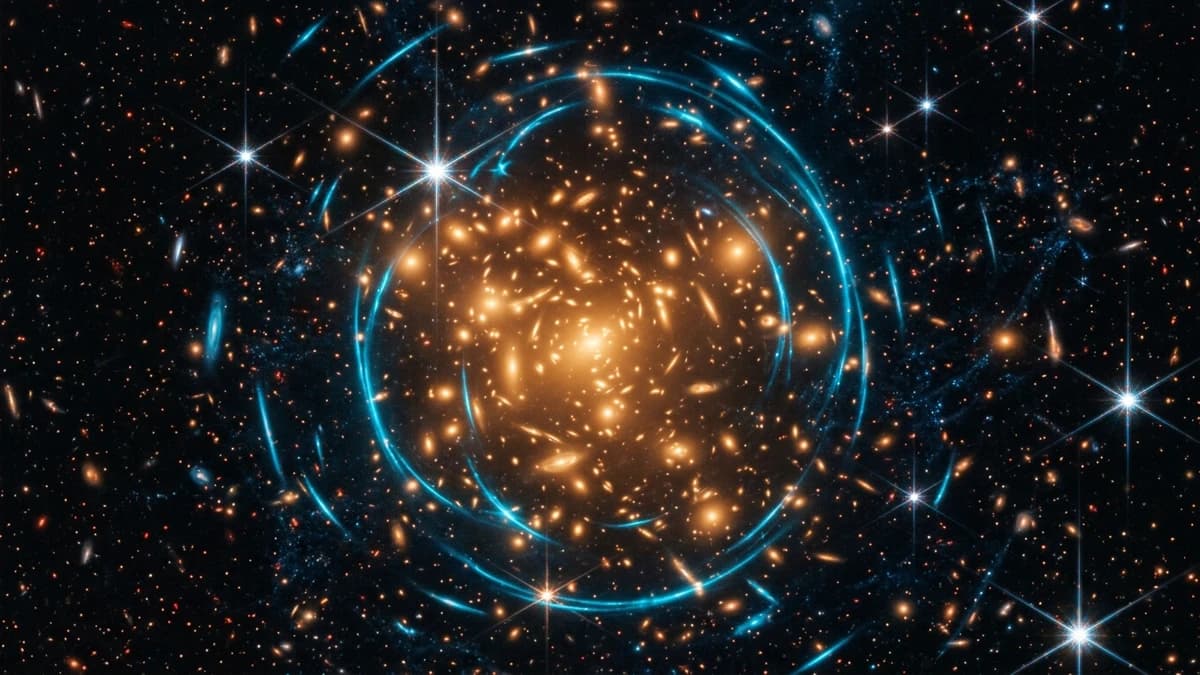
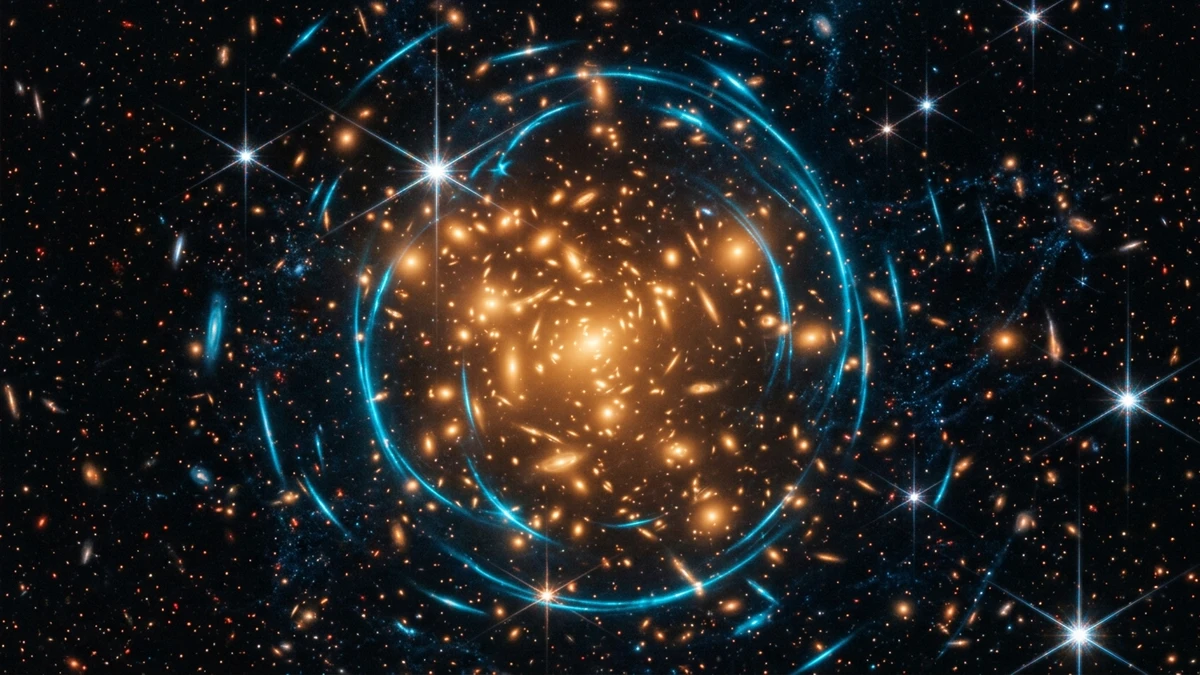
Finally, the weak gravitational lensing survey will observe how the shapes of millions of distant galaxies are subtly distorted by dark matter along the path. This detailed observation will generate an unprecedented map of the dark cosmic structure, revealing how it clumped galaxies together over billions of years. The vast amount of data collected may finally determine whether Einstein's theory of general relativity needs revision on intergalactic scales.
Comparison of Space Observatories
To understand the true magnitude of the Roman Telescope's capability, it is essential to compare it with other world-class observatories in operation. The following table highlights the specifications and core purposes of the most famous platforms, revealing how they complement each other.
| Observatory | Mirror Size | Primary Wavelength | Field of View (Relative) | Primary Mission |
|---|---|---|---|---|
| Hubble | 2.4 meters | Visible / Ultraviolet | 1x (Baseline) | Detailed studies of celestial objects, universe age. |
| James Webb (JWST) | 6.5 meters | Mid/Near Infrared | ~0.7x | First galaxies, exoplanet atmospheres. |
| Euclid (ESA) | 1.2 meters | Visible / Infrared | ~50x | Geometry of the universe, dark matter and energy. |
| Nancy Grace Roman | 2.4 meters | Near Infrared | 100x | Panoramic surveys, dark energy, exoplanet census. |
As demonstrated in the table, each telescope was designed to act synergistically, not to compete, expanding different aspects of human knowledge. Roman's expansive field of view is its defining and most powerful characteristic.
Synergies with the James Webb and Euclid Telescopes
The Roman Telescope will not operate in a scientific vacuum; it was conceived to work in perfect harmony with the recently launched European Euclid telescope and the phenomenal James Webb. The Euclid observatory began similar mappings of the dark universe using visible and infrared light, but with a slightly different focus on depth. Roman will explore overlapping areas with superior infrared precision, allowing data crossovers that will incredibly refine cosmological results.
Meanwhile, the relationship with the James Webb Space Telescope (JWST) will be truly symbiotic, combining macro-vision with micro-analysis. Roman will act as an expert cosmic scout, rapidly identifying transient phenomena and fascinating galaxy clusters across extensive celestial swaths. Once Roman discovers the rarest and most anomalous targets, JWST will be able to use its massive spectrographs to conduct thorough and deep examinations.
This collaboration between cutting-edge observatories ensures that JWST's precious and limited time is spent observing the objects of highest scientific interest. The synergy between Roman's comprehensive mapping and James Webb's detailed scrutiny will transform how astronomers prioritize their investigations. The joint effort of this space fleet promises to decipher the mechanisms of early star formation much more holistically.
Data Science and the Petabyte Era in Astronomy
The magnitude of the Roman Space Telescope brings phenomenal logistical and computational challenges, robustly inaugurating the Big Data era in astrophysics. Over its initial five-year mission, the telescope is expected to generate a colossal 20 petabytes of raw scientific information. This massive volume represents more data than almost all of NASA's astrophysical missions combined have historically managed to download in their lifetimes.
To handle this avalanche of data, ground teams have had to develop new artificial intelligence and machine learning algorithms. Sophisticated software will be employed to separate galaxies from image artifacts, automate supernova discovery, and process stellar light curves. Institutions around the world will need to adapt to cloud computing architectures to ensure fast and collaborative access to the processed images.
Furthermore, NASA has committed to making Roman's data available immediately to the public and the international scientific community, without the traditional embargo period. This open science policy will encourage independent scientists, academic institutions, and astronomy enthusiasts to investigate the database freely and in real-time. The democratization of information will enormously accelerate the pace of analytical discoveries within the global community.
A New Era of Astronomical Discovery
With the perfect launch accomplished this Sunday in 2026, astronomy is ready to take its next giant leap into the unknown. SpaceX has once again proven the reliability of its heavy-lift vehicle, solidifying its vital and ongoing partnership with the American space agency. As the Roman Space Telescope travels through the relentless cold of the spatial vacuum to L2, thousands of researchers on Earth eagerly await the stream of "first light."
When Roman fully opens its eyes to the infrared cosmos, the spectacular panoramas it will capture are sure to redefine the collective human imagination. Its data promises to shake up well-established theories and possibly force us to rewrite entire sections of modern physics textbooks. Above all, the mission keeps the tenacious spirit of Nancy Grace Roman alive, perpetuating humanity's unyielding desire to look at the stars and try to understand our infinite home.
Frequently Asked Questions
Why was the SpaceX Falcon Heavy rocket chosen for this specific NASA space launch mission?
The Falcon Heavy was selected due to its incredible heavy-lift capability and its excellent track record of proven reliability in missions. The Roman Telescope is a massive and highly delicate spacecraft, which required a vehicle capable of sending it directly onto a trajectory toward Lagrange Point L2. In addition to the rocket's phenomenal performance, the contract with SpaceX provided an extremely cost-effective and efficient solution for the space agency's strict budget parameters.
What exactly is dark energy and how will the telescope help study it more deeply than past missions?
Dark energy is a hypothetical force responsible for the observed phenomenon of the accelerated expansion of our universe, counteracting the laws of classical gravitational attraction. The Roman telescope will investigate this unknown force by meticulously measuring the distance and recession velocity of millions of galaxies and supernova explosions over time. By creating a gigantic 3D map of cosmic structures, scientists can finally determine whether this mysterious energy has varied over billions of years.
Why is the gravitational microlensing technique so crucial for discovering new exoplanets in our distant galaxy?
The gravitational microlensing technique uses the very geometry of spacetime to reveal planets that do not emit enough light to be captured directly by other lenses. When a star crosses in front of a more distant one, gravity amplifies the background light, and any planet there will cause a characteristic anomalous spike in the event. Roman's giant field of view allows it to observe the dense stellar center of the galaxy simultaneously, drastically multiplying the mathematical chances of capturing these rapid anomalies.
References
- NASA - Nancy Grace Roman Space Telescope: https://roman.gsfc.nasa.gov
- Space.com - SpaceX Falcon Heavy Launches: https://www.space.com/spacex-falcon-heavy
- ScienceDaily - Astrophysics and Dark Energy: https://www.sciencedaily.com/news/space_time/astrophysics/