Los Gallardos Wildfire: The Tragedy That Devastated Almería in 2026
The scorching heat of the 2026 European summer reached unprecedented levels across the Iberian Peninsula. In mid-July, the province of Almería, located in Andalusia, became the epicenter of a devastating environmental catastrophe. The Los Gallardos wildfire spread with terrifying speed, leaving a trail of destruction and profound grief in the local community.
This disaster exposed the growing vulnerabilities of Southern Europe in the face of accelerating global climate change. At the height of the incident, the speed at which the flames propagated surprised even the most experienced wildfire analysts. The event consolidated itself as one of the deadliest wildfire episodes in Spain in recent history, prompting urgent investigations.

Almería is historically recognized as one of the driest provinces in all of Western Europe. Its geographic proximity to arid desert zones creates a fragile ecosystem highly susceptible to rapid soil moisture loss. When temperatures soared to extreme levels, the local native vegetation quickly transformed into a massive, highly flammable tinderbox.
The Disaster in Almería: The Beginning of the Inferno in Los Gallardos
The initial outbreak of the wildfire started in the early afternoon of July 9 near the municipality of Los Gallardos. Driven by powerful desert winds blowing from the Sahara, the original fire spots jumped highways and rapidly ignited dry crops. The severe drought that had plagued Andalusia for months had eliminated any ambient moisture that could contain the first flames.
Within a few hours, massive columns of thick black smoke could be seen from miles away, spreading panic among local residents. Civil protection authorities immediately initiated emergency mass evacuation orders to protect the surrounding populations. Desperate residents reported that the deafening roar of the approaching flames sounded like the constant rumble of a jet engine.
The relative humidity of the air dropped to a critical mark of just 10%, severely hindering containment efforts. With local thermometers registering a scorching 45°C, the effectiveness of ground crews spraying water became minimal due to instantaneous evaporation. To understand the gravity of this severe meteorological scenario, you can read more about the [/en-US/blog/extreme-heat-wave-europe-temperature-record-2026](extreme heat wave in Europe in 2026).
Military Mobilization: The UME on the Front Line
Faced with the immense magnitude of the crisis and the rapid, unchecked progression of the fire, the Spanish government raised the emergency alert level. The Military Emergencies Unit (UME) was mobilized under maximum urgency by the Ministry of Defense. Hundreds of specialized soldiers and heavy tactical vehicles were deployed to Almería to coordinate rescue operations and fire suppression.
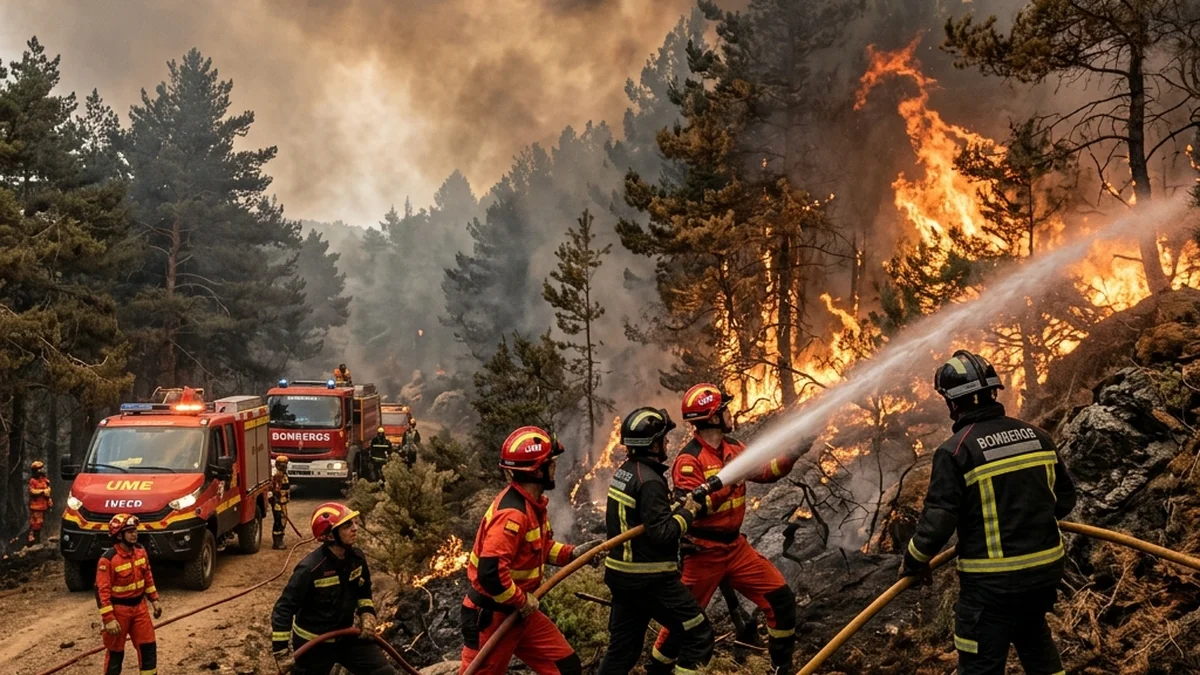
The soldiers operated under extreme conditions characterized by near-zero visibility and radiant heat that damaged their protective gear. Heavy water-bombing aircraft carried out dozens of drops over the most dangerous sectors of the wildfire. However, powerful thermal wind currents rising from the burning valleys created severe turbulence that often prevented stable helicopter flights.
Military crews concentrated their efforts on the mechanical creation of wide firebreaks along the vulnerable forested hillsides surrounding Los Gallardos. Using heavy armored bulldozers, they stripped away vegetation to deny the advancing fire any fuel. This strategic intervention successfully prevented the flames from directly breaching the peripheral urban neighborhoods.
Tragedy on the Asphalt: The Case of the Trapped Foreign Tourists
The most tragic incident of the entire disaster occurred on the AL-6109 highway during the late afternoon. Dark, suffocating smoke enveloped the roadway, reducing visibility to less than two meters in a matter of seconds. Several motorists who were driving through the area panicked, abandoning their vehicles or attempting dangerous U-turns on the narrow road.
Among the carbonized vehicles later found on the road was a passenger car equipped with a right-hand drive steering wheel. The occupants were foreign tourists from the United Kingdom who were visiting the province of Almería for their summer holidays. The unfamiliar left-side driving position of the driver, combined with the extreme smoke, severely limited his ability to navigate.
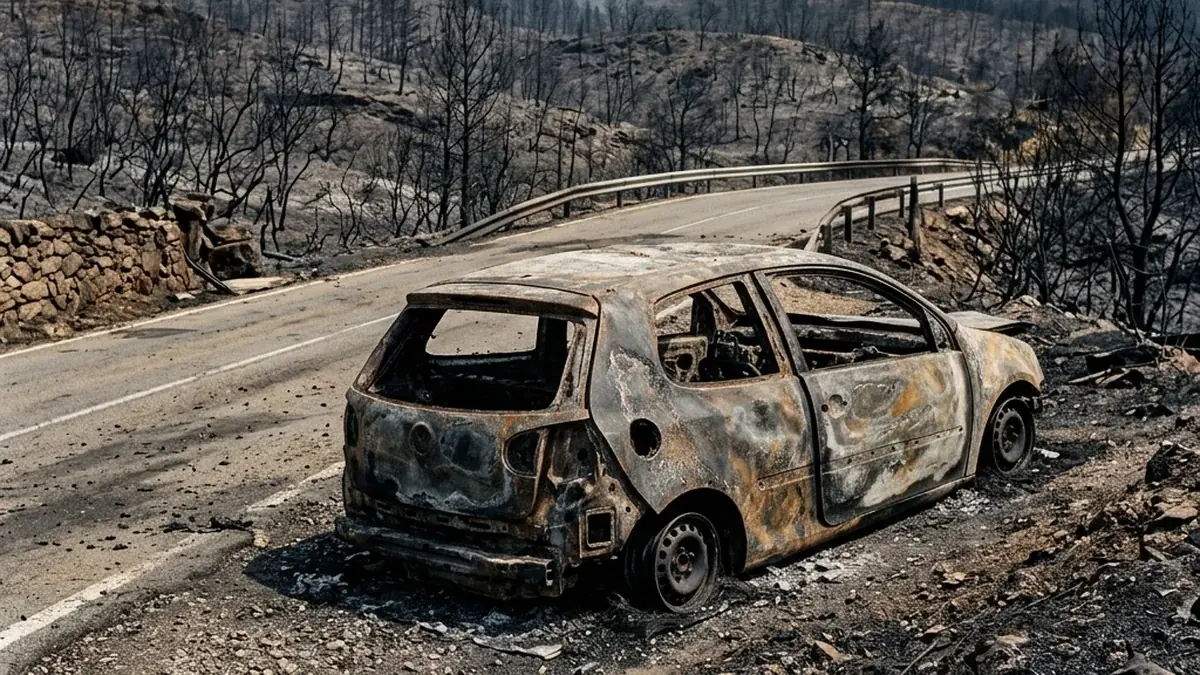
Unable to see the road ahead, the driver lost control and collided with a steep ravine on the shoulder of the rural highway. The fast-moving flames coming from the adjacent valley swept across the asphalt before the occupants could exit the vehicle. This tragic accident resulted in the immediate death of all passengers, causing profound international distress.
In total, the final official balance of the tragedy recorded 12 confirmed deaths and 23 people reported missing. Military search and rescue teams continued their efforts for several days across the rugged mountainous terrain of Almería. Specialized search dogs and drones equipped with thermal sensors were deployed in the hopes of locating survivors.
Scientific Investigation: Power Lines and the Origin of the Fire
Once the primary blazes were brought under control, expert investigators from the Nature Protection Service (SEPRONA) took charge of the case. By mapping the direction of the ash deposits and analyzing heat intensity patterns on trees, technicians successfully located the exact point of origin. The primary objective was to determine whether the fire had been deliberately started by arsonists.
Soil and vegetation samples collected at the scene ruled out the presence of accelerants or human-made open flame sources. The investigators then turned their attention to the civilian electricity transmission network that crosses the nearby ravine. It was soon proven that the disaster was initiated by power cables that had fallen to the ground.
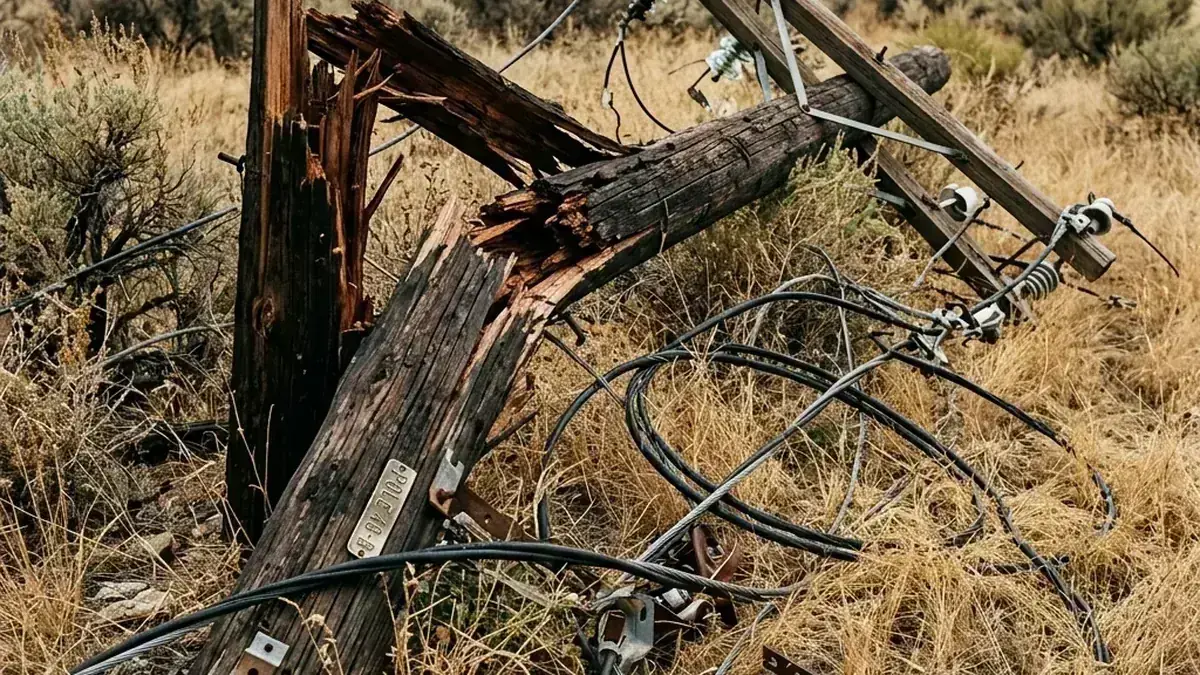
Strong wind gusts caused the physical detachment of aging transmission cables from their local support towers. When these live, high-voltage wires touched the dry grass, they generated powerful electrical arcs that instantly ignited the vegetation. The flames then propagated rapidly up the steep slopes, driven by the intense Saharan winds.
The incident highlighted the extreme vulnerability of civilian infrastructure to severe modern weather patterns. To gain a deeper understanding of how these global changes affect our urban environments, it is worth reading about [/en-US/blog/global-warming-consequences-future](global warming and its consequences for the future). Aging power grids require urgent upgrades to withstand the combination of high winds and record-breaking temperatures.
Impact on the Population: Historical Analysis and Consequences of the Disaster
The wildfire consumed approximately 6,600 hectares of native forests and vital agricultural lands across Almería. Small-scale farmers suffered devastating losses, including centennial olive trees and dozens of plastic greenhouses essential for the local economy. In addition to agricultural losses, the fire caused irreparable damage to the habitats of endangered local wildlife species.
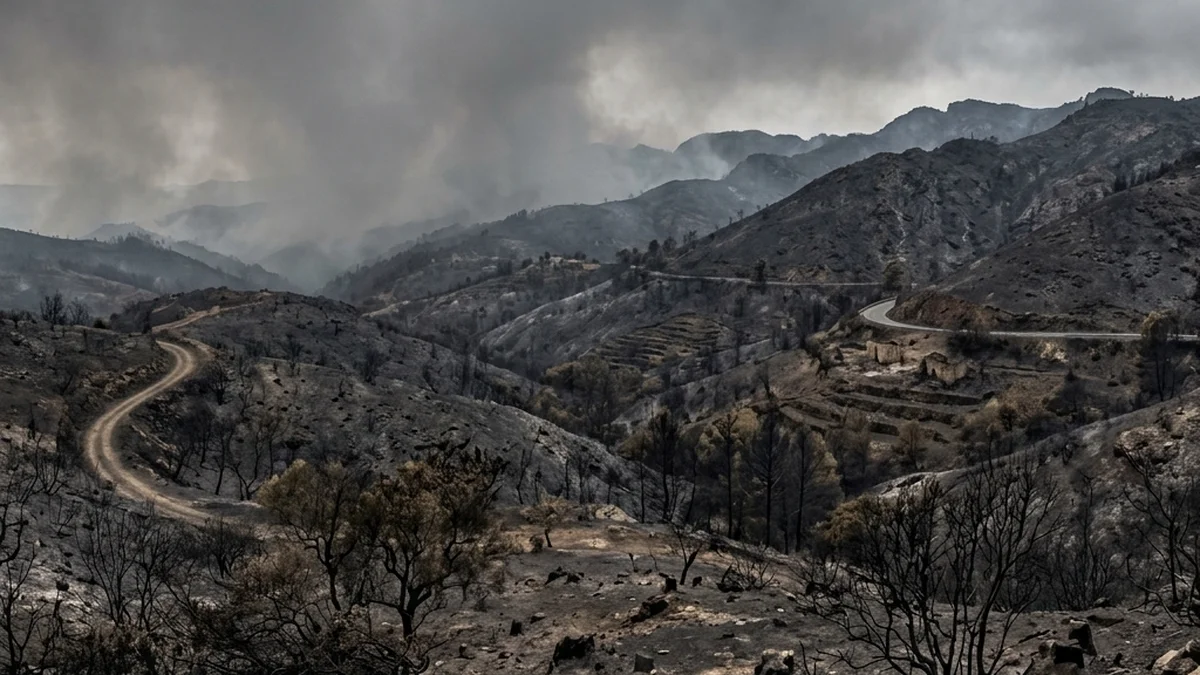
Ash contamination in local water basins caused severe disruptions to the drinking water supply of several municipalities. Water tankers had to be deployed to assist isolated communities in the villages surrounding Los Gallardos for several weeks. The disaster caused economic damage estimated in millions of euros, requiring comprehensive long-term recovery plans.
Discussions regarding new preventative measures and forest management legislation have gained significant momentum in the Andalusian Parliament. Comparing the Los Gallardos incident with historical fires in Spain helps illustrate the growing severity of these events. The frequency of extreme fires on the Iberian Peninsula has shown a steady increase over the last few decades.
The table below presents a historical comparison of significant wildfires that have occurred in Spain over the past few decades. This data highlights the escalating nature of environmental disasters in the region.
| Year | Region/Location | Burned Area (ha) | Deaths | Primary Cause |
|---|---|---|---|---|
| 1994 | Valencia Province | 25,000 | 138 | Lightning and severe drought |
| 2012 | Cortes de Pallás, Valencia | 28,000 | 1 | Solar panel welding spark |
| 2017 | Galicia (multiple outbreaks) | 49,000 | 4 | Human action (arsonists) |
| 2022 | Zamora (Sierra de la Culebra) | 30,000 | 4 | Lightning and extreme heat |
| 2026 | Los Gallardos, Almería (Andalusia) | 6,600 | 12 | Fallen power lines |
This historical overview demonstrates that severe forest disasters continue to challenge public firefighting infrastructures. The tragic loss of lives in Los Gallardos highlights the urgent necessity of investing in more resilient electrical grids. Preserving fragile ecosystems will require efficient preventive responses to avert similar catastrophic events in the coming years.