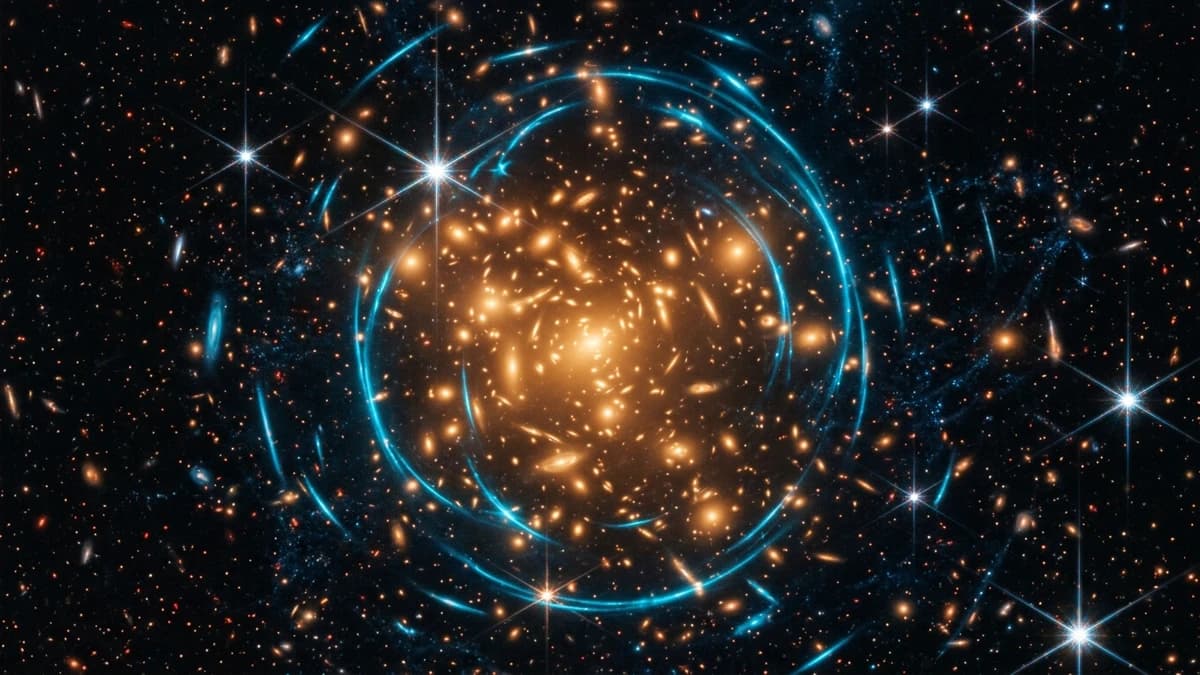
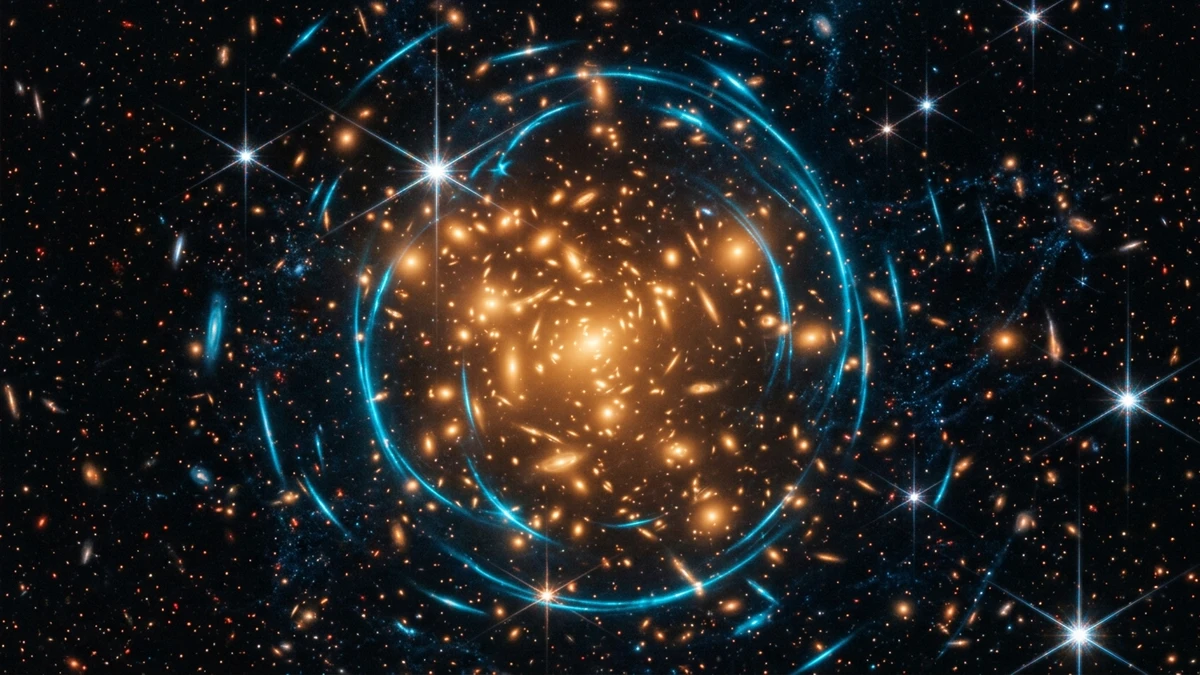
Theoretical physics has just taken a gigantic leap in understanding the fundamental structure of the universe and quantum gravity. Researchers from the Vienna University of Technology (TU Wien) and Goethe University Frankfurt have successfully modeled a fascinating critical state involving the so-called "spacetime crystal". This theoretical breakthrough offers an incredibly powerful new mathematical tool for investigating the physics of the early universe. It also provides crucial clues about the formation of primordial black holes shortly after the Big Bang event.
To understand the magnitude of this discovery, one must first grasp what physicists mean by a spacetime crystal. Unlike ordinary crystals that organize their atoms in repetitive patterns in space, these new theoretical constructs extend the periodicity into the dimension of time. The model analyzed by the two European universities demonstrated that these structures are not static, but rather dynamic systems that can exist in an extremely delicate state of equilibrium. The slightest energy perturbation can seal the fate of this quantum structure in dramatic ways.
What makes this research truly revolutionary is the revelation of the consequences of such energetic perturbations. According to the complex equations developed, a slight variation in the system's energy leads to a drastic bifurcation in the crystal's behavior. On one hand, the structure can simply dissolve, losing its quantum coherence and dissipating into the fabric of spacetime. On the other hand, and much more intriguingly, the crystal can undergo gravitational collapse and transform into a microscopic black hole.
The Nature of Spacetime Crystals
In classical physics and traditional crystallography, a crystal is defined by the spontaneous breaking of spatial translation symmetry. This means that, while empty space is uniform in all directions, the presence of a crystal establishes preferred locations for atoms to position themselves. In 2012, Nobel Laureate Frank Wilczek proposed the idea that the same principle could be applied to temporal translation symmetry. Thus time crystals were born, structures that exhibit perpetual periodic motion even in their lowest energy state.
The concept of a spacetime crystal elevates this premise to an even more complex and multidimensional level. In these structures, periodicity occurs simultaneously in both the three spatial dimensions and the temporal dimension. The result is a mathematical object that vibrates and pulses in a rhythmic pattern perfectly synchronized with the fabric of spacetime itself. The team from Vienna and Frankfurt utilized principles of string theory and quantum gravity to formulate a viable model of these exotic entities.
In this new model, the spacetime crystal acts as a system that strongly interacts with the quantum fluctuations of the vacuum. By studying this system, physicists were able to simulate conditions analogous to those that existed fractions of a second after the universe began. The complexity of these simulations required the use of advanced supercomputers and new mathematical methods derived from the AdS/CFT correspondence. This holographic principle allowed for translating complex gravity problems into more tractable quantum mechanics equations.
Comparison Table of Crystalline States
To elucidate the fundamental differences between these phases of matter, the following table details the unique properties of each state. Understanding these distinctions is crucial to grasping the impact of the new research.
| Physical Characteristic | Standard Space Crystal | Time Crystal | Spacetime Crystal |
|---|---|---|---|
| Symmetry Breaking | Spatial translation symmetry. | Temporal translation symmetry. | Spatial and temporal symmetry simultaneously. |
| Periodicity | Repetitive pattern in 3 spatial dimensions. | Periodic oscillation in time (ground state). | Interlocking patterns of space and time. |
| Energy Stability | Highly stable, requires heat/energy to melt. | Dynamically stable in non-equilibrium systems. | Critical state; highly sensitive to energy fluctuations. |
| Observable Example | Diamond, quartz, table salt. | Trapped ion systems (laboratory models). | Theoretical models of the early universe and black holes. |
The Critical State: Dissolution or Collapse
The high point of the study published by the European universities lies in identifying a critical threshold in the stability of the spacetime crystal. This threshold represents a point of no return, where the system balances precariously between two radically different phases. Researchers discovered that the structure is perfectly stable only until a specific energy density limit is reached. Surpassing this limit, even by a microscopic fraction, triggers an irreversible mathematical chain reaction.
If the energy fluctuates in a way that reduces the internal cohesion of the crystal, the structure begins to lose its periodicity and dissolves. This dissolution process does not generate a burst of energy, but rather results in a smooth phase transition back to the standard quantum vacuum. The fundamental building blocks of the crystal dissipate analogously to a melting ice cube, albeit at a level governed by quantum mechanics. The spacetime geometry returns to its flat and featureless state.
However, the alternative scenario is by far the most captivating for quantum gravity theorists. If the energy injection increases the local density beyond a microscopic Schwarzschild limit, the geometry of the structure itself collapses under its own gravity. The spacetime crystal folds in on itself, compressing its mass-energy into a singularity. The final result is the formation of a microscopic black hole, surrounded by a tiny event horizon that traps neighboring light and matter.
Implications for Primordial Black Holes
The possibility that spacetime crystals could collapse into microscopic black holes has profound implications for cosmological astrophysics. During the first moments of the universe, right after cosmic inflation, energy densities were phenomenally high and fluctuating. Theorists have long postulated that these extreme densities could have collapsed directly into primordial black holes. The new model provides a tangible physical mechanism through which this process could have occurred on a quantum scale.
Primordial black holes are fundamental theoretical entities that can help explain some of the greatest mysteries of the universe. Many physicists believe that a vast population of these tiny black holes could constitute at least a fraction of the enigmatic dark matter. If spacetime crystals were continuously forming and collapsing in the primordial cauldron, they could have seeded the cosmos with these massive compact objects. This provides a direct link between theoretical high-energy physics and modern observational cosmology.
Furthermore, the existence of these miniature black holes is closely tied to the phenomenon of Hawking radiation. Stephen Hawking demonstrated that black holes are not completely black, but rather emit radiation and lose mass over time. Microscopic black holes generated by the collapse of spacetime crystals would evaporate very quickly if they were small enough. The high-energy radiation signature resulting from their final explosive evaporation could be a detectable signal, offering a way to prove this revolutionary theory in future astrophysical observatories.
The Importance of the Holographic Principle
To mathematically model the collapse and dissolution, researchers from Vienna and Frankfurt resorted to a concept known as the holographic principle. This revolutionary approach, often associated with the AdS/CFT correspondence, proposes that the physics of a higher-dimensional space can be described by a theory operating on its boundary. In practical terms, this means that the force of gravity inside the universe can be translated as a quantum system without gravity on the "surface" of that universe. This duality is one of the sharpest tools in modern theoretical physics.
By applying the holographic principle to the spacetime crystal, the team managed to bypass the mathematical infinities that normally plague quantum gravity calculations. The crystal's critical state could be analyzed as a thermal phase transition in the corresponding boundary model. This revealed the exact properties of the collapse into a black hole, describing the thermalization of the system when it reaches maximum entropy. The precision of the results reinforces the belief that holography is a genuine path toward a unified theory of physics.
The future of this line of research promises to be even more exciting as new computational technologies become available. Simulations using mature quantum computers may soon be able to test the limits of this holographic spacetime crystal model in real time. While we cannot create these conditions directly in the laboratory, advances in mathematics and computation allow us to peek into the machinery of the early universe. This study marks a formidable step towards finally reconciling Einstein's general relativity with complex quantum mechanics.
Frequently Asked Questions
What exactly is a spacetime crystal and how does it differ from ordinary matter?
A spacetime crystal is a theoretical structure proposed in the realm of high-energy physics and quantum gravity. Unlike ordinary matter, which repeats its structure only in spatial dimensions, this crystal exhibits periodicity in both space and time. This means that it oscillates and changes in a perfect rhythmic pattern, maintaining a coherent structure across four dimensions. This intrinsic characteristic makes them essential for studying the behavior of the primordial cosmic fabric under extreme conditions. The structure would only exist in an exotic energy state not found in the conventional matter of our daily lives, requiring the high densities of the young universe to manifest and maintain its dynamic cohesion.
How can a slight energy change transform this structure into a microscopic black hole?
According to researchers from Vienna and Frankfurt, the spacetime crystal exists in an incredibly delicate critical state of equilibrium. If the system receives a slight energy injection, the local density exceeds a fundamental limit predicted by the equations of relativity and quantum mechanics. This excessive accumulation causes the structure to be unable to support its own self-gravitation, instantly collapsing into a singularity. The result is the formation of a microscopic black hole bounded by a minuscule quantum event horizon. Conversely, if the energetic variation decreases the crystal's cohesion, the rhythmic periodicity is lost and the structure simply dissolves back into the vacuum of flat spacetime, without generating any massive compact object.
What is the importance of this discovery for the study of the early universe and dark matter?
This theoretical discovery provides a solid and innovative mathematical mechanism for understanding how extreme fluctuations generated black holes right after the Big Bang. The so-called primordial black holes are considered by many cosmologists as one of the strongest candidates to comprise the elusive dark matter. If the energy densities of the young universe allowed for the formation and collapse of countless spacetime crystals, the cosmos could have been flooded by these microscopic relics. By providing a rigorous holographic foundation for this process, the study brings theoretical physics closer to solving the dark matter enigma through the quantum and thermodynamic evolution of the universe in its first millionths of a second of existence.
References
- TU Wien (Vienna University of Technology) - Leading research in theoretical physics and spacetime crystal models.
- Physical Review Letters - Publications of scientific papers focused on pioneering discoveries in quantum gravity and holography.
- ScienceDaily - Summaries and science popularization articles on primordial black holes, dark matter, and high-energy cosmology.