The Hidden Dark Web Datacenter: The Investigation inside the Swiss Military Bunker
A major international law enforcement operation coordinated by Europol has revealed one of the deepest secrets of global cybercrime. In July 2026, security forces raided an abandoned Cold War military bunker nestled deep within the Swiss Alps. The facility, engineered to withstand nuclear strikes, was housing a clandestine, high-tech datacenter powering illegal Dark Web networks.

The surgical raid resulted in the seizure of hundreds of active servers and hard drives containing petabytes of highly confidential information. The discovery shocked cybersecurity experts due to the extreme level of logistical and physical sophistication employed by the operators. The secret infrastructure relied on redundant fiber optic internet lines concealed in the mountain's vegetation and industrial-grade autonomous generators.
Dismantling this digital fortress represents an unprecedented blow to global cyberattack support networks. Investigators point out that the choice of location was not accidental. The physical shielding of the bunker protected the equipment from physical intrusion and natural disasters, while the region's strict privacy laws were exploited by the criminal operators.
What Happened
The tactical raid took place in the early hours of July 8, 2026, following eighteen months of covert investigations involving seven international law enforcement agencies. Swiss federal police officers, accompanied by specialized agents from Europol, surrounded the reinforced concrete entrance of the military complex near the Canton of Uri. The assault teams had to use heavy cutting equipment to break through the armored steel blast doors sealing the interior.
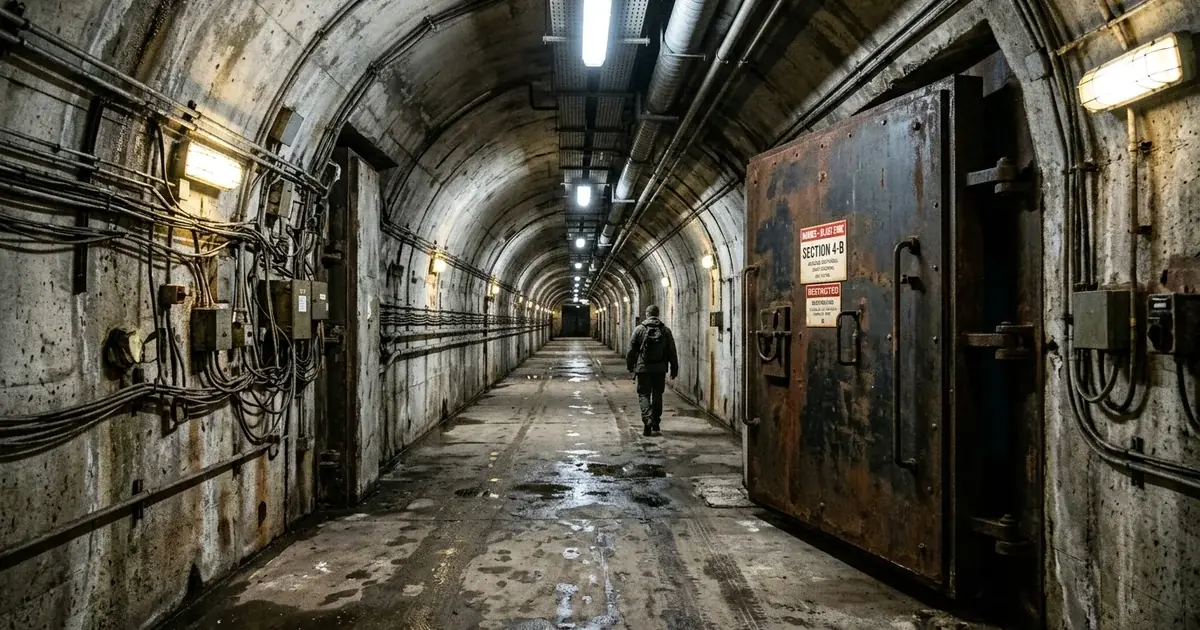
Upon entering the deep underground tunnels, security agents encountered a fully operational technological facility. The bunker's air was maintained at the ideal cooling temperature through industrial constant-flow climate systems. State-of-the-art fiber optic cables ran along the raw granite walls, connecting the command rooms to global traffic routes.
The datacenter technicians who lived inside the bunker in complete isolation were arrested on the spot. They were responsible for monitoring the physical integrity of the systems and ensuring the continuous cooling of the machines. The underground complex operated under the guise of a decommissioned shelter but secretly consumed a massive amount of electricity drawn from local high-voltage lines.
Context and History
Built during the Cold War in the 1960s by the Swiss government, the bunker was part of the national defense system against a potential Soviet invasion or thermonuclear attack. The complex, carved hundreds of meters into the Alpine rock, included dormitories, dining halls, and advanced air filtration systems to protect against chemical and radiological contamination. With the restructuring of the armed forces in the following decades, many of these fortifications were decommissioned and sold to private entities.
The clandestine datacenter operated under the code name "Alpine Vault" and was marketed privately as bulletproof hosting. This service guarantees clients that their websites and data will not be taken down, regardless of legal complaints or judicial removal requests. The structure was a key pillar for global criminal forums trading corporate access credentials and leaked personal databases.
The table below compares the known specifications of the digital fortress with other underground facilities dismantled in previous years:
| Bunker Location | Operation Name | Depth | Seized Servers | Main Crime Hosted |
|---|---|---|---|---|
| Swiss Alps (Uri) | Alpine Vault (2026) | 180 meters | 420 racks | Ransomware & Crypto |
| Traben-Trarbach (Germany) | CyberBunker (2019) | 5 levels | 250 racks | Illicit Markets & Forums |
| Rotterdam (Netherlands) | Operation Shield | 15 meters | 80 racks | DDoS Bots & Proxies |
Using decommissioned bunkers to host maximum-security datacenters is a well-known tactic in physical cyber engineering. These facilities offer complete protection against electromagnetic radiation and physical earthquakes. However, the physical connection to the external internet backbone remains the Achilles' heel of these underground fortresses.
Impact on the Population
The dismantling of the "Alpine Vault" datacenter will bring immediate practical benefits to the digital safety of citizens and businesses worldwide. The infrastructure hosted command and control (C2) servers for several ransomware families that targeted hospitals, schools, and public utility companies. Without these servers to coordinate attacks and deliver decryption keys, the activity of these virtual gangs will face a severe slowdown in the coming months.
The seizure of hard drives containing access logs will allow authorities to identify buyers and sellers of leaked data on the internet. This material will help clarify the origin of several database breaches containing credit card records and personally identifiable information. Internet users may notice a temporary reduction in the volume of sophisticated financial scams carried out via phishing emails and messages.
The international cooperation shown in this operation also serves as a clear warning to cybercriminals seeking physical shelter. Geographical neutrality and physical isolation are no longer enough to guarantee digital impunity. Police agencies demonstrated the technical capability to trace deep virtual connections back to their most isolated physical origins.
What the Involved Parties Say
At a press conference held at Europol headquarters, the director of cyber operations, Dr. Catherine De Bolle, praised the joint work of the agencies and highlighted the tactical complexity of the raid. De Bolle stated that "this successful action sends an unequivocal message that there are no impenetrable sanctuaries for organized crime in the digital age." The cooperation between digital forensics experts and tactical assault teams from MS and various countries was noted as the key factor in the operation's success.
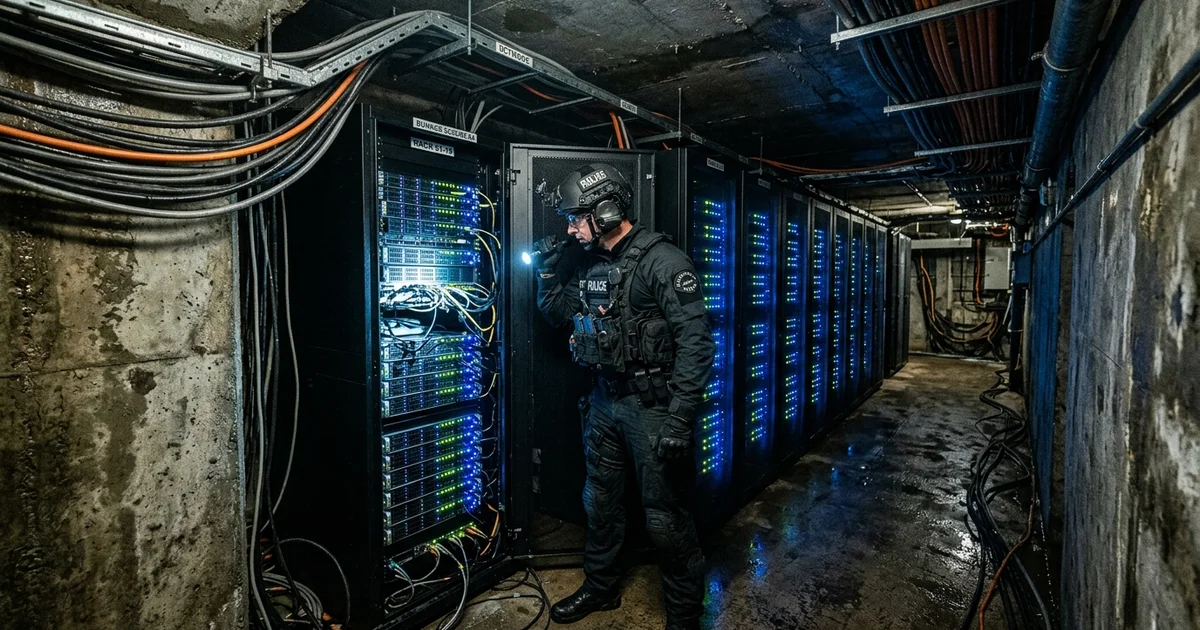
For their part, the spokesperson for the Swiss Federal Police explained that physical investigation and power consumption logging were crucial to confirming technical suspicions about the military bunker. "We identified thermal anomalies on the mountain slopes and an inconsistent consumption of electrical energy for a decommissioned shelter, which allowed us to plan the tactical entry with absolute precision," the officer reported in Geneva.
Defense lawyers for the network technicians detained inside the complex claimed their clients were unaware of the illicit nature of the data stored on the hard drives. The defense argues that the technicians were hired strictly to perform hardware maintenance and thermal cooling. The Swiss Prosecutor's Office, however, maintains the charge of global criminal conspiracy and facilitation of ransomware cyberattacks.
Next Steps
Europol's forensic experts have begun the process of decoding and analyzing the hard drives seized in the bunker. Due to the advanced multi-layer encryption techniques used on the systems, it is estimated that the complete analysis of the stored information will take months or even years. The recovered data will be shared with federal police agencies worldwide to trace the authorship of major cyberattacks against global corporations.
Switzerland is expected to re-evaluate its policy on leasing and selling decommissioned military bunkers to private entities. The local parliament plans to propose measures requiring periodic monitoring and auditing of how these high-security underground shelters are used by their new owners. These steps aim to prevent other Cold War shelters from being reused as bulletproof virtual strongholds for illegal cyber activities.
New coordinated actions by Interpol may occur based on the initial connection logs recovered from the Alpine Vault. The international police force is monitoring other suspicious datacenters operating in countries with restrictive jurisdictions and isolated military infrastructure in Eastern Europe. The battle for transparency and the integrity of global cyber networks continues to move forward behind the scenes.
Sources and References
- Swiss Federal Department of Justice and Police (FEDPOL)
- Europol European Cybercrime Centre (EC3)
- Analysis of Technical Network Logs by Interpol
- Infrastructure Reports by the Federal Office for Civil Protection (FOCP)