583 people killed in 27 seconds. Two Boeing 747s — the largest commercial aircraft in the world — collided on a runway shrouded in fog in the Canary Islands. Nobody could see beyond 50 meters. The KLM pilot accelerated for takeoff without clearance. The Pan Am was still on the runway. The impact was so violent that body parts were found over 1 kilometer away. This is Tenerife, 1977 — the worst aviation accident in history. But it's not the only one that will keep you up tonight.
1. Tenerife, 1977 — The Worst Air Disaster of All Time
Date: March 27, 1977 | Location: Los Rodeos Airport, Tenerife | Deaths: 583
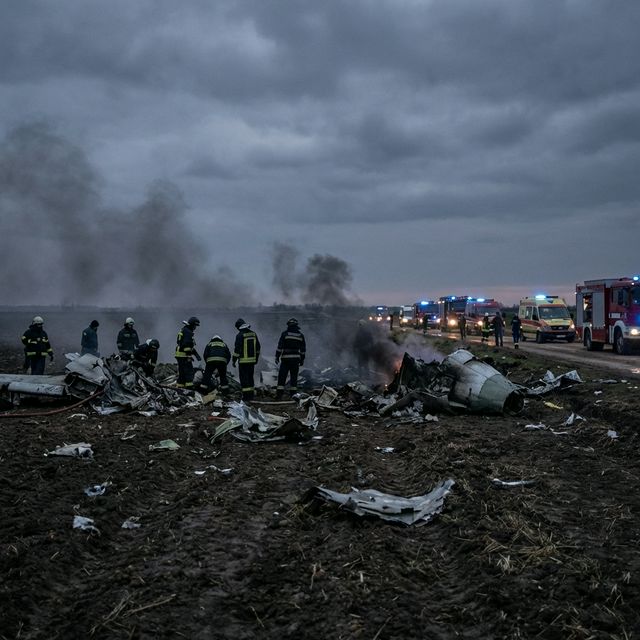
A bomb at Gran Canaria Airport diverted flights to tiny Los Rodeos. Dense fog reduced visibility to under 300 meters. The KLM 747 began its takeoff run. The Pan Am 747 was still on the runway. Radio interference prevented the controller's warning from getting through. The KLM hit the Pan Am at 260 km/h. 583 people died. This single accident revolutionized aviation: standardized English for communications, Crew Resource Management (CRM), and completely reformed taxiing procedures.
2. JAL Flight 123, 1985 — 520 Dead, 4 Miraculous Survivors
The rear pressure bulkhead ruptured 12 minutes after takeoff. For 32 agonizing minutes, the crew fought to control the Boeing 747 using only engine thrust. The black box recording captures pilots working without panic until the final second. Of 524 aboard, only 4 women survived — all seated in the rear section. Rescue teams took 16 hours to arrive, despite reports that more people were alive immediately after impact.
3. Vesna Vulović — The 10,160-Meter Fall Without a Parachute
On January 26, 1972, flight attendant Vesna Vulović fell 10,160 meters (33,330 feet) when JAT Flight 367 exploded over Czechoslovakia. She wasn't even supposed to be on that flight — a name mix-up put her there. Trapped in a section of fuselage that glided like a leaf, cushioned by trees and snow, she survived with a fractured skull, 3 crushed vertebrae, 2 broken legs, and 27 days in a coma. She holds the Guinness World Record for the highest fall survived without a parachute.
4. Juliane Koepcke — 3,000-Meter Fall Into the Amazon
On Christmas Eve 1971, 17-year-old Juliane fell 3,000 meters still strapped to her seat when LANSA Flight 508 disintegrated over the Peruvian Amazon. She walked 11 days through the jungle — with a broken collarbone, infected wounds full of maggots, and one eye swollen shut — following a stream, a technique learned from her zoologist father.
5. Cecelia Cichan — 4 Years Old, Sole Survivor
On August 16, 1987, 4-year-old Cecelia was the only survivor of Northwest Airlines Flight 255 (156 dead). A firefighter found her after hearing a faint cry among flaming wreckage. Investigators believe her mother may have shielded her with her own body in the final seconds.
6. Bahia Bakari — 12 Years Old, 13 Hours in the Indian Ocean
On June 30, 2009, 12-year-old Bahia was the sole survivor of Yemenia Flight 626 (152 dead). She couldn't swim. Yet she clung to debris and floated in the dark ocean for over 13 hours, surrounded by sharks.
7. The Andes Survivors — 72 Days on the Mountain
On October 13, 1972, Uruguayan Air Force Flight 571 crashed at 3,570 meters in the Andes. After weeks without rescue, survivors made the most controversial decision in survival history: eating their dead companions. Two survivors walked 10 days through the Andes to find help. 16 of 45 survived. Their story was retold in "Society of the Snow" (2023).
The Paradox of Aviation Safety
Despite these terrifying stories, flying is statistically the safest form of transportation:
| Data | Value |
|---|---|
| Chance of dying in a plane crash | 1 in 11 million |
| Chance of dying in a car accident | 1 in 5,000 |
| Daily commercial flights worldwide | ~100,000 |
| Fatal accident rate (2023) | 0.03 per million flights |
Every crash is exhaustively investigated, and lessons are implemented globally. Each tragedy has made the next flight safer.
Survival Science: What Determines Who Lives and Who Dies
Aviation crash investigators and survival researchers have identified several factors that significantly influence survival odds in aircraft accidents.
Seat Position Matters
A comprehensive study by Popular Mechanics analyzing 36 years of NTSB crash data found that passengers seated in the rear third of the aircraft had a 69% survival rate, compared to 56% for those over the wing and 49% for first class. While no seat guarantees survival, the data consistently shows that rear seats offer a statistical advantage.
The Plus-3/Minus-8 Rule
Aviation safety experts refer to the "Plus-3/Minus-8 Rule" — the first 3 minutes after takeoff and the last 8 minutes before landing account for approximately 80% of all aviation accidents. During these critical phases, passengers should keep their shoes on, seatbelts fastened, and be mentally prepared for an emergency evacuation.
The 90-Second Rule
Aircraft certification requires that all passengers must be able to evacuate within 90 seconds using only half the available exits. This standard exists because fire and toxic smoke can make an aircraft cabin unsurvivable within 2-3 minutes after a crash. Studies show that passengers who read the safety card and count the rows to the nearest exit are significantly more likely to survive.
Body Position During Impact
The brace position — leaning forward with hands on the seat in front — is not a myth. Research by the UK Civil Aviation Authority demonstrated that the brace position reduces the risk of head injury by 25-30% and significantly decreases the chance of fatal chest compression. The position works by limiting the distance the body travels before impact with the seat in front, reducing deceleration forces.
The Deadliest Decades: Aviation's Dark Ages
The 1970s and 1980s were particularly deadly periods for commercial aviation, with multiple catastrophic accidents each year:
Notable Disasters Not in the Main List
- 1979 — American Airlines Flight 191 (Chicago): Engine separated during takeoff, killing all 271 aboard plus 2 on the ground. Deadliest single-aircraft accident in US history at the time.
- 1985 — Arrow Air Flight 1285 (Gander, Newfoundland): Crashed on takeoff killing 256 — mostly US soldiers returning from peacekeeping duty in the Sinai.
- 1988 — Iran Air Flight 655: Shot down by USS Vincennes over the Persian Gulf, killing all 290 aboard. The US Navy cruiser mistakenly identified the Airbus A300 as an attacking F-14 fighter jet.
- 1994 — USAir Flight 427 (Pittsburgh): Crashed on approach killing all 132 aboard. The investigation took 5 years and led to the discovery of a rudder valve defect in the Boeing 737.
- 1996 — Charkhi Dadri mid-air collision (India): A Saudi Arabian 747 and a Kazakh Il-76 collided at 14,000 feet, killing all 349 people on both aircraft. Led to mandatory TCAS installation worldwide.
These tragedies, while devastating, each contributed to the remarkable safety record that modern aviation enjoys today. The aviation industry's commitment to learning from every accident — no matter how painful — is perhaps its greatest achievement.
Modern Safety Innovations
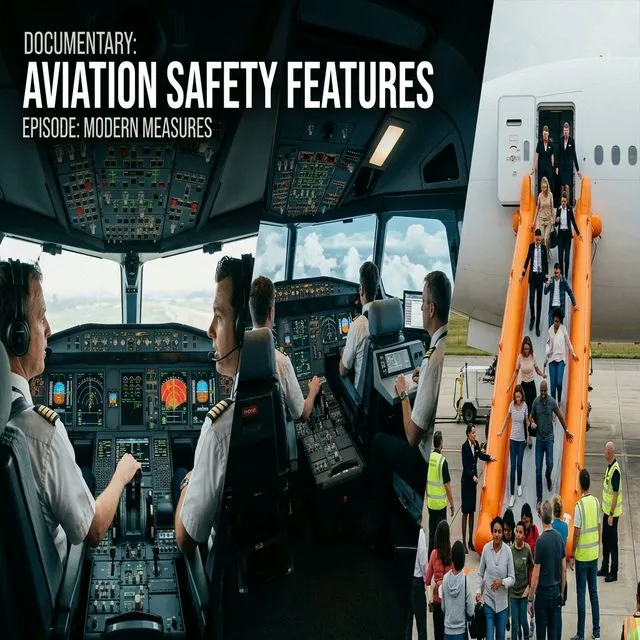
Today's aircraft incorporate revolutionary safety features that would have seemed like science fiction decades ago. Enhanced Ground Proximity Warning Systems (EGPWS) use GPS and terrain databases to alert pilots of dangerous terrain, virtually eliminating controlled flight into terrain accidents. Traffic Collision Avoidance Systems (TCAS) independently coordinate evasive maneuvers between aircraft, preventing mid-air collisions without requiring air traffic control input. Fly-by-wire technology prevents pilots from exceeding the aircraft's structural limits, while composite materials make modern fuselages both lighter and more crash-resistant than their aluminum predecessors.
Conclusion: Between Engineering and Miracles
The stories of Vesna, Juliane, Cecelia, and Bahia defy rational explanation. A 10,160-meter fall. A 12-year-old who couldn't swim floating 13 hours in the ocean. A 4-year-old found alive in an inferno. Science explains part of these survivals. But something beyond calculations kept these people alive. And every time you board a plane, 80 years of lessons learned in blood are silently working to ensure you reach your destination.
8. Air France Flight 447, 2009 — Vanished Over the Atlantic
On June 1, 2009, Air France Flight 447 disappeared over the Atlantic Ocean during a flight from Rio de Janeiro to Paris. All 228 people aboard perished. The Airbus A330 encountered severe turbulence in the Intertropical Convergence Zone, and ice crystals blocked the pitot tubes — the sensors that measure airspeed.
The Investigation That Changed Aviation
The aircraft's black boxes weren't recovered until nearly two years later, found at a depth of 3,900 meters on the ocean floor. The investigation revealed a cascade of errors: when the autopilot disconnected due to unreliable speed data, the co-pilot pulled back on the stick, putting the aircraft into an aerodynamic stall. Despite stall warnings sounding 75 times, the crew never correctly diagnosed the problem.
The crash led to mandatory changes in pilot training worldwide, particularly regarding high-altitude stall recovery. Airbus redesigned its pitot tubes, and airlines implemented new protocols for handling unreliable airspeed indications. The tragedy also sparked debates about the level of automation in modern cockpits and whether pilots were losing fundamental flying skills.
9. Malaysia Airlines Flight 370, 2014 — The Greatest Aviation Mystery
On March 8, 2014, Malaysia Airlines Flight 370 vanished with 239 people aboard during a routine flight from Kuala Lumpur to Beijing. Despite the largest and most expensive search operation in aviation history — covering over 120,000 square kilometers of the Indian Ocean floor — the aircraft has never been found.
What We Know
Military radar tracked the Boeing 777 as it deviated from its planned route, turned west across the Malay Peninsula, and flew south over the Indian Ocean until it presumably ran out of fuel. The transponder was deliberately switched off, and the aircraft's communication systems were disabled. Satellite data from Inmarsat provided the only clues about the plane's final trajectory.
Several pieces of debris have washed ashore on islands in the western Indian Ocean, confirming the aircraft crashed into the sea. But the main wreckage, the black boxes, and the remains of 239 passengers and crew have never been recovered. The mystery has spawned countless theories — from pilot suicide to hijacking to mechanical failure — but without the flight recorders, the truth may never be known.
10. Ethiopian Airlines Flight 302, 2019 — The Boeing 737 MAX Crisis
On March 10, 2019, Ethiopian Airlines Flight 302 crashed just 6 minutes after takeoff from Addis Ababa, killing all 157 people aboard. It was the second fatal crash of a Boeing 737 MAX in five months — Lion Air Flight 610 had killed 189 people in Indonesia in October 2018.
The MCAS System Failure
Both crashes were caused by a flawed automated system called MCAS (Maneuvering Characteristics Augmentation System), which repeatedly pushed the nose down based on data from a single faulty sensor. Pilots were not adequately trained on the system, and Boeing had not disclosed its full capabilities in the aircraft manual.
The 737 MAX was grounded worldwide for 20 months — the longest grounding of a commercial aircraft in history. Boeing paid over $2.5 billion in fines and settlements. The crisis exposed serious failures in the certification process, where Boeing had been allowed to largely self-certify the safety of its own aircraft. The FAA's oversight procedures were completely overhauled as a result.
How Aviation Safety Has Evolved: A Timeline
The history of aviation safety is written in tragedy. Every major crash has led to specific improvements that have made flying progressively safer:
| Year | Disaster | Safety Improvement |
|---|---|---|
| 1956 | Grand Canyon mid-air collision | Creation of the FAA; radar-based air traffic control |
| 1977 | Tenerife runway collision | Standardized English; Crew Resource Management (CRM) |
| 1985 | JAL Flight 123 | Improved pressure bulkhead inspection protocols |
| 1988 | Lockerbie bombing (Pan Am 103) | Enhanced baggage screening and security |
| 1996 | TWA Flight 800 | Fuel tank inerting systems on all aircraft |
| 2001 | September 11 attacks | Reinforced cockpit doors; TSA creation |
| 2009 | Air France 447 | Improved pilot stall recovery training |
| 2019 | Boeing 737 MAX crashes | FAA certification reform; MCAS redesign |
The Numbers Tell the Story
In the 1970s, there were approximately 40 fatal accidents per year in commercial aviation. By 2023, that number had dropped to fewer than 5 — despite a massive increase in the number of flights. The fatal accident rate has decreased by over 95% in five decades.
Modern aircraft are equipped with:
- Triple-redundant flight control systems
- Terrain awareness and warning systems (TAWS)
- Traffic collision avoidance systems (TCAS)
- Enhanced ground proximity warning systems (EGPWS)
- Flight data monitoring programs that analyze every flight for anomalies
The Psychology of Fear: Why We Fear Flying
Despite overwhelming statistical evidence that flying is extraordinarily safe, fear of flying (aviophobia) affects an estimated 25-30% of the population to some degree. Psychologists attribute this to several cognitive biases:
- Availability heuristic: Plane crashes receive massive media coverage, making them seem more common than they are
- Lack of control: Passengers have no control over the aircraft, unlike driving a car
- Catastrophic potential: When plane crashes occur, they tend to kill many people at once
- Evolutionary mismatch: Humans evolved on the ground; being 10,000 meters in the air triggers primal fear responses
The irony is that the drive to the airport is statistically far more dangerous than the flight itself. Yet most people feel perfectly comfortable in a car and anxious in a plane — a perfect example of how human risk perception is fundamentally irrational.
Frequently Asked Questions
What is the deadliest plane crash in history?
The Tenerife airport disaster on March 27, 1977 remains the deadliest, killing 583 people when two Boeing 747s collided on the runway in fog. The deadliest single-aircraft accident was Japan Airlines Flight 123 in 1985, killing 520 of 524 passengers.
How safe is flying compared to other transport?
Flying is statistically the safest form of transportation. The odds of dying in a plane crash are approximately 1 in 11 million, compared to 1 in 5,000 for car travel. The fatal accident rate has dropped 95% since the 1970s.
What are the most common causes of plane crashes?
Pilot error accounts for approximately 50% of accidents, followed by mechanical failure (20%), weather (12%), sabotage (9%), and other causes. Modern aviation safety focuses on crew resource management and automated systems.
Can you survive a plane crash?
Yes, 95.7% of passengers involved in aviation accidents survive according to the NTSB. Even in serious accidents, survival is possible. Sitting near emergency exits and wearing your seatbelt significantly improve survival odds.
Sources: Britannica, Aviation Safety Network, Wikipedia, Guinness World Records, BBC, National Geographic.
References: Aviation Safety Network, NTSB, Guinness World Records