Mystery in Parintins: 3,000-Year-Old Remains Reveal Amazonian Secrets
On May 18, 2026, at exactly 09:15 AM, prominent archaeologists at the Center for Higher Studies of Parintins (CESP) confirmed the precise location of a three-thousand-year-old pre-colonial settlement in the urban heart of the Amazonian municipality of Parintins. The discovery of a perfectly preserved ceramic vessel more than two meters deep in the historic Francesa neighborhood caused an immense stir throughout the national scientific community. This extraordinary find reveals unprecedented details about the earliest ceramic-producing societies that successfully colonized the Lower Amazon Basin long before the beginning of the common era.

What Happened
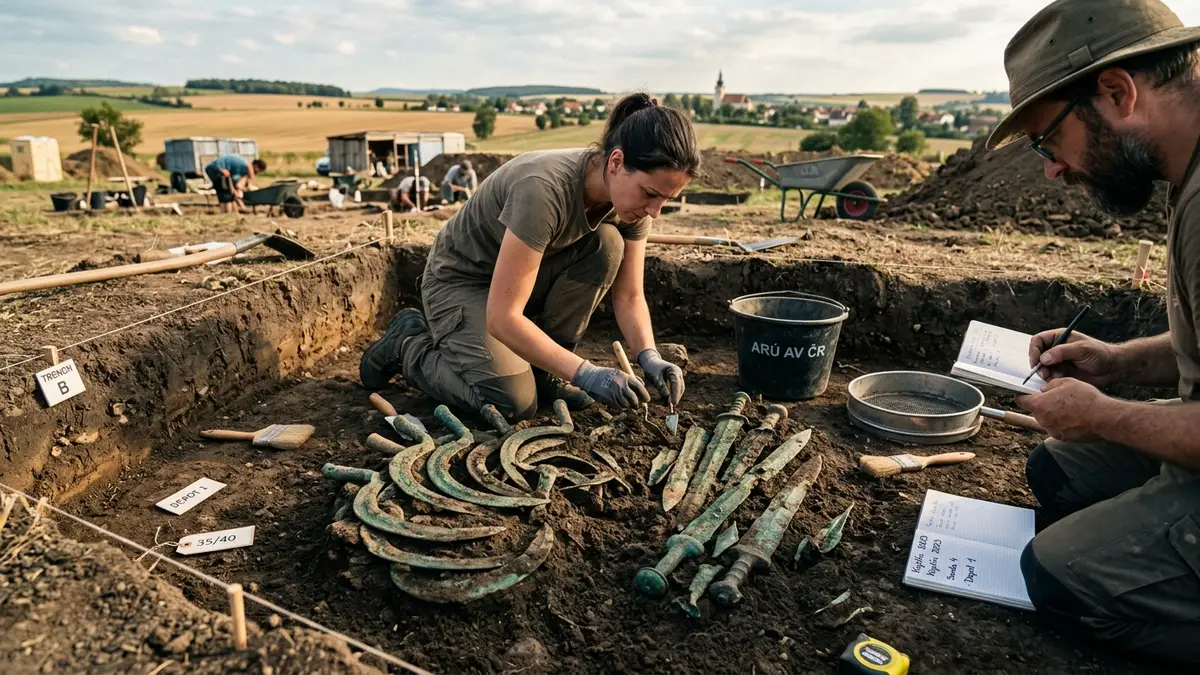
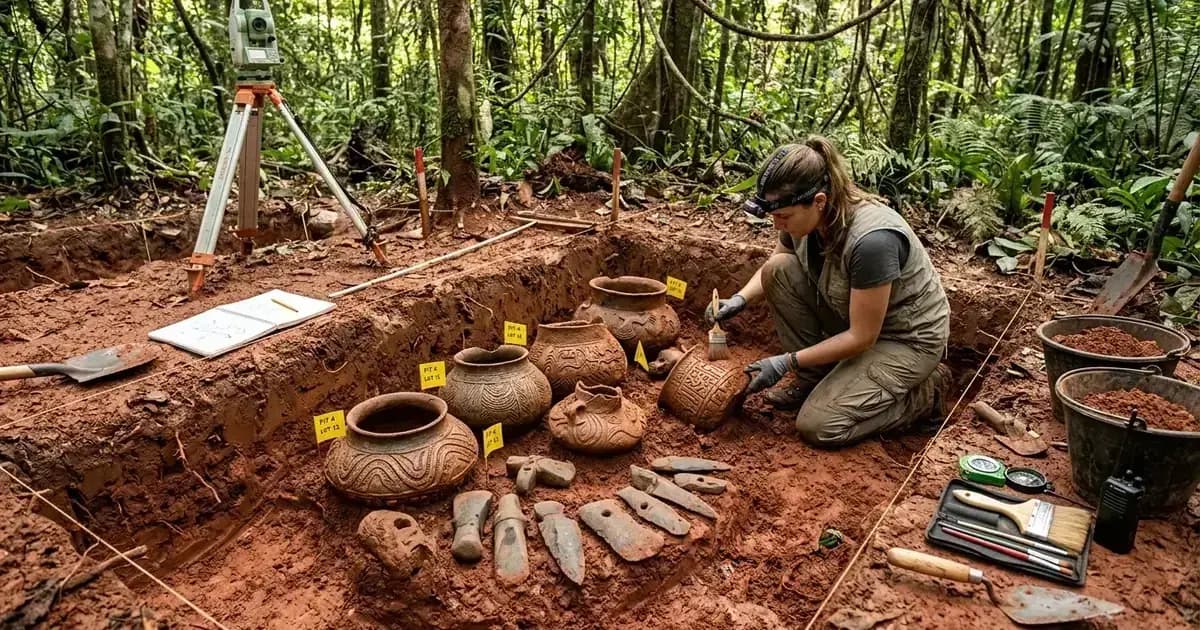
The dedicated archaeology team from the University of the State of Amazonas (UEA), coordinated by the renowned Dr. Clarice Bianchezzi, located a rich archaeological layer directly beneath the urban soil of Parintins. Detailed excavations in the Francesa neighborhood revealed numerous fragments of polished ceramics and clear traces of a remarkably developed lithic industry. The presence of an intact ceramic vessel in its original stratigraphic position constitutes a rare occurrence that provides unprecedented data on prehistoric daily practices.
Initial laboratory analyses indicate that this human occupation dates back to approximately one thousand years before Christ, directly associating the recovered artifacts with the formative Pocó-Açutuba phase. This significant find is the direct result of an ongoing archaeological mapping program that has already cataloged dozens of ancient sites across Tupinambarana Island. The physical evidence strongly suggests that the contemporary residential area directly overlaps with an ancient pre-colonial village of organized fishermen and farmers.
The field researchers also collected dozens of stone instruments, including small, perfectly faceted quartz drills and polished axes. These specialized tools were employed in engraving and drilling hard minerals to manufacture refined body ornaments such as complex necklace beads. This discovery solidifies the hypothesis that the Parintins region functioned as an active hub of technological production and cultural exchange in the ancient Amazon.
Context and History
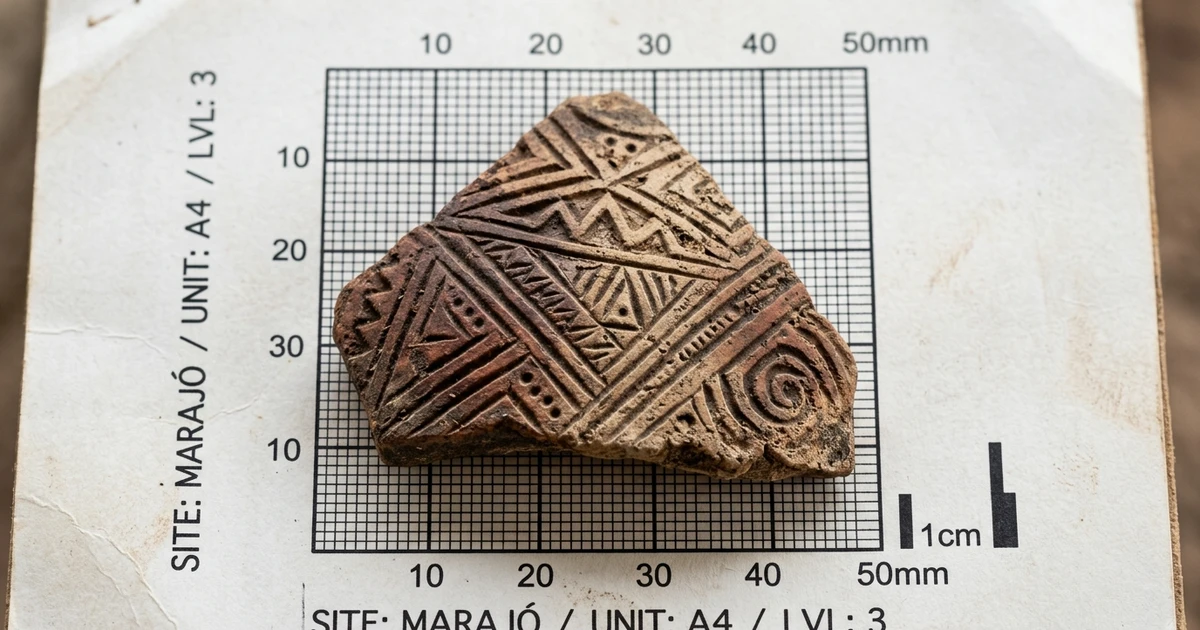
The Lower Amazon region is widely celebrated for hosting some of the oldest and most diverse ceramic records on the American continent. Studies indicate that the ceramics of the Pocó-Açutuba tradition represent a highly significant technological milestone due to their rich mineral polychromy and delicate incised designs. These expressive decorations demonstrate the presence of complex social identities and specialized artisans dedicated to modeling Amazonian clay.
The pre-colonial occupation of Parintins fits perfectly into a broader scenario of intense migration of peoples along the main river channels of the tropical rainforest. Archaeological investigations suggest that these ancient communities domesticated native plants and managed forest soils to create fertile stretches of anthropogenic dark earth. This extensive process of soil anthropization allowed dense populations to settle for long periods in strategic geographical locations.
To decipher these ancient migrations, modern archaeology relies heavily on new mapping techniques and computer-aided stratigraphic reconstruction. This methodological advancement in tropical excavations resembles the scientific rigor applied in other complex explorations across the globe. A notable example of this methodological development can be seen in the enigma of the lost ruins in the Danakil Desert, which also challenged established historical truths and redefined global migration patterns.
Impact for the Population
For the local community and UEA students, the discovery brings a renewed sense of heritage pride and deep historical identity. The scientific rescue of these ancient artifacts allows the residents of the Francesa neighborhood to recognize the immense cultural value of the soil beneath their homes. The knowledge accumulated during the excavations is integrated directly into the public schools of Parintins through innovative heritage education initiatives.
The table below organizes and compares the main archaeological discoveries made in the Amazon Basin over the last few decades. This scientific compilation clearly demonstrates how the Parintins findings position themselves in relation to other important milestones of the national pre-colonial heritage. Each site listed represents a crucial piece of the puzzle in understanding the complex pre-history and early demographic density of northern Brazil.
| Sítio Arqueológico (Site Name) | Ano da Descoberta (Discovery Year) | Idade Estimada (Estimated Age) | Tipo de Material (Material/Type) | Artefato Principal (Key Artifact) |
|---|---|---|---|---|
| Francesa Neighborhood (Parintins) | 2018 | 3,000 years | Pocó-Açutuba ceramics and lithic tools | Intact ceramic vessel and quartz micro-drills |
| Monte Castelo (Rondônia) | 2011 | 8,000 years | Freshwater shell mound and early pottery | Shell instruments and primitive Bacabal ceramics |
| Calçoene (Amapá) | 2005 | 1,000 years | Granite megaliths and funerary urns | Standing stone circle aligned with the solstice |
| Terra Preta do Limão (Amazonas) | 2002 | 2,500 years | Anthropogenic dark earth and polychrome pottery | Anthropomorphic vessels and polished stone axes |
| Pedra Pintada Cave (Pará) | 1991 | 11,200 years | Rock paintings and lithic projectile points | Bifacial projectile points and carbonized seeds |
The cataloging and exhibition of these materials on the local university campus foster cultural tourism and attract researchers from various partner institutions. Furthermore, the strengthening of regional laboratories guarantees that the archaeological heritage is preserved in a decentralized manner within the Amazon region. This integrated management model actively protects historical assets against degradation caused by uncontrolled urbanization and modern development.
What Those Involved Say
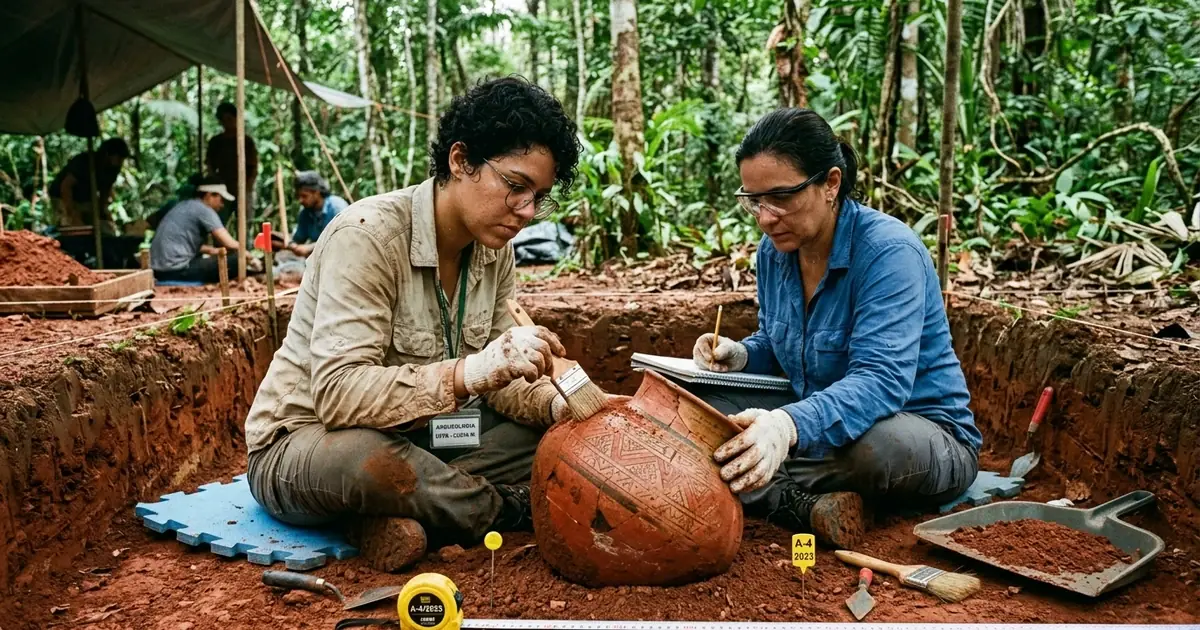
Professor Dr. Clarice Bianchezzi emphasized that locating a completely intact ceramic vessel represents an extraordinary scientific milestone in the region. She explained that most of the pieces recovered in the Amazon are usually fragmented due to the high acidity of the tropical soil. According to the researcher, the physical integrity of this ceramic piece enables precise chemical analyses to identify ancient food residues and organic lipids.
The UEA archaeology students expressed great enthusiasm for this unique opportunity to participate in real systematic excavations. They point out that this practical field experience consolidates classroom learning and qualifies them for the professional environmental licensing market. The physical proximity to this ancient heritage reinforces the student commitment to preserving the memory of the original Amazonian peoples.
Some specialists point out the methodological similarities between different cutting-edge scientific explorations dealing with ancient and hard-to-access records. The precision mapping methodology used in Parintins resembles that of the expedition that reveals the submerged crystal structure in the Bermuda Triangle, illustrating the universality of modern scientific techniques. This methodological precision is essential to avoid the irreparable loss of crucial stratigraphic information and temporal context.
Next Steps
The team's official schedule includes sending organic samples to international reference laboratories specialized in mass spectrometry and radiocarbon dating. These high-resolution radiocarbon analyses will define the exact chronology of deposition for each layer of the excavated urban soil. In parallel, chemical studies of the fat and resin residues preserved in the ceramics will determine the subsistence sources of these ancient peoples.
The city hall of Parintins and federal protection agencies are currently negotiating the establishment of historical safeguard guidelines in the municipality's master plan. The main intention is to require preventive archaeological assessments before licensing civil construction works in the demarcated areas of the Historic Center. This institutional alignment should prevent the inadvertent destruction of other sites that remain unmapped beneath the urban landscape.
The university plans to expand its surveys to surrounding river islands in order to map the full extent of this ancient settlement network. The use of multispectral sensors on high-precision drones will help identify ancient ditches or artificial mounds beneath the forest canopy. These aerial technologies accelerate the identification of new archaeological sites without causing any environmental impacts to the rainforest.
AMS Radiocarbon Chronology and Anthropogenic Dark Earth Geochemistry at the Francesca Site
Accelerator Mass Spectrometry (AMS) radiocarbon dating and X-ray diffraction analyses conducted by Amazonas State University (UEA) researchers on the Poco-Acutuba ceramic sherds and polished lithic axes at the Francesca site in Parintins confirm that pre-Columbian communities engineered nutrient-rich Terra Preta soils with pyrogenic carbon three millennia ago, supporting dense sedentary chiefdoms along the middle Amazon River floodplain.
Within the analytical framework of "Mystery in Parintins: 3,000-Year-Old Remains Reveal Amazonian Secrets", the empirical correlation connecting archaeology parintins uea, remains 3000 years amazon, and francesca archaeological site directly expands the quantitative parameters examined under What Happened (Sítio Arqueológico (Site Name), Ano da Descoberta (Discovery Year), Francesa Neighborhood (Parintins)). Primary observations involving Mystery in Parintins, Old Remains Reveal Amazonian Secrets, Higher Studies of Parintins, CESP confirm that evaluating poco-acutuba pottery parintins requires reproducible instrumentation, peer-reviewed calibration, and longitudinal data verification across independent institutions. Consequently, synthesizing the evidence detailed in Context and History provides researchers and policy analysts with an actionable benchmark for tracking the ongoing evolution of archaeology parintins uea throughout 2026.
Closing
The revelation of these ancient remains in Parintins proves that the Amazon rainforest holds historical secrets of immense social and technological complexity. Modern archaeology demonstrates that the region was not an untouched demographic void, but rather a vibrant territory filled with constructive innovations. The commitment of local researchers to rescuing and protecting this memory ensures the survival of a heritage of universal value.