| Find Location |
Estimated Dating |
Type of Objects |
State of Conservation |
Probable Reason for Deposit |
Institution Responsible for Research |
| Kojetín (Czech Rep.) |
1000 BCE |
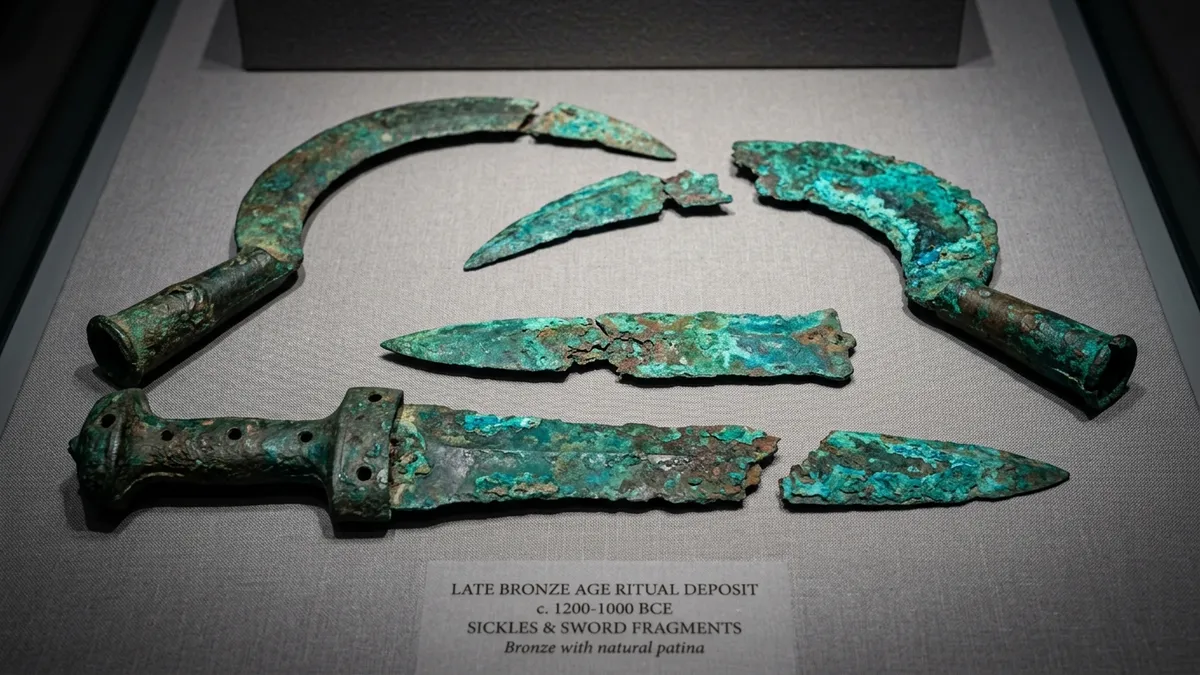
Sickles and swords |
Ritually broken and bent |
Spiritual sacrifice and tribal protection |
Institute of Archaeology of the Czech Academy |
| Nebra (Germany) |
1600 BCE |
Swords, axes, and disk |
Direct ritual burial |
Astronomical alignment and solar ritual |
Halle State Museum of Prehistory |
| Moreton (United Kingdom) |
1200 BCE |
Spearheads and jewelry |
Intact under stones |
Offering of gratitude to the water deities |
Portable Antiquities Scheme |
| Balsfjord (Norway) |
800 BCE |
Bronze axes |
Severe corrosion with patina |
Agricultural soil fertility ritual |
University of Tromsø |
| Villena (Spain) |
1000 BCE |
Gold bowls and bracelets |
Excellent shiny condition |
Hiding of dynastic treasure during war |
Archaeological Museum of Villena |
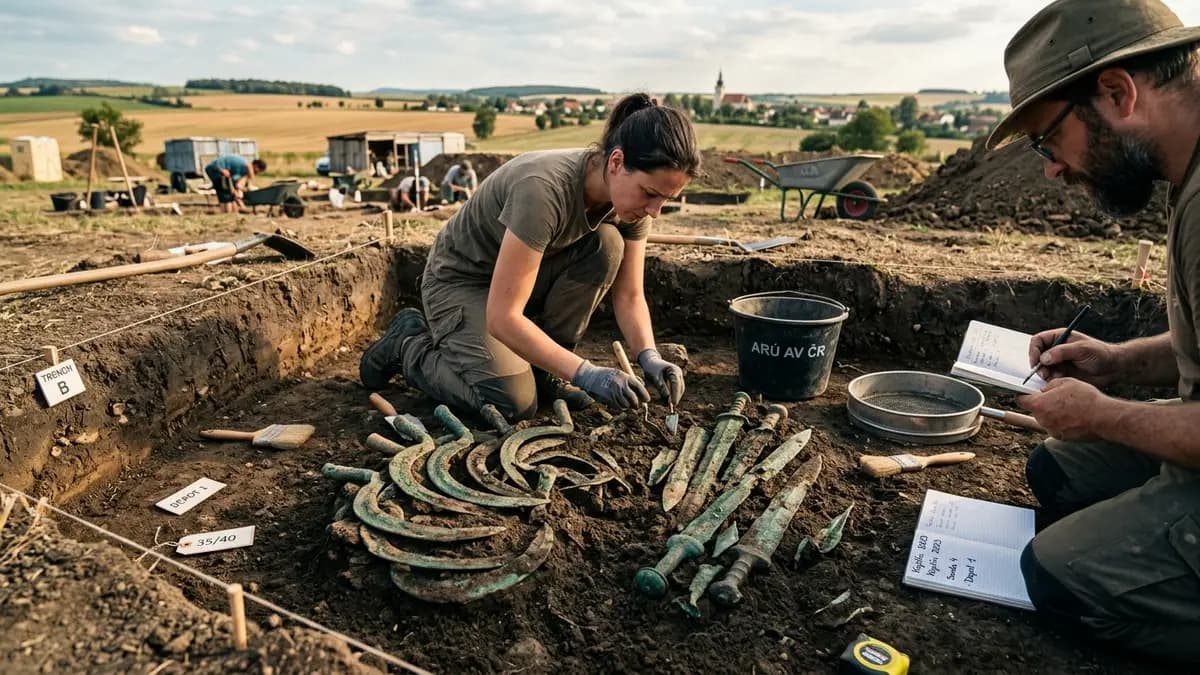
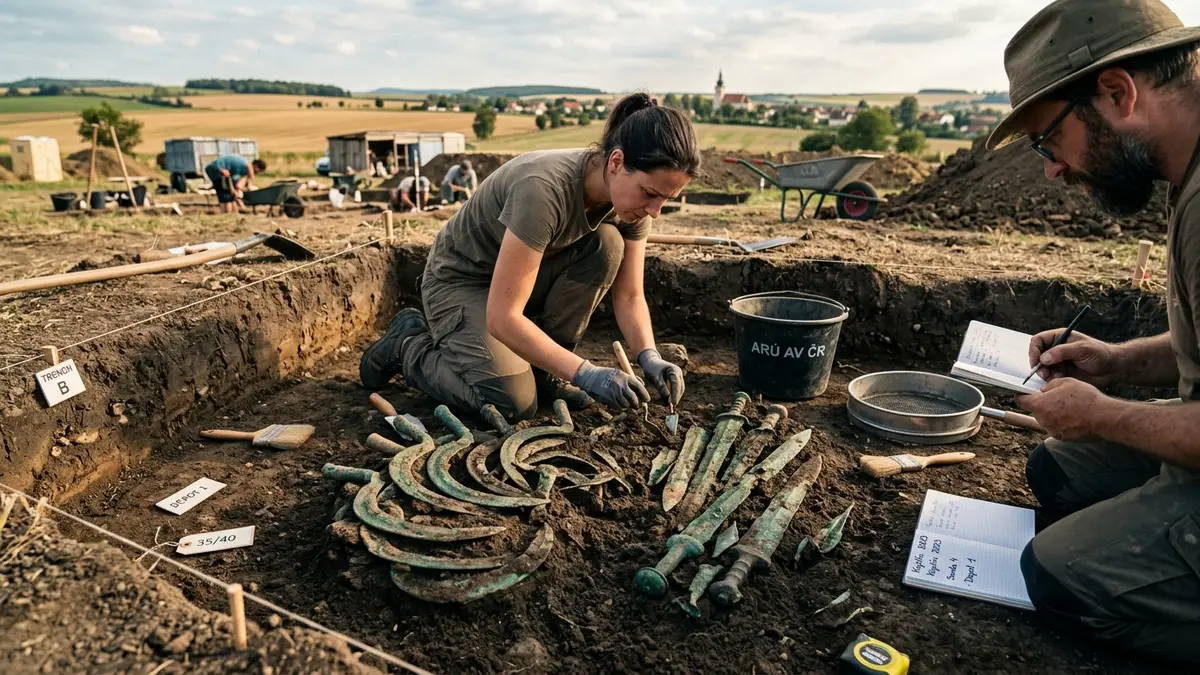
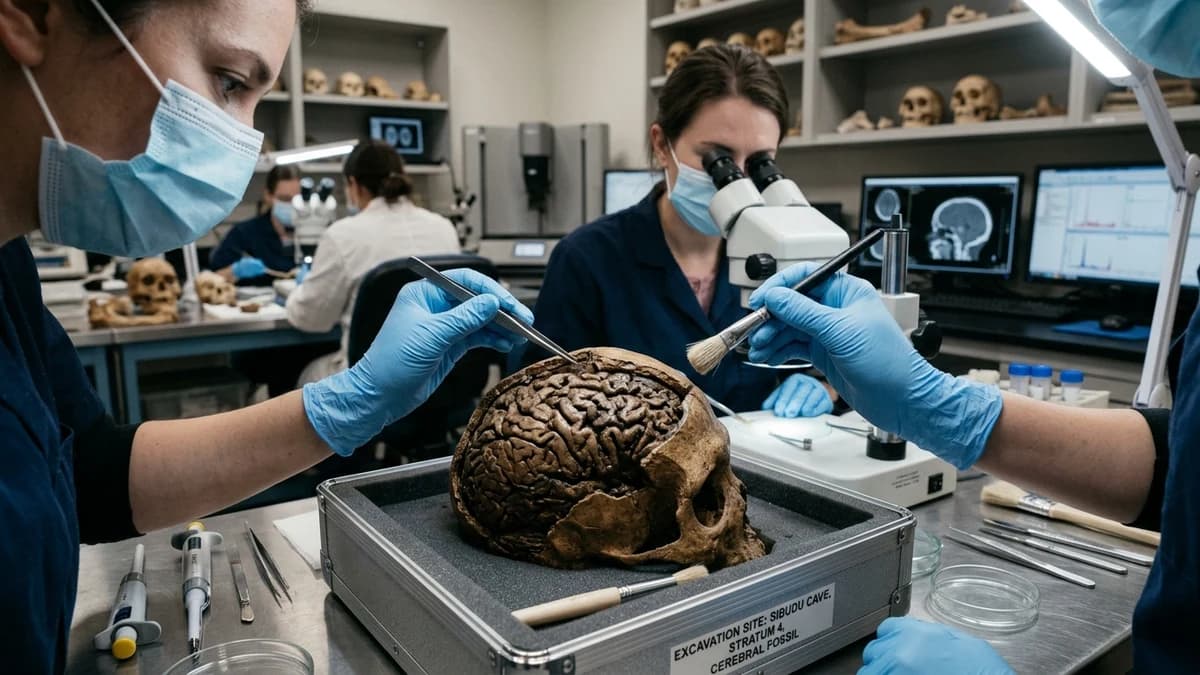
The metallic fragments from Kojetín were transferred to high-tech laboratories in Prague for detailed chemical and radiographic analysis. X-ray fluorescence spectrometry will help determine the exact geographical origin of the copper and tin alloys that make up the bronze. This advanced metallurgical information will make it possible to map the ancient trade routes that connected the Czech Republic with the rest of the prehistoric European continent.
The local municipality of Kojetín plans to build a modern museum to display the treasure and revitalize the tourism economy of the quiet region. The exhibition will feature virtual reality resources and digital simulations that will reconstruct the ancient sword decommissioning ritual in a realistic manner. This cultural initiative brings modern archaeological science closer to the general public, educating new generations of students about the fascinating history of our ancestors.
The ritual deposit of Kojetín continues to challenge our intellectual limits regarding what truly motivated the spiritual mind of ancient man. Each broken metal fragment functions as a silent word of a spiritual message that time has almost completely erased. Twenty-first-century archaeology continues to unearth these deep secrets, proving that the human past is much richer and more complex than we imagine.
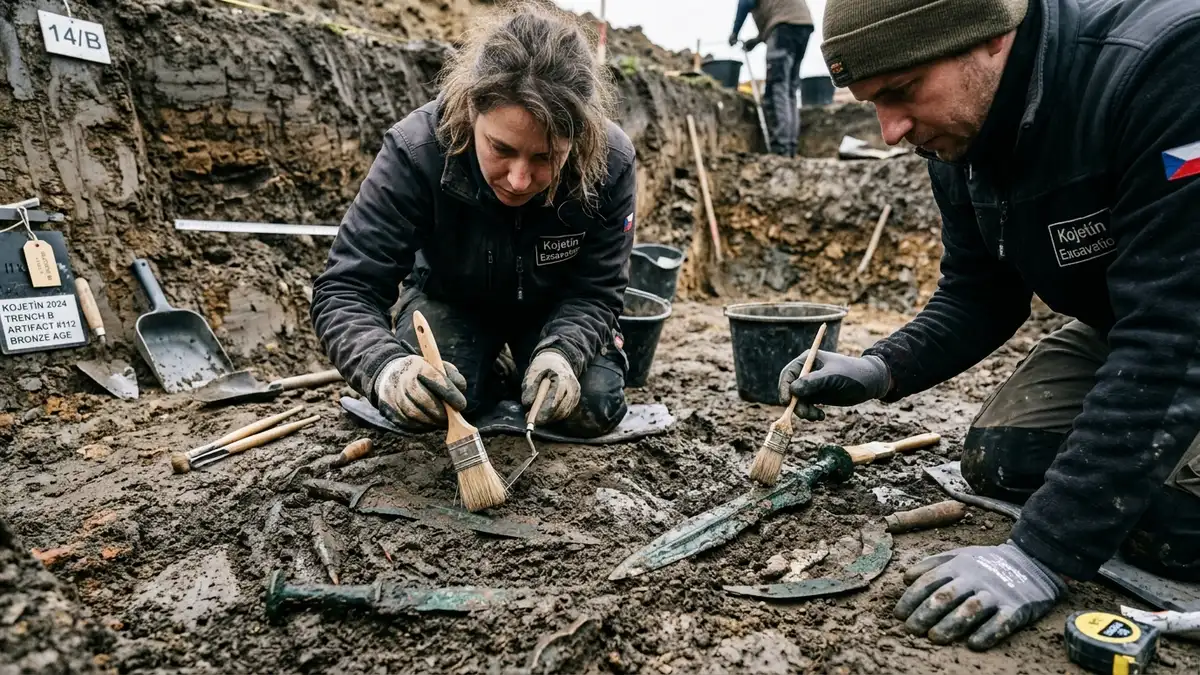
Archaeometallurgical analysis of the more than five hundred bronze artifacts unearthed near Kojetín in the Přerov District of Moravia—conducted using portable X-ray fluorescence (pXRF) and lead-isotope mass spectrometry—reveals copper-tin-antimony alloy signatures linked to Alpine and Carpathian mining networks of the Late Bronze Age (circa 1200–1000 BCE). The deliberate mechanical bending, edge-notching, and fragmentation of swords, socketed axes, sickles, and ornamental pins prior to burial confirm that the hoard was not an emergency smith's cache hidden from raiders, but a structured communal sacrifice.
Within the cosmology of the Central European Urnfield culture, ritually 'killing' high-value bronze weaponry removed the metal permanently from profane human circulation and transferred its spiritual essence to chthonic or aquatic deities along marshy river terraces.
Micro-stratigraphic excavation of the Kojetín pit by Czech archaeologists further documented organic layering showing that the items were wrapped in woven bast textiles and deposited in a strict hierarchical sequence, offering unprecedented insight into prehistoric social stratification and metallurgical wealth redistribution across Moravia.