
70% of Rice Farmers Don't Want Their Children in Agriculture: The Crisis Threatening to Feed the World
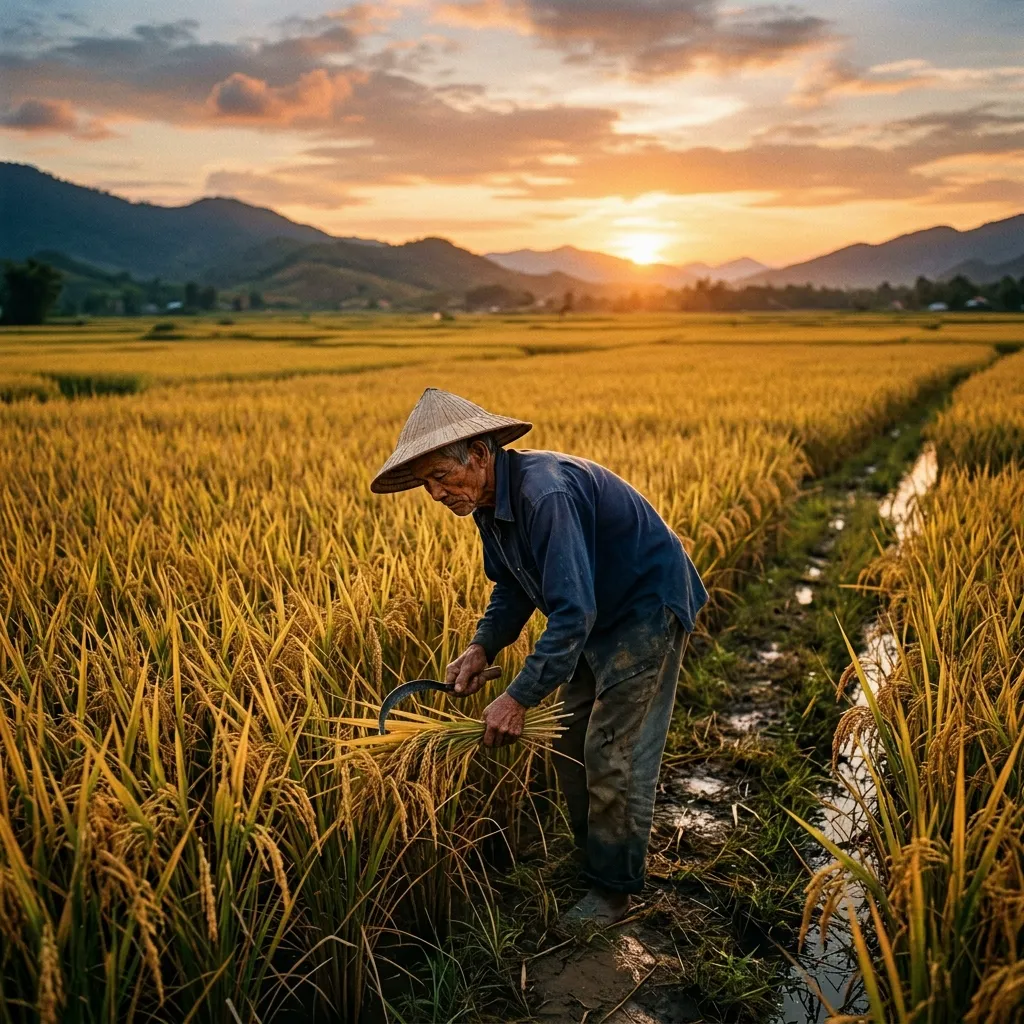
Ramesh Kumar, 58, has cultivated rice for 40 of those years on a 2-hectare property in Uttar Pradesh, India. His family has planted rice for five generations. His son Arjun, 24, is the first Kumar in 150 years to have never planted a single seed. He works at a call center in Noida, 800 km away, earning ₹25,000 per month ($300) — three times what his father makes from rice in good months.
"I don't want Arjun to suffer like me," Ramesh told Mars Inc. researchers who interviewed his family in 2025. "Every year I work more, earn less, and pray more. That's no life for my son."
A bombshell report published on March 31, 2026 by Mars Inc. — titled "Securing the Future of Rice: From Field to Fork" — reveals that 70% of rice farmers surveyed in India and 63% in Pakistan state they don't want their children to continue in agriculture. The reason? A devastating combination of economic instability, unpredictable climate change, and water scarcity that has transformed rice cultivation — the staple food of 4 billion people — into a profession of risk without reward.
The Mars 2026 Report Numbers
The study interviewed 12,800 rice producers across 6 countries during 2024-2025.
India
| Indicator | Result |
|---|---|
| Farmers rejecting agriculture for children | 70% |
| Average farmer age | 52 years |
| Producers under 30 | 8% |
| Average annual net income | $1,200 |
| Indebted producers | 68% |
| Crop loss from climate (last 3 years) | 47% |
Pakistan
| Indicator | Result |
|---|---|
| Farmers rejecting agriculture for children | 63% |
| Average farmer age | 49 years |
| Producers under 30 | 12% |
| Average annual net income | $950 |
| Indebted producers | 54% |
| Flood losses 2022-2025 | 41% |
Other surveyed countries
| Country | Rejection rate | Average age | Average annual income |
|---|---|---|---|
| Thailand | 58% | 54 years | $1,800 |
| Vietnam | 52% | 48 years | $2,100 |
| Philippines | 65% | 55 years | $1,100 |
| Bangladesh | 61% | 50 years | $780 |
The pattern is universal: aging, indebted farmers with no successors. The rice feeding half of humanity is being cultivated by a generation that doesn't want — and won't have — replacements.
Why Rice Is in Crisis
The economic trap
Rice is paradoxically one of the most consumed and least profitable foods in the world. The problem is structural: governments keep prices artificially low to avoid social instability. The result is that consumers pay less than rice costs to produce — and farmers absorb the difference.
In India, the MSP (Minimum Support Price) of ₹23,000 barely covers the production cost of ₹22,000-28,000 per ton.
The climate crisis
Rice is an aquatic crop requiring 3,000-5,000 liters of water per kilogram produced (40× more than wheat). This makes it extraordinarily vulnerable to climate change.
Water: the vanishing resource
Rice consumes 40% of all irrigation water worldwide. In the Punjab (India/Pakistan), the water table drops 1 meter per year. At current rates, parts of Punjab will have exhausted groundwater in 15-20 years.
The Generational Crisis
Aging fields
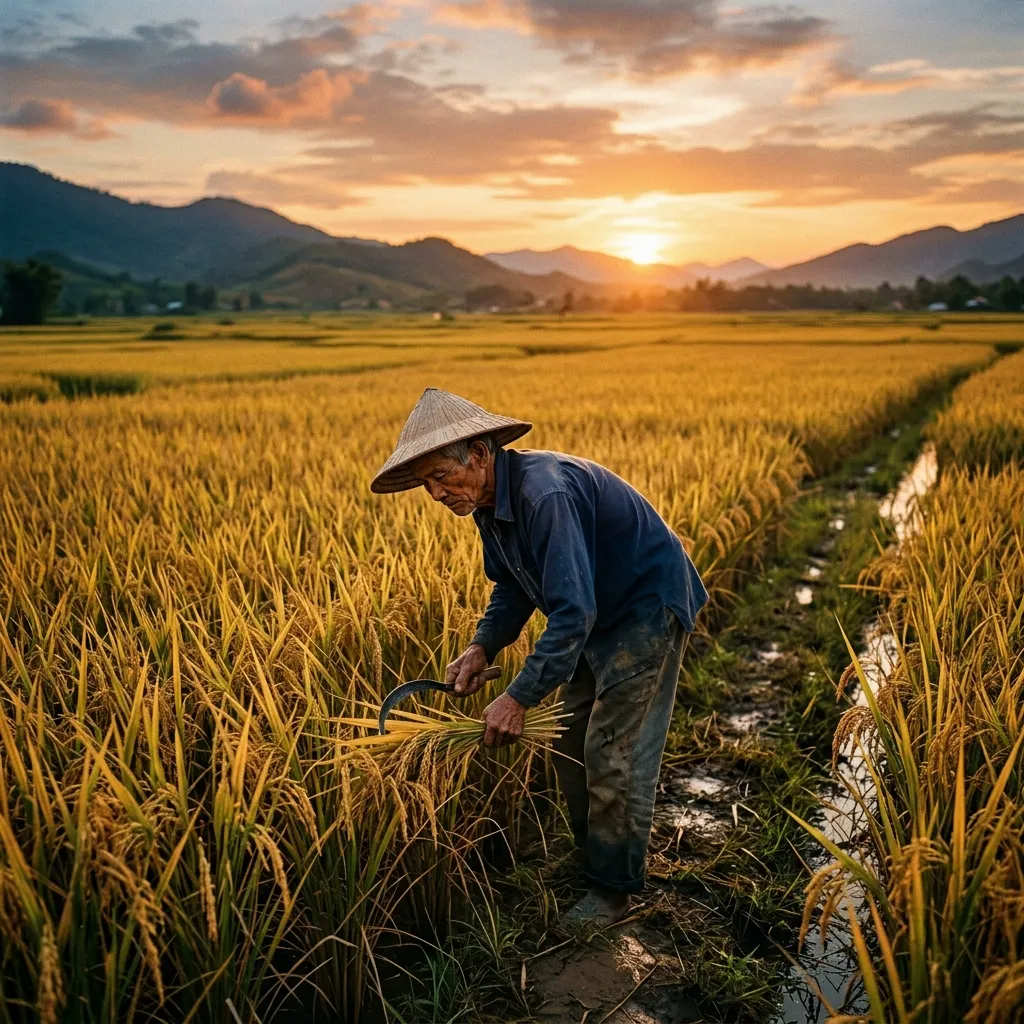
The average age of Asian rice farmers is 52 and rising. In Japan — a preview of what will happen across Asia — the average farmer is 67. Less than 5% are under 40. Result: 40% of agricultural land is abandoned or underutilized.
The exodus is rational
Young rural people aren't "abandoning tradition" on a whim — they're making a rational analysis: urban income is 2-5× higher, with fixed salary stability, better healthcare, education, and social status.
Historical Lessons: When Rice Ran Out
The Great Bengal Famine (1943)
When rice production dropped just 5%, combined with British colonial export policies, the result was a famine killing 3 million people in under a year.
The 2008 Rice Crisis
Rice prices tripled in 4 months — from $300/ton to $1,000/ton. Violent protests erupted in 30 countries. Haiti's government fell. 115 million people were pushed into severe food insecurity.
The cultural meaning of rice
Rice isn't just food. In many Asian cultures, it's sacred: Thailand's goddess Mae Phosop, Japan's 2,000-year imperial planting ceremony, China's ideogram for "meal" containing the rice radical.
Global Impact: What Happens If Rice Runs Short?
If global production falls 10%:
- International prices up 50-80%
- Additional 200-350 million food-insecure people
- Political instability in 15-20 import-dependent countries
Solutions: What Can Be Done?
Technology and mechanization
Agricultural robots, monitoring drones, IoT sensors for precision irrigation and compact harvesters can reduce labor needs. Japan's Kubota has developed autonomous rice tractors — but at $100,000+, they're prohibitive for small Asian farmers.
Drought-resistant varieties
IRRI's DRR44 variety produces viable yields with 50% less water. Heat-tolerant (up to 38°C) and salinity-tolerant varieties are in development.
Income improvement and social prestige
Programs presenting agriculture as a technological profession — "smart farming" — are generating interest among IT-educated young Indians.
Also Read
- Fresh Water Reservoir in the Great Salt Lake
- Plastic Turns to Gasoline: Organic Pyrolysis
- 50501 Protests in the US Against Trump
FAQ — Frequently Asked Questions
Can rice really run out?
Rice won't "run out" — it's a plant that can be cultivated indefinitely. The risk is sharp production reduction because there won't be sufficient labor. If current trends continue, production could fall short of demand by 50-100 million tons/year by 2040.
Why not simply pay more for rice?
The issue is political, not economic. Cheap rice is treated as a basic right in many Asian countries. Governments that allow significant rice price increases face protests, lose elections, and in extreme cases are overthrown.
Can Brazil replace Asian rice production?
Partially. Brazil has land, water, and technology to multiply production 3-5×, but Asian demand is 470 million tons/year — scale no country outside Asia can cover alone. Additionally, expanding rice cultivation would mean converting cerrado or forest into flooded fields.
Sources and References
- Mars Inc. — "Securing the Future of Rice: From Field to Fork" — March 31, 2026
- International Rice Research Institute (IRRI) — "World Rice Statistics 2026" — March 2026
- FAO — "State of Food Security and Nutrition 2025"
- The Washington Post — "Asian rice farmers are aging out — and no one is replacing them" — March 2026
- Manila Bulletin — "65% of Filipino rice farmers don't want their children in agriculture" — March 2026


