
7.4 Magnitude Earthquake Strikes Indonesia and Triggers Tsunami Warning: Residents Flee in Panic
At 2:17 AM on April 2, 2026 (local time), while millions of Indonesians slept, the floor of the Molucca Sea ruptured with a violence that shook two entire provinces. An earthquake of magnitude 7.4 — classified as "major" on the Richter scale — struck the region between Ternate (North Maluku) and Bitung (North Sulawesi), at a depth of approximately 120-130 kilometers.
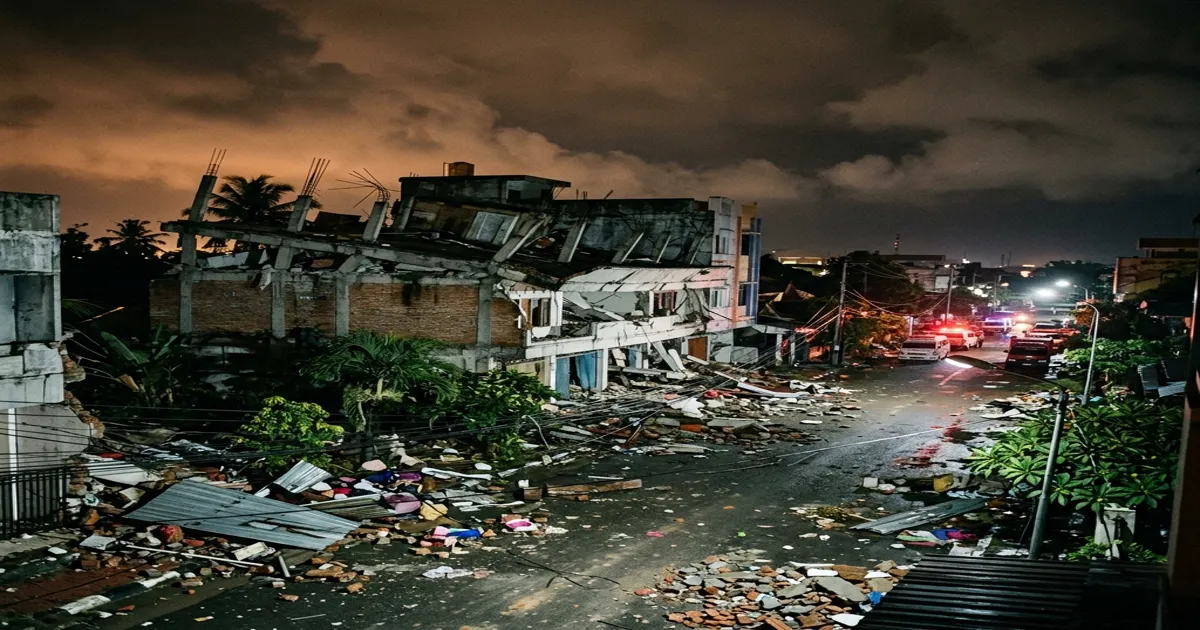
The tremor lasted between 10 and 20 seconds — enough time to wake millions of people, bring down walls of homes, churches and commercial buildings, and trigger a tsunami warning that forced hundreds of thousands of coastal residents to flee to higher ground in the darkness of predawn hours.
What Happened: Earthquake Timeline
| Time (WITA) | Event |
|---|---|
| 02:17 | Main tremor — 7.4 magnitude |
| 02:19 | BMKG issues tsunami warning |
| 02:22 | PTWC confirms tsunami potential |
| 02:25 | First reports of collapses in Manado and Ternate |
| 02:40 | 75 cm tsunami waves recorded in North Minahasa |
| 03:15 | 6.2 magnitude aftershock |
| 04:30 | Tsunami warning canceled |
| 06:00 | BNPB begins damage assessment |
The epicenter was located in the Molucca Sea, one of the most seismically active zones on the planet. The region sits at the confluence of three tectonic plates: the Pacific Plate, the Philippine Sea Plate and the Indo-Australian Plate — making it one of the most violent points on the Pacific Ring of Fire.
Damage and Casualties
Deaths and Injuries
At least one person died — a 70-year-old woman in Manado, capital of North Sulawesi, struck by debris from a wall that collapsed while she was trying to leave her home. Several injuries were reported in Manado and Ternate, most involving cuts and fractures from falling structures.
Structural Destruction
The earthquake caused significant damage in both provinces:
- Manado: Collapsed walls in residences, cracks in commercial buildings, and historic churches damaged
- Ternate: Port infrastructure compromised, partial collapse of public market
- Bitung: Damage to industrial facilities and residential areas near the coast
- North Minahasa: Coastal roads with fissures, access bridge compromised
Indonesia's Badan Nasional Penanggulangan Bencana (BNPB) — the national disaster management agency — began damage assessments at dawn, but initial estimates indicated hundreds of homes affected in both provinces.
The Tsunami: 75 Centimeters That Caused Panic
The Warning
Two minutes after the main tremor, BMKG (Indonesia's Meteorology, Climatology, and Geophysics Agency) issued a tsunami warning for the coasts of North Maluku and North Sulawesi. The Pacific Tsunami Warning Center (PTWC), based in Hawaii, confirmed the tsunami potential minutes later.
What Actually Happened
Tsunami waves were effectively recorded, with the largest measuring 75 centimeters on the coast of North Minahasa. Smaller heights were observed at other coastal points. Although 75 cm waves may seem small, experts warn that tsunami waves of this height carry an enormous amount of energy and can drag vehicles, flood coastal streets and cause drownings.
Scenes of Panic
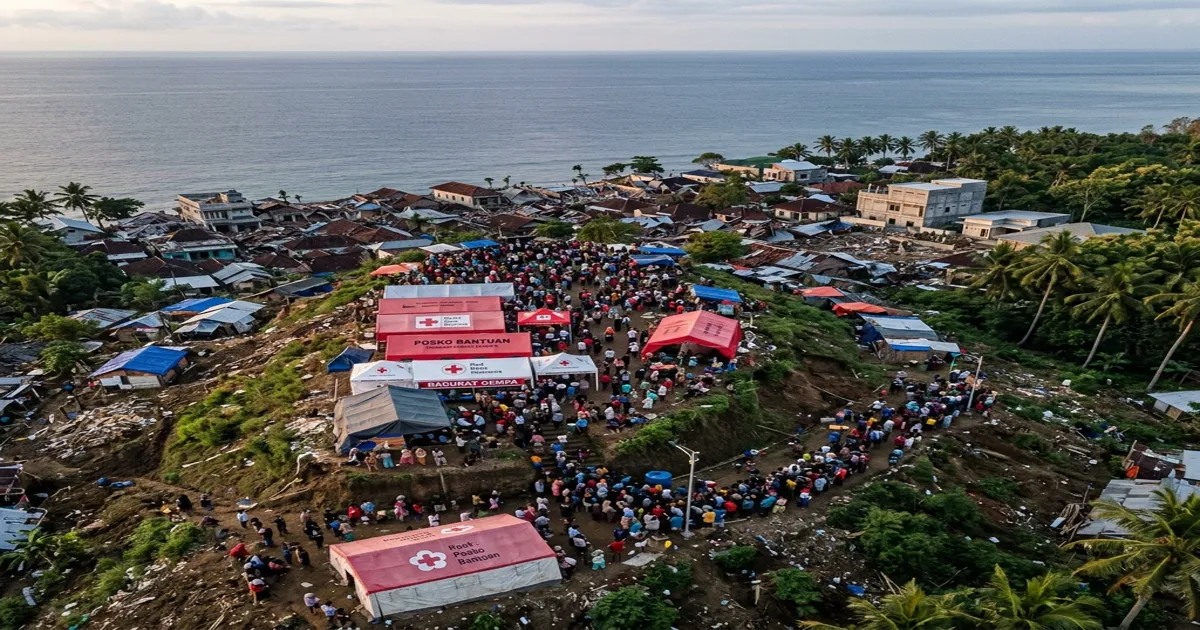
The tsunami warning in the middle of the early morning hours caused scenes of desperation in both provinces. Coastal residents ran for elevated areas, many barefoot and in pajamas, carrying children and belongings. Traffic on exit roads from coastal zones was blocked within minutes, with vehicles attempting to reach higher ground simultaneously.
In Ternate, a volcanic island with mountainous terrain, residents reported that reaching elevated areas was quicker, but in flat areas like parts of Bitung and Minahasa, the evacuation was more difficult and chaotic.
Aftershocks: The Tremors Didn't Stop
After the main tremor, the region was shaken by dozens of aftershocks, with the strongest registering magnitude 6.2 — which by itself would be classified as a "strong" earthquake under any other circumstances.
The aftershocks continued throughout the following hours, causing additional panic among residents who were trying to return to their homes after the tsunami warning was cancelled. Each new aftershock renewed fears of another tsunami.
Modern seismology knows that magnitude 7+ earthquakes can generate significant aftershocks for weeks or even months after the main event. BMKG published guidelines for residents to remain on maximum alert for at least 72 hours.
The Ring of Fire: Why Indonesia Is the World's Most Seismic Country
Indonesia is the country with the greatest seismic activity on the planet. This is not mere statistics — it's a direct consequence of its geographic position: the archipelago of 17,508 islands is located exactly where three major tectonic plates collide.
Impressive Numbers
| Indicator | Value |
|---|---|
| Earthquakes/year in Indonesia | ~7,000 (felt and unfelt) |
| Earthquakes >5.0/year | ~300 |
| Earthquakes >7.0 since 2000 | 54 |
| Active volcanoes | 127 (most in the world) |
| % of Ring of Fire | ~13% |
The Pacific Ring of Fire is a belt of approximately 40,000 km that encircles the Pacific Ocean, where about 75% of all active volcanoes in the world are located and 90% of all earthquakes occur. Indonesia represents the most concentrated and active portion of this belt.
The Mechanics of Tectonic Plates in Indonesia
What makes Indonesia particularly vulnerable is the phenomenon of subduction — when one tectonic plate dives beneath another. In the Moluccas region, the situation is even more complex because two plates are diving toward each other simultaneously, creating what geologists call a double collision zone. This rare geological configuration generates an extraordinary concentration of seismic energy that needs to be released periodically — and each release is an earthquake.
The 120-130 km depth of the April 2 earthquake epicenter indicates that the rupture occurred in the transition zone between the upper mantle and the Earth's crust, a region where pressures are extreme and rock is at the limit between brittle behavior (which breaks) and plastic behavior (which deforms). Earthquakes at this depth tend to affect very large areas on the surface, which explains why the tremor was felt in two provinces separated by hundreds of kilometers.
The Challenge of Earthquake-Resistant Construction
Despite being the world's most seismic country, a large portion of Indonesia's housing infrastructure does not follow earthquake-resistant standards. According to Indonesia's Ministry of Public Works, it is estimated that less than 30% of residences in remote provinces like North Maluku were built following the updated seismic building code (SNI 1726:2019). The additional cost of earthquake-resistant construction — between 10% and 20% more than conventional building — represents a significant barrier for low-income communities that constitute the majority of the population in these regions.
In contrast, in Japan — another highly seismic country — more than 95% of buildings follow rigorous earthquake-resistant standards, resulting in dramatically lower earthquake mortality rates per capita.
Indonesia's Worst Earthquakes: A History of Destruction
To understand the scale of risk Indonesia faces, one need only look at the last 20 years:
Sumatra 2004 — The Tsunamigenic
On December 26, 2004, a magnitude 9.1 earthquake off the coast of Sumatra generated the deadliest tsunami in modern history, killing approximately 230,000 people across 14 countries. Indonesia, particularly Aceh province, suffered the most devastating losses, with an estimated 170,000 deaths in the country alone.
The 2004 event was so catastrophic that it led to the creation of the Indian Ocean Tsunami Warning System (IOTWS), a monitoring system that today protects the entire Indian Ocean basin.
Palu 2018 — The Unexpected Tsunami
On September 28, 2018, a magnitude 7.5 earthquake struck the city of Palu in Central Sulawesi. The earthquake generated a localized tsunami that hit Palu Bay with waves up to 6 meters, killing more than 4,300 people and causing the phenomenon of soil liquefaction — where entire neighborhoods literally sank into ground that had transformed into mud.
Lombok 2018 — The Devastating Sequence
Between July and August 2018, the island of Lombok in West Nusa Tenggara was hit by a sequence of earthquakes, with the largest reaching magnitude 6.9. The series destroyed more than 100,000 homes and displaced 350,000 people.
Tsunami Warning System: It Works But It's Not Perfect
Today's earthquake demonstrated that the warning system works — alerts from BMKG and PTWC arrived in less than 5 minutes. However, Indonesia's warning infrastructure faces serious challenges:
The Buoy Problem
Indonesia should have a network of 22 tsunami buoys along its coast. In reality, only 4 to 6 buoys are functional at any given time. The rest have been stolen, vandalized, damaged by fishing vessels or simply lost power and not been replaced.
This means tsunami detection relies mainly on terrestrial seismographs and computational models — which estimate tsunami potential based on the earthquake's location, depth and magnitude, but cannot confirm whether waves are actually forming.
The Alert Dilemma
Authorities face a cruel dilemma: if they issue too many warnings that don't materialize, the population begins to ignore them (the "cry wolf" phenomenon). If they alert too little, lives are lost. The 2018 Palu earthquake tragically demonstrated the second scenario — the tsunami warning was canceled prematurely, and 6-meter waves hit coastal areas minutes later.

Economic and Humanitarian Impact
Immediate Cost
Although the material damage from today's earthquake is still being assessed, magnitude 7+ earthquakes in Indonesia typically cause damages between US$50 million and US$500 million, depending on proximity to urban centers and affected infrastructure.
Tourism Affected
The provinces of North Maluku and North Sulawesi are diving and ecotourism destinations. The earthquake will likely cause booking cancellations and reduced tourist flow for weeks, affecting coastal communities that depend on tourism as their main source of income.
International Assistance
Indonesia has a highly experienced disaster agency (BNPB), but major earthquakes frequently trigger assistance from the International Red Cross, UNICEF and bilateral agencies from neighboring countries like Australia and Japan.
What to Do in Case of an Earthquake Followed by Tsunami
For residents of coastal zones in seismic areas, UN and BMKG guidelines are clear:
- During the tremor: Drop, cover your head and hold onto something fixed. Don't try to run during the tremor
- After the tremor: If you're within 1 km of the coast, go IMMEDIATELY to elevated ground (above 30 meters above sea level)
- Don't wait for the official alert: If the tremor lasted more than 20 seconds and you're on the coast, the tremor IS your alert
- Don't return to the coast until authorities confirm it's safe
- Remember: Tsunamis arrive in multiple waves. The first wave is rarely the largest
FAQ
What was the exact magnitude of the earthquake?
The earthquake was recorded at magnitude 7.4 by BMKG (Indonesia's seismic agency). Initial reports from other international agencies mentioned slightly different values — magnitudes 7.6 and 7.8 — which is common in the first hours after a seismic event, when data is still being calibrated. The final consolidated magnitude settled at 7.4, classified as a "major" earthquake on the Richter scale. Earthquakes of this magnitude release energy equivalent to approximately 1 million tons of TNT — or 66 times the Hiroshima bomb.
Is there a risk of another earthquake?
Yes. Magnitude 7+ earthquakes are typically followed by significant aftershocks for weeks or months. The strongest aftershock recorded so far was magnitude 6.2, and dozens of smaller aftershocks continue to occur. BMKG recommends that residents remain on maximum alert for at least 72 hours and keep emergency kits prepared. Historically, there is approximately a 5-10% probability that an aftershock will be as strong as or stronger than the main tremor.
Can Indonesia predict earthquakes?
No. Despite significant advances in seismology, no existing technology is capable of predicting when and where an earthquake will occur. What scientists can do is map risk zones, estimate statistical probabilities over decades, and monitor in real-time when tremors occur to issue tsunami alerts. The focus of seismic protection is on prevention: earthquake-resistant construction, tsunami warning systems and evacuation plans — not on predicting the event itself.
Are 75 cm tsunamis dangerous?
Yes, more than most people imagine. A 75-centimeter tsunami wave is not comparable to a normal ocean wave of the same height. Tsunami waves carry a massive volume of water that advances horizontally with great force for hundreds of meters beyond the coastline. A tsunami wave of just 30 centimeters is enough to knock down a person standing. A 50 cm wave can drag light vehicles. A 75 cm wave can flood coastal streets, drag debris and cause drownings.
Sources and References
- BMKG — Badan Meteorologi, Klimatologi, dan Geofisika. Official seismological report, April 2, 2026
- Pacific Tsunami Warning Center (PTWC) — National Weather Service, NOAA. Tsunami Alert No. 002/2026
- BNPB — Badan Nasional Penanggulangan Bencana. Preliminary damage assessment
- CBS News — "7.4 earthquake hits Indonesia, triggers brief tsunami warning" — April 2, 2026
- The Independent — "Indonesia earthquake: Tsunami warning issued after major 7.4 tremor" — April 2, 2026
- Al Jazeera — "Tsunami warning lifted after 7.4 earthquake strikes eastern Indonesia" — April 2, 2026


