
World Cup 2026: Final Ticket Sales Phase Opens and Millions Are Left Out
On April 1, 2026, FIFA opened the fourth and final phase of ticket sales for the 2026 World Cup — the largest sporting event in history, spread across 16 cities in three countries: the United States, Mexico and Canada. And the race for tickets became a digital nightmare.
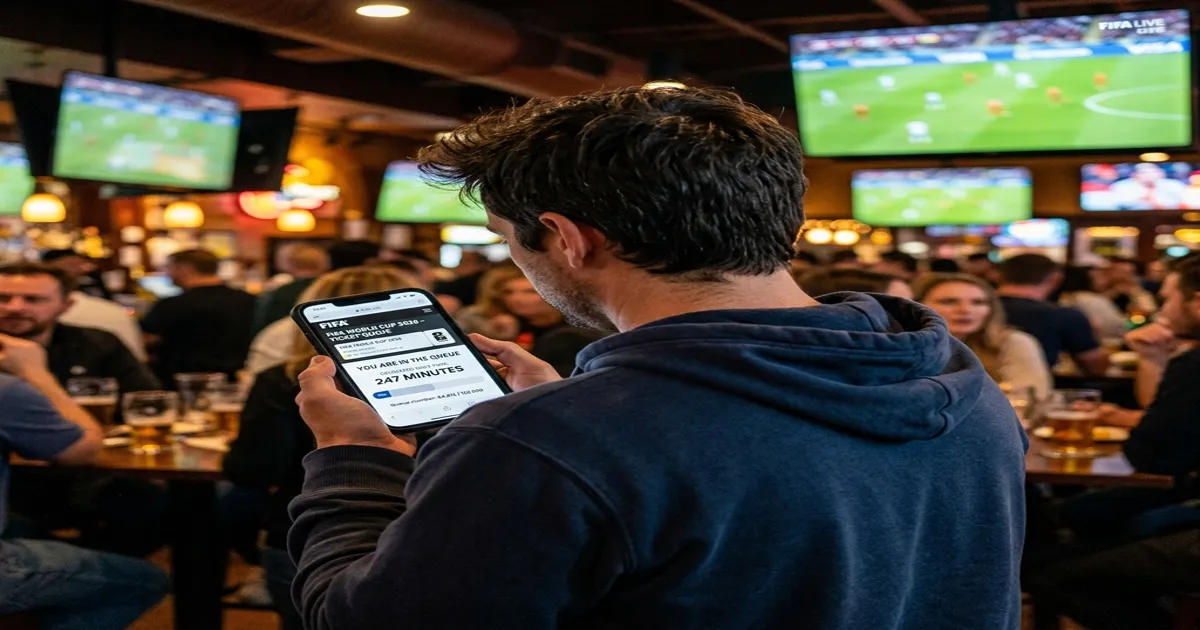
In the first 24 hours, the official website fifa.com/tickets recorded more than 70 million visits, repeatedly crashing servers and generating virtual waiting queues of up to 4 hours. The message that millions of fans around the world saw was cruel: "Due to high demand, you have been placed in a queue. Estimated wait time: 247 minutes."
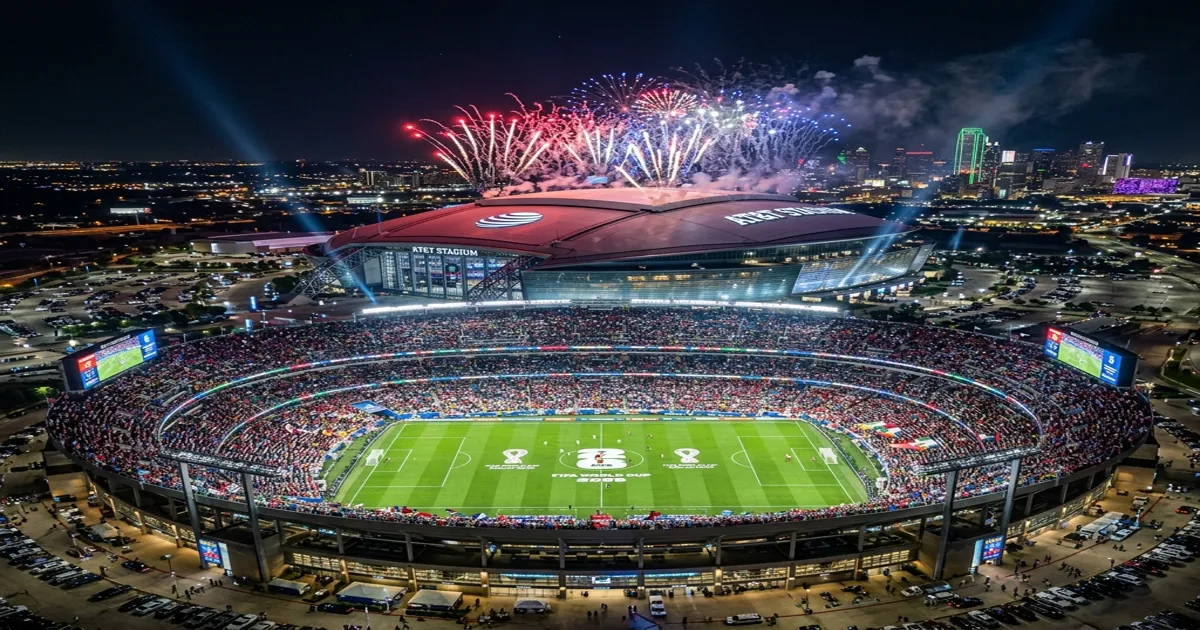
The Most Gigantic World Cup in History
The 2026 World Cup is, by any metric, the largest sporting event ever organized:
| Indicator | 2022 World Cup (Qatar) | 2026 World Cup (USA/MEX/CAN) | Growth |
|---|---|---|---|
| Teams | 32 | 48 | +50% |
| Matches | 64 | 104 | +62% |
| Stadiums | 8 | 16 | +100% |
| Host countries | 1 | 3 | +200% |
| Duration (days) | 29 | 39 | +34% |
| Total capacity | 1.7M seats | 5.4M seats | +218% |
The expansion from 32 to 48 teams means that more countries than ever will have a chance to participate. For many African, Asian and Central American nations, it will be their first World Cup in history.
Prices: From US$35 to US$1,600
FIFA defined 4 ticket categories for the group stage:
| Category | Price (group stage) | What's included |
|---|---|---|
| Cat. 4 (host country residents) | US$35 | Seat with limited visibility |
| Cat. 3 | US$93 | Side seat, upper section |
| Cat. 2 | US$165 | Side seat, middle section |
| Cat. 1 | US$295 | Central seat, premium section |
For the final at MetLife Stadium (New Jersey), on July 19, 2026, prices skyrocket:
| Category | Price (final) |
|---|---|
| Cat. 4 | US$180 |
| Cat. 3 | US$440 |
| Cat. 2 | US$960 |
| Cat. 1 | US$1,600 |
The Problem: Demand 10x Greater Than Supply
In the first three sales phases (2024-2025), FIFA received more than 300 million requests for approximately 5.4 million available tickets. Statistically, only 1 in 55 people who tried to buy managed to get a ticket.
For high-demand matches — like any game featuring the USA, Brazil, Argentina or Mexico — the success rate dropped to less than 1 in 200.
The Resale Marketplace: The New Frontier
On April 2, 2026, simultaneously with the final sales phase, FIFA reopened the Official Resale Marketplace — the only authorized platform for reselling tickets between fans.
How It Works
Fans who purchased tickets but can no longer attend can list their tickets on the official marketplace. Prices are set by FIFA — it's not possible to resell above the original face value. This prevents (in theory) the black market problem, where tickets can cost 5 to 20 times the original price.
The Black Market
In practice, the ticket black market is already in full operation. Investigations by the Financial Times identified more than 400 illegal websites selling tickets for the 2026 World Cup, with prices ranging from US$500 (for group stage matches of smaller teams) to US$25,000 (for the final).
FIFA has repeatedly warned that tickets purchased outside the official website will be canceled and that fans arriving at stadiums with invalid tickets will not be admitted. In 2022, in Qatar, more than 12,000 fans were turned away at the gates for holding fake or parallel-market tickets.
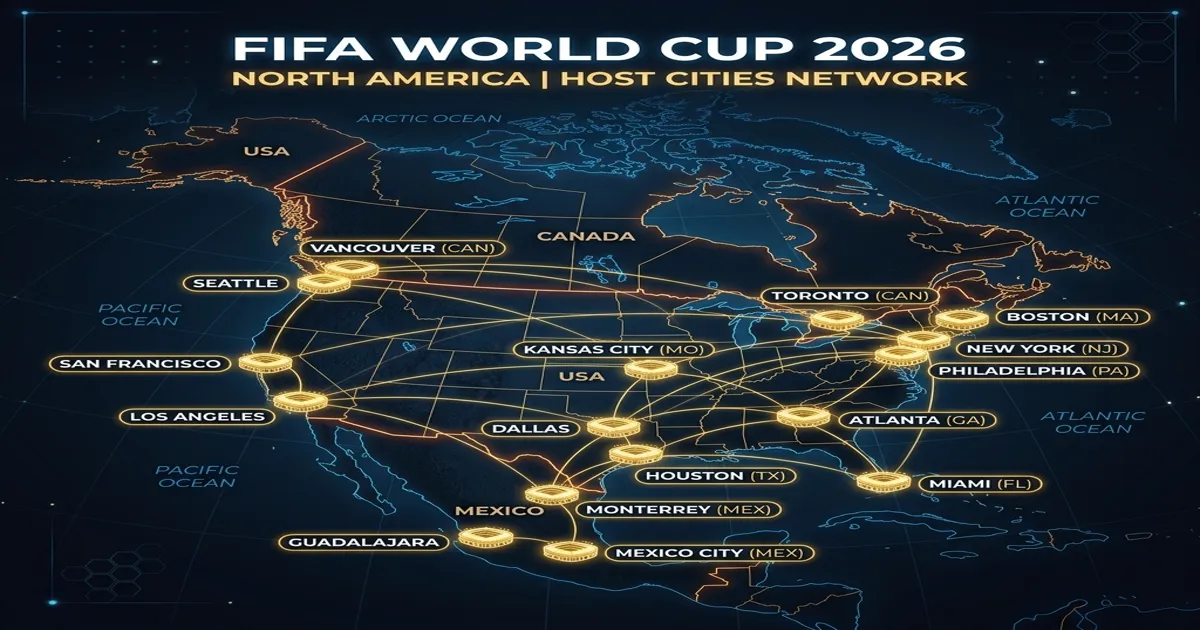
The 16 Host Cities: A Continental Tour
The 2026 World Cup will be played at 16 stadiums spread across three countries:
United States (11 cities)
| City | Stadium | Capacity |
|---|---|---|
| New York/New Jersey | MetLife Stadium | 82,500 |
| Los Angeles | SoFi Stadium | 70,240 |
| Dallas | AT&T Stadium | 80,000 |
| Miami | Hard Rock Stadium | 65,326 |
| Houston | NRG Stadium | 72,220 |
| Atlanta | Mercedes-Benz Stadium | 71,000 |
| Philadelphia | Lincoln Financial Field | 69,796 |
| Seattle | Lumen Field | 68,740 |
| San Francisco | Levi's Stadium | 68,500 |
| Kansas City | Arrowhead Stadium | 76,416 |
| Boston | Gillette Stadium | 65,878 |
Mexico (3 cities)
| City | Stadium | Capacity |
|---|---|---|
| Mexico City | Estadio Azteca | 87,000 |
| Guadalajara | Estadio Akron | 49,850 |
| Monterrey | Estadio BBVA | 53,500 |
Canada (2 cities)
| City | Stadium | Capacity |
|---|---|---|
| Vancouver | BC Place | 54,500 |
| Toronto | BMO Field (expanded) | 45,736 |
Estadio Azteca in Mexico City will make history as the first stadium to host a World Cup for the third time (1970, 1986 and 2026).
Economic Impact: US$5 Billion at Stake
The estimated economic impact of the 2026 World Cup is monumental:
- USA: US$4.2 billion in direct economic activity (tourism, hospitality, transportation)
- Mexico: US$500 million in additional international tourism
- Canada: US$300 million in economic activity in host cities
Jobs
FIFA estimates the 2026 World Cup will generate more than 120,000 temporary jobs across the three countries, including security, hospitality, transportation, media and operational support.
Tourism
The US Department of Commerce projects 3.5 million international visitors during the tournament period (June 11 to July 19, 2026), with an average spend of US$1,200 per visitor during their stay.
Security: The Greatest Logistical Challenge
Security for the 2026 World Cup will be the most complex policing operation ever mounted for a sporting event. With matches in 16 cities across 3 different countries, coordination between security agencies is unprecedented.
Operation Numbers
- Private security agents: over 25,000
- Local and federal police: over 40,000 deployed
- FBI and Secret Service agents: deployments in all 11 American cities
- Surveillance drones: over 200 units planned for aerial coverage
- Command centers: 16 local centers + 1 federal center in Washington D.C.
The US Department of Homeland Security (DHS) classified the 2026 World Cup as a SEAR-1 level event (Special Event Assessment Rating), the highest security level, equivalent to a presidential inauguration or the Super Bowl.
The Border Challenge
With matches in three countries, fans will need to cross international borders during the tournament. FIFA negotiated with all three governments a temporary "visa waiver" system for ticket holders during the tournament period, but the logistics of processing millions of border crossings in 39 days is extraordinarily complex.
Technology and Fan Experience
The 2026 World Cup will be the first to implement augmented reality (AR) technology at scale for fans:
- Smartphone AR: Point the camera at the field to see real-time stats on players, ball speed and tactical formations overlaid on the image
- Instant translation: Live translation system in 24 languages on stadium screens
- Full cashless: No stadium will accept cash — only cards and digital payments
- Wi-Fi 6E: All 16 stadiums equipped with ultra-high-capacity Wi-Fi supporting 50,000+ simultaneous devices
Fan Zones — free public areas with giant screens — will be larger and more technological than in any previous edition. Each host city will have at least one Fan Zone with capacity for 20,000 to 50,000 people.
Tips for Those Still Wanting to Buy
For those trying to get a ticket in the final phase, here are FIFA's official guidelines:
- Only official website: fifa.com/tickets — NEVER buy from another site
- Account creation: Create your FIFA account in advance and verify your email
- Patience: Virtual queues can take hours. DO NOT reload the page
- Rolling tickets: New tickets are released periodically through July, including on match days
- Resale marketplace: Keep an eye on the official marketplace for cancellations
- Fan Zones: If you can't get a ticket, all 16 host cities will have free Fan Zones with giant screens
What to Avoid
- ❌ Never buy from unofficial websites — the ticket will be canceled
- ❌ Never pay above face value on unauthorized marketplaces
- ❌ Never share payment data on suspicious sites
- ❌ Never buy tickets from street vendors — 100% are fake
FAQ
Is it still possible to buy tickets for the 2026 World Cup?
Yes! The fourth and final sales phase began on April 1, 2026 and will remain open until the end of the tournament in July. Tickets are sold on a first-come, first-served basis. FIFA releases tickets in periodic batches, and some may become available even on match day. The tip is to check the official website daily, as new releases happen continuously. The official Resale Marketplace is also a good option for finding tickets returned by other fans.
How much is the cheapest ticket?
The cheapest ticket available is Category 4, reserved for host country residents, starting at US$35. This category is limited to citizens and residents of the USA, Mexico or Canada and offers seats with limited visibility. For international visitors, the most affordable option is Category 3, starting at US$93. For knockout-round matches onward, prices increase significantly, and for the final, the most expensive Category 1 ticket reaches US$1,600.
Is it safe to buy tickets from unofficial websites?
Absolutely not. FIFA operates a nominal ticket system linked to the buyer's identity. Tickets purchased outside the official website fifa.com/tickets can be (and frequently are) automatically canceled by the system. At the 2022 World Cup in Qatar, more than 12,000 fans were turned away at the gates for holding invalid tickets. Beyond the risk of losing your money, fans who attempt to use fake tickets can be detained by security and face legal consequences.
How many matches will the 2026 World Cup have?
The 2026 World Cup will feature 104 matches — the most in World Cup history. The increase is due to the expansion from 32 to 48 teams, approved by the FIFA Congress in 2017. The group stage will have 12 groups of 4 teams each, followed by a knockout round of 32 teams. The entire tournament spans 39 days, from June 11 to July 19, 2026.
Are there VIP hospitality packages?
Yes. FIFA offers hospitality packages through MATCH Hospitality, the official agency. Packages include premium seating, access to exclusive lounges with food and beverages, networking areas, and in some cases, pitch access before and after matches. Basic hospitality packages for group stage matches start at around US$950 per person, while premium packages for the final can exceed US$8,000 per person. Companies can also acquire corporate suites for values reaching US$250,000 per match.
Sources and References
- FIFA — "Last-Minute Sales Phase opens for FIFA World Cup 26" — Official communication, April 1, 2026
- FIFA — "Official ticketing and hospitality" — fifa.com/tickets
- CBS News — "FIFA World Cup 2026 ticket sales: How to get tickets" — April 2, 2026
- Financial Times — "Black market thrives as World Cup tickets sell fast" — March 2026
- U.S. Department of Commerce — Tourism projections for World Cup 2026


