🌍 Your knowledge portal
tecnologia

SpaceX Launches Giant BlueBird Block 2 Satellites for Direct Cell Connectivity

📅 2026-08-06⏱️ 6 min read📝
SpaceX Launches Giant BlueBird Block 2 Satellites for Direct Cell Connectivity
SpaceX Launches Giant BlueBird Block 2 Satellites for Direct Cell Connectivity — High-Fidelity Artistic Illustration created by artificial intelligence based on scientific research.
⚡

Quick Summary

SpaceX successfully launched the largest commercial BlueBird Block 2 satellites to enable direct satellite-to-cell connection for standard smartphones. Commercial space exploration and the global telecommunications industry have reached a new historic milestone of development with the latest successful launch performed by SpaceX.

Key Takeaways:

  • Considered the largest commercial satellites ever placed in low Earth orbit, the gigantic BlueBird Block 2 spacecraft possess dimensions that challenge modern engineering.
  • The practical operation of this complex space ecosystem is based on the coordination of radio frequencies previously licensed by national and international regulatory authorities.
  • In practical terms of performance, the space network promises to deliver high data transmission speeds equivalent to conventional terrestrial 4G and 5G connections.

SpaceX Launches Giant BlueBird Block 2 Satellites for Direct Cell Connectivity 🚀📱 #

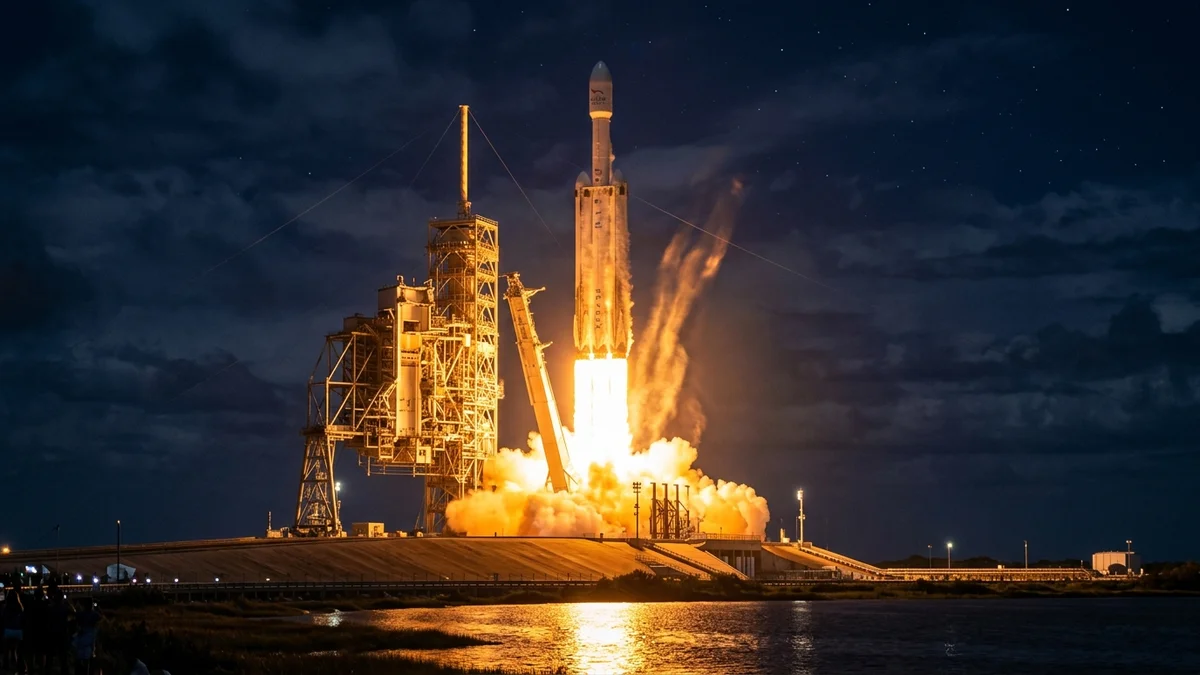
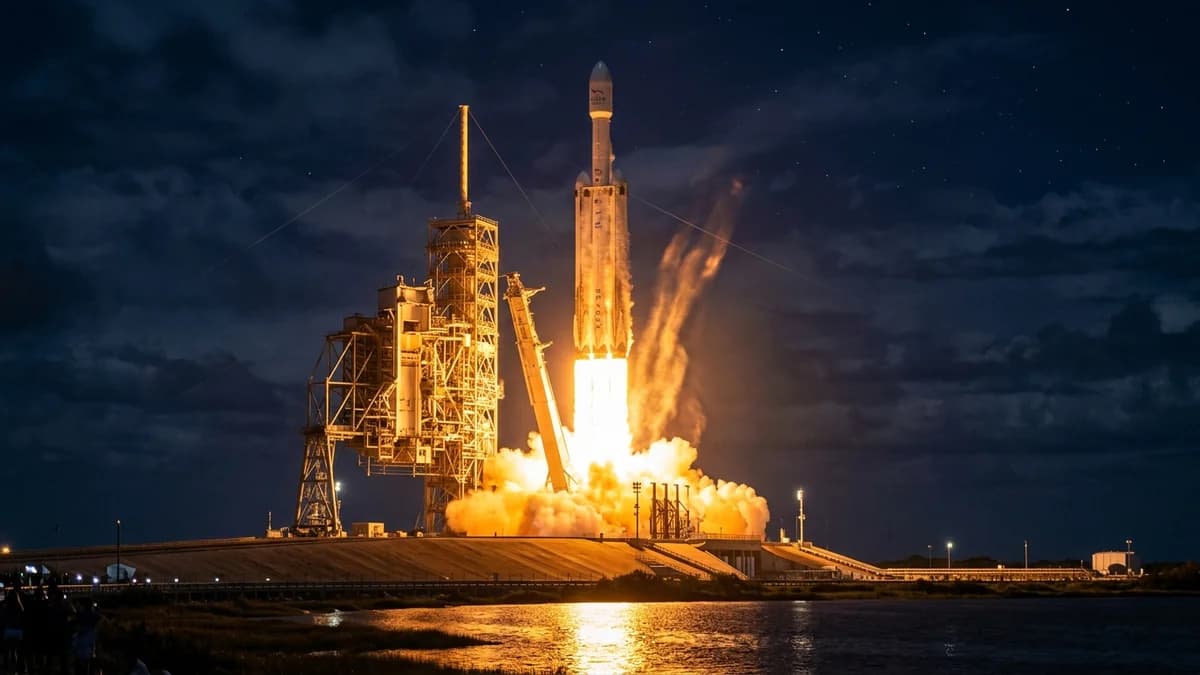
SpaceX Falcon 9 rocket rising in the night with bright fire trail, carrying the BlueBird satellites of AST SpaceMobile.

Commercial space exploration and the global telecommunications industry have reached a new historic milestone of development with the latest successful launch performed by SpaceX. A Falcon 9 rocket majestically rose into deep space carrying on board the new BlueBird Block 2 commercial satellites belonging to the American company AST SpaceMobile. This ambitious mission has the primary objective of establishing a revolutionary communication network in space capable of connecting ordinary smartphones without intermediaries.

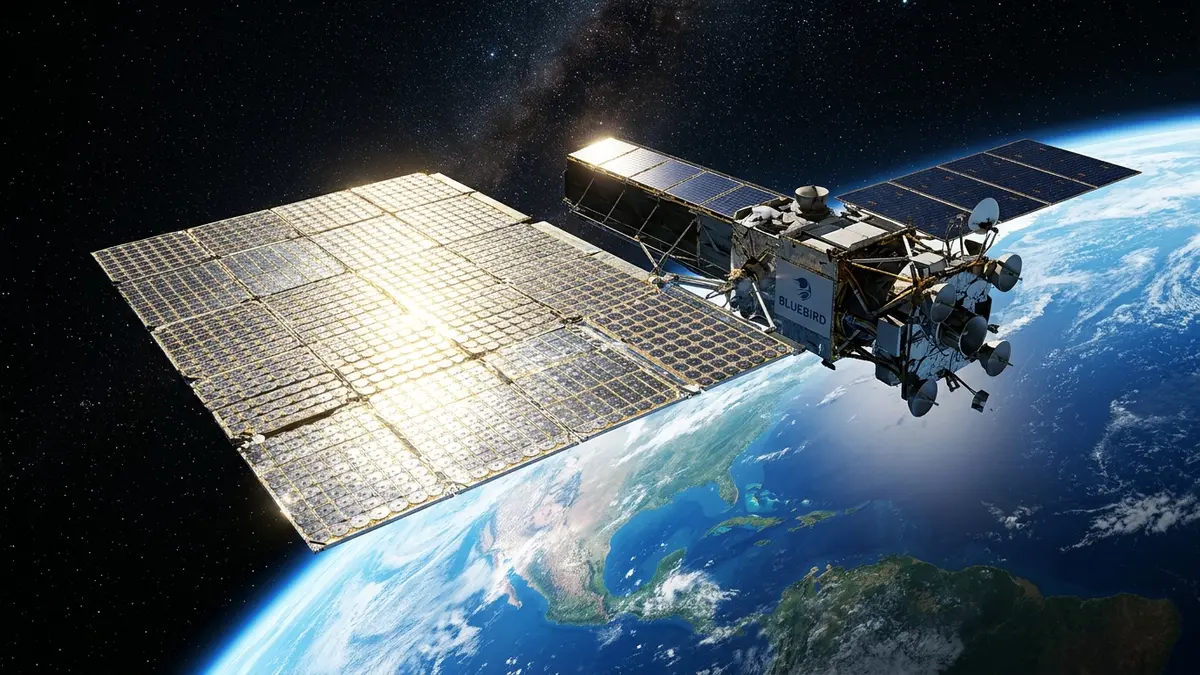
Considered the largest commercial satellites ever placed in low Earth orbit, the gigantic BlueBird Block 2 spacecraft possess dimensions that challenge modern engineering. Each unit deploys in space an immense phased array antenna with more than one hundred square meters of active surface. This colossal design is fundamental to capture the weak radio signals emitted by ordinary cellular phones directly from the ground of our planet.

The central technological innovation behind this audacious project is the revolutionary concept of direct connectivity for mobile phones in daily use on the ground. Unlike satellite telephony systems of the past, ordinary users do not need to buy expensive dedicated devices or additional external antennas. The satellite positioned in space works essentially as a floating cell tower, transmitting broadband data directly to the conventional network chip of your standard smartphone.

To ensure stable coverage and low latency, the satellites were strategically positioned in a low Earth orbit at about five hundred kilometers of altitude. This physical proximity to the Earth's surface is absolutely crucial to enable fast broadband communication without noticeable delays in standard voice calls. The direct partnership with the world's largest mobile network operators will ensure that the signal transition occurs in a completely transparent and automated way.

The Technology Behind Giant Phased Array Antennas #

The practical operation of this complex space ecosystem is based on the coordination of radio frequencies previously licensed by national and international regulatory authorities. The gigantic antennas on board the satellites utilize beamforming algorithms to direct multiple communication channels to specific regions of the globe. This allows thousands of internet connections and voice calls to occur simultaneously on the same band without generating harmful interference.

Monitoring and adjusting the orbital trajectory of these massive floating structures in space requires extremely complex calculations of orbital dynamics and acting gravitational forces. In the same way that artificial objects in Earth's orbit need stability, massive external perturbations could destabilize entire planetary systems on cosmic scales. To explore scenarios where invisible gravitational forces disrupt planetary orbits and threaten Earth's stability, read our article about the /en-US/blog/buraco-negro-errante-esta-desviando-orbita-da-terra-2026.

The immense BlueBird satellite with its giant phased array antenna deployed in the vacuum of space reflecting sunlight above the Earth.

The physical launch of such voluminous structures required deep aerodynamic adaptations in the fairing of the latest generation of rockets designed by SpaceX. The satellites must be folded in an extremely compact way like origami pieces to withstand the strong vibrations generated during the supersonic ascent. Once the planned operational orbit is reached, high-precision mechanical actuators initiate the slow deployment of the massive antenna array.

Despite the technical enthusiasm, the impressive size of the new satellites has raised serious concerns in the international astronomical community regarding light pollution. The reflection of sunlight on the immense shiny surfaces of the antennas can disrupt the observation of distant stars and galaxies by ground-based telescopes. In response, the engineering team at AST SpaceMobile is studying the application of new anti-reflective coatings to mitigate brightness without compromising efficiency.

Performance and Impact on the Global Telecommunications Market #

In practical terms of performance, the space network promises to deliver high data transmission speeds equivalent to conventional terrestrial 4G and 5G connections. This technical advancement will ensure the rapid sending of text messages, seamless web browsing, and continuous real-time high-definition video streaming. The established infrastructure clears the path to a new era where the frustrating loss of cellular signal will become a technological problem of the past.

In extreme situations of natural disasters or severe humanitarian crises, direct-to-cell satellite connectivity will prove to be an essential tool for saving human lives. When powerful hurricanes or earthquakes destroy conventional terrestrial fiber optic networks, these low-orbit satellites continue to function without any interruptions. Rescue teams and isolated citizens will be able to communicate with medical emergency centers and coordination hubs continuously from any remote location.

To evaluate the extreme environmental conditions that space technology must endure outside our planet, scientists also perform tests and research on our own natural satellite. The search for natural resources and solid water in neighboring celestial bodies is another priority of contemporary space exploration. An example of this innovative research focused on the space environment is described in detail in the article about /en-US/blog/novas-tecnicas-sismicas-detectam-reservatorios-gelo-sub-superficie-lua-2026.
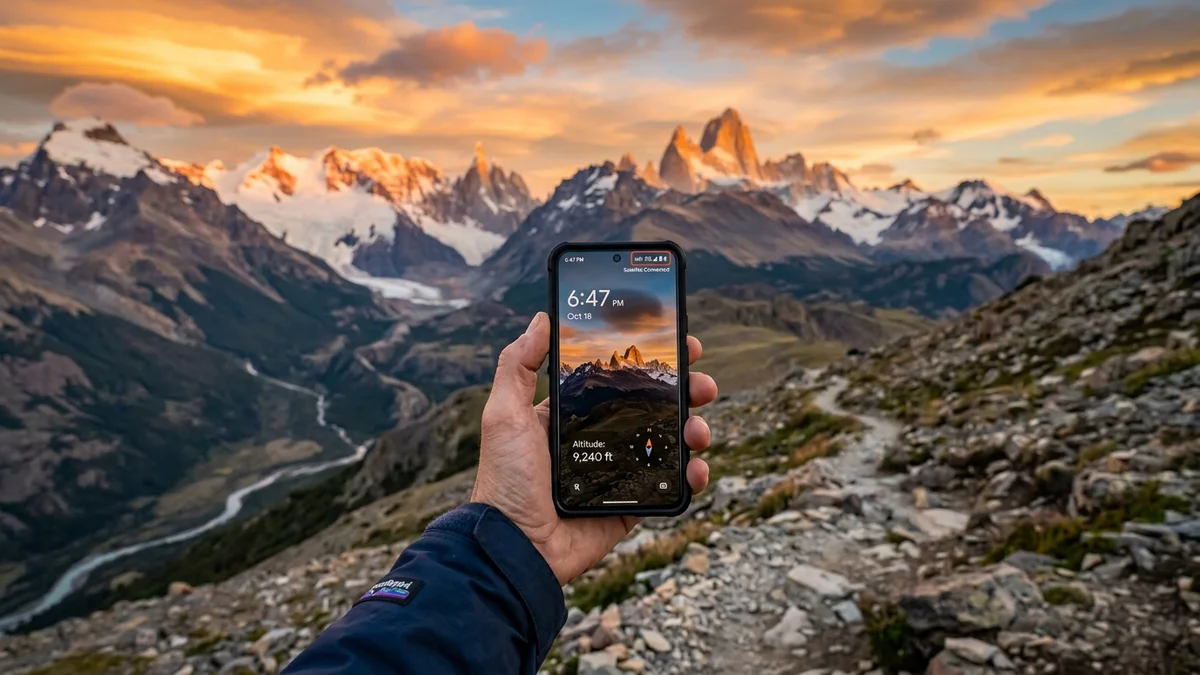
A standard smartphone displaying stable 5G signal via satellite in an isolated mountainous forest during sunset.

Regulatory approval for the commercial operation of this technology requires complex legal agreements between government agencies, such as the Federal Communications Commission in the United States. Each country has sovereignty over the use of its radio frequencies, which requires detailed bilateral negotiations for each territory. This meticulous bureaucratic process is fundamental to avoid signal overlap with military services or other essential communication networks.

The race for supremacy in space mobile connectivity has also intensified direct competition between AST SpaceMobile, SpaceX's Starlink, and Amazon's Project Kuiper constellation. Each competitor adopts different engineering strategies and commercial partnerships to capture important shares of the lucrative global telecommunications market. This intense market rivalry accelerates innovation and promises to reduce final subscription costs for users of mobile technology around the world.

Space Mobile Connectivity Technologies Comparison #

Parameter of Comparison BlueBird Block 2 (AST) Starlink Direct-to-Cell BlueBird Block 1 (AST) Traditional GEO Satellites
Antenna Area ~120 square meters ~22 square meters ~64 square degrees Small (closed dish)
Operating Frequency Cellular frequencies (Terrestrial cellular band) Terrestrial cellular band (T-Mobile partnership) Broadband cellular frequencies Proprietary L-band & Ku-band
Target Device Type Unmodified standard 4G/5G smartphones Unmodified standard LTE smartphones Standard smartphones Expensive dedicated satellite phones
Orbit Altitude 500 km (LEO) 350-550 km (LEO) 530 km (LEO) 35,786 km (GEO)
Offered Services Voice, SMS and Mobile Broadband Internet Initial SMS, later voice and simple data SMS and simple voice calls Simple voice with high latency
Est. Peak Speed Up to 120 Mbps shared Up to 18 Mbps shared Up to 20 Mbps shared Less than 2.4 kbps per channel

The Future of Global Direct-to-Cell Connectivity #

The next stages of the expansion plan foresee the regular launch of new batches of BlueBird satellites in the coming months. With a complete constellation of about ninety massive satellites operating in orbit, the company expects to offer continuous global coverage for all populated regions. The success of this initial phase will consolidate outer space as the main frontier for mobile services of the next decade of technology.

For ecotourism enthusiasts and professionals who perform field work in remote areas, the new space connectivity will bring unprecedented operational safety. Travelers will be able to cross deserts, dense forests, or oceans knowing that they will be only one click away from contacting the rest of the world. This facility will transform the dynamics of geographical exploration and open new horizons for tourism in isolated places.

Ultimately, the launch of the BlueBird Block 2 satellites by SpaceX represents an indisputable milestone in the democratization of global digital access and mobile connectivity. The capacity to provide high-speed modern communication to underserved populations in developing countries will reduce social exclusion and promote quality digital education. Through the intelligent use of outer space, humanity creates stronger connections and moves towards an integrated world without technological barriers.


Reference Sources:

🏷️ Tags:

#spacex#astspacemobile#cellularsatellite#direct-to-cell#falconheavy#telecommunications

📢 Gostou deste artigo?

Compartilhe com seus amigos e nos conte o que você achou nos comentários!

❓Frequently Asked Questions

Direct-to-Cell technology is based on the use of gigantic space antennas that can capture and transmit data directly on the same radio frequencies used by terrestrial cellular networks. By operating as floating signal towers in deep space, the satellites eliminate the need for any special intermediate device for the ordinary user. This spectacular innovation allows any standard smartphone to receive 4G or 5G signals seamlessly in isolated locations where physical terrestrial transmission towers simply do not exist.
Unlike traditional communication satellites that orbit thousands of kilometers away in stationary positions, BlueBird satellites remain in low Earth orbit to minimize communication latency. Another impressive difference is the gigantic physical size of their phased array antennas, which cover more than one hundred square meters after deployment in space. This massive reflective structure is fundamental to establish stable connections directly with normal mobile phones without the need for specific terrestrial receiving dishes.
The engineering team at AST SpaceMobile is developing special light-absorbing coatings to apply to the immense reflective antennas of their next-generation satellites. Furthermore, the companies collaborate closely with international astronomical associations to adjust the orbital trajectories and the tilt of the spacecraft during passes over large ground-based telescopes. These important mitigating measures seek to balance the need to bring digital connection to remote areas with the preservation of the dark night sky for scientific research.

Receba novidades!

Cadastre seu email e receba as melhores curiosidades toda semana.

🔒 Sem spam. Cancele quando quiser.

💬 Comentários (0)

Seja o primeiro a comentar! 👋

Receba novidades no WhatsApp!